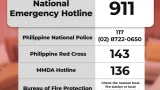

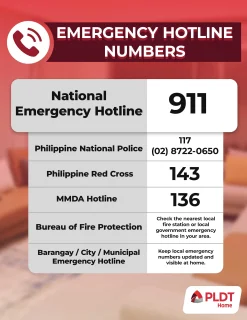
Beyond keeping basic supplies such as food, water, medicine, flashlights, and batteries, every household should also have a clear communication plan in case of an emergency. This includes knowing whom to call, keeping important emergency numbers visible, and ensuring family members have an accessible way to contact emergency hotlines, barangays, hospitals, relatives, or first responders when needed. As families use different ways to stay connected every day, having a dedicated home phone line can be part of a household’s broader emergency preparedness plan. A landline gives family members, including children, seniors, and household helpers, a fixed and familiar way to contact emergency hotlines, barangays, hospitals, relatives, and first responders when urgent assistance is needed. It also serves as an additional communication option at home, especially when family members need to quickly coordinate during an emergency. Keep emergency numbers visible at home A prepared household does not only know how to call for help. Families are encouraged to keep a list of important emergency numbers in a visible and accessible area, such as beside the landline, on the refrigerator, near the main door, or in the family emergency kit. Here are some important emergency numbers Filipino families may keep on hand: ●National Emergency Hotline: 911 ●Philippine National Police: 117 / (02) 8722-0650 ●Philippine Red Cross: 143 ●MMDA Hotline: 136 ●Bureau of Fire Protection: Check the nearest local fire station or local government emergency hotline in your area. Read more in our articles including "Keep emergency numbers within reach: A home safety reminder for Filipino families" and "Resilience Before the Rain: PLDT Home Strengthens Network and Customer Support Ahead of Typhoon Season".
Emergency preparedness begins at home. Beyond keeping basic supplies such as food, water, medicine, flashlights,…
May 30, 2026
For Filipino families, severe weather is not a rare emergency. It is a recurring reality.…
Jul 14, 2026
mWell, the Philippines’ fully integrated digital healthcare platform by Metro Pacific Health Tech Corporation, gives…
Jun 18, 2026
The realme C35 is one of the more eye-catching budget phones realme has put out…
Jun 2, 2026
Every day, millions of Filipinos go online to work, study, run businesses, connect with loved…
May 30, 2026
PLDT Enterprise continues to strengthen its position as a leader in innovative connectivity solutions through…
May 28, 2026Beyond keeping basic supplies such as food, water, medicine, flashlights, and batteries, every household should also have a clear communication plan in case of an emergency. This includes knowing whom to call, keeping important emergency numbers visible, and ensuring family members have an accessible way to contact emergency hotlines, barangays, hospitals, relatives, or first responders when needed.
As families use different ways to stay connected every day, having a dedicated home phone line can be part of a household’s broader emergency preparedness plan. A landline gives family members, including children, seniors, and household helpers, a fixed and familiar way to contact emergency hotlines, barangays, hospitals, relatives, and first responders when urgent assistance is needed. It also serves as an additional communication option at home, especially when family members need to quickly coordinate during an emergency.
Our coverage of emergency numbers includes: "Keep emergency numbers within reach: A home safety reminder for Filipino families"; "Resilience Before the Rain: PLDT Home Strengthens Network and Customer Support Ahead of Typhoon Season"; "mWell is Closing the Gap for Accessible Mental Health Care for Filipinos". Each article provides unique insights and information.