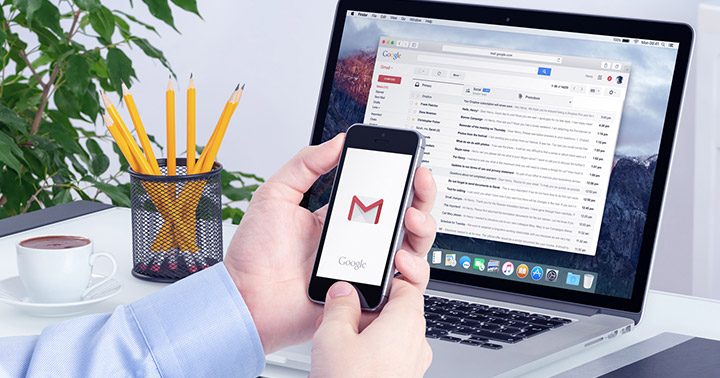


Several inaccurate claims surfaced recently that incorrectly stated that we issued a broad warning to all Gmail users about a major Gmail security issue. Like the recently reported breach, compromised email addresses and passwords that are possibly used for work, social media accounts, and financial services, are left open to be used by cybercriminals. A data breach, by definition, "is a security incident in which sensitive, protected or confidential data is copied, transmitted, viewed, stolen or used by an individual unauthorized to do so." Data like your email addresses and passwords should not be exposed or released to the public or to any entity that can't be trusted. One big example is the recent data breach that exposes over 772 million email addresses and over 21 million passwords. You might be thinking, "I'm just using my email address to keep in touch with people and send files." But remember that you're also probably using it for other services like Facebook, Twitter, Instagram, Netflix, Spotify, Lazada, Shopee, Dropbox, Amazon, Steam, even bank accounts. If you're using a single email address and password for all these accounts and happened to get exposed, then the attacker can simply change your password (assuming you don't have 2FA activated), lock you out, access all your data, and use it for other malicious activities. Read more in our articles including "Google debunks Gmail database hack reports" and "What to do if your accounts have been compromised".

Google has posted on their official blog in regards to claims of a Google data…
Sep 2, 2025
Data breaches are rampant nowadays and have also put ordinary users like you and me…
Jan 18, 2019Just received an SMS from my account manager from Security Bank early this morning (this…
Sep 1, 2014
Apple Pay is now available in the Philippines. Initial issuing banks include GoTyme, MetroBank, Union…
Aug 4, 2026
Google axes AI Studio app before official launch. Google AI Studio has announced that it…
Aug 4, 2026
Samsung has announced that Prime Video will be the first streaming service to support HDR10+…
Aug 4, 2026Several inaccurate claims surfaced recently that incorrectly stated that we issued a broad warning to all Gmail users about a major Gmail security issue. Like the recently reported breach, compromised email addresses and passwords that are possibly used for work, social media accounts, and financial services, are left open to be used by cybercriminals.
A data breach, by definition, "is a security incident in which sensitive, protected or confidential data is copied, transmitted, viewed, stolen or used by an individual unauthorized to do so." Data like your email addresses and passwords should not be exposed or released to the public or to any entity that can't be trusted. One big example is the recent data breach that exposes over 772 million email addresses and over 21 million passwords. You might be thinking, "I'm just using my email address to keep in touch with people and send files." But remember that you're also probably using it for other services like Facebook, Twitter, Instagram, Netflix, Spotify, Lazada, Shopee, Dropbox, Amazon, Steam, even bank accounts.
Our coverage of email security includes: "Google debunks Gmail database hack reports"; "What to do if your accounts have been compromised"; "Security Bank now sends SMS on ATM transactions". Each article provides unique insights and information.