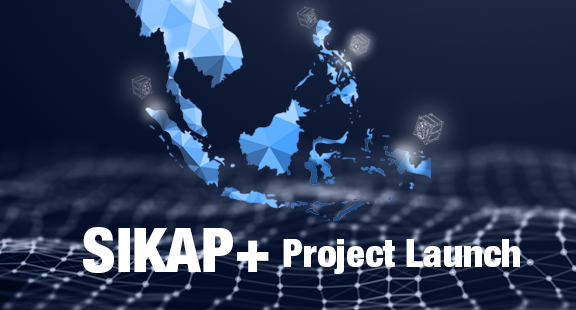

The Philippine Space Agency (PhilSA) recently launched SIKAP+, which stood for the Space Infrastructure, Know-How, and Applications Acceleration through Promotion and Training project, in aims to expand scientific research and cooperation among Asian nations. "In terms of space, the SIKAP+ aims to teach countries that are yet to work on space industry. We will teach them how to control a satellite, how to process data from it, how to establish amateur ground receiving stations to be used in communication," said Shielo Muta, Chief Science Research Specialist of PhilSA's Space Mission Control and Operations Division, in an interview with the Philippine News Agency last Wednesday. The Asi@Connect partners such as Bangladesh, Cambodia, Myanmar, and Nepal have already expressed interest in space technology. SIKAP+ also complements the Ground Receiving and Science Product Development (GRASPED) and the Space Science and Technology Proliferation through University Partnerships (STeP-UP) components of the STAMINA4Space Program. To recall, it is the space research and development program implemented by DOST-ASTI and UP Diliman intended to sustain the local scientific-industrial base for space technology and applications. "The project envisions creating a community among new entrants and existing space actors in the region by raising awareness about the benefits of space technologies for sustainable development that recognizes the varying levels of investments in each country," said PhilSA Space Information and Infrastructure Bureau Director Dr. Read more in our articles including "PH to teach other nations on space tech and best practices" and "Beyond Reliable and Fast Internet: PLDT Home Champions Safer Digital Spaces for Filipinos".

The Philippine Space Agency (PhilSA) recently launched SIKAP+, which stood for the Space Infrastructure, Know-How,…
May 29, 2022
Every day, millions of Filipinos go online to work, study, run businesses, connect with loved…
May 30, 2026
PLDT Enterprise continues to strengthen its position as a leader in innovative connectivity solutions through…
May 28, 2026
Adobe just introduced new AI-powered features in Adobe Acrobat, allowing users to turn PDFs into…
May 6, 2026
Adobe has launched Student Spaces in Adobe Acrobat, a new free beta feature made to…
Apr 9, 2026
The Ateneo de Davao University recently announced that they are opening enrollment for their new…
Aug 21, 2018The Philippine Space Agency (PhilSA) recently launched SIKAP+, which stood for the Space Infrastructure, Know-How, and Applications Acceleration through Promotion and Training project, in aims to expand scientific research and cooperation among Asian nations. "In terms of space, the SIKAP+ aims to teach countries that are yet to work on space industry.
We will teach them how to control a satellite, how to process data from it, how to establish amateur ground receiving stations to be used in communication," said Shielo Muta, Chief Science Research Specialist of PhilSA's Space Mission Control and Operations Division, in an interview with the Philippine News Agency last Wednesday. The Asi@Connect partners such as Bangladesh, Cambodia, Myanmar, and Nepal have already expressed interest in space technology. SIKAP+ also complements the Ground Receiving and Science Product Development (GRASPED) and the Space Science and Technology Proliferation through University Partnerships (STeP-UP) components of the STAMINA4Space Program.
Our coverage of space agency includes: "PH to teach other nations on space tech and best practices"; "Beyond Reliable and Fast Internet: PLDT Home Champions Safer Digital Spaces for Filipinos"; "PLDT Enterprise and Starlink Score Big in the Broadband Space". Each article provides unique insights and information.