

The Infinix HOT 70 is here, and it’s trying to shake up the entry-level segment again.
 It’s got a handful of features: smoother display, bigger battery, some fresh AI features. But beyond those, is it actually worth your money? Let’s all find out in this review.
Design and Construction
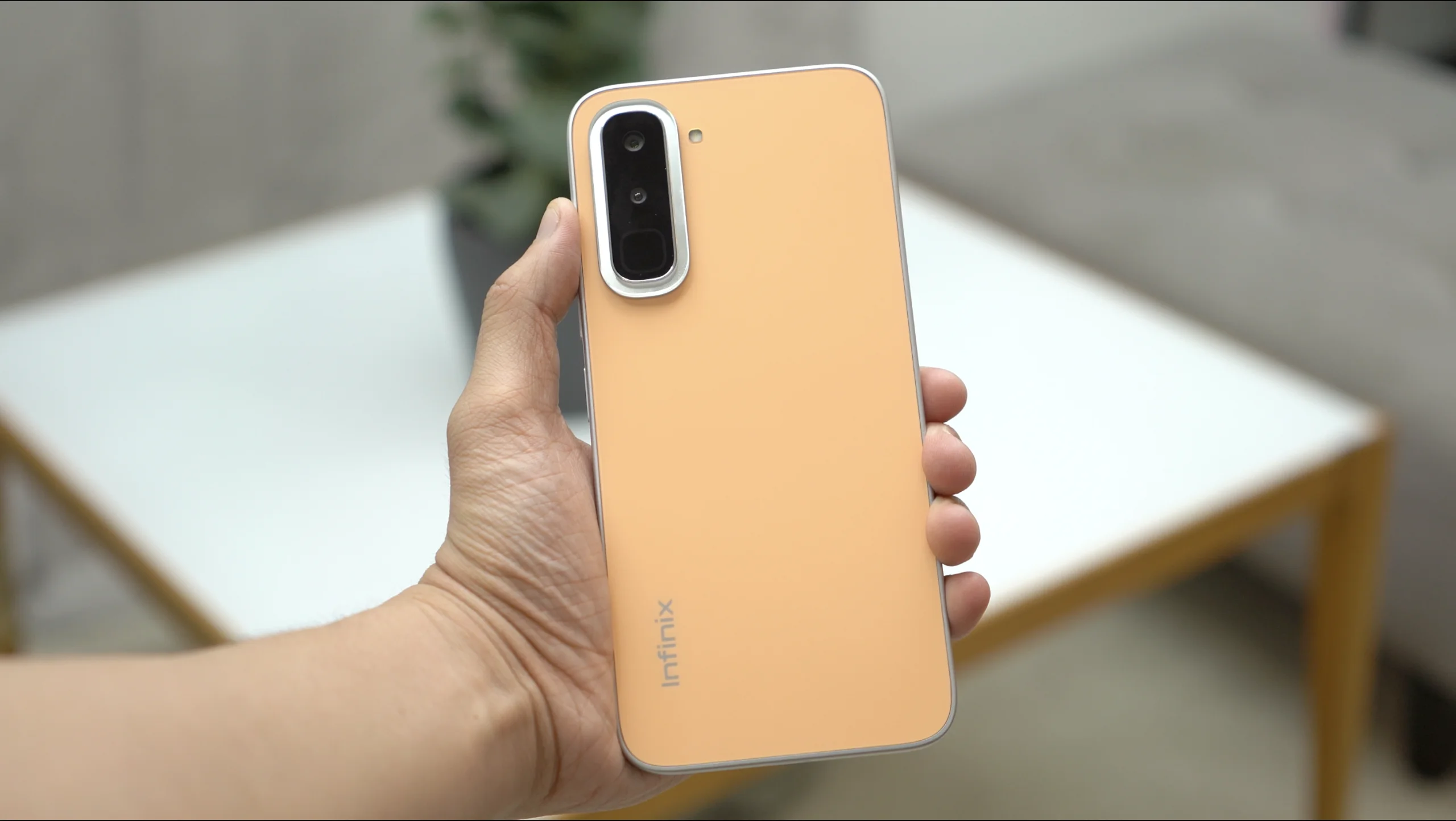
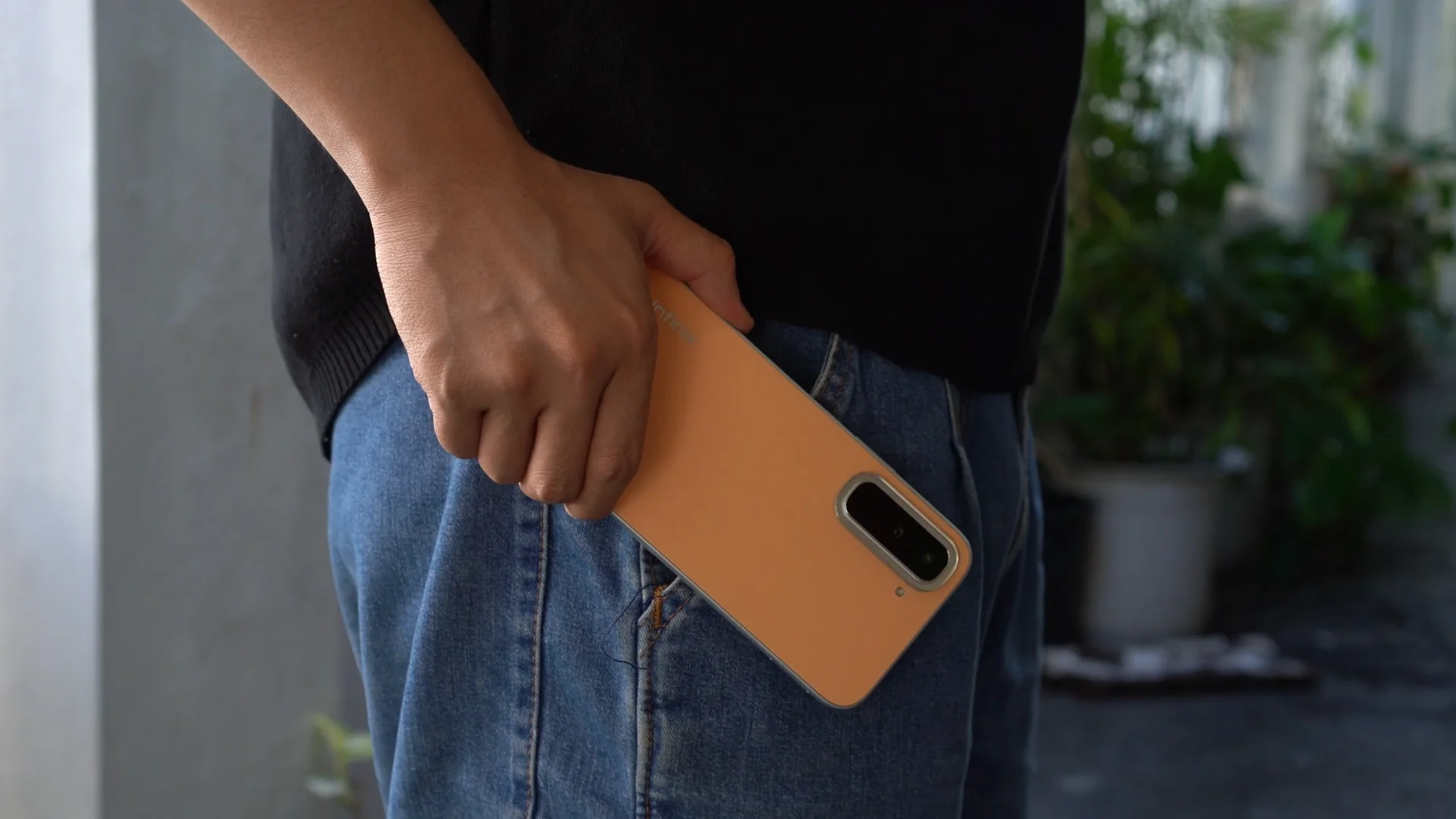
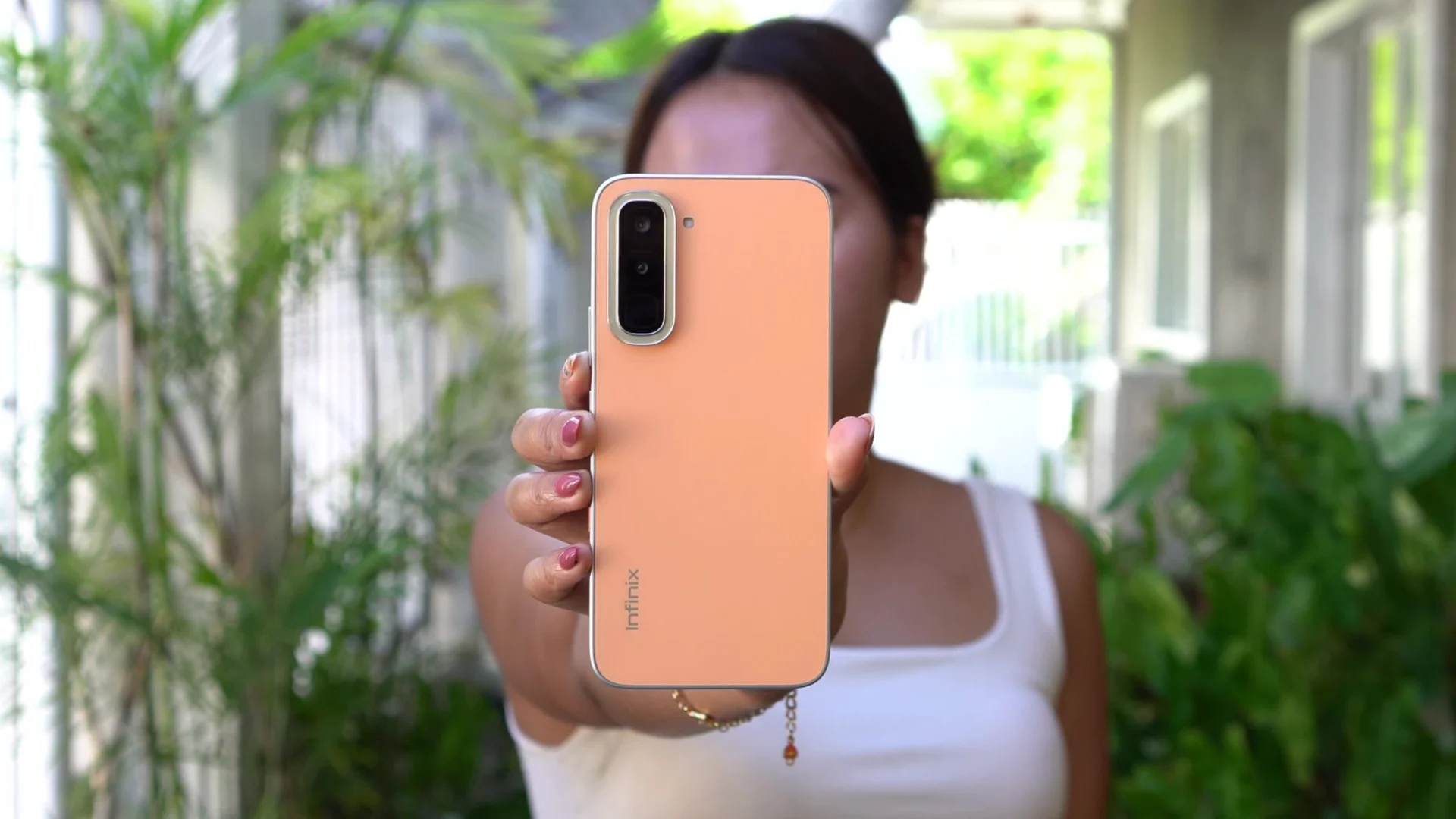
Let’s start with how it looks, and honestly, it’s not really my thing. I’m usually a minimalist guy, and this one’s got a bit too much quirk for my taste, especially that loud colorway.
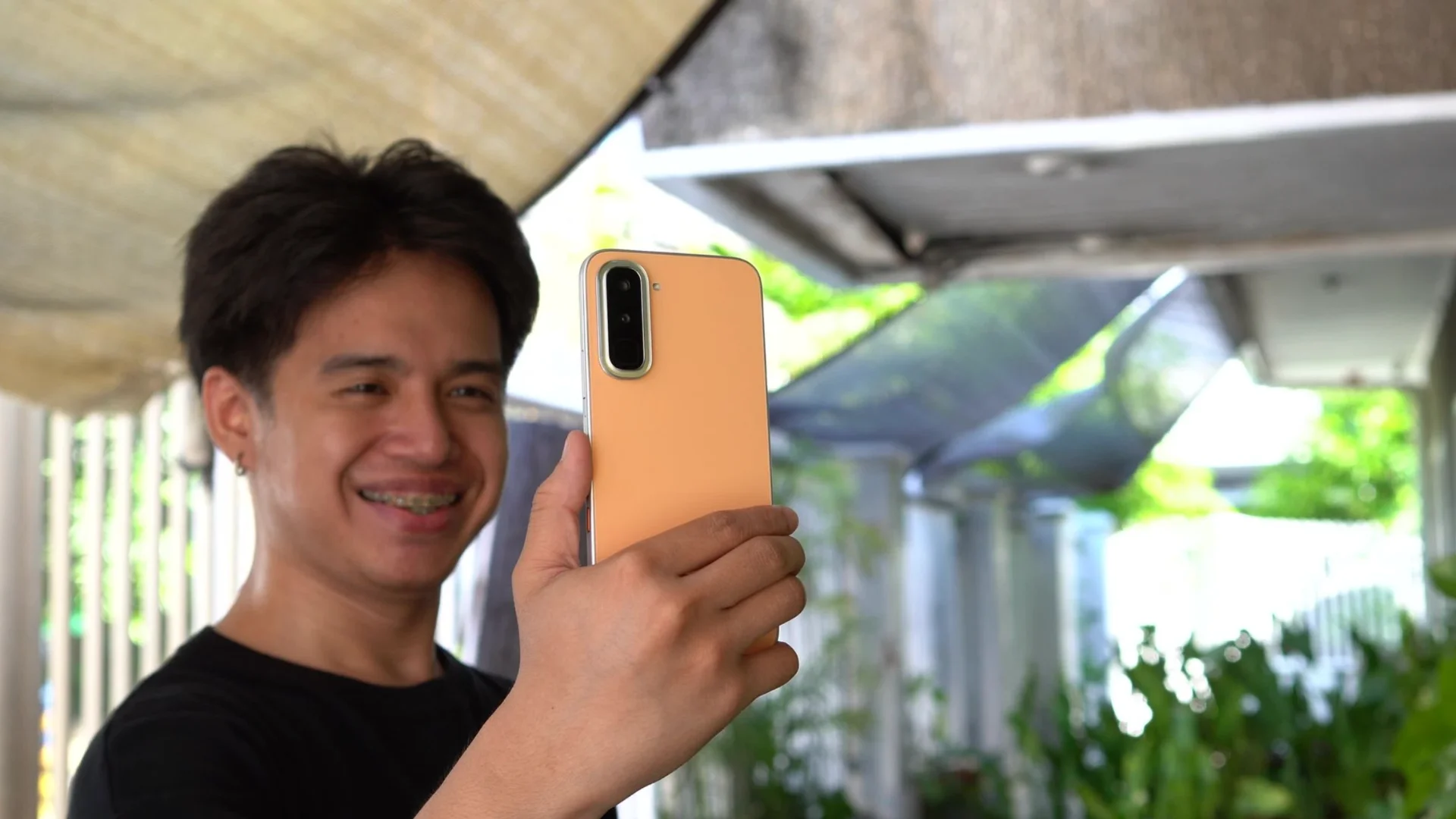
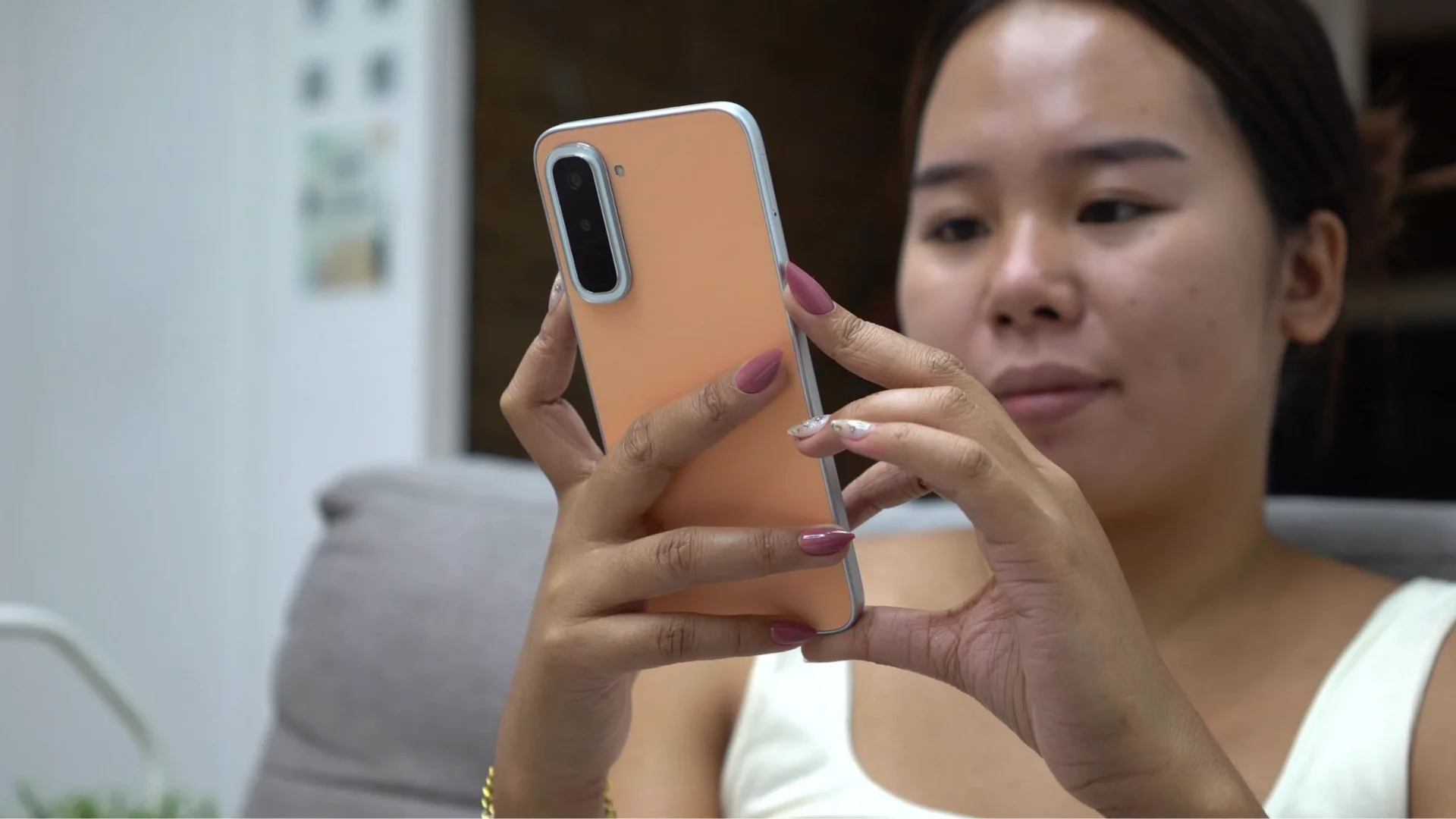
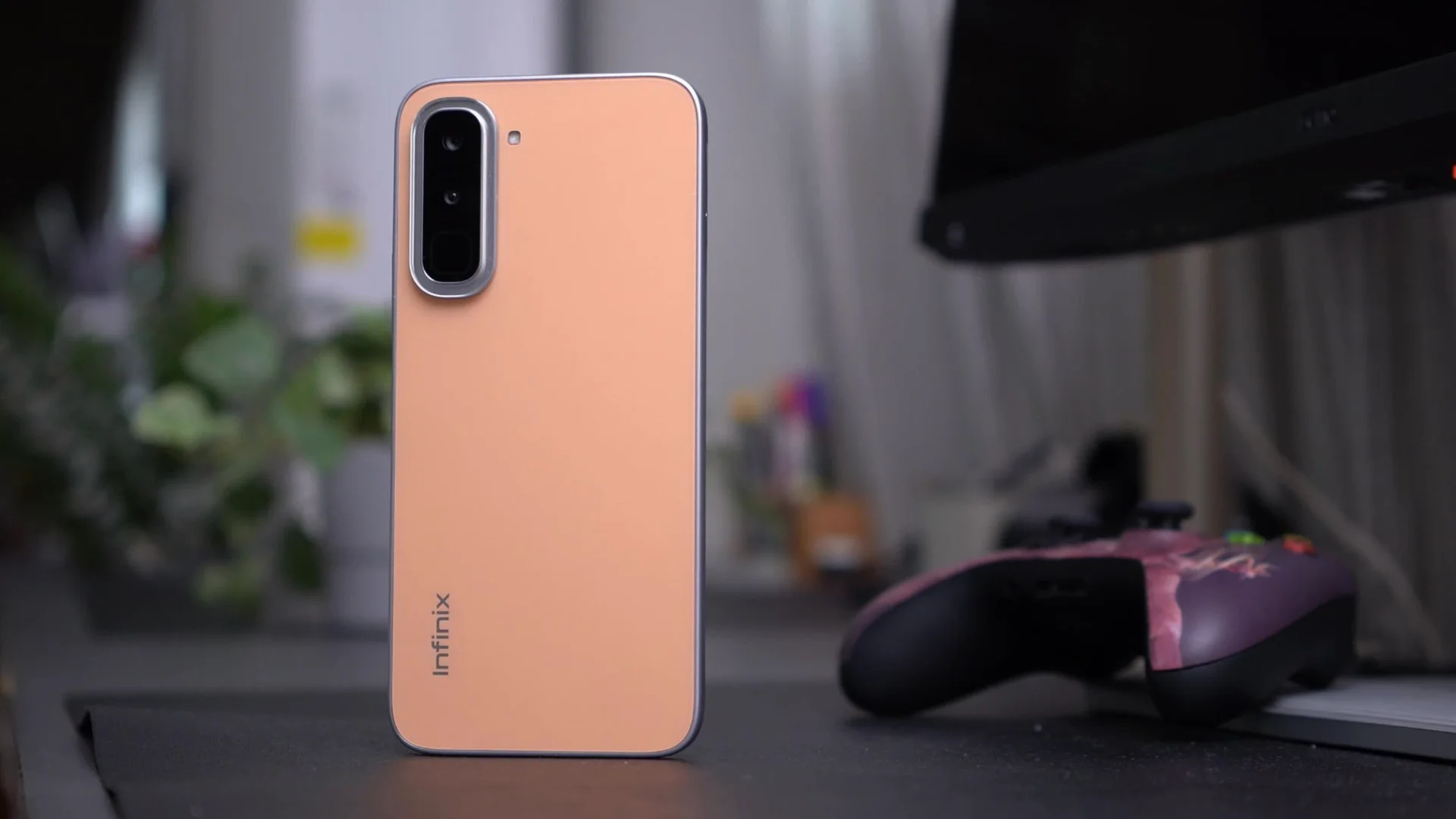 That said, this Thermo Orange unit has a neat trick, it changes the color intensity on the back depending on the temperature around you. Light Orange when it’s hot, and saturated Deep Orange if it’s cold. Such a feature isn’t typically found in budget phones, so Infinix gets some credit for that.
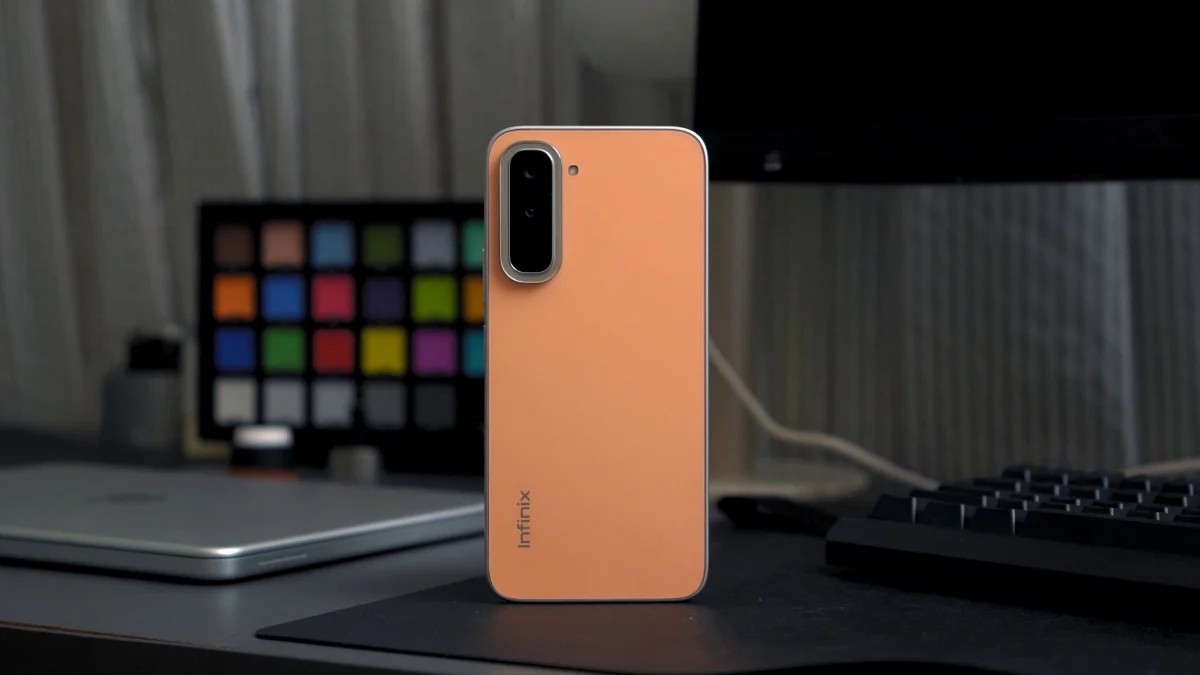 In the hand, it feels slim at 7.49 mm thin, and lightweight too, at 195 grams. It doesn’t look cheap at least from afar, although you can tell it’s plastic when you tap the back panel.
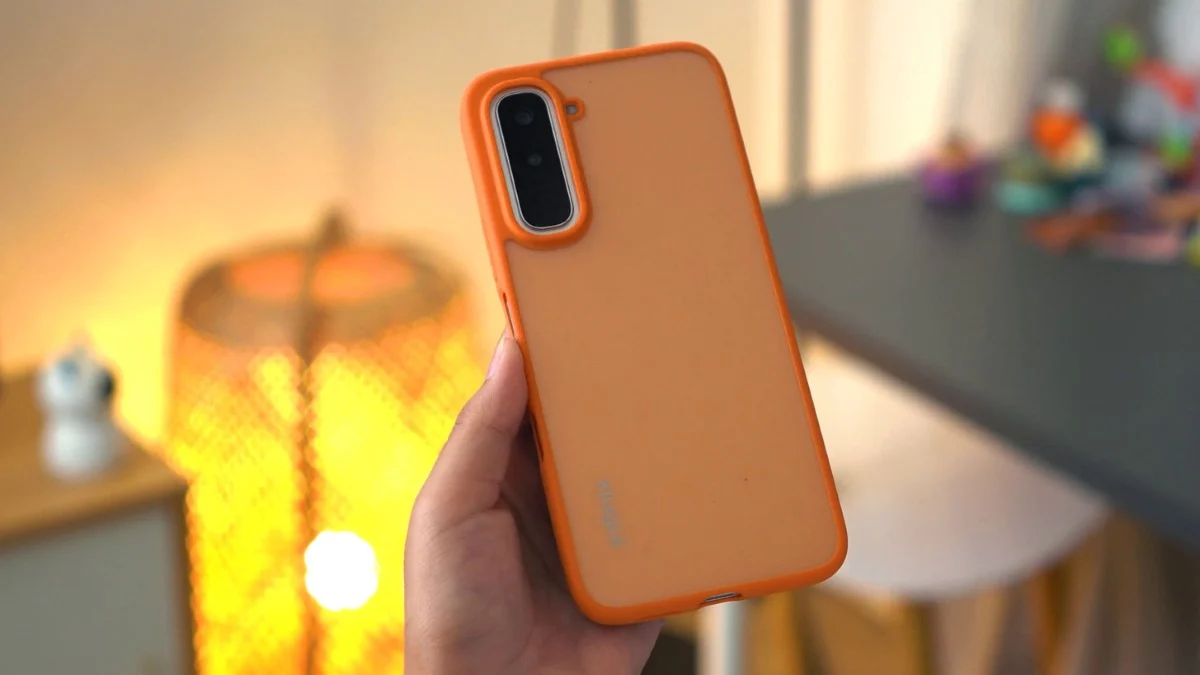 And here’s a nice surprise: when it comes to ingress protection, most budget phones stop at IP54, but this one’s rated IP65, so it handles dust and water splashes better. It’s also 5-Star SGS certified for drop protection, and Infinix throws in a TPU case in the box that actually matches the phone’s style.
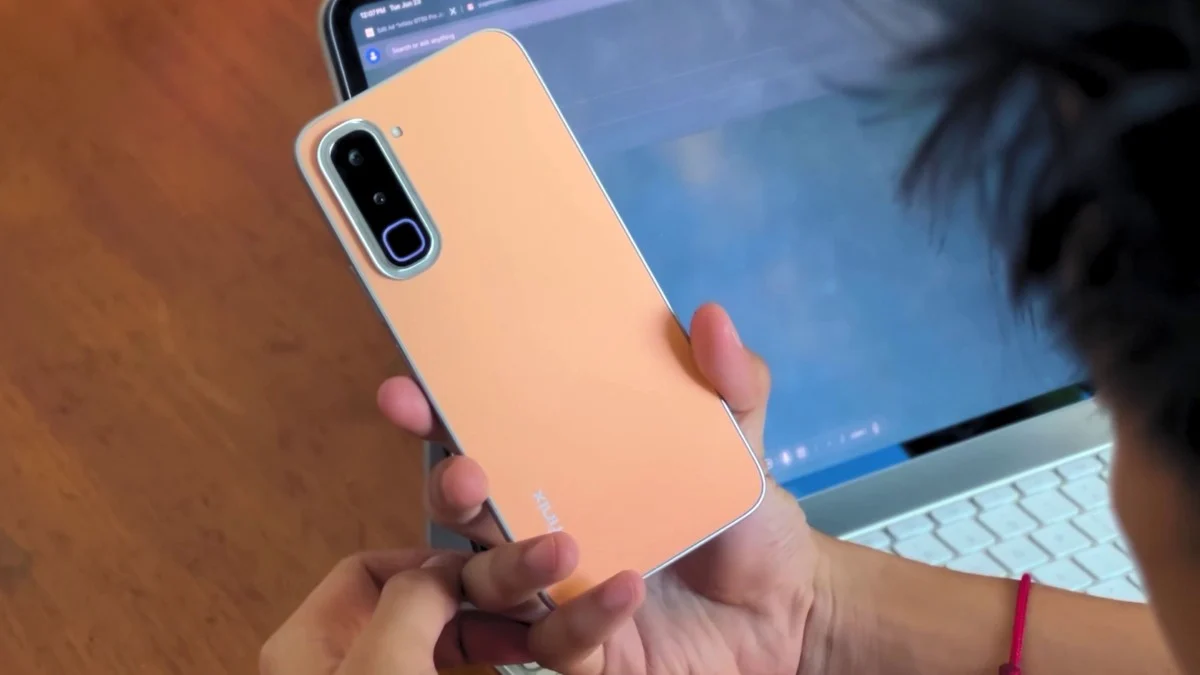 The camera island gives it some personality with those reflective modules, and the silver frame complements the loud orange color well.
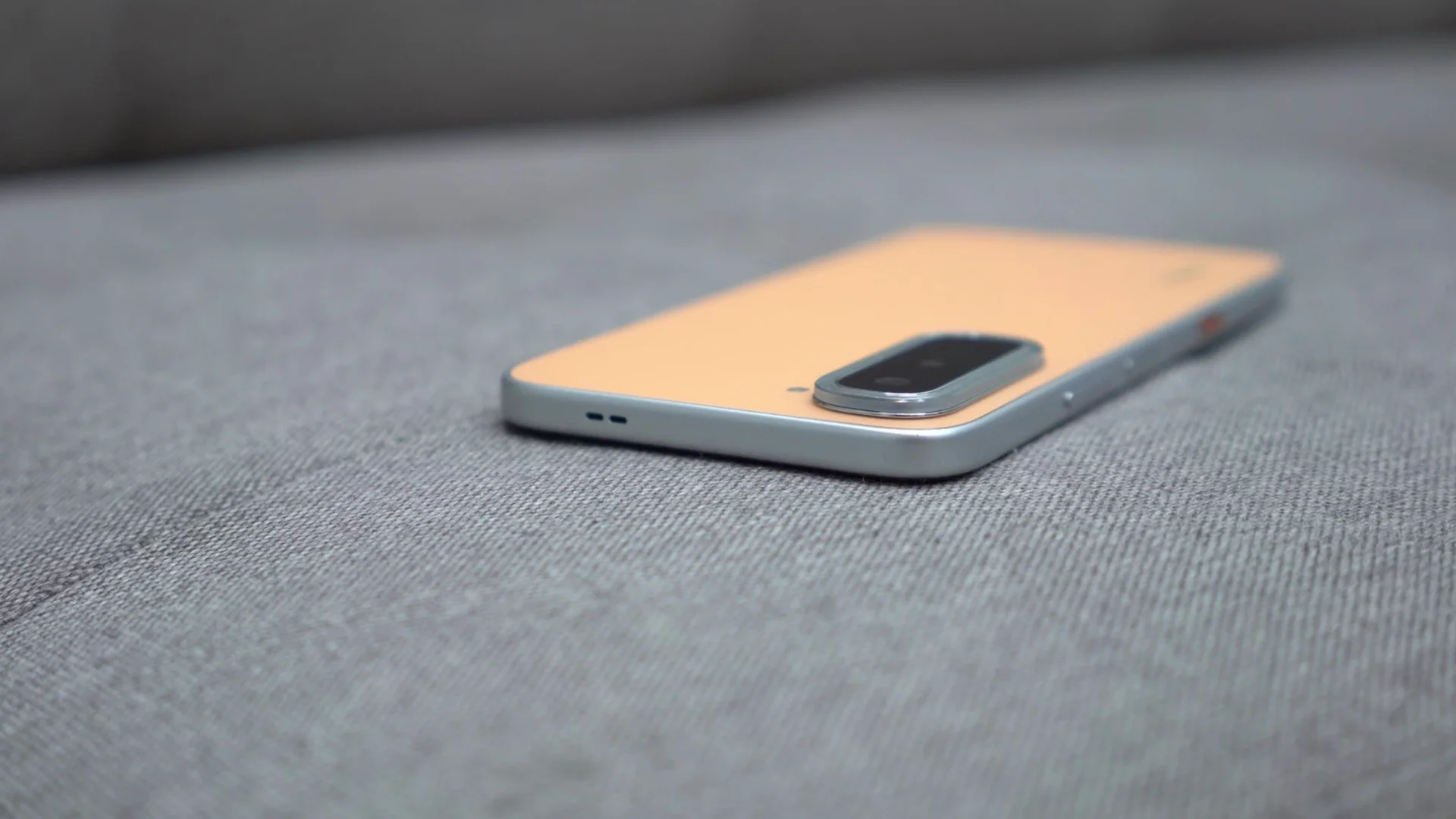
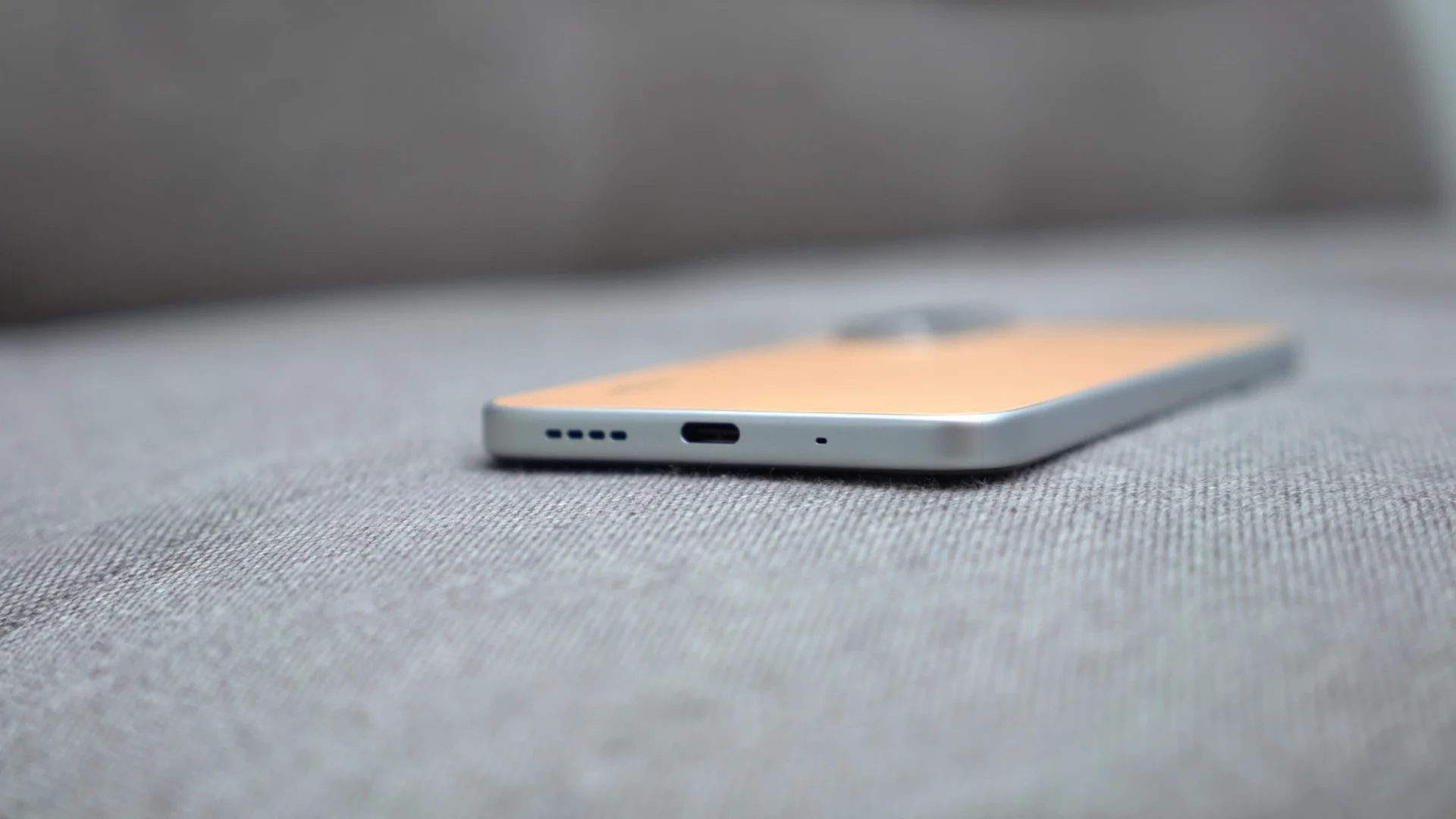
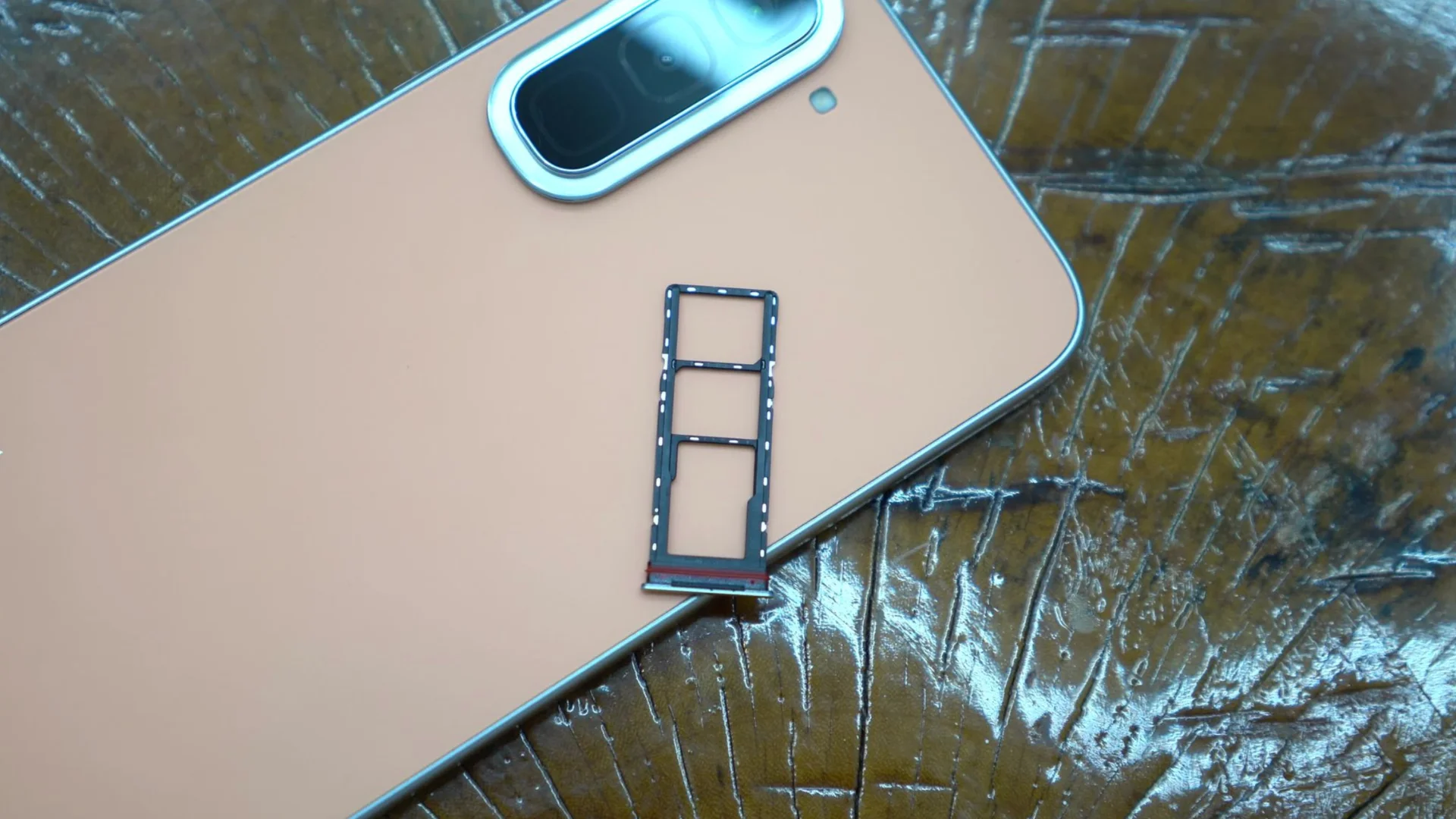
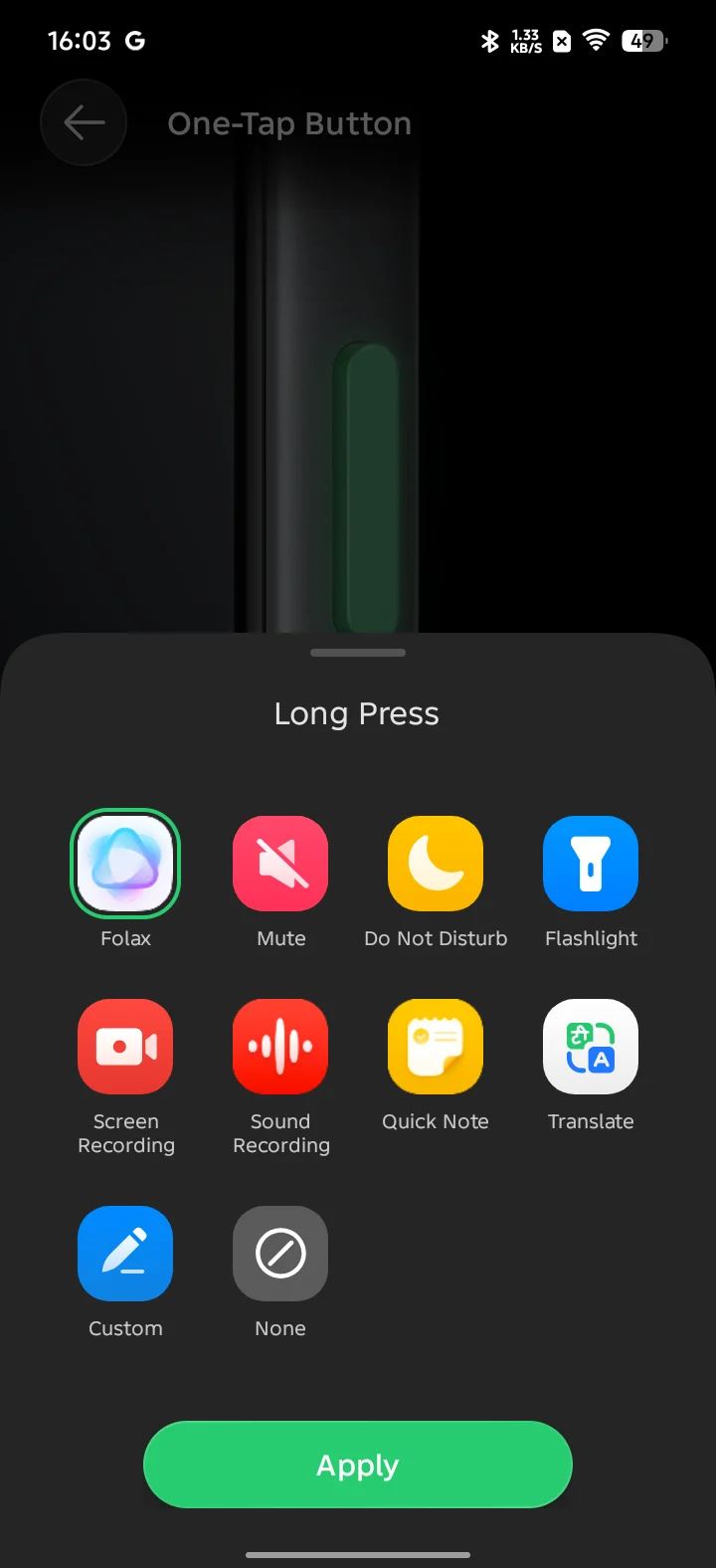
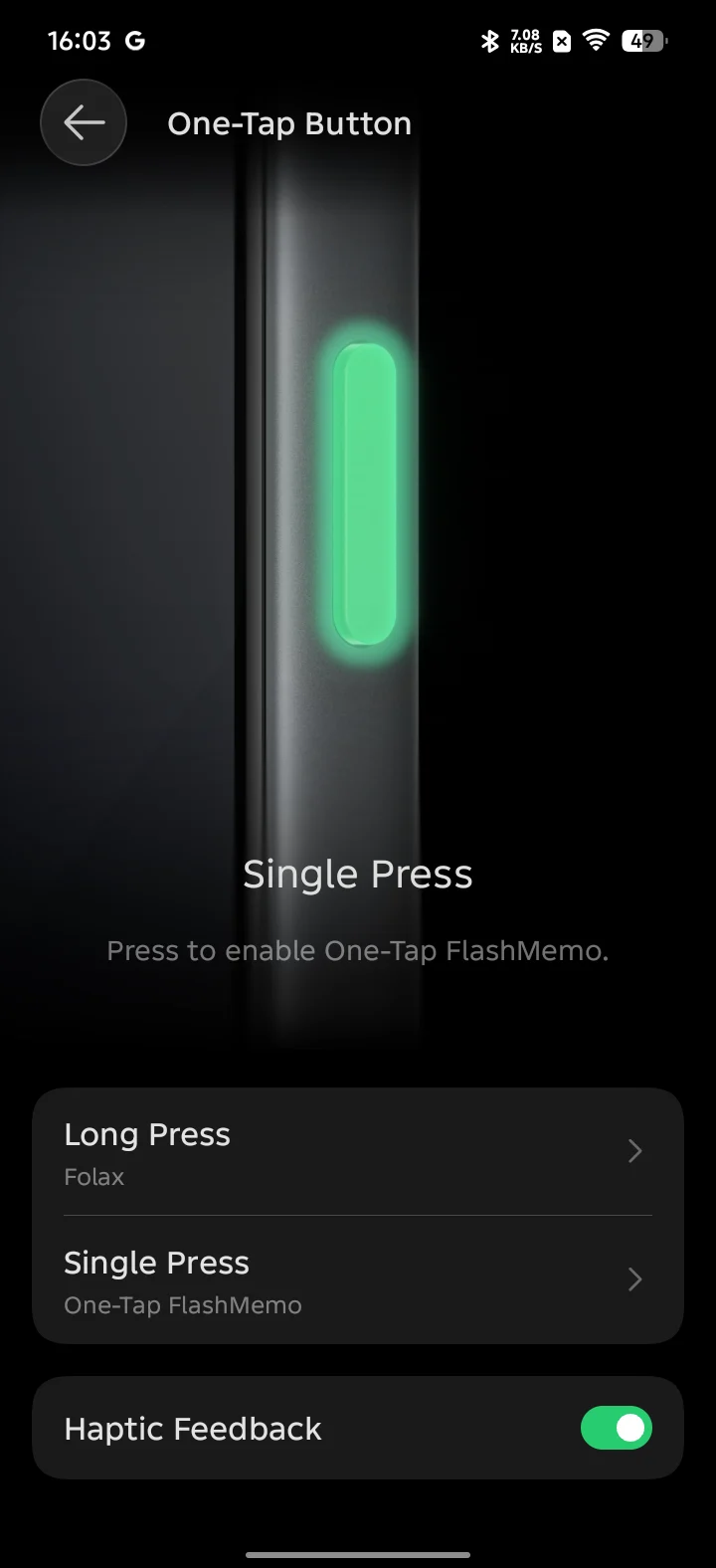
Around the sides, the power button doubles as the fingerprint sensor, alongside the volume rocker and an AI Tap button, are found on the right. The SIM tray with a dedicated microSD slot is on the left. Speaker up top, second speaker plus USB-C and mic on the bottom.
Display, Multimedia, and Biometrics
Now the display, and this is where you start to feel the compromises.
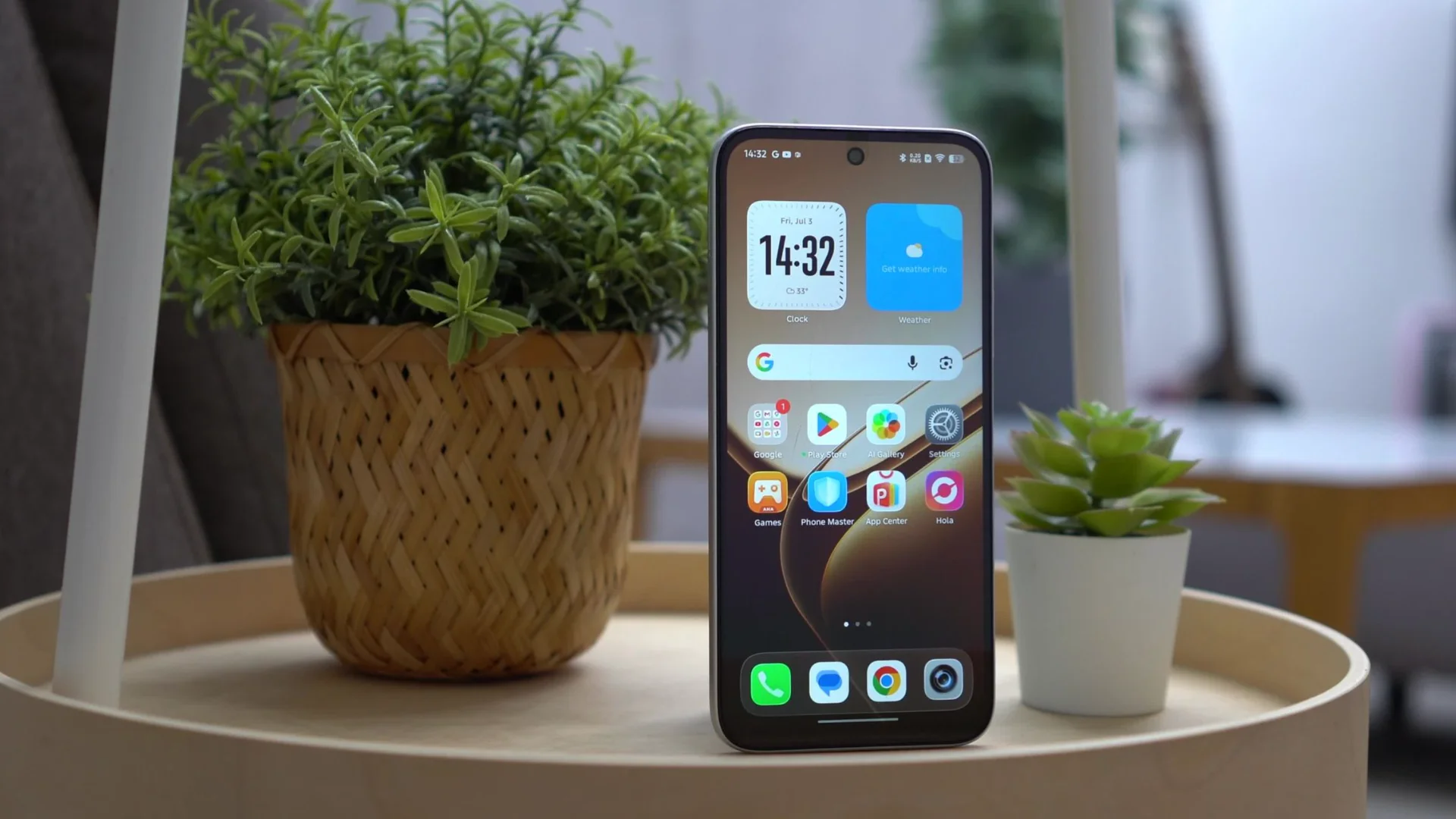 It’s a big 6.78-inch IPS LCD panel with 120Hz refresh rate, and honestly that 120Hz is one of the things I liked about this phone. Scrolling feels smoother, and for everyday stuff like browsing, chatting, and watching short clips, it makes a real difference.
 But here’s the catch: the screen is only 720p, so text and images aren’t as sharp as you’d get on a Full HD panel. You’ll feel it most if you read a lot, zoom into photos, or stream higher-res video. For stuff like doomscrolling on socials, watching YouTube, or messaging, though, it’s still totally fine.
 Brightness gets up to around 700 nits in high brightness mode, so it’s okay indoors and still readable outdoors.
Colors look decent, and the size makes it comfortable for longer viewing sessions. My one complaint though: the bezels are thick, especially that chin.
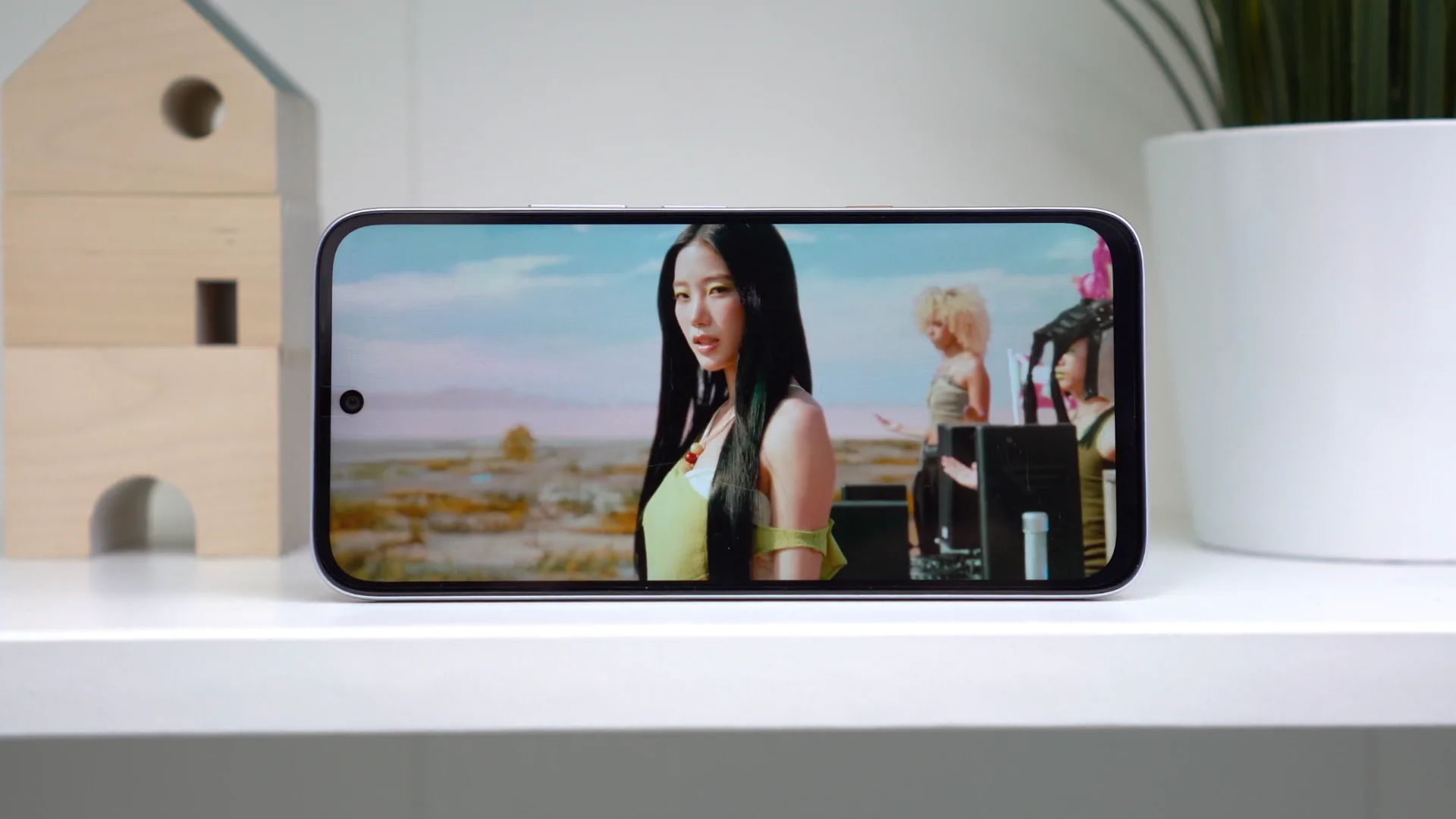 Audio-wise, it’s acceptable. Not the punchiest speakers out there, but it’s loud, and the dual stereo setup does the job.
 For biometrics, you get face unlock and a fingerprint scanner. Both work fine most of the time, but every now and then you’ll notice a bit of lag. And like always, we recommend opting for the fingerprint sensor since it’s relatively more secure than face unlock.
Cameras
Onto cameras, the Infinix HOT 70 carries a 50MP main and an 8MP selfie camera.
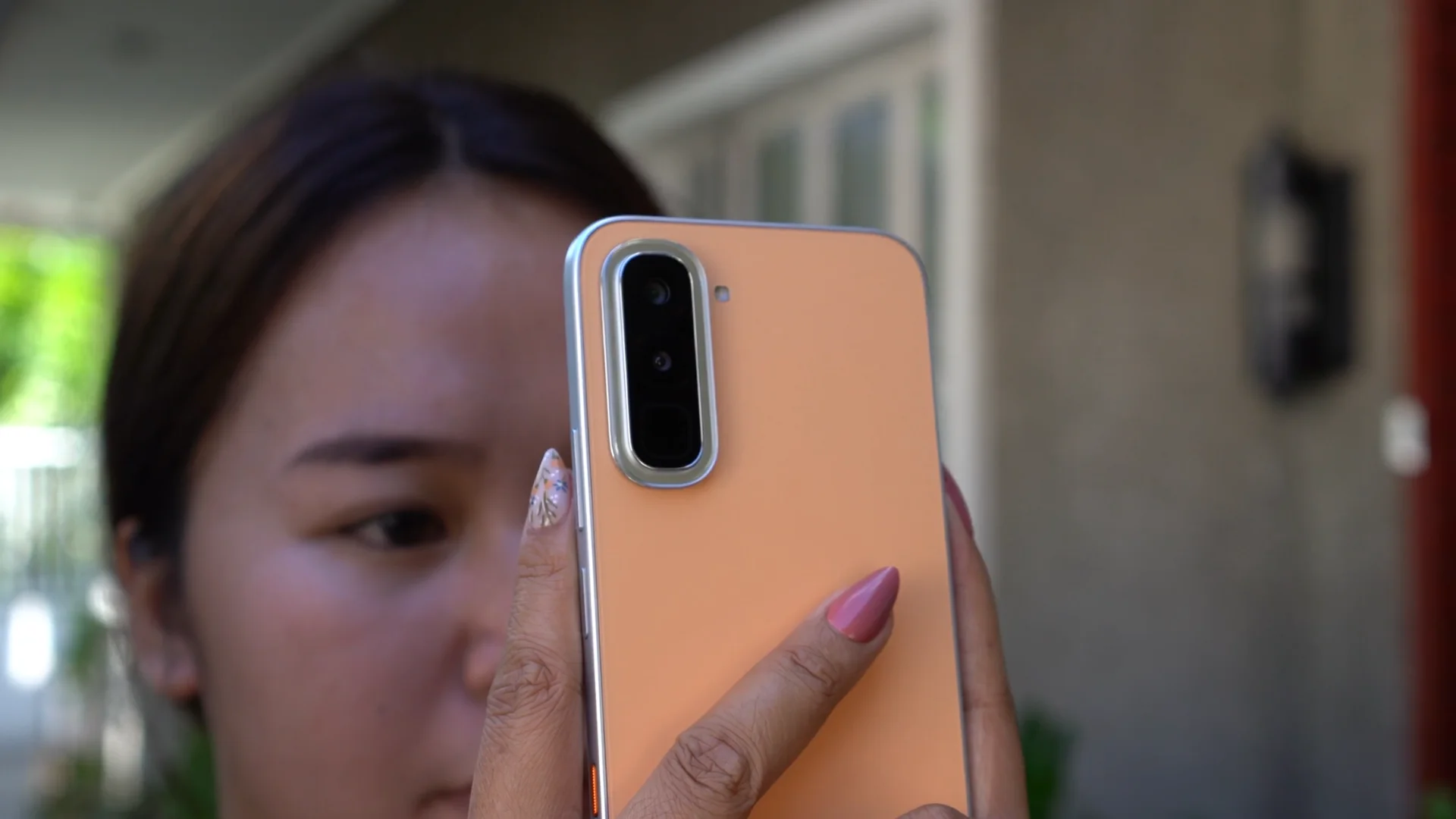
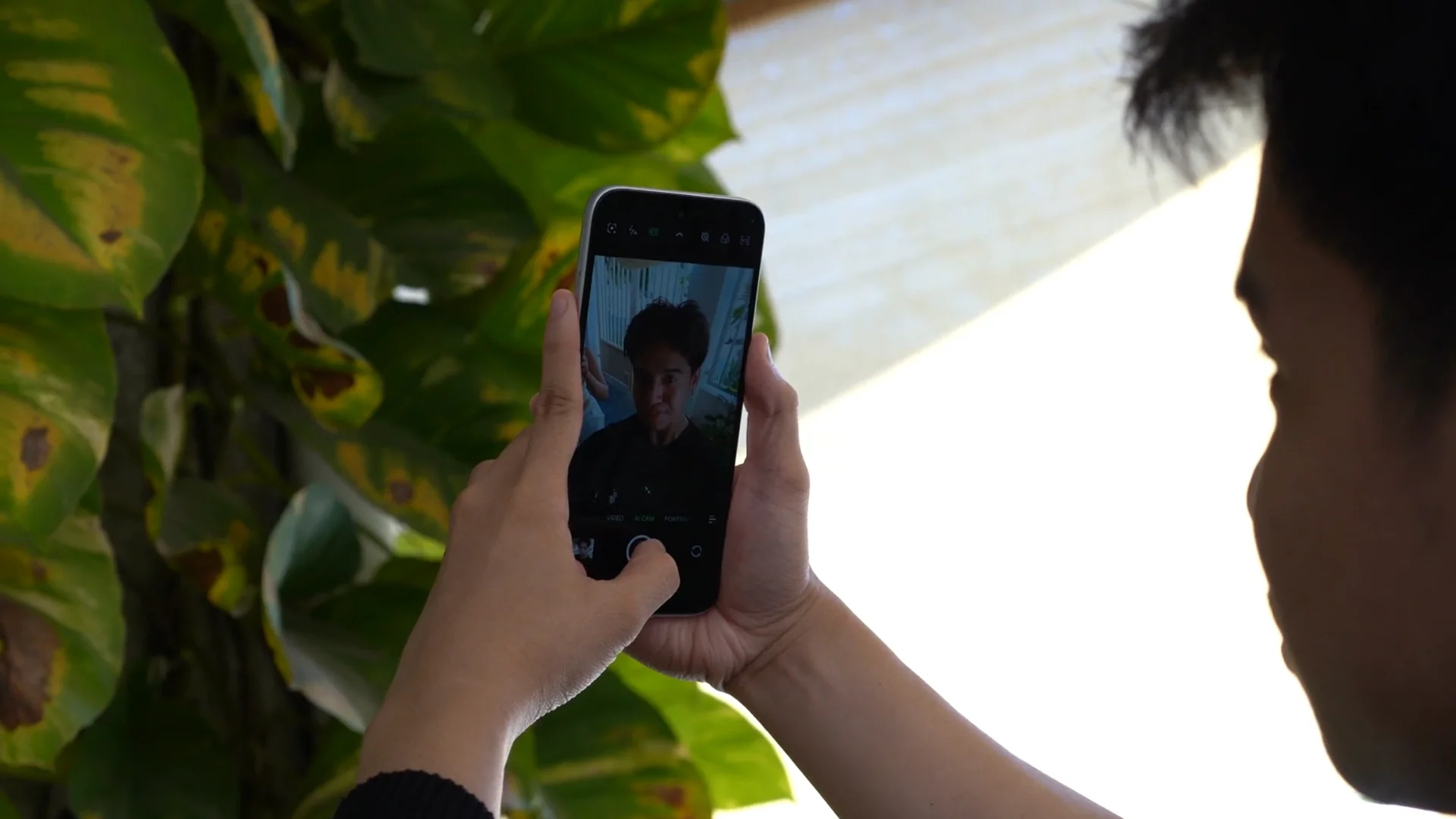
It’s pretty much what you’d expect from a phone in this range. In daylight, the rear camera does well, colors pop without looking fake, and there’s enough detail for social media. Autofocus is quick too, so you’re not waiting around for a couple seconds to take the shot.
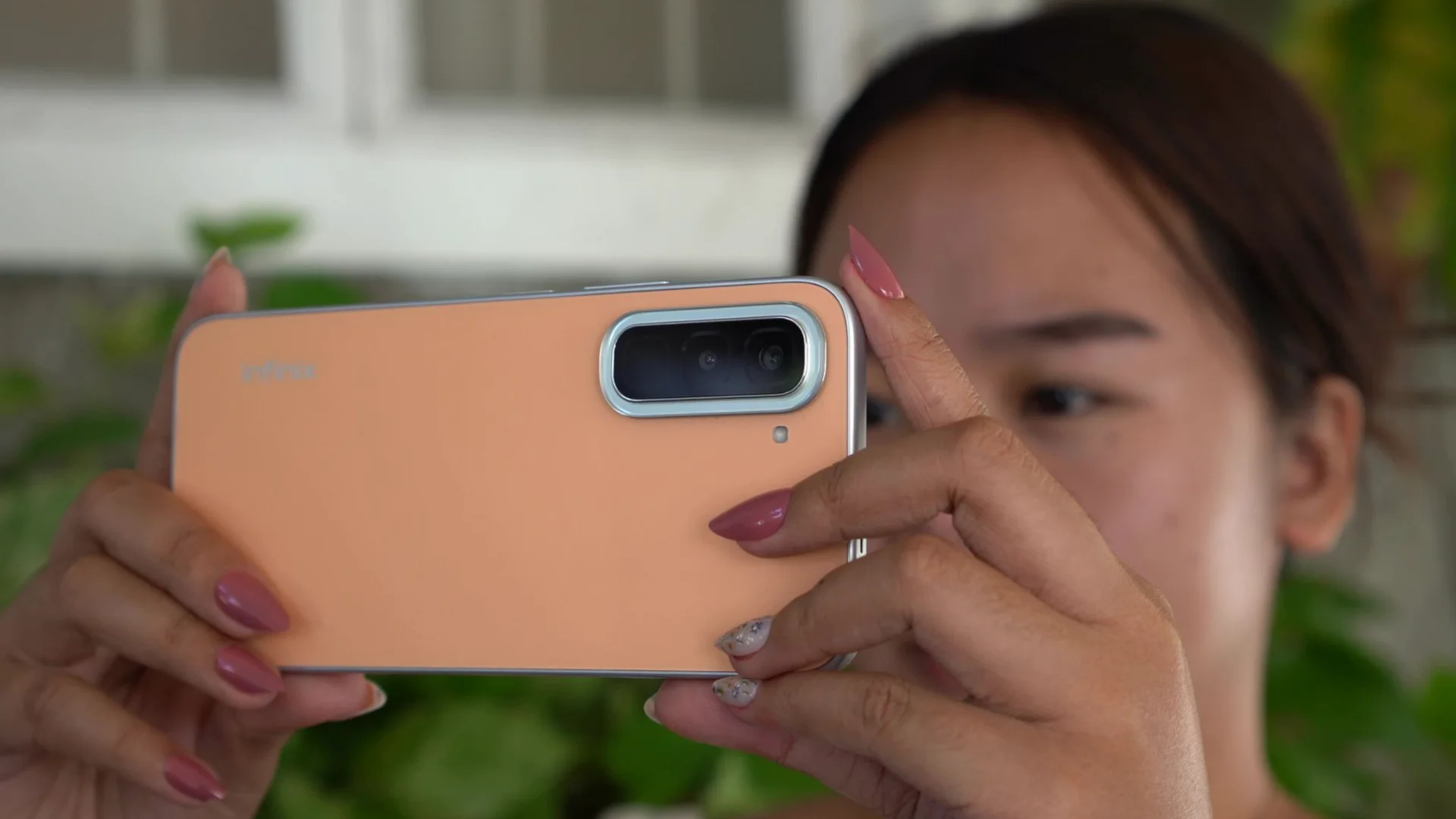 Portrait mode is slightly a hit-or-miss when it comes to separating the subject cleanly from the background.
Once it gets dark, though, you start seeing its limits. No optical stabilization means shots can come out soft if your hands aren’t steady, and you’ll notice more grain, especially in darker areas.
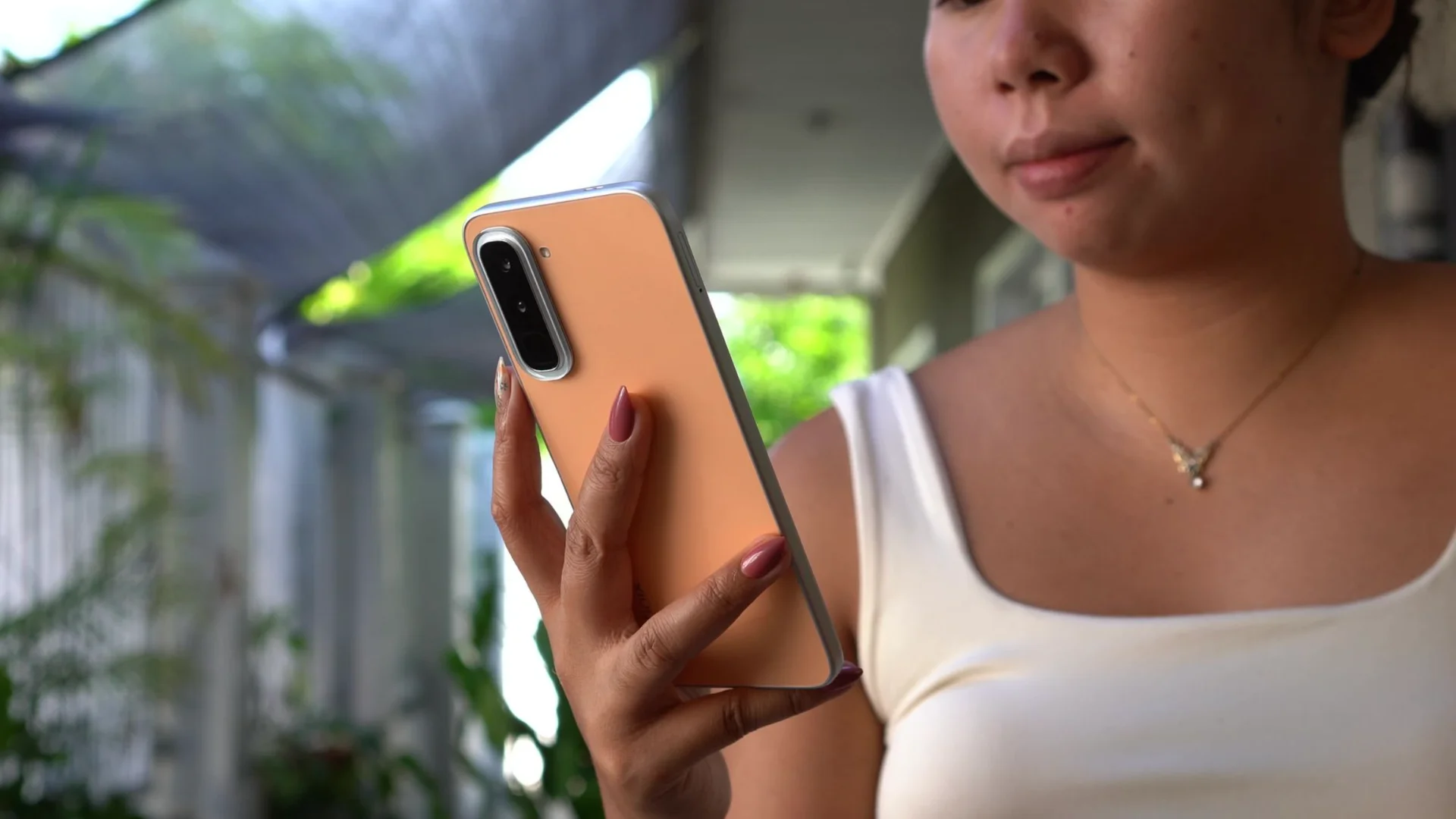 Front camera’s fine in good lighting, good enough for calls or social media posts, but don’t expect flagship-level sharpness.
Surprisingly, video maxes out at 2K 30fps front and back. The overall video quality is okay. It can look a little shaky handheld, so grab a tripod if you can, and the color tends to lean slightly cool, but nothing too distracting.
Bottom line, these cameras aren’t trying to fight flagships , they just get the job done for basic everyday photography.
Infinix HOT 70
Jun 21 – Jul 6


Performance and Benchmarks
Performance’s respectable, though it WILL show some strain the longer you push it.
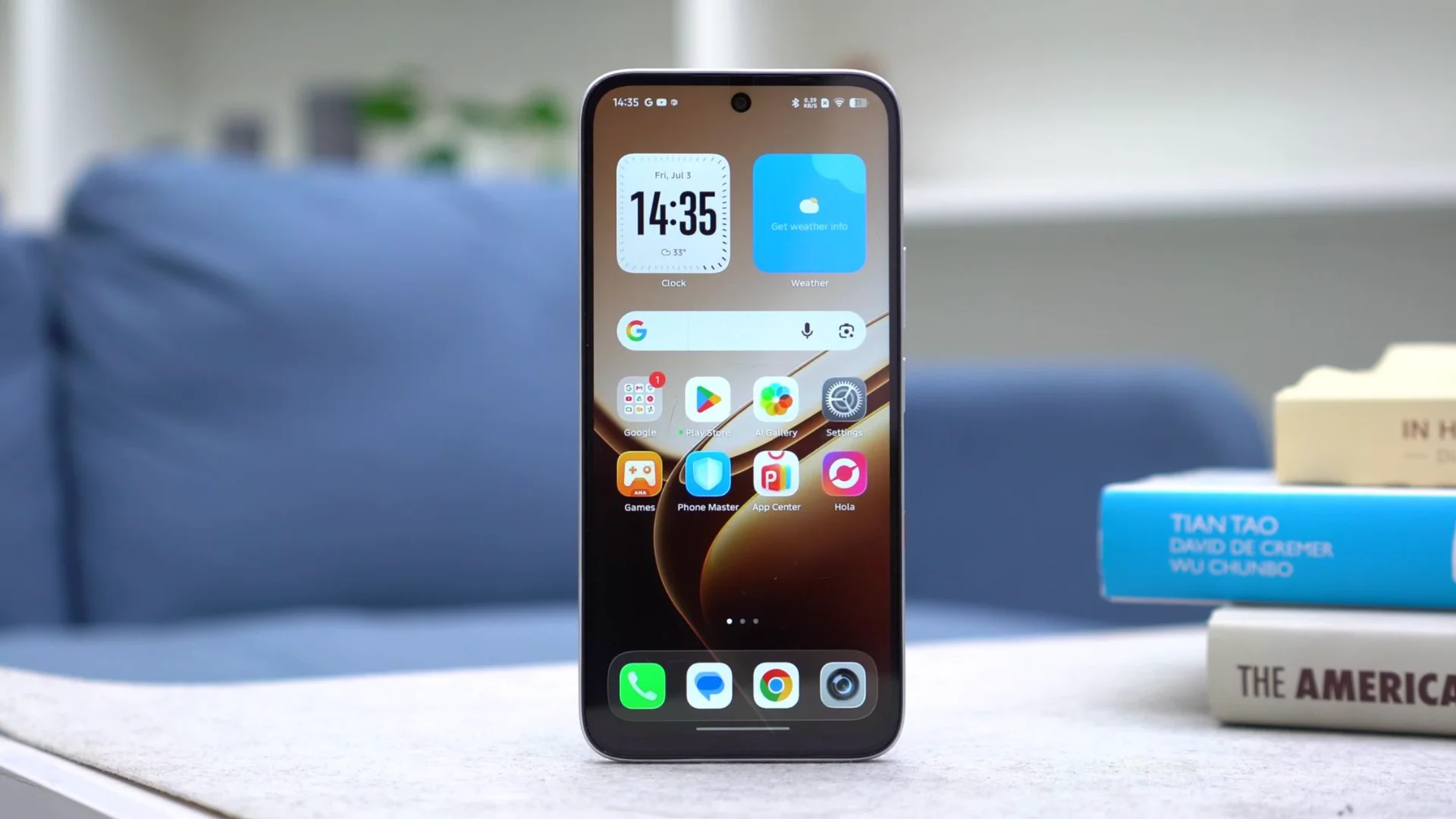 Under the hood is a MediaTek Helio G100 Ultimate with our unit packing 4GB of RAM and 128GB storage, expandable up to 2TB, which is nice to have.
 Day to day, it runs smoothly. Juggling multiple apps is definitely possible. However, with a limited amount of memory, expect it to reload apps in the background from time to time.
In AnTuTu Version 11, it scored close to 500K which is decent for the specs. For those interested, I’ll have the rest of the benchmark numbers down below.
| AnTuTu V11 | 467,795 |
|---|---|
| AnTuTu Storage | 58,822 |
| Seq Read | 976.2 MB/s |
| Seq Write | 897.9 MB/s |
| Geekbench Single-Core | 718 |
| Geekbench Multi-Core | 1,652 |
| Geekbench Vulkan | 1,726 |
| Geekbench OpenCL | 1,675 |
| PCMark Performance | 9,200 |
| PCMark Battery Life | 22 Hours and 51 Minutes |
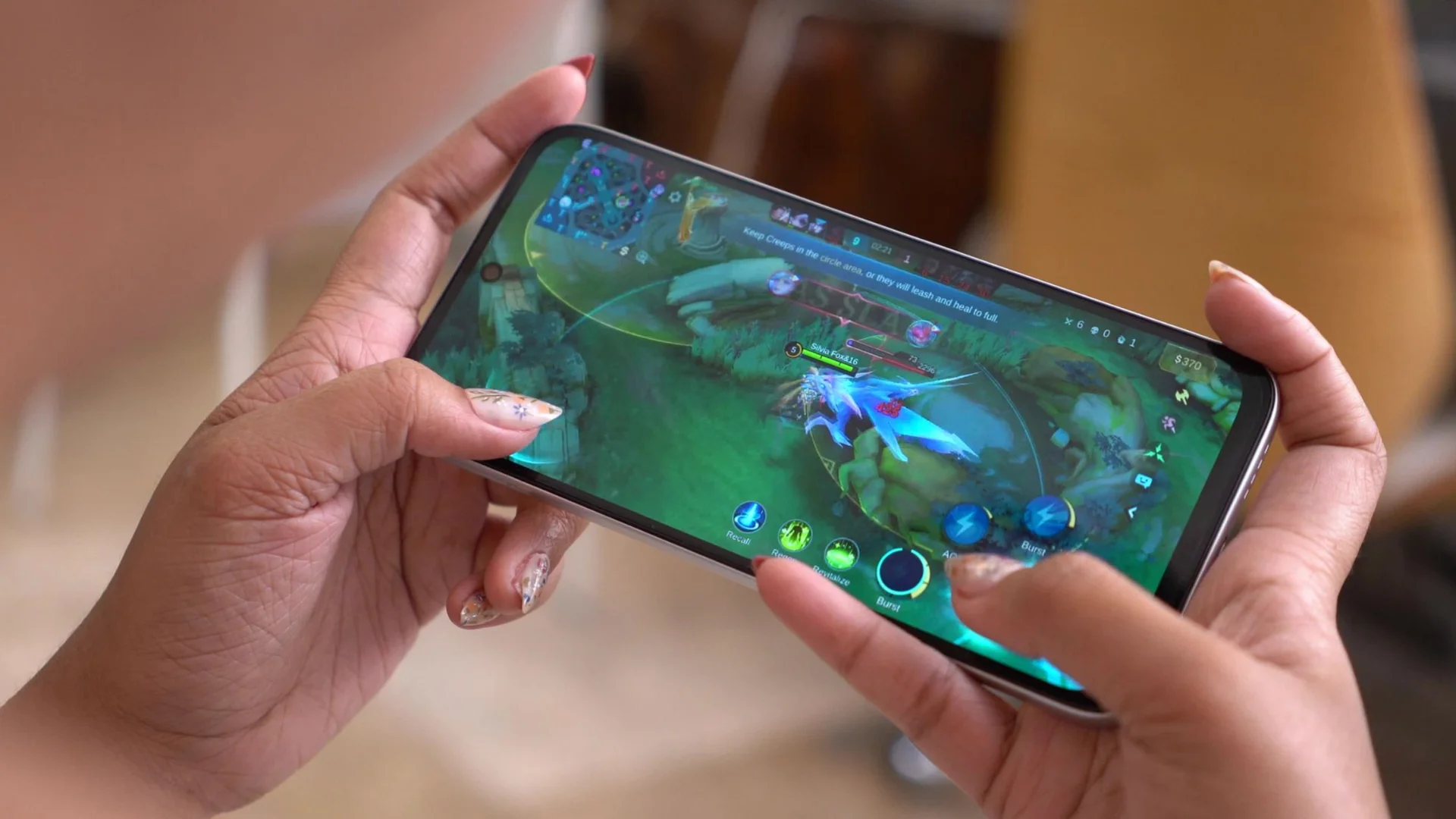
Gaming’s pretty decent, too. Mobile Legends and Call of Duty Mobile ran well even with graphics and frame rate settings cranked up to High. There were no noticeable stutters, until I played graphic-intensive titles.
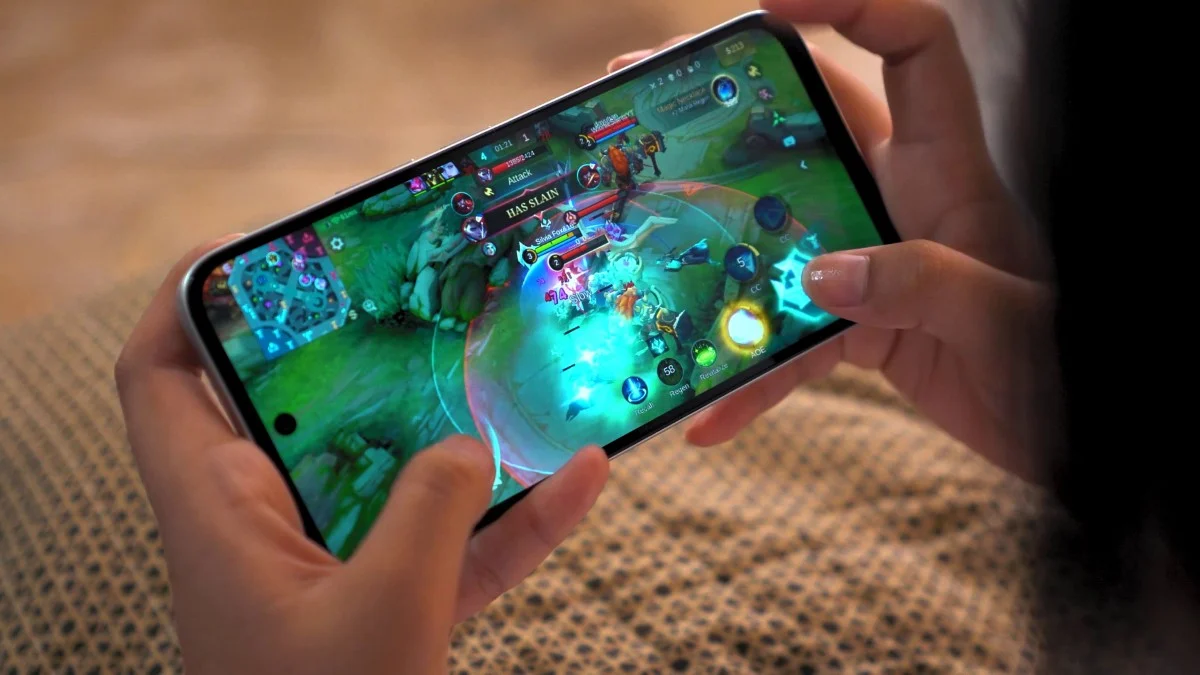 For games like Genshin Impact and Wuthering Waves, you’ll hit some hiccups, which makes sense given the specs. It also warmed up a bit during testing as expected, but not to an alarming amount.
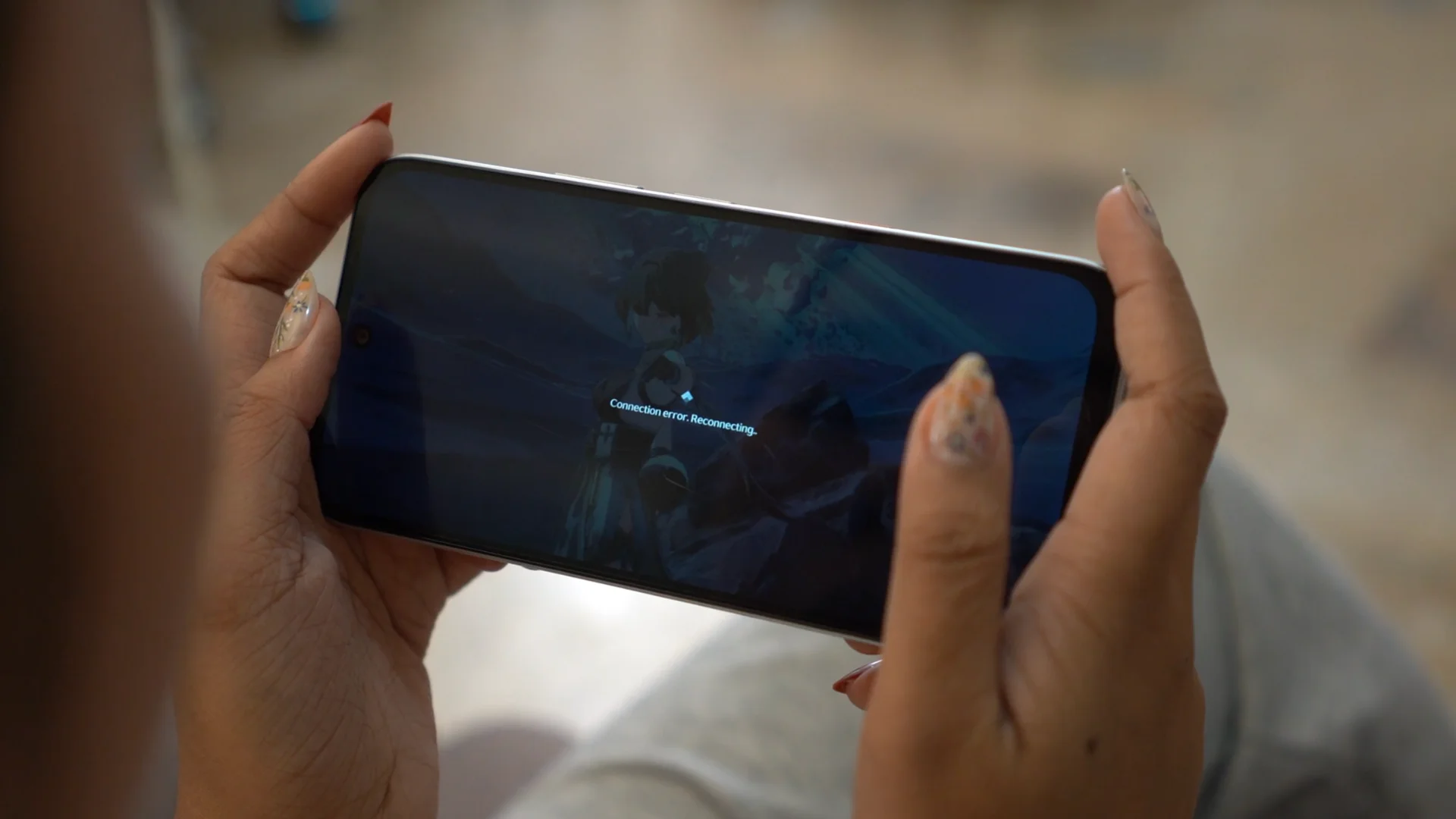 Nonetheless, it’s still gonna do fine for lighter games, besides, this isn’t really designed for gaming. So, you’d really have to set expectations here.
OS, Apps, and UI
Next, let’s talk about its software and this is where, I think, Infinix deserves some praise.
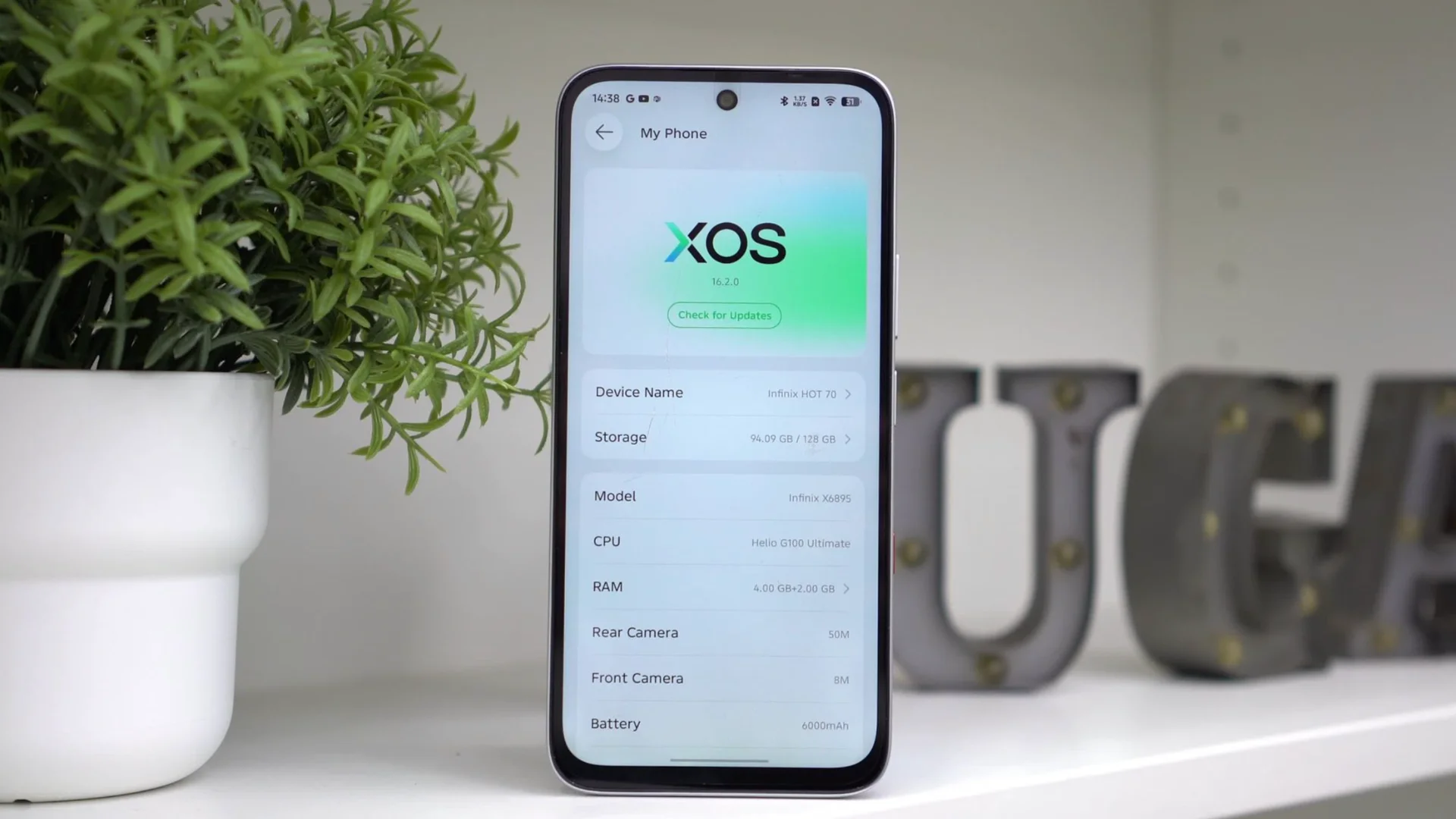 It’s running XOS 16 on top of Android 16, and it feels genuinely polished for an entry-level phone. Tons of customization: lock screen, clock styles, icons, wallpapers, you name it.
There’s some fun stuff too, like the depth effect on the lock screen and AI wallpapers that make it feel a little bit premium in a sense. While the whole UI takes some heavy inspiration from iOS, Infinix keeps it consistent across the system. So, it’s honestly surprising how well they’re able to recreate the look at least, and for a budget phone by the way. The feels? it isn’t quite there yet.
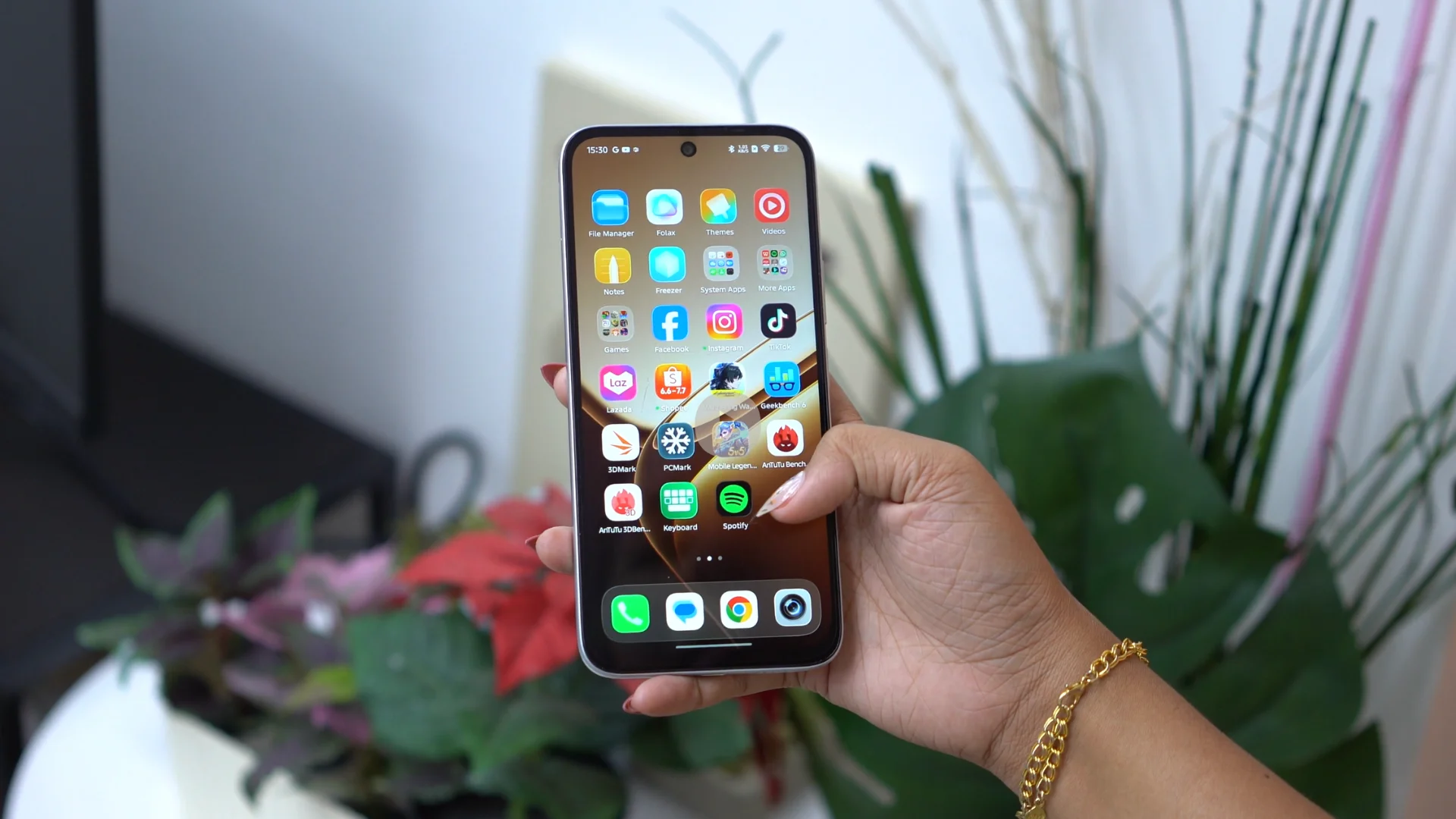 It’s still pretty heavy on bloatware as well, but you can just remove them if you will.
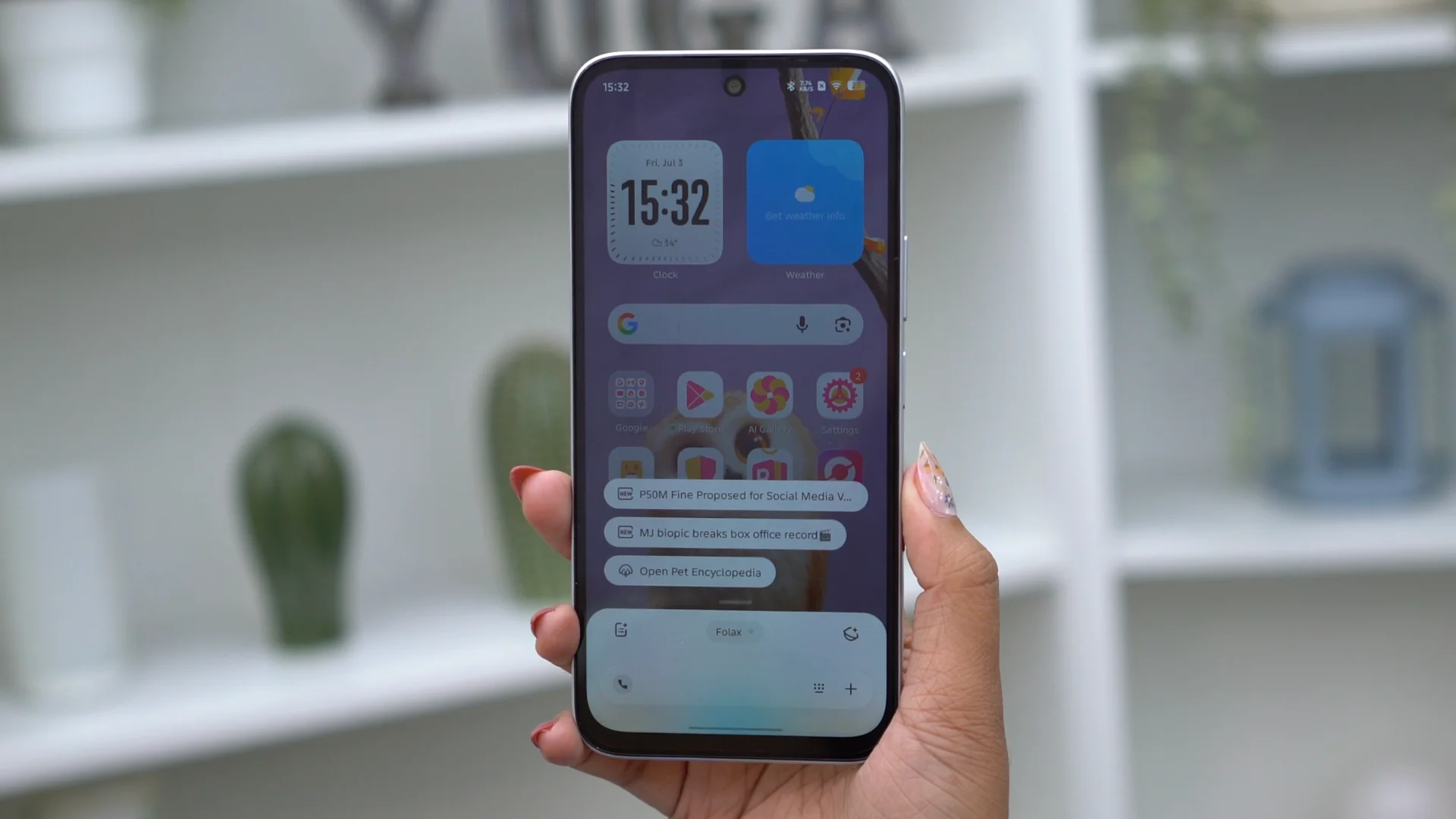 Folax, Infinix’s AI Assistant, is present here as well for a more productive and smoother performance when juggling numerous task.
It also features some AI tools baked into Gallery, Camera, Themes, and Calendar, but the standout for me is the One-Tap AI button. Looks like a simple screenshot button at first, but instead of just saving the image, it sends it to the so-called “AI MindHub,” which reads what’s on screen and pulls out useful stuff like emails, dates, and events, so you can save or use it right away.
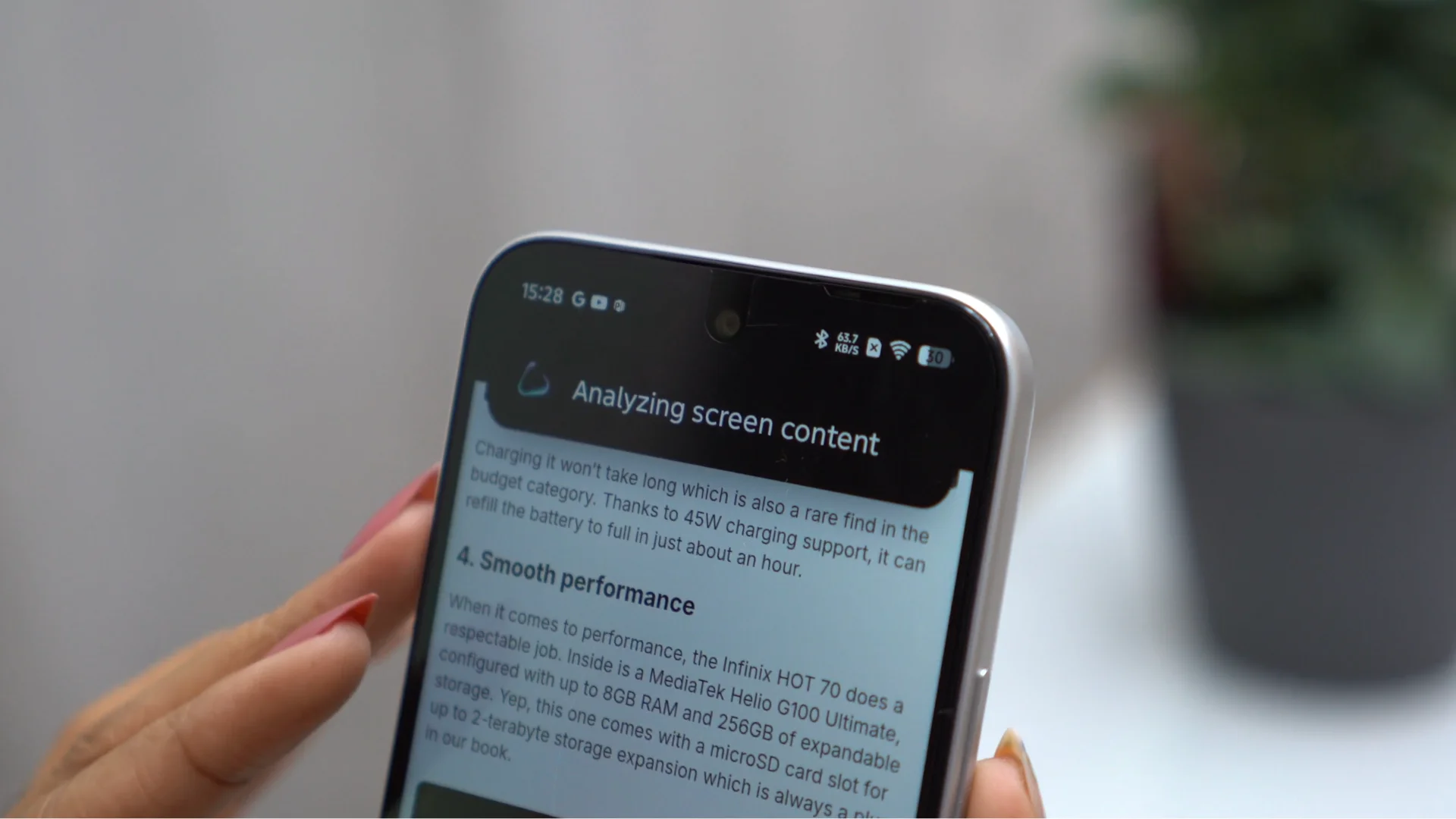 That’s a first for the HOT series, and honestly it’s the kind of feature you don’t expect at this price. It adds real value to the software side.
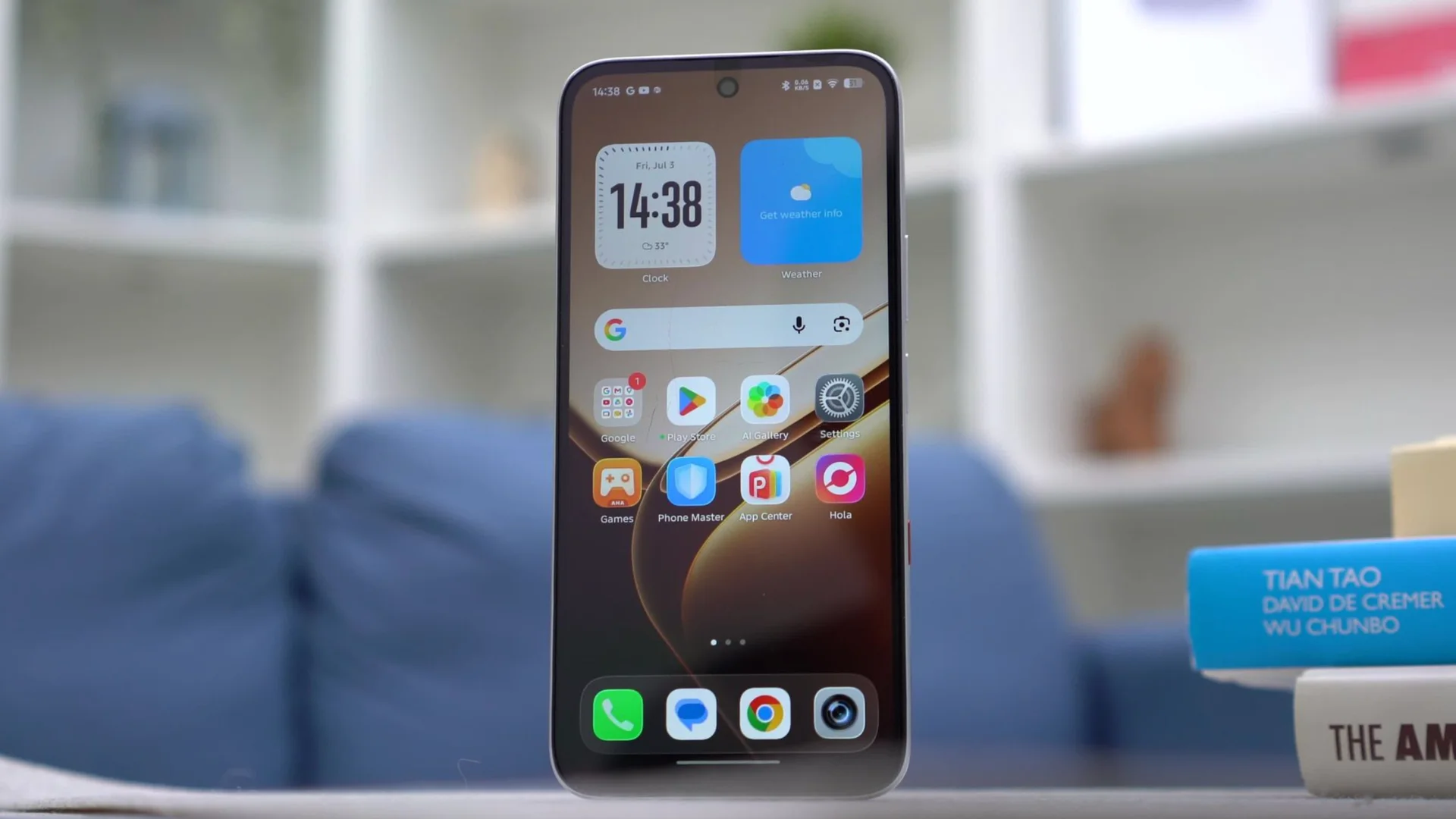 Even better, Infinix is promising three major OS upgrades and five years of security patches for the HOT 70. That’s another unusual thing coming from Infinix since they rarely talk about update policy for their devices. If they follow through, you’re looking at updates all the way to Android 19.
Connectivity and Battery Life
In terms of battery life, this is probably where the HOT 70 shines the most.
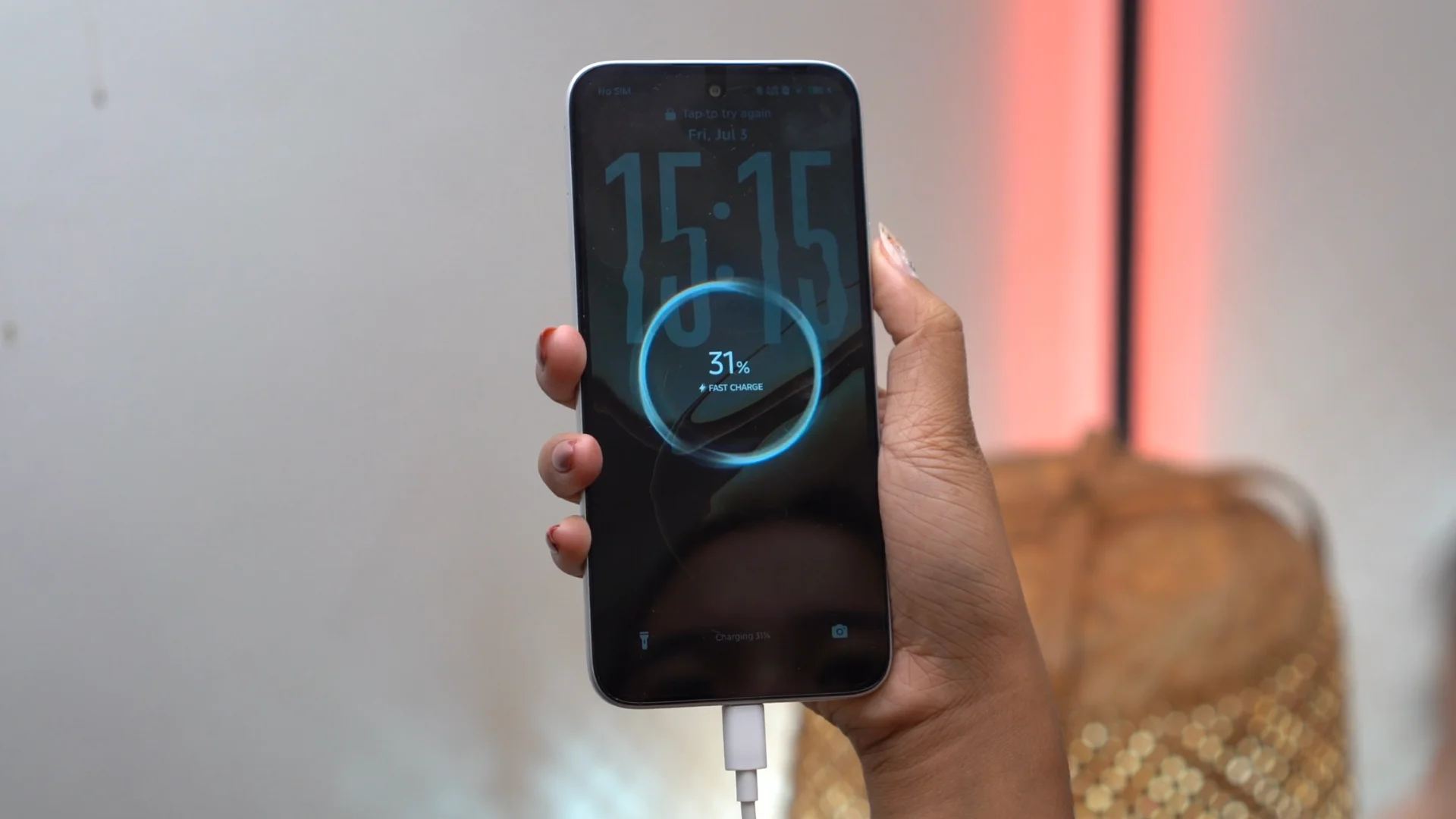 It’s packing a massive 6000mAh unit, and the added capacity actually matters. Our PCMark battery test clocked 22 hours and 51 minutes, and our video loop test hit 28 hours and 16 minutes of uptime. Genuinely impressive numbers.
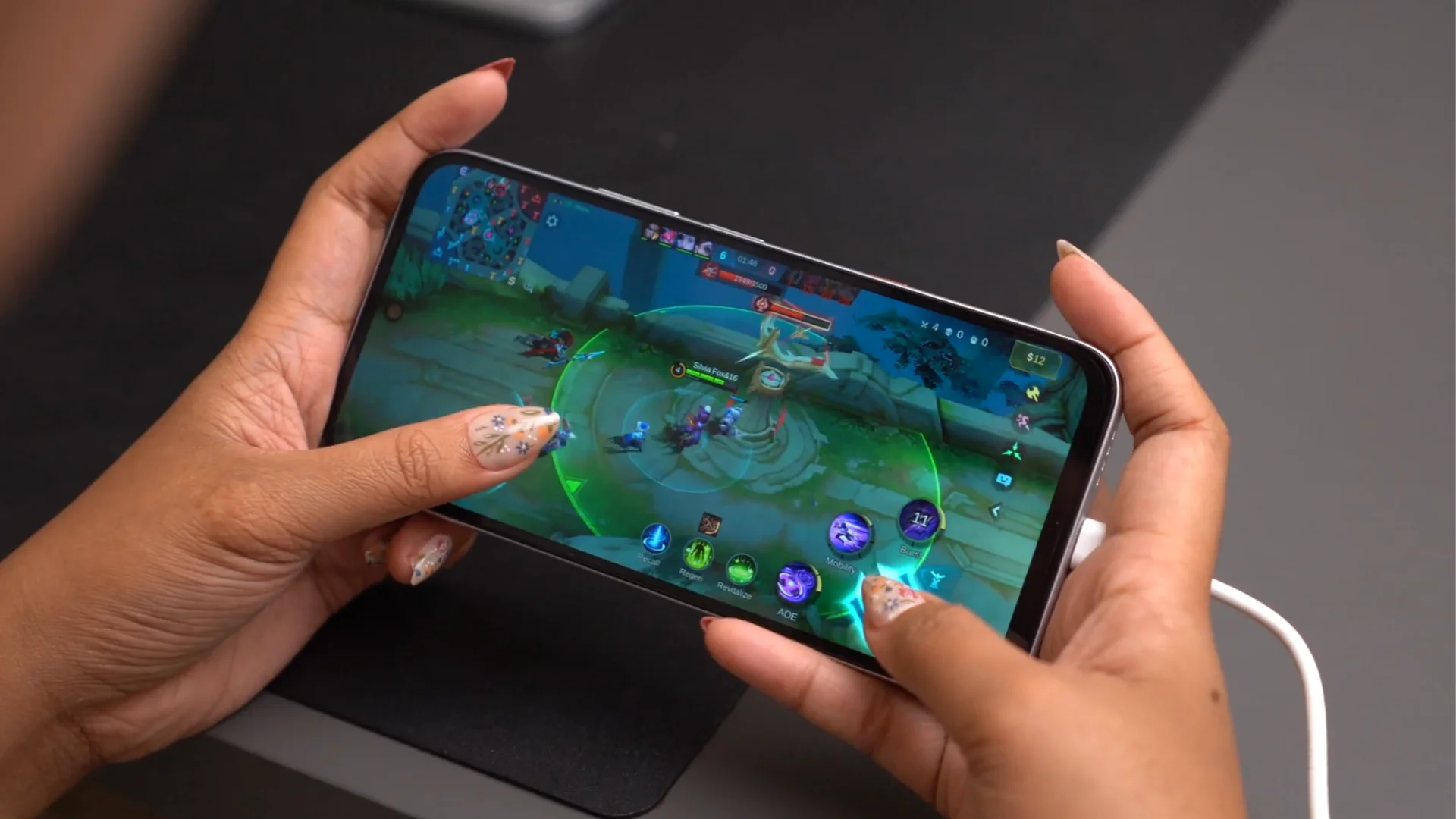 Charging’s quick too, getting a full charge in about an hour with 45W wired charging. There’s also bypass charging, which routes power straight from the wall instead of the battery, which is handy for those long gaming sessions. Simply put, there’s less stress on the battery, less heat buildup, therefore slower battery aging.
Connectivity-wise, it covers the essentials: 4G LTE, WiFi, Bluetooth 5.4, GPS, FM Radio, NFC, an IR blaster, and GPS.
Pricing and Availability
Before we jump to our verdict, let’s talk about price. The Infinix HOT 70 starts at PHP 7,999 for 4GB+128GB, while higher storage options (6GB+256GB) go up to PHP 10,499 SRP.
Conclusion
So, is the Infinix HOT 70 worth it? Yes! I’d say so, especially if you want a budget phone that nails the basics. Smooth 120Hz display, reliable everyday performance, genuinely great battery life, some useful AI tricks, and better software support than most phones in this segment.
 It’s not perfect, of course. The 720p screen, average cameras, and limited performance are some of its real cons, but that’s kind of expected already at this price. And at PHP 7,999, they’re pretty easy to live with, especially now that every phone release seems to be jacking up in price.
 If you’re mostly into social media, light gaming, and want a phone that lasts all day long, the HOT 70 is an easy recommendation. So what do you guys think of the Infinix HOT 70? Could this be your next daily driver? Let us know in the comments below!
If you find this article informative, please share and repost this review, and follow us on our socials for more tech news and reviews.
What we liked:
- Surprisingly impressive battery life
- 45W fast charging
- A more transparent update policy
- Addition of AI features
What we didn’t like:
- Only HD+ (720p) display
- Apps reload often due to limited memory
- Thick bezels
Infinix HOT 70 specs:
6.78-inch HD+ IPS LCD
720 x 1576 pixels, 120Hz refresh rate
700 nits (HBM), 560 nits (typ) brightness
MediaTek Helio G100 Ultimate
6nm, octa-core, up to 2.2GHz
Mali-G57 MC2 GPU
6GB, 8GB LPDDR4X RAM
128GB, 256GB UFS2.2 storage
Expandable up to 2TB via microSD (dedicated slot)
– 50MP main, AF
8MP selfie shooter (punch hole notch), front flash
Dual nano-SIM
4G LTE
Wi-Fi 5
Bluetooth 5.4
GPS
USB Type-C
NFC
Side-mounted fingerprint sensor, face unlock
IP65 dust and water resistance
SGS 5-Star drop and impact resistance
Dual stereo speakers (tuned by DTS), IR blaster
Active Halo light, One-Tap AI Button
XOS 16, Android 16
3 years OS upgrades + 5 years security patches
6000mAh battery
45W charging (wired)
10W reverse wired charging
167.92 x 79.12 x 7.49 mm (dimensions)
195g (weight)
Night Pulse, Dive Blue, Silver Dancer, Green Texture, Quiet Violet, Thermo Orange (colorways)


0 Comments
Leave a Reply