
In a bold move that could reshape the global smartphone market, U.S. President Donald Trump has threatened to impose a 25% tariff on all smartphones sold in the United States but manufactured abroad. This policy targets major players like Apple and Samsung, urging them to shift production to American soil.
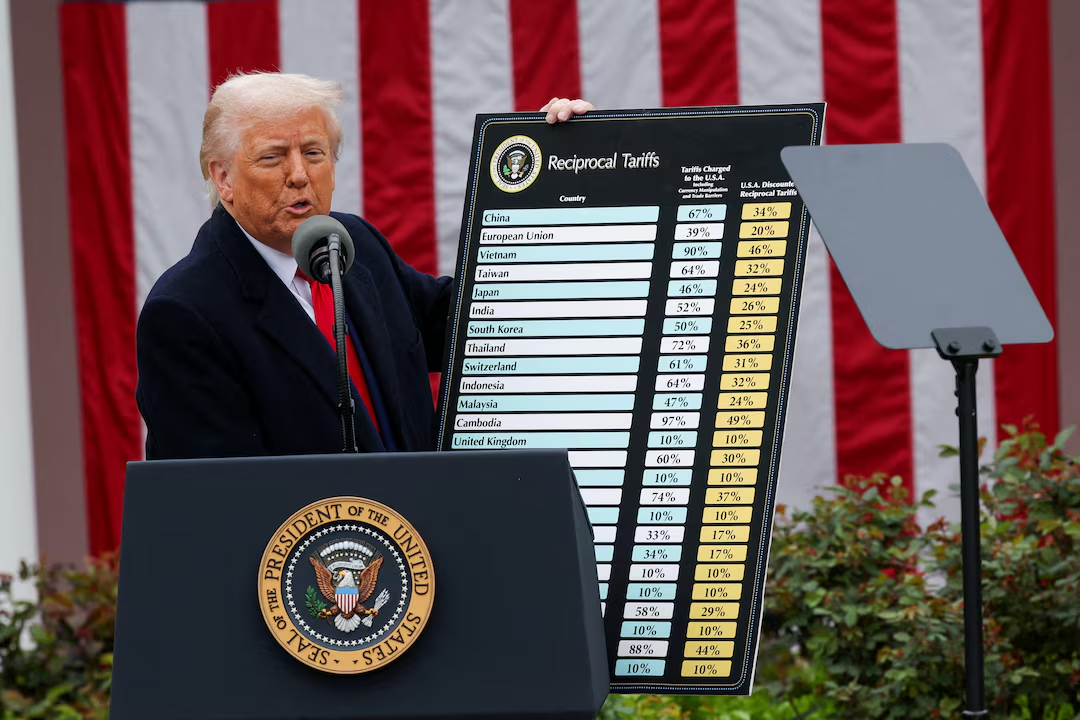
Trump’s announcement, made via Truth Social and reiterated during a recent Oval Office briefing, emphasized his expectation that iPhones sold in the U.S. be produced domestically. He stated, “If that is not the case, a Tariff of at least 25 percent must be paid by Apple to the US.”
The proposed tariffs are set to take effect by the end of June 2025, affecting not only Apple but also other smartphone manufacturers like Samsung, which primarily assembles its devices in Vietnam, China, and India. Trump justified the across-the-board application of the tariff by stating it would be unfair to single out Apple.
Industry analysts warn that relocating smartphone production to the U.S. would be a monumental task. Apple’s CEO, Tim Cook, has indicated that the necessary technology for fully automated domestic assembly doesn’t yet exist. Moreover, experts estimate that producing iPhones in the U.S. could inflate retail prices to around $3,500, a significant jump from the current average of $1,200.
Ming-Chi Kuo, a renowned Apple analyst, suggests that absorbing the tariff costs might be more feasible for Apple than attempting to overhaul its complex global supply chain. He argues that the financial and logistical challenges of moving production stateside outweigh the benefits.
Apple has been gradually shifting some of its manufacturing to India, aiming to diversify its production base and mitigate risks associated with U.S.-China trade tensions. However, Trump’s stance indicates that production in countries like India would still be subject to the proposed tariffs.
The broader economic implications of these tariffs are significant. Stock markets have already reacted negatively, with major indices like the S&P 500 and Dow Jones experiencing declines. Shipping volumes from Asia to the U.S. have also decreased, as businesses brace for potential disruptions.
Critics argue that Trump’s tariff strategy could lead to higher consumer prices and strain international trade relations. European Union officials have expressed concerns, emphasizing the need for trade agreements based on mutual respect rather than threats.
As the deadline approaches, smartphone manufacturers face a challenging decision: absorb the additional costs, pass them on to consumers, or undertake the costly process of relocating production to the U.S. The outcome will have lasting effects in the global tech inustry and consumer markets.







0 Comments
Leave a Reply