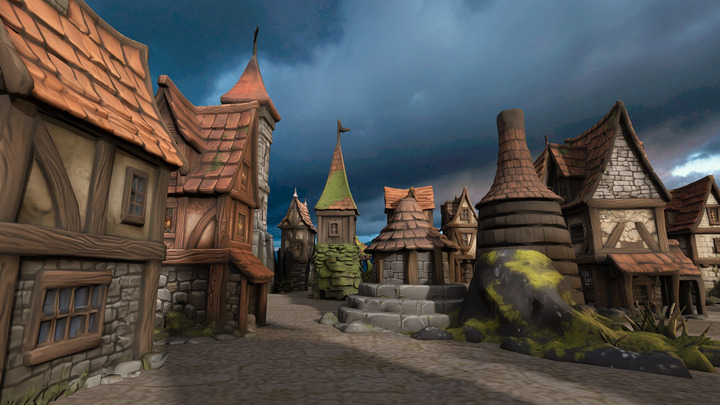

Meta has unveiled WorldGen, a new system designed to generate fully interactive and navigable 3D worlds from a single text prompt. Meta, the brand behind Facebook and Instagram, has introduced WorldGen. Users can create 3D worlds all from a text prompt. The system uses procedural reasoning, diffusion-based 3D generation, and object-aware scene decomposition. WorldGen outputs are compatible with common game engines including Unity and Unreal Engine, with no additional conversion required. Meta says larger world sizes and reduced generation time are planned for future versions. The WorldGen pipeline includes several stages: planning, procedural blockout, navmesh extraction, reference image generation, image-to-3D reconstruction, scene texturing, AutoPartGen-based decomposition, and final refinement for both meshes and textures. Although still in the research phase and not yet available to developers, Meta sees WorldGen as a major step toward democratizing 3D content creation, enabling people to build complex virtual worlds without writing code. Read more in our articles including "Meta announces WorldGen 3D world generator" and "OpenAI expands ChatGPT free access with GPT-5.6 Luna".
Meta has unveiled WorldGen, a new system designed to generate fully interactive and navigable 3D…
Nov 25, 2025
OpenAI is expanding ChatGPT Free and Go access with unlimited text chats, a new Think…
Aug 7, 2026
Some Android phones running China-specific firmware recently lost access to Google Wallet contactless payments after…
Aug 7, 2026
OPPO has introduced the Reno16 F 5G in the Philippines, with prices starting at PHP…
Aug 7, 2026
OPPO has launched the Reno16 5G and Reno16 Pro 5G in the Philippines, with prices…
Aug 7, 2026
Huawei has expanded its flagship tablet portfolio with the launch of the Huawei MatePad Pro…
Aug 6, 2026Meta has unveiled WorldGen, a new system designed to generate fully interactive and navigable 3D worlds from a single text prompt. Meta, the brand behind Facebook and Instagram, has introduced WorldGen.
Users can create 3D worlds all from a text prompt. The system uses procedural reasoning, diffusion-based 3D generation, and object-aware scene decomposition. WorldGen outputs are compatible with common game engines including Unity and Unreal Engine, with no additional conversion required.
Our coverage of AI world generation includes: "Meta announces WorldGen 3D world generator"; "OpenAI expands ChatGPT free access with GPT-5.6 Luna"; "Google Wallet NFC issue hits some China-ROM Android Phones". Each article provides unique insights and information.