

Brave Software, Inc., the company behind the free and open-source web browser Brave, has launched a new feature in its browser called De-AMP, which allows Brave users to bypass Google-hosted AMP pages, and instead visit the content’s publisher directly. AMP stands for Accelerated Mobile Pages and was originally created by Google as a competitor to Facebook Instant Articles and Apple News. However, Brave said that AMP is harmful to users' privacy, security and internet experience: "First, AMP is harmful to privacy. AMP gives Google an even broader view of which pages people view on the Web, and how people interact with them. AMP encourages developers to more tightly integrate with Google servers and systems, and penalizes publishers with decreased search rankings and placements if they don’t, further allowing Google to track and profile users. Users think they’re interacting with the publisher when in actuality the user is still within Google’s control. AMP encourages more of the Web to be served from Google’s servers, under Google’s control and arbitrary non-standards. It also allows Google to require pages to be built in ways that benefit Google’s advertising systems. Read more in our articles including "Brave says Google's AMP pages are harmful, launches De-AMP" and "Courier Complaints Drop 88% Under Oplan Bantay Padala".

Brave Software, Inc., the company behind the free and open-source web browser Brave, has launched…
Apr 21, 2022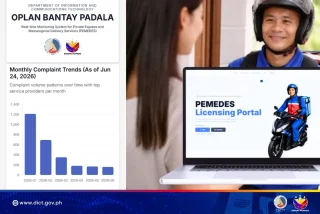
The Department of Information and Communications Technology (DICT) reported a significant decline in courier-related complaints,…
Jun 25, 2026
The top model in the lineup is the ROG Zephyrus Duo GX651AX, described by ASUS…
Jun 25, 2026There was some sort of mass panic last night when Google was spewing a warning…
Feb 1, 2009
Insta360 has officially launched the Luna Ultra in the Philippines. The camera is co-engineered with…
Jun 24, 2026
After being spotted in Lazada, the Infinix HOT 70 is now available in the Philippines.…
Jun 24, 2026Brave Software, Inc., the company behind the free and open-source web browser Brave, has launched a new feature in its browser called De-AMP, which allows Brave users to bypass Google-hosted AMP pages, and instead visit the content’s publisher directly. AMP stands for Accelerated Mobile Pages and was originally created by Google as a competitor to Facebook Instant Articles and Apple News.
However, Brave said that AMP is harmful to users' privacy, security and internet experience: "First, AMP is harmful to privacy. AMP gives Google an even broader view of which pages people view on the Web, and how people interact with them. AMP encourages developers to more tightly integrate with Google servers and systems, and penalizes publishers with decreased search rankings and placements if they don’t, further allowing Google to track and profile users.
Our coverage of Google Brave includes: "Brave says Google's AMP pages are harmful, launches De-AMP"; "Courier Complaints Drop 88% Under Oplan Bantay Padala"; "ASUS ROG Zephyrus Duo and Zephyurus G now officially available in PH". Each article provides unique insights and information.