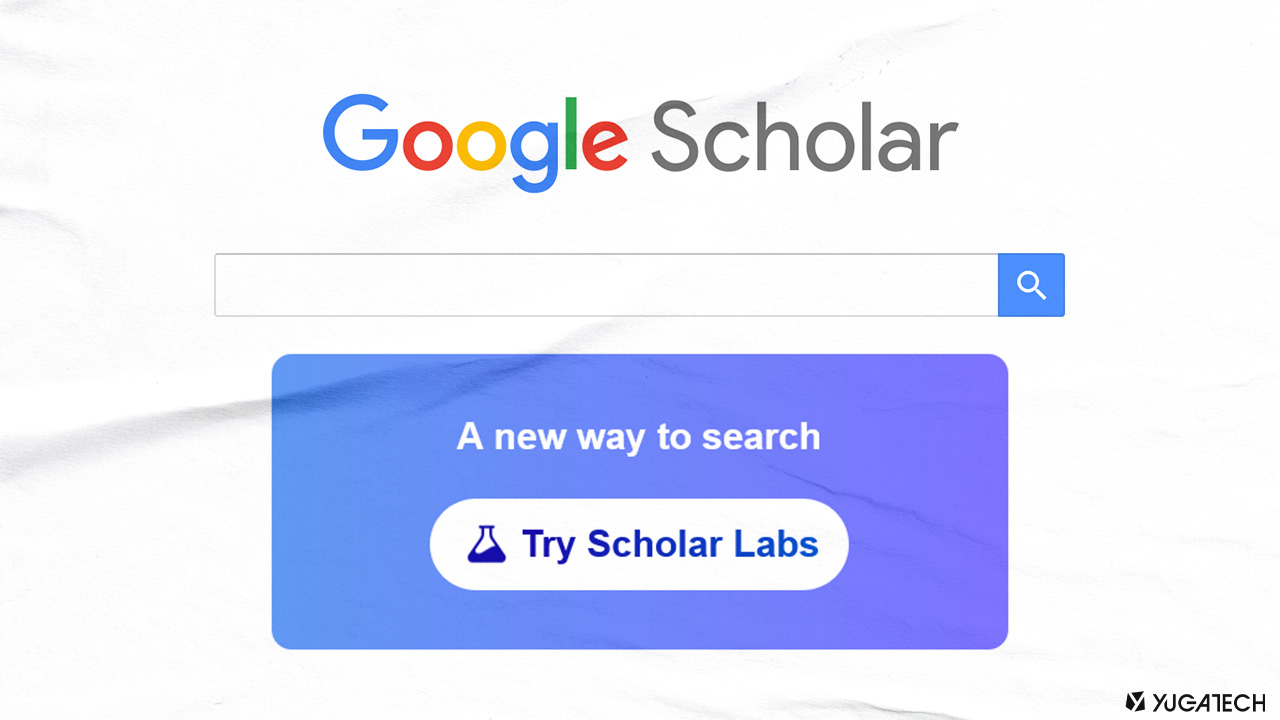


Search engine giant, Google, has introduced Scholar Labs which leverages AI to answer users’ scholarly research questions. It is essentially an upgraded yet a separate version of Google Scholar but adds generative AI “to act as an advanced research tool.” Google Scholar has been traditionally pulling up papers based on keywords from the search query. Now, Scholar Labs analyzes the full question, breaks it down into key topics, angles, and relationships, then scans Google Scholar for the most relevant studies. We’ve tried making a search on both the old and new platforms by searching “how effective are silicon carbon batteries on smartphones?” As expected, Google Scholar pulled up studies that contained the keywords from our search query, but it showed the results much faster in a mere second. Scholar Labs on the other hand was much slower as it ‘evaluates’ over 80 top results, then eventually coming up with 10 most relevant results. While the UI is mostly the same as before, Scholar Labs lacks the filters such as adding a custom year range which is crucial for academic research. Users can try out the new Scholar Labs here. Google Scholar Google is the number one search engine today. Read more in our articles including "Google Scholar Labs is now live: uses AI to find relevant studies" and "Websites You Can Use for Research".

Search engine giant, Google, has introduced Scholar Labs which leverages AI to answer users’ scholarly…
Nov 20, 2025
Online classes have started already, and for sure, some of you are looking for websites…
Oct 8, 2020There was some sort of mass panic last night when Google was spewing a warning…
Feb 1, 2009
OpenAI is expanding ChatGPT Free and Go access with unlimited text chats, a new Think…
Aug 7, 2026
GCash brought together technology leaders, policymakers, regulators, and business experts at the fifth iGnite Innovation…
Jul 28, 2026
Apple has released watchOS 27 beta 3 for developers, bringing its upgraded Siri AI experience…
Jul 7, 2026Search engine giant, Google, has introduced Scholar Labs which leverages AI to answer users’ scholarly research questions. It is essentially an upgraded yet a separate version of Google Scholar but adds generative AI “to act as an advanced research tool.” Google Scholar has been traditionally pulling up papers based on keywords from the search query.
Now, Scholar Labs analyzes the full question, breaks it down into key topics, angles, and relationships, then scans Google Scholar for the most relevant studies. We’ve tried making a search on both the old and new platforms by searching “how effective are silicon carbon batteries on smartphones?” As expected, Google Scholar pulled up studies that contained the keywords from our search query, but it showed the results much faster in a mere second. Scholar Labs on the other hand was much slower as it ‘evaluates’ over 80 top results, then eventually coming up with 10 most relevant results.
Our coverage of Google Scholar includes: "Google Scholar Labs is now live: uses AI to find relevant studies"; "Websites You Can Use for Research"; "The day Google broke the Web". Each article provides unique insights and information.