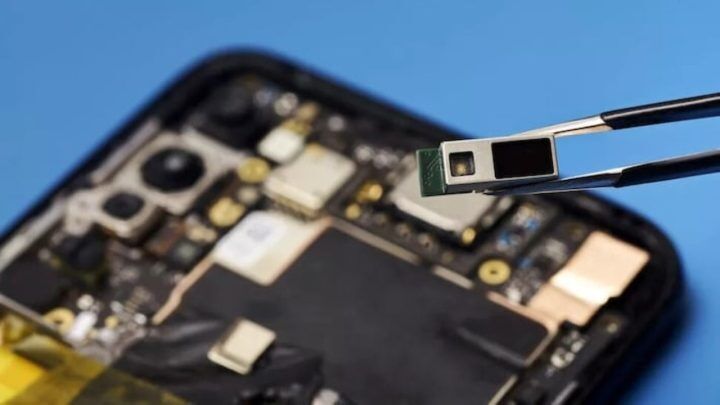

According to Business Wire, pureLiFi and Fraunhofer HHI, two global Li-Fi companies, have expressed their approval of the release of the new 802.11bb standard by IEEE. Li-Fi is a wireless technology that uses light, instead of radio frequencies, to transmit data. How it works By utilizing the light spectrum, Li-Fi can provide ‘faster’ and ‘more reliable’ wireless connectivity that is more secure than conventional technologies like WiFi and 5G. This means that Li-Fi is technically not designed to compete with Wi-Fi, as it is meant to be interoperable rather than an entirely distinct wireless system. https://youtu.be/kDqA1-ldTOI The Fraunhofer HHI video demonstrates a Li-Fi system that utilizes a building's lighting infrastructure for data transmission. Here’s a video demo from The Verge to better understand how it works: https://youtu.be/OpYejIKbluA The cons Although Li-Fi seems all promising, there are a few drawbacks to consider in its current development. [caption id="attachment_340742" align="alignnone" width="1280"] Photo/ pureLiFi[/caption] With the release of the IEEE 802.11bb standard, manufacturers can now have more confidence in integrating Li-Fi technology where it is suitable. One of the major players in the Li-Fi industry, pureLiFi, has already developed the Light Antenna ONE module, which is 14.5mm component for LC and is currently being offered to OEMs for evaluation. Read more in our articles including "IEEE adds 802.11bb 'Li-Fi' wireless standard, uses light to transmit up to 9.6Gbps data" and "Li-Fi is 100 times faster than Wi-Fi in transmitting data".
The entity behind the Wi-Fi 802.11 standards—Institute of Electrical and Electronics Engineers (IEEE)—has released the…
Jul 15, 2023A new wireless technology has just been taken and tested out of the lab which…
Nov 25, 2015Wireless Fidelity, aka Wi-Fi is so 2013, or at least that’s how the engineers behind…
Nov 1, 2013
Smart Communications has expanded the availability of its Smart Home WiFi Postpaid service to more…
Jul 20, 2026
Globe has officially launched Starlink’s satellite-to-mobile service in the Philippines after receiving approval from the…
Jun 30, 2026
The Philippines remains among the slowest countries in transitioning away from 3G networks, with most…
Jun 2, 2026According to Business Wire, pureLiFi and Fraunhofer HHI, two global Li-Fi companies, have expressed their approval of the release of the new 802.11bb standard by IEEE. Li-Fi is a wireless technology that uses light, instead of radio frequencies, to transmit data.
How it works By utilizing the light spectrum, Li-Fi can provide ‘faster’ and ‘more reliable’ wireless connectivity that is more secure than conventional technologies like WiFi and 5G. This means that Li-Fi is technically not designed to compete with Wi-Fi, as it is meant to be interoperable rather than an entirely distinct wireless system. https://youtu.be/kDqA1-ldTOI The Fraunhofer HHI video demonstrates a Li-Fi system that utilizes a building's lighting infrastructure for data transmission.
Our coverage of li-fi includes: "IEEE adds 802.11bb 'Li-Fi' wireless standard, uses light to transmit up to 9.6Gbps data"; "Li-Fi is 100 times faster than Wi-Fi in transmitting data"; "Light Fidelity, the future of wireless connectivity". Each article provides unique insights and information.