infinix x yugatech

Light Fidelity, the future of wireless connectivity

Listen to article

Wireless Fidelity, aka Wi-Fi is so 2013, or at least that’s how the engineers behind Light Fidelity (Li-Fi) see the future wireless data transmission. Let’s delve a little deeper into this fairly new concept and see how it can revolutionize the way we connect to the internet.

harald haas

After working on his project for nearly 8 years, University of Edinburgh’s Professor Harald Haas showcased his idea publicly during a TED talk back in 2011.

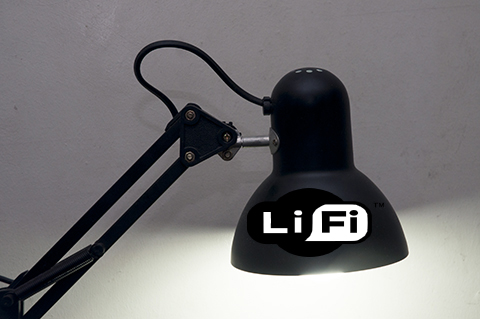
His idea involves turning an ordinary LED light bulb in to a wireless broadband device by rigging it to radio microchip. This chip then controls how the LED light behaves; switching it on and off to produce signals similar to binary codes which is then deciphered by a receiver on the other end.

Professor Haas’ idea caught fire and led to a £4.7-million grant from Engineering and Physical Sciences Research Council (EPSRC) to fund his project. He’s now collaborating with a group of talented individuals from various Universities including Cambridge, Edinburgh, Oxford, St Andrews and Strathclyde.

Within the span of a year, Haas and his team has already covered a lot of grounds since they began to work together under the Ultra Parallel Visible Light Communications (UP-VLC) project and has recently made the headlines when they reported that they were able to reach transmission speeds of up to 10 Gbit/s using only single micro-LED light bulb.
lifi

Apart from lightning fast speed, another feature of Li-Fi that Haas takes pride on is that it’s “potentially more secured than traditional Wi-Fi connection” because light doesn’t pass through walls. However, this strength can also be its biggest drawback as future users needs to always be within range of the Li-Fi device in order to establish wireless connection.

Li-Fi is still a work in progress, but I think that the team working on the project is headed in the right direction and it’s pretty exciting to see what they’ll come up with in the future.

{source }

Frequently Asked Questions

Who invented Li-Fi?
University of Edinburgh’s Professor Harald Haas invented Li-Fi and showcased it publicly during a TED talk in 2011.
How fast is Li-Fi transmission?
Li-Fi has reached transmission speeds of up to 10 Gbit/s using a single micro-LED light bulb.
What is a key advantage of Li-Fi over Wi-Fi?
Li-Fi is potentially more secure than Wi-Fi, according to Professor Haas.
React to this article:
Written by
Ronnie Bulaong

This article was written by Ronnie Bulaong, a special features contributor and correspondent for YugaTech. Follow him on Twitter @turonbulaong.

View all posts by Ronnie Bulaong →

56 Comments

HE
hemakumar · 13 years ago

Can i know the range of Li-Fi

Reply
ER
ervin · 13 years ago

Lightning fast wireless connection FTW! \m/^_^

Reply
RE
Rex · 13 years ago

“Wireless Fidelity, aka Wi-Fi is…”

Wi-fi does not stand for wireless fidelity. It is not a shorthand for anything. It is just a play on words to to sound like hi-fi. And a successful one at that.

Reply
WE
wew · 13 years ago

how about using Infrared LEDs kung ayaw ng user ng kahit anong ilaw maliban sa screen.

Reply
AN
Analog · 13 years ago

i love the idea, i imagine gadgets wherein the back covers are full of photo sensors. tsaka d mo mapapansin ang pag on / off ng ilaw sa taas ng switching frequency nya. pag nasa bahay i dont think problema ang range basta may ilaw, at lahat ng ilaw dapat naka-sync. kung may other source ng ilaw na itatapat sa device, medyo challenging yun, pero gaya ng sabi ko, implementing several sensors will do the job to identify which signal is the real one.

Reply
EO
eoji · 13 years ago

“WiFi aint Wireless Fidelity. WiFi is WiFi just as Toyota is Toyota.” So Toyota just came out of nowhere, people thought about things a lot especially when coining something important. When I read this, my mind was revolting in silence, so reading a lot of stuff sometimes confuses us with what we already know, obfuscation is prevalent nowadays.

Reply
SH
Shutup · 13 years ago

Wi-Fi means Wireless Fidelity. Yung hindi nakakaalam nyan ay ipinanganak in the 90’s onwards kung hindi nagresearch. Yung iba, galing galingan lang. Peace!

Reply
TA
Talino · 13 years ago

Oh my pink gosh. Yung mga nagmamarunong hindi alam ang “wireless fidelity” ???? Sila ata ang nagkulang sa research.

Reply
MA
Mario · 13 years ago

hahaha oo nga pang-gulo masyado. napaisip nga rin ako nung nabasa ko yung sinasabi nila i mean wtf man all these years mali pala ang pagkakaintindi ko sa wifi?! akala ko tuloy nabobobo na ko haha.

CH
chill · 13 years ago

@Jeremy @HiFi

chill lang.. you are both correct.. WiFi is just WiFi… but a decade ago, the Wi-Fi Alliance did refer to WiFi as “Wireless Fidelity”.. they then dropped it quietly for some reason…my guess is, they initially used it for easier marketing considering marami may alam sa “high fidelity = hifi” and then they dropped it when the tech was gaining momentum na… again, hula ko lang to bakit nila drinop…

please see the bottom of pdf page 4 (under “A Short History of WLANs”) from this official doc of the WiFi Alliance back in the day… it clearly states “…WiFi (Wireless Fidelity)…”

http://www.wi-fi.org/files/wp_4_Securing%20Wireless%20Networks_2-6-03.pdf

so chill lang tayo mga sir… :)

Reply
MA
Mario · 13 years ago

i was taught in a class on history of networking in college that wifi indeed means wireless fidelity. it’s actually a play on words of hifi and wireless LAN. it’s quite obvious that the term wifi was coined from term high fidelity, otherwise it wouldn’t make sense it’s not even a word on its own unlike bluetooth, or blackberry or apple, etc. so wifi = wireless fidelity. it couldn’t have any other meaning than that, unless the wi-fi alliance issued a new meaning for wifi, create an acronym, or an entirely new name. jeez when i read their rants above i got confused i don’t know what those guys problems were. pride issues perhaps?

MU
Muller Tambis · 13 years ago

This might be a good new concept. But should solve some issues like wall blockage which wifi signals could do.

Reply
AN
anonymous · 13 years ago

Amazing, but a little vague. The applications I mean. Comparing it to Wifi. The examples shown here are mostly related to light sensing, not communication between devices like cellular phone.

Great though.

Reply
MA
Madlang people · 13 years ago

This article was meant for the general public,it was made to be easily understood.

It was not meant for geeks and geniuses like others here… ^_^

Reply
HI
HiFi · 13 years ago

Can’t help but cringe when i read the first line that right away exudes sheer lack of research. What wireless fidelity are you talking about? Were you thinking along the lines of HiFi in the audio world that means Hi(gh) Fi(delity) ? If content is spread to an audience, should at least be accurate. Wifi is not an acronym, so don’t even infer one. :) it simply is the name for the technology.

The overall content though is fine. Just not sold out yet to the idea, seems to limit flexibility in usage. It’s like a solar panel, you need to have your panels exposed to the sun. Deviations in angle disrupts. But let’s see, anything that’s futuristic and intended to improve the way of doing things is always nice.

Reply
HA
haaysfaaaayssss · 13 years ago

kaw naaaaahhhh!!!!!

LO
lol · 13 years ago

replies like this are really annoying. the guy only corrected the article and gave his opinion. if giving an intelligent comment is now offensive then our generation is really doomed.

JA
james · 13 years ago

replies like that should alert you to keep your pride in check. i hope i am just reading something that is not there but i sense a lot of bitterness in your comment above. lol

LO
lol · 13 years ago

lol did i sound bitter? i was just trying to point out that comments like that does not add anything meaningful in discussions and deter people from making critical comments. didn’t see arrogance as well, at least compared to the other comment above

JE
jeremy sux · 13 years ago

maybe you should write your own blog since you know it all.

Reply
JE
Jeremy · 13 years ago

WiFi aint Wireless Fidelity. WiFi is WiFi just as Toyota is Toyota. Disappointed much by the misinformation. At least get your facts straight. You could use IEEE 802.11 the next time instead. God. Does your writerseven know what they are talking about? Or you just copy paste and rephrase everything Engadget. The Verge et.al are writing about?

Reply
RO
ronn · 13 years ago

perfectly correct.

jeremy ciora is that you?

JI
jirimeeeeehh · 13 years ago

wagas na react much!

JE
jeron · 13 years ago

so who needs to get his facts straighten now?

JE
Jeremy · 13 years ago

Sorry for sounding arrogant as I was just very mad at the misinformation considering Yugatech is one of the more respected tech blogs in the Ph. Just couldn’t take it especially that it was the opening statement.

You guys can take a read of a nice informative article here:http://www.wi-fiplanet.com/columns/article.php/3674591

Please post it anywhere you can so as to correct any misconceptions.

AY
AyosTo · 13 years ago

bale dalawa ang functions ng li-fi
-as lighting machibse
– at network device

Reply
FR
Freeje · 13 years ago

This won’t allow you to use your device in the dark.

Reply
MA
Marcus Kambing · 13 years ago

Line of Sight lang cguro… OK to pag d mo gusto magnakaw nang Li-Fi signal yung kapitbahay mo… lol

Leave a Reply

Loading next article...