

USB-C was since then adopted in electronics whose specification started with USB 3.2 Gen 1—that offered “SuperSpeed” of 5Gbps data transfer, enhanced power delivery up to 100W, native audio/video support, and backwards compatible with previous USB specifications. [Note: USB 3.1 (or 3.1 Gen 2) and USB 3.0 (or 3.1 Gen 1) have been renamed to USB 3.2 Gen 2 and USB 3.2 Gen 1 accordingly.] USB-C also utilized USB 3.2 Gen 2 specification only with double the transfer rate of 10Gbps called “SuperSpeed Plus” and with the same capabilities as Gen 1. Evidently, most USB-C ports today are based on USB 3.2 Gen 2 specification. Jump to 2017 when USB-IF released the USB 3.2 Gen 2x2 which doubled the transfer rate at maximum of 20Gbps (“SuperSpeed 20Gbps”) from its predecessor. A compatible USB 3.2 Gen 2x2 should be connected to achieve the max speed, thus connecting previous versions won’t reach 20Gbps but only the speed of that specific USB generation. To know more details about USB generations, READ: USB Generation Guide: What you Need to Know USB-C flexibility in functionalities With all that said, USB-C is much more compact and simpler, which are now common on mice, keyboards, and storage drives. ADDENDUM: Adjusted article to correct USB 3.2 Gen 2 info and added USB4 iteration. Read more in our articles including "Quick Guide to Knowing What USB Type-C You Need" and "Giveaway: Want an extra Mugen battery?".

It’s a shame that some mobile phone manufacturers continue to release devices with micro-USB ports.…
Feb 28, 2022So after testing the Mugen Power extended batteries (see review here), we’re giving them away…
Jun 27, 2011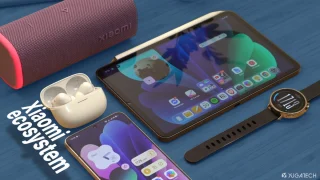
We all know that Apple and its closed ecosystem is arguably THE best one out…
Aug 1, 2026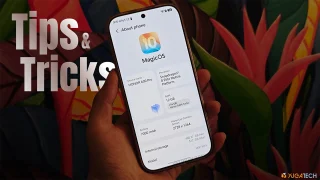
We’ve spent weeks using the HONOR 600 Series as our daily drivers to get a…
Jul 23, 2026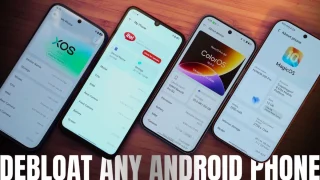
So, you just got a shiny new phone, and what’s exactly the first thing you’d…
Jul 23, 2026
It seems like it was only yesterday when 2026 started, but now we’re already halfway…
Jul 12, 2026USB-C was since then adopted in electronics whose specification started with USB 3.2 Gen 1—that offered “SuperSpeed” of 5Gbps data transfer, enhanced power delivery up to 100W, native audio/video support, and backwards compatible with previous USB specifications. [Note: USB 3.1 (or 3.1 Gen 2) and USB 3.0 (or 3.1 Gen 1) have been renamed to USB 3.2 Gen 2 and USB 3.2 Gen 1 accordingly.] USB-C also utilized USB 3.2 Gen 2 specification only with double the transfer rate of 10Gbps called “SuperSpeed Plus” and with the same capabilities as Gen 1.
Evidently, most USB-C ports today are based on USB 3.2 Gen 2 specification. Jump to 2017 when USB-IF released the USB 3.2 Gen 2x2 which doubled the transfer rate at maximum of 20Gbps (“SuperSpeed 20Gbps”) from its predecessor. A compatible USB 3.2 Gen 2x2 should be connected to achieve the max speed, thus connecting previous versions won’t reach 20Gbps but only the speed of that specific USB generation.
Our coverage of USB C Gen 3.1 includes: "Quick Guide to Knowing What USB Type-C You Need"; "Giveaway: Want an extra Mugen battery?"; "Xiaomi Ecosystem: It just works, too". Each article provides unique insights and information.