

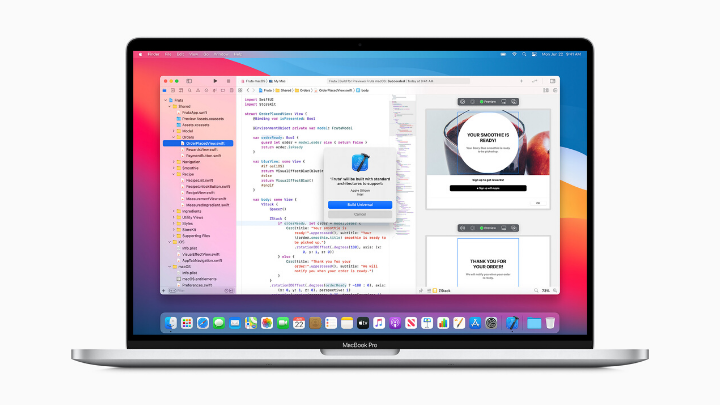
Analyst Ming-Chi Kuo claims Apple is poised to bring Intel back into its Mac ecosystem, this time not as a chip designer but as a manufacturing partner. According to the report, Intel could start producing Apple’s lowest-end M-series chips on its advanced 18A process as early as mid-2027, potentially for future MacBook Air, iPad Air, and iPad Pro models. Unlike the old Intel x86 processors used in Macs before 2020, these chips would still be Apple-designed Arm-based silicon, with Intel acting only as a foundry while TSMC continues to handle the bulk of M-series production. The move would support US manufacturing goals and help Apple diversify its supply chain, even as macOS Tahoe remains the last major release to support legacy Intel-based Macs. Apple has recently announced the transition of its Mac hardware to Apple silicon chipsets. The switch allows developers to optimize apps and produce compatible software on the entire Apple ecosystem. According to the tech American company, the software update of macOS Big Sur includes technologies that "ensures a smooth and seamless transition to Apple silicon". It has Xcode 12 for native compiling, editing, and debugging tools for developers, Universal 2 application binaries for developing software that is compatible with both Apple silicon and Intel-based Macs, and Rosetta 2 for running Mac apps with plug-ins that have not yet been updated. Read more in our articles including "Apple may tap Intel again to manufacture future M-series Mac chips" and "Apple announces Mac transition to Apple silicon".

Analyst Ming-Chi Kuo claims Apple is poised to bring Intel back into its Mac ecosystem,…
Nov 29, 2025
Apple has recently announced the transition of its Mac hardware to Apple silicon chipsets. The…
Jun 23, 2020
After being spotted in Lazada, the Infinix HOT 70 is now available in the Philippines.…
Jun 24, 2026
Google has announced new updates to Chrome Autofill. With this feature, it brings support for…
Jun 24, 2026
Apple has revealed that the iPhone 12 and 12 mini now come in the color…
Apr 21, 2021
Apple announced the official date for its upcoming Apple Event. As seen on Apple’s website,…
Sep 9, 2020Analyst Ming-Chi Kuo claims Apple is poised to bring Intel back into its Mac ecosystem, this time not as a chip designer but as a manufacturing partner. According to the report, Intel could start producing Apple’s lowest-end M-series chips on its advanced 18A process as early as mid-2027, potentially for future MacBook Air, iPad Air, and iPad Pro models.
Unlike the old Intel x86 processors used in Macs before 2020, these chips would still be Apple-designed Arm-based silicon, with Intel acting only as a foundry while TSMC continues to handle the bulk of M-series production. The move would support US manufacturing goals and help Apple diversify its supply chain, even as macOS Tahoe remains the last major release to support legacy Intel-based Macs. Apple has recently announced the transition of its Mac hardware to Apple silicon chipsets.
Our coverage of Apple silicon includes: "Apple may tap Intel again to manufacture future M-series Mac chips"; "Apple announces Mac transition to Apple silicon"; "Infinix HOT 70 now available with Dynamic Shine design". Each article provides unique insights and information.