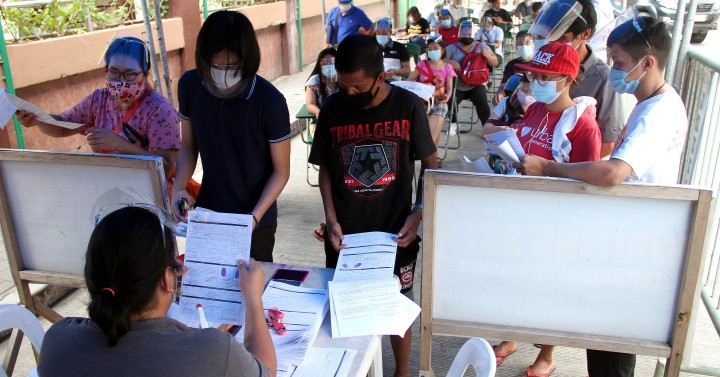

7-hour glitch, 60-30-10 voting, and other theories in the Philippines In any election, there will be winners and losers. Since automated elections began in 2010, the process goes like this: the voter marks their preferences in ballots, puts the marked ballots in the PCOS machine, and at the end of the day, the votes are counted electronically. When this server was supposedly "overwhelmed" with data coming from various voting precincts across the nation, the parallel quick count stopped, but the central server kept receiving returns. In 2013, a voting pattern dubbed as "60-30-10" went rounds in the web and caused concern for some about the credibility of automated elections. While this appears to be less complex than the 60-30-10 voting pattern, it has similar concerns. Similar to the argument against the alleged 60-30-10 voting pattern, varying bailiwicks can be noted. According to the Institute for Democracy and Electoral Assistance (IDEA), 49 of 178 countries surveyed have adopted a form of electronic voting in either national or subnational elections, including the Philippines. While 9 countries have abandoned electronic voting, 25 countries have been conducting studies on its applications in their respective settings. Read more in our articles including "A brief history of automated elections in the Philippines (Part 2)" and "Samsung launches new Galaxy foldables and smartwatches with AI upgrades, pre-order promos until August 13".

Editor’s Note: This is part 2 of a three-part series on the brief history of…
Mar 8, 2022
Customers who pre-order by August 13 can enjoy free storage upgrades, trade-in discounts, Samsung Care+…
Aug 7, 2026
Business laptops have come a long way from being simple tools for emails and spreadsheets.…
Jul 1, 2026
As someone who occasionally uses a laptop to work, one thing I sometimes wish for…
Jun 30, 2026
Coming in hot in the entry-level segment is the new Infinix HOT 70, and for…
Jun 25, 2026
The TECNO POVA Curve 2 5G has arrived. It’s a slim, lightweight phone, and yet…
Jun 12, 20267-hour glitch, 60-30-10 voting, and other theories in the Philippines In any election, there will be winners and losers. Since automated elections began in 2010, the process goes like this: the voter marks their preferences in ballots, puts the marked ballots in the PCOS machine, and at the end of the day, the votes are counted electronically.
When this server was supposedly "overwhelmed" with data coming from various voting precincts across the nation, the parallel quick count stopped, but the central server kept receiving returns. In 2013, a voting pattern dubbed as "60-30-10" went rounds in the web and caused concern for some about the credibility of automated elections. While this appears to be less complex than the 60-30-10 voting pattern, it has similar concerns.
Our coverage of electronic voting includes: "A brief history of automated elections in the Philippines (Part 2)"; "Samsung launches new Galaxy foldables and smartwatches with AI upgrades, pre-order promos until August 13"; "ASUS ExpertBook Ultra - 5 Best Features That Make This a Serious Executive Productivity Machine". Each article provides unique insights and information.