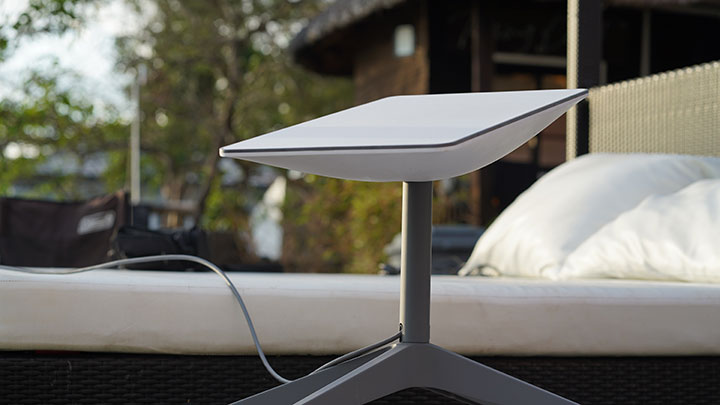

While data shows lacking in certain areas, Starlink’s satellite internet still offers certain advantages, Even local ISPs still lead in speed. In these remote areas, satellite broadband like Starlink could be a practical solution. ABI Research forecasts that by 2028, the Philippines could become the leading market for satellite broadband in Southeast Asia, with around 909,000 subscriptions. Globe Telecom has officially partnered with Starlink to bring Direct to Cell (DTC) satellite service to the Philippines, making it the first telco in Southeast Asia to offer this breakthrough technology. Starting this year, Filipinos using standard LTE smartphones will be able to access essential mobile services such as voice calls, text messaging, messaging apps, and even video, anywhere with a clear view of the sky. Starlink’s satellites will essentially act as “cell towers in space,” beaming signals directly to mobile phones and seamlessly connecting through its network of over 650 low-Earth orbit (LEO) satellites. Globe says the service will help cover the remaining 4% of the population, or around 4.8 million people, who currently lack terrestrial network coverage. The service is also positioned as a key tool for disaster resilience, helping keep first responders and communities connected when typhoons and other calamities disrupt ground-based networks. Read more in our articles including "Starlink Slower Than Local ISPs in PH, Study Shows" and "Globe and Starlink Launch Direct-to-Cell Satellite Service in the Philippines".

In the latest Ookla’s study reveals that Starlink’s download and upload speeds are slower compared…
Aug 18, 2024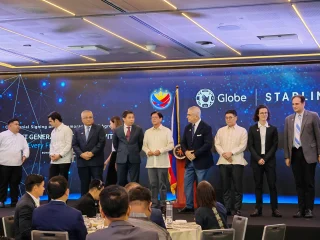
Globe Telecom has officially partnered with Starlink to bring Direct to Cell (DTC) satellite service…
Jan 16, 2026
The Philippines remains among the slowest countries in transitioning away from 3G networks, with most…
Jun 2, 2026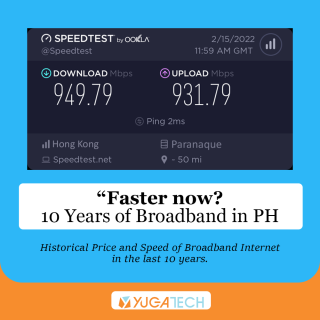
Not long ago, the Philippines have always been reported as among having the slowest internet…
May 28, 2026
Smart Communications, Inc. and TNT are providing free Facebook access through selected prepaid, home, and…
May 26, 2026
Globe introduced new AI, cloud, and connectivity products during its “The Blueprint” media briefing on…
May 26, 2026While data shows lacking in certain areas, Starlink’s satellite internet still offers certain advantages, Even local ISPs still lead in speed. In these remote areas, satellite broadband like Starlink could be a practical solution.
ABI Research forecasts that by 2028, the Philippines could become the leading market for satellite broadband in Southeast Asia, with around 909,000 subscriptions. Globe Telecom has officially partnered with Starlink to bring Direct to Cell (DTC) satellite service to the Philippines, making it the first telco in Southeast Asia to offer this breakthrough technology. Starting this year, Filipinos using standard LTE smartphones will be able to access essential mobile services such as voice calls, text messaging, messaging apps, and even video, anywhere with a clear view of the sky.
Our coverage of satellite service includes: "Starlink Slower Than Local ISPs in PH, Study Shows"; "Globe and Starlink Launch Direct-to-Cell Satellite Service in the Philippines"; "PH among slowest countries in shift away from 3G". Each article provides unique insights and information.