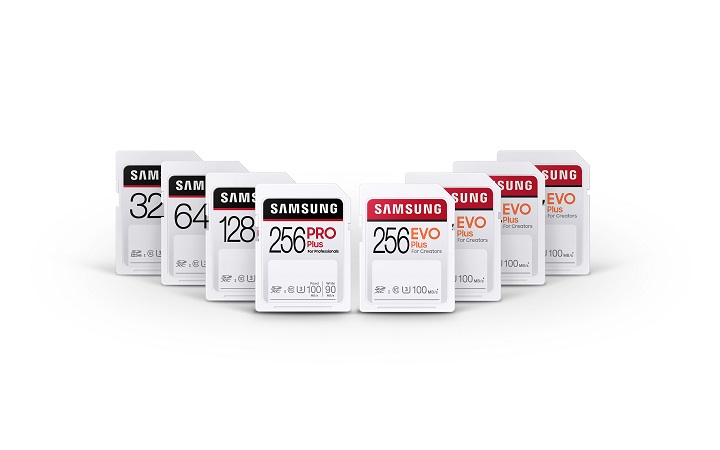

Samsung Electronics has officially added the PRO Plus and EVO Plus SD cards to its memory card lineup. The newly-unveiled SD cards feature exceptional speeds and improved durability. These SD cards are equipped with protection from water, temperature, x-rays, magnets, and shocks. Secure Digital (or SD for short) cards have been around since the early 2000s after three companies, Sandisk, Panasonic, and Toshiba all came together in 1999 to develop and market them as the industry standard. It's been almost twenty years since, and it's safe to say that their goal back in 1999 has been more than achieved, given the widespread use of SD cards. SD cards look like they're here to stay, and the least you can do to get the most out of the technology is to understand it so that you can make more educated buying decisions. Worry not though, as we're here to break it all down for you. Types of SD cards The simplest way to categorize SD cards into different types is by size, so that is where we will begin. There are three physical sizes of SD cards that are used nowadays: Standard Mini Micro Of the three, the mini SD size is the least common, as it's rare to see a device that uses it nowadays. Read more in our articles including "Samsung PRO Plus, EVO Plus SD cards now official" and "A Complete Guide to SD Cards".

Samsung Electronics has officially added the PRO Plus and EVO Plus SD cards to its…
Oct 14, 2020
Author’s Note: Article has been updated to include Application Performance Class under the Read/Write Speeds…
Feb 22, 2018I’ve been an avid fan of the Moo cards ever since they went online. The…
Jul 22, 2008
Infinix has launched its 7.7 Sale across Shopee, Lazada, and TikTok Shop, offering discounts on…
Jul 7, 2026
The Department of Information and Communications Technology (DICT) and the National Bureau of Investigation (NBI)…
Jul 7, 2026
Apple has released watchOS 27 beta 3 for developers, bringing its upgraded Siri AI experience…
Jul 7, 2026Samsung Electronics has officially added the PRO Plus and EVO Plus SD cards to its memory card lineup. The newly-unveiled SD cards feature exceptional speeds and improved durability.
These SD cards are equipped with protection from water, temperature, x-rays, magnets, and shocks. Secure Digital (or SD for short) cards have been around since the early 2000s after three companies, Sandisk, Panasonic, and Toshiba all came together in 1999 to develop and market them as the industry standard. It's been almost twenty years since, and it's safe to say that their goal back in 1999 has been more than achieved, given the widespread use of SD cards.
Our coverage of SD cards includes: "Samsung PRO Plus, EVO Plus SD cards now official"; "A Complete Guide to SD Cards"; "Moo Mini Cards: An Expensive Lesson in Proofreading". Each article provides unique insights and information.