

The Supreme Court (SC) has partnered with Microsoft to improve the efficiency and productivity of the country’s legal proceedings through videoconferencing hearings. It started on April 27, 2020, when the Honorable Chief Justice Peralta issued Administrative Circular 37-2020, directing all litigants, judges, and court personnel of 925 First and Second Level Courts located in Metro Manila and other key cities to immediately begin virtual court hearings. In the first nine days of videoconferencing hearings, the Supreme Court released a total of 4,683 PDLs. It is 125% more compared to the data recorded six weeks prior to its implementation. Aside from videoconferencing hearings, the high court also allowed the e-filing of complaints and petitions for bail, as well as submission of requirements for bail to minimize physical contact. Supreme Court of the Philippines has approved a new framework governing the use of artificial intelligence in the judiciary, setting rules to ensure human oversight and accountability. The policy, called the Governance Framework on Human-Centered Augmented Intelligence, establishes guidelines for how AI tools can be used across courts, emphasizing that technology should assist, not replace, human judgment. The Court said these are meant to strengthen public trust in the judicial system while ensuring ethical use of AI. Read more in our articles including "Supreme Court of the Philippines use virtual courtrooms to conduct hearings" and "Supreme Court approves AI guidelines for court use".

The Supreme Court (SC) has partnered with Microsoft to improve the efficiency and productivity of…
May 15, 2020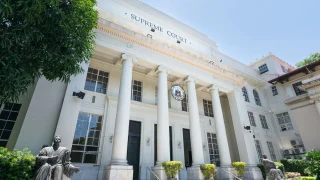
Supreme Court of the Philippines has approved a new framework governing the use of artificial…
Mar 22, 2026
Last Thursday, June 19, 2025, the Supreme Court of the Philippines formally launched the eCourt…
Jun 22, 2025
The Supreme Court (SC) has begun pilot testing of AI software in select first and…
Nov 30, 2024
As per an article on Inquirer, the Philippine Supreme Court (SC) is looking to leverage…
Sep 23, 2024
The Supreme Court affirmed the dismissals of four telecommunication companies from third-generation mobile communications technology…
Apr 29, 2024The Supreme Court (SC) has partnered with Microsoft to improve the efficiency and productivity of the country’s legal proceedings through videoconferencing hearings. It started on April 27, 2020, when the Honorable Chief Justice Peralta issued Administrative Circular 37-2020, directing all litigants, judges, and court personnel of 925 First and Second Level Courts located in Metro Manila and other key cities to immediately begin virtual court hearings.
In the first nine days of videoconferencing hearings, the Supreme Court released a total of 4,683 PDLs. It is 125% more compared to the data recorded six weeks prior to its implementation. Aside from videoconferencing hearings, the high court also allowed the e-filing of complaints and petitions for bail, as well as submission of requirements for bail to minimize physical contact. Supreme Court of the Philippines has approved a new framework governing the use of artificial intelligence in the judiciary, setting rules to ensure human oversight and accountability.
Our coverage of Supreme Court of the Philippines includes: "Supreme Court of the Philippines use virtual courtrooms to conduct hearings"; "Supreme Court approves AI guidelines for court use"; "Supreme Court intros eCourt Portal, eFiling to start July 1". Each article provides unique insights and information.