

The Vietnamese government is preparing to require its users of social media platforms—including Facebook and TikTok—verify their identities to combat online scams and cybercrime. “Unverified accounts, no matter on local or foreign platforms such as Facebook, TikTok, YouTube, will be dealt with.” The move effectively strips users from disseminating criticisms of the ruling Communist Party of Vietnam (CPV) anonymously. In Vietnam, it is said to implement a broad category of “criminal activities” that criminalizes the production and spreading of ‘anti-state propaganda’ and even fair criticisms against the CPV ruling. While Vietnamese reformers, dissidents, human rights defenders, and other freethinkers utilize these tools as means of communication and potential political mobilization, the CPV authorities are taking action to keep in control. To regulate the flow of information online and bring major foreign tech firms under state control, Vietnam passed a cybersecurity law in 2018. The law requires Facebook and Google to take down posts deemed to be threats to national security within 24 hours of receiving a government request, and foreign tech firms must establish representative offices in Vietnam and store users’ data locally. Furthermore, Vietnam’s Ministry of Information announced a ‘comprehensive’ probe into TikTok, which is popular among the young and challenges Facebook as the country’s preferred social media network. Read more in our articles including "Mandatory social media user identity verification is being pushed in Vietnam" and "Infinix HOT 70 now available with Dynamic Shine design".

The Vietnamese government is preparing to require its users of social media platforms—including Facebook and…
May 13, 2023
After being spotted in Lazada, the Infinix HOT 70 is now available in the Philippines.…
Jun 24, 2026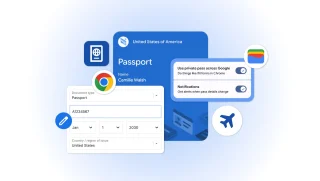
Google has announced new updates to Chrome Autofill. With this feature, it brings support for…
Jun 24, 2026
The Cybercrime Investigation and Coordinating Center (CICC) has ordered the temporary blocking of the game…
Jun 23, 2026
NVIDIA has announced Halos for Robotics. It is a new full-stack safety platform designed to…
Jun 23, 2026
Apple has released the second developer beta of iOS 27. It brings several new features…
Jun 23, 2026The Vietnamese government is preparing to require its users of social media platforms—including Facebook and TikTok—verify their identities to combat online scams and cybercrime. “Unverified accounts, no matter on local or foreign platforms such as Facebook, TikTok, YouTube, will be dealt with.” The move effectively strips users from disseminating criticisms of the ruling Communist Party of Vietnam (CPV) anonymously.
In Vietnam, it is said to implement a broad category of “criminal activities” that criminalizes the production and spreading of ‘anti-state propaganda’ and even fair criticisms against the CPV ruling. While Vietnamese reformers, dissidents, human rights defenders, and other freethinkers utilize these tools as means of communication and potential political mobilization, the CPV authorities are taking action to keep in control. To regulate the flow of information online and bring major foreign tech firms under state control, Vietnam passed a cybersecurity law in 2018.
Our coverage of Vietnam includes: "Mandatory social media user identity verification is being pushed in Vietnam"; "Infinix HOT 70 now available with Dynamic Shine design"; "Google Chrome expands Autofill with Google Wallet integration". Each article provides unique insights and information.