

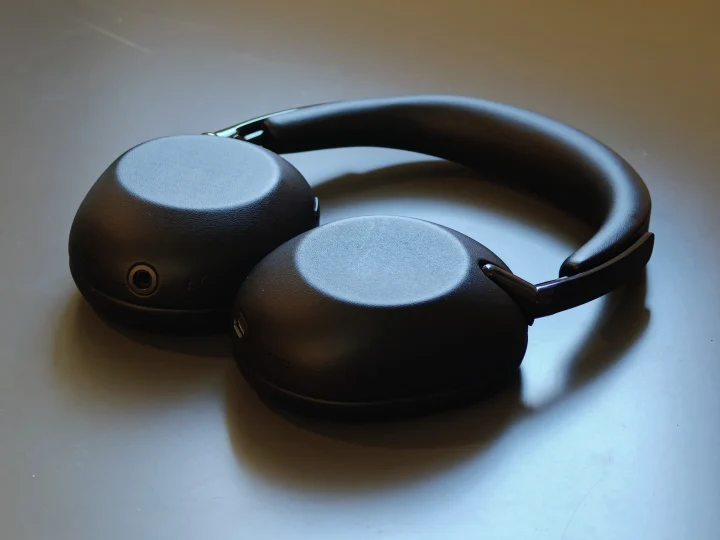
In the crowded wireless over-ear ANC headphone space we have in 2026, we have to admit that we’re really spoiled for choice. It can be easy to forget that once upon a time, we were realistically only choosing from Sony or Bose.
That’s why we’re more than happy to review the Sony 1000X THE COLLEXION headphones. This represents the current engineering apex of the brand in a field it was once the undisputed king of.
Is it a worthwhile purchase at its admittedly steep price point?
Before I get into it, I personally know that sound can be very subjective. I am by no means an audiophile, nor do I claim to have the most technical credentials. But I have been listening to music on earphones/headphones for a couple of decades. I’ve owned both budget and premium IEMs, on-ear/over-ear headphones, high-end TWS earbuds and bookshelf/room speakers. These days I don’t have as elaborate a listening setup as I once had (aging made me prioritize convenience!) but my experience with wireless ANC headphones comes from ownership of several Sony XMx models, the Bose QC series, Soundcore, Sennheiser, and many others.
I may have subtle preferences given my sensitivity to specific ranges – but I’ll try to describe the product as accurately as I can.
From here on out, I’ll call the headphones the 1000X. Let’s begin!
Design and Construction
The first thing that stood out to me when opening the box is the 1000X’s carrying case. It reminds me of the distinct, handbag-like silhouette of a Harman Kardon Onyx Studio 5 speaker.
The hard shell is enveloped in a cloth finish, with only minimalistic SONY branding near the bottom.
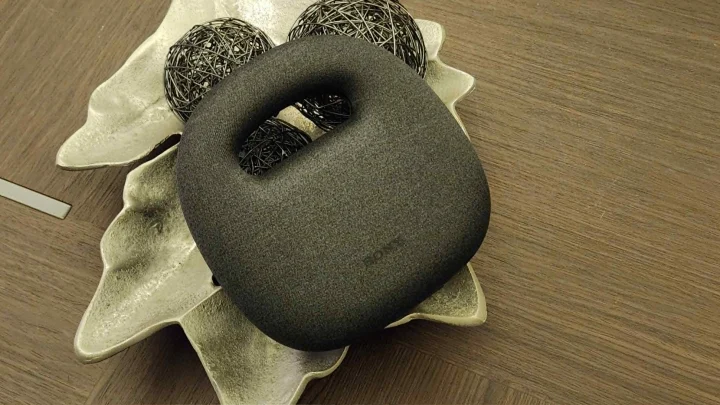
It can be opened via a secure magnetic flap on the case’s underside. Flipping it up reveals the headphones and a 3.5mm cable at the center. Since I accepted the product without doing any research (to rid myself of potential biases), I was glad to see wired support there.
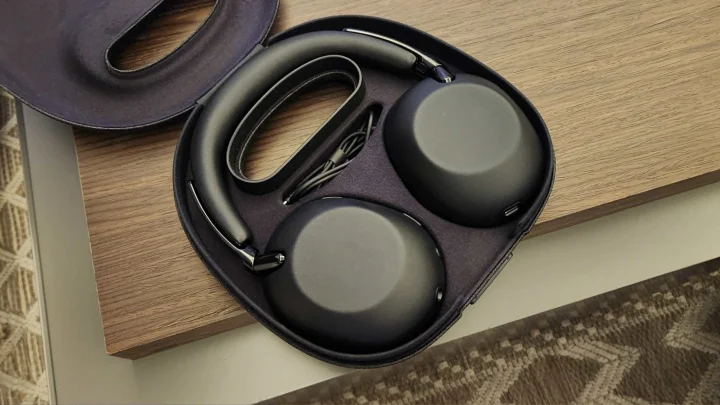
Let’s get to the headphones themselves. Upon picking them up, the most noticeable thing is the weight. It feels heftier in the hand than any Sony XM headphone I’ve tried before, although it’s not AirPods Max 2-level quite yet. The spec sheet confirms this observation (1000X at 320g, XM5/6 at 249/253g).
This weight is evenly distributed across the headband and earcups, both giving off an expensive, leathery feel to the touch.
The headband itself is supported by a metal strip connecting it to the cups as well. I fiddled around with the 1000Xs to try to get as much as a creak from its frame. There was no such thing here. Perhaps the fact that it doesn’t fold added to the overall structural integrity of these headphones.
Luckily enough, the metallic portions make use of a matte finish that should be easy to keep clean. Only the components directly connected to the cups themselves are piano black, but I think it’d be unlikely for someone to touch these and leave fingerprints.
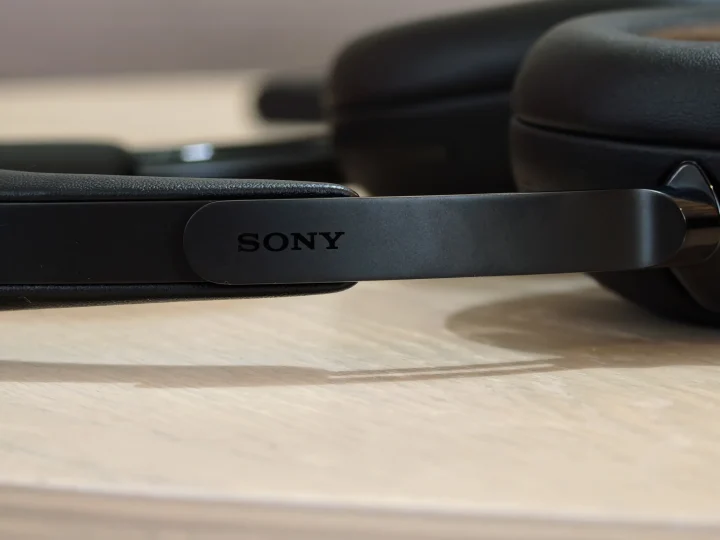
There are three buttons on the headphones. As expected, none of them are too loose or difficult to press. The construction screams quality, comfort, and years of ergonomic design experience.
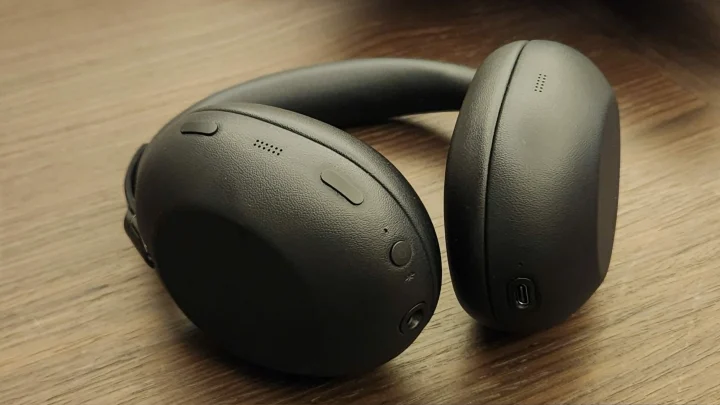
Port selection is simple: a 3.5mm jack and a USB Type-C opening.
Comfort and Fit
Since the Sony 1000X is both hefty and built like a tank, it would be easy to assume the worst about its comfort. I personally have had to sell off numerous headphones in the past due to migraines from improper fit or weight distribution.
Despite this, these headphones are plush and padded similar to five-star luxury accommodation. Can it offset the laws of physics?
Well, for the most part, yes. The weight distribution balance I spoke of earlier does wonders in use. No part of the Sony 1000X feels heavier on the head than the others, leading to a uniform clamping force all throughout. The headphones stay in place even during brisk morning walks.
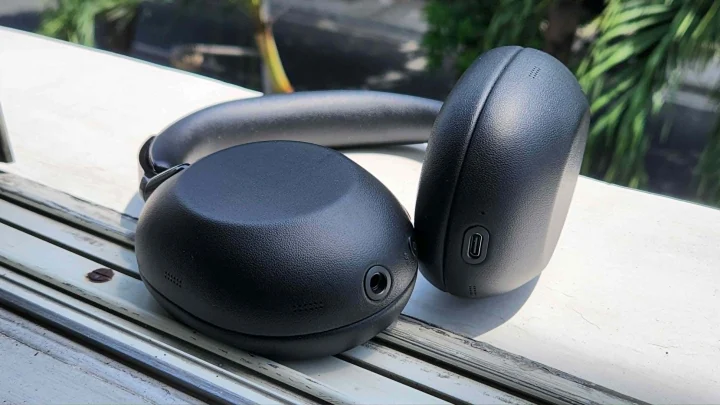
I had some issues with shallow earcups pushing my ears against drivers in past Sony XMs (particularly the 6), but that’s not an issue here. There is a surplus of space, giving my ears ample room to exist uninterruptedly. However, I do admit that it gets a bit toasty inside the cups, even when wearing the 1000Xs in colder weather.
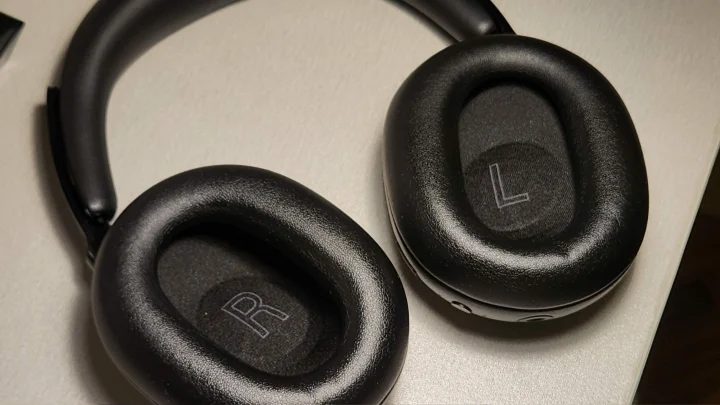
The clamping force is easy to ignore in the first two hours, especially with the padding – but I felt the need to periodically take it off to let the area around my ears rest. It’s nowhere near unbearable though. Perhaps this is the trade-off for solid construction, and I’d take these over headphones that I have to constantly readjust any day of the week.
On the other hand, the headband emulated a pillow constantly attached to my head.

So while the 1000Xs aren’t quite on the S-tier “set it and forget it” headphones (there are few, if any nowadays), they are a lock for the A-tier.
Connectivity and Battery Life
The Sony 1000Xs come shipped with Bluetooth 6.0 technology onboard. They seamlessly connected to multiple devices: my laptop, my smartphone, and my tablet.
Holding down the power button for five seconds spawned a menu on my two mobile devices, asking which one would like to connect to the 1000X. Once it was on my phone, I opened the official app to do some testing.
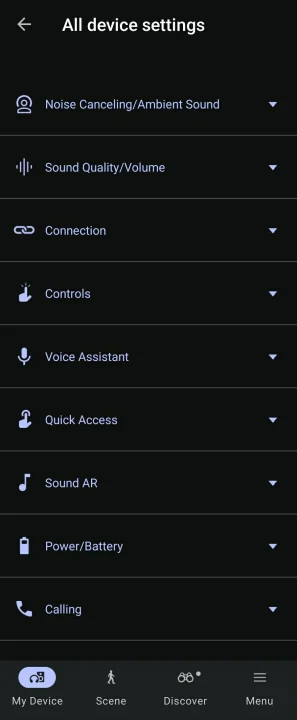
The Sony Sound Connect app provides a top-down overview of the 1000X and its features. There are shortcuts to Ambient Sound Control, Equalizer shifting (to change tonal tuning), Listening Modes, and other toggles a user would want to easily access. A full dropdown settings menu is also present for users to configure each and every setting to their own preferences.
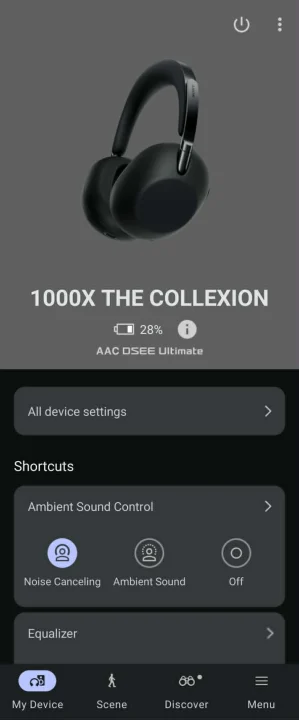
Due to more powerful hardware than ever before, the 1000Xs actually have a shorter battery life than its siblings. It tops out at 24 hours with ANC on, less than the XM5 and XM6’s 30-37.
Audio Quality and Noise Cancelling
Now let’s get to what most of you are probably here for.
How does Sony’s range-topping, ultra-premium 1000X THE COLLEXION actually sound? Do the bespoke 30mm carbon composite drivers pack a punch?

My first test scenario was fresh out of the box, connected to my laptop via Bluetooth. This will likely be one of the most common setups with this device. No equalizer changes, Music Upmix set on Standard, ANC turned on.
Unsurprisingly, the Sony 1000X sound as mainstream, V-shaped as it will get. It’s been the same for all Sony XM headphones I’ve tried so far – just with incremental improvements with every generation. The bass is definitely present and ready to thump away at your eardrums, should your playlist track demand it. Thankfully, it doesn’t muddy the music and still leaves room for the other elements to shine.
The warmth spreads across the board. The mids are slightly boosted, with both the vocals and instruments taking center stage. On busier tracks with a lot of simultaneous activity from both, though, it somehow seems like one of them is trying to overpower the other. I personally like it when the vocals are a tiny bit more powerful and pronounced than the accompaniments, but it is more of a preference than anything else.
I’m sure most people will be happy with the performance of the 1000Xs, even on stock settings. The detail is especially good compared to other common ANC headphone picks. I did several back-and-forth listening tests with a few ANC headphones at home just to make sure.
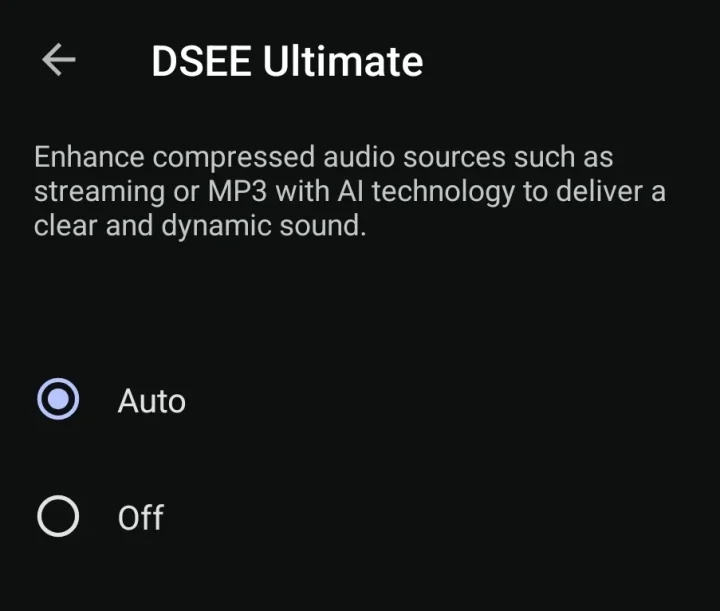
Should the audio source itself be lackluster, Sony’s DSEE Ultimate uses AI technology to fill in the resolution gaps to keep your music sounding crisp, supplemented by higher-fidelity SBC/AAC codecs.
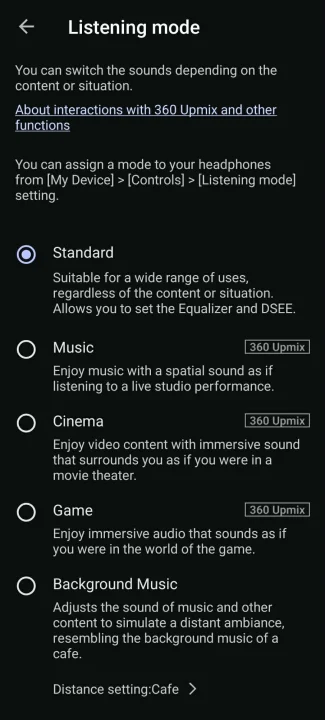
There is a good amount of soundstaging and separation – you can tell each instrument apart by closing your eyes and listening to the songs. You can adjust spatial audio modes by pressing on the “Music Upmix” button on the headphones, which can simulate Cinema, Game, or other settings as seen below.
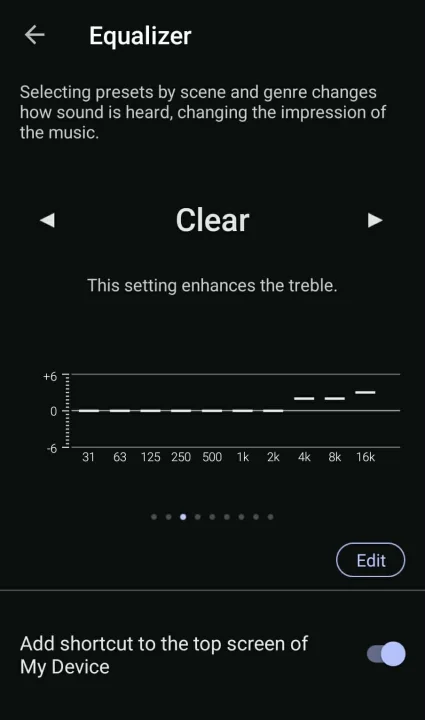
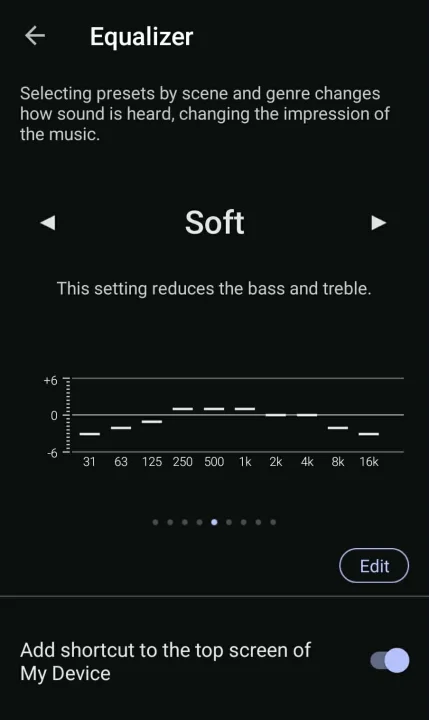
Moving on to my smartphone is when I can do some magic with the audio tweaks. Instead of messing about with the EQ levels, I noticed that switching to the “Clear” EQ preset was an immediate improvement. I kept it in this setting for most of my usage, then used it as my baseline for further personalized tuning.
“Soft” could also bring out the headphones’ maximum potential with a selection of tracks, but it lacked the needed punch for some more energetic genres.
The Active Noise Cancelling, on the other hand? Class-leading. Sony has ANC down to a T. Even in a noisy environment such as a crowded cafe or in the mall, turning on the 1000Xs feels similar to being pulled into a vacuum. I’ve tried a lot of ANC headphones, but very, very few can compete with Sony on this.
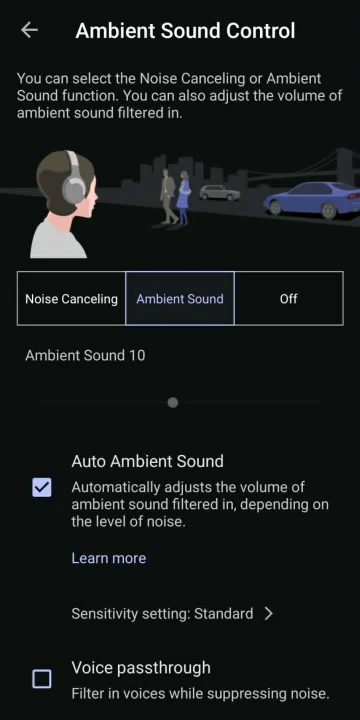
Since it’s hazardous to be walking in public with minimal spatial awareness, an “Ambient Sound” mode lets some surrounding noise in. The amount can be toggled from 1 to 20 within the application. A cool feature: the headphones can automatically detect how chatty your environment is to self-set the slider.
Conclusion
The Sony 1000X THE COLLEXION is an apt anniversary headphone to celebrate 10 years since the first Sony noise-cancelling headphone (MDR-1000X). The design and construction quality are undoubtedly a step above the XM6 and 5, so the fact that it doesn’t fold can be easy to forgive. The well-thought out carrying case is a nice bonus too.

If we’re just talking about musicality, it might be hard to justify the price difference (these are PHP 36,999 by the way, versus the XM6’s SRP of PHP 27,999). There just isn’t a big enough leap in acoustic performance.
But as an overall package? That’s a different story. The extra cash you’re shelling out gets you the same Sony signature sound, room-silencing ANC, a super sturdy build that we’re sure will last the test of time, greater comfort for long listening sessions, as well as an intuitive layout and comprehensive app support.
If you have the cash to spare and are looking to keep a pair of ANC travel headphones for the next few years or so, then these will be a solid investment.






0 Comments
Leave a Reply