
The POCO F7 Series came out earlier this year (in March), including the F7 Pro and the lineup’s first-ever Ultra model. However, one variant was missing: the base model POCO F7.
Jump to now, POCO has finally released the POCO F7 just recently via an online unveiling during the last week of June.
It’s the very first phone available globally rocking the new Snapdragon 8s Gen 4. That said, you can kinda see why Xiaomi did another launch for the base model. Perhaps, it’s because the said chip is the latest “flagship-level” chipset released by Qualcomm right after the Snapdragon 8 Elite.
So, they just had to wait- you get what I mean. Anyway, back to our main topic: we’re comparing the vanilla POCO F7 against its Pro sibling. Coming in for a significantly lower price (that’s a Php4,000 difference, mind you), does the POCO F7 offer better value for money?
Or is it just better to go for the Pro model altogether? We’re going to answer that shortly in this comparison review.
Design and Construction
On the outside, despite both phones carrying the same F7 moniker, each has a distinctive design.

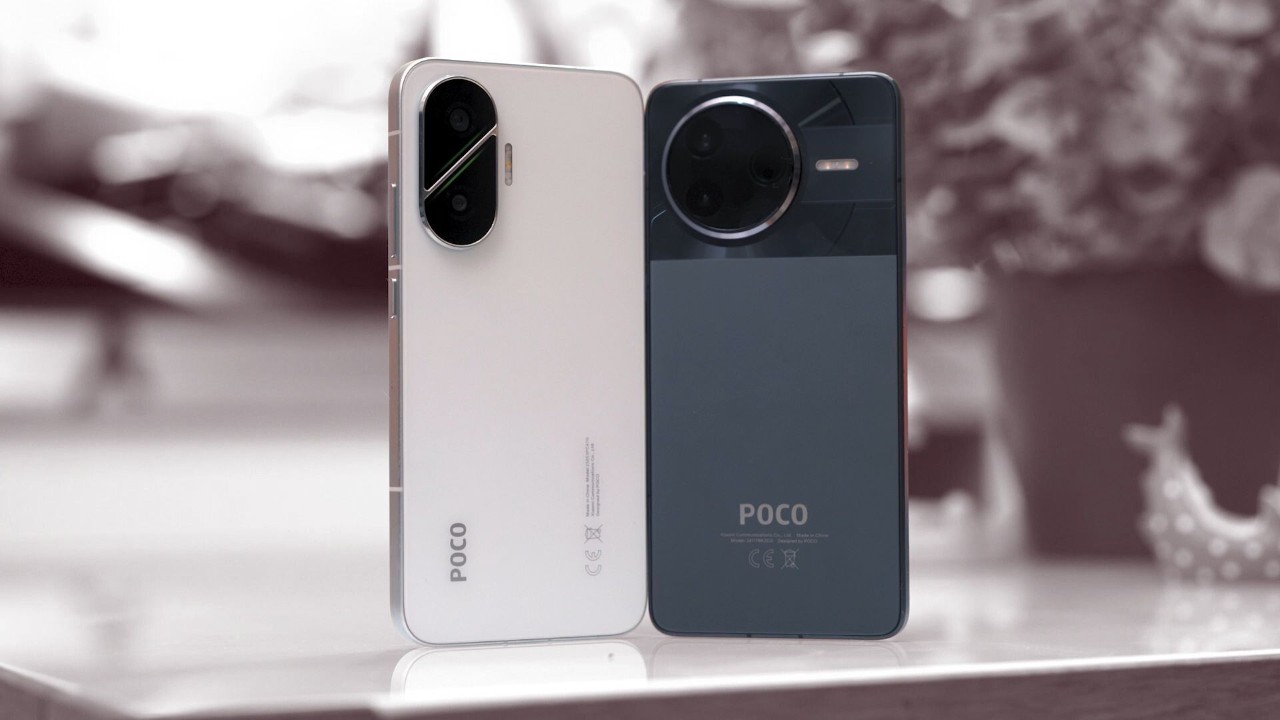
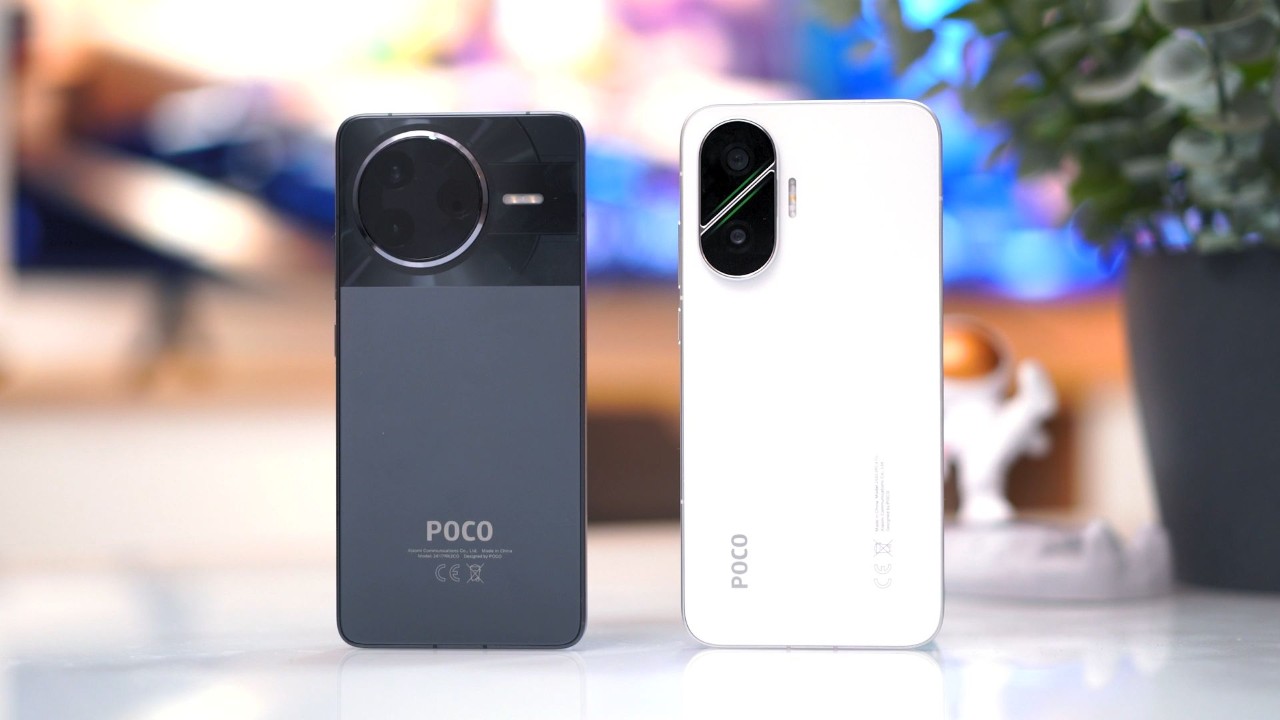
The POCO F7 Pro gets the same look as the Ultra model, rocking a two-tone finish with the top panel having a high gloss finish and the other large half is matte to the touch. We have the circular camera bump housing two cameras, and some geometrical patterns designed around it.
Our F7 Pro unit is in the Black colorway with color matching metallic frame, and it has sleek, flat sides and flat edge design.
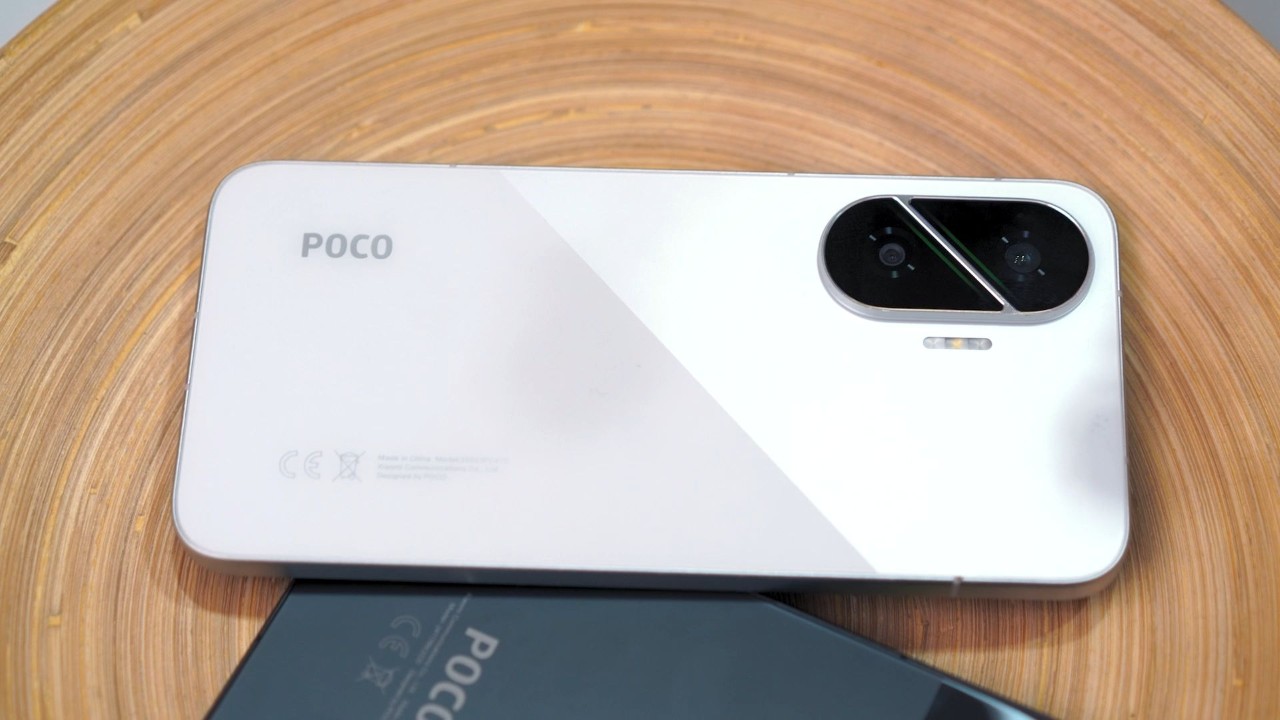
Moving over to the base model POCO F7, it comes with a different look, defined mainly by its pill-shaped camera bump. It does feature a two-tone design, too, however, the whole back panel is entirely in matte finish—making it less prone to smudges unlike its other color options, which are weirdly all in glossy finish.
Not to mention, its design is much more minimalist in our opinion, and that little green accenting on the camera island adds a really nice touch. It has a metallic frame and a flat edge design, just like the Pro model.
For added protection, I’m glad to see that both are IP68-rated for dust and water resistance—just in time for the rainy season here in the Philippines. This is definitely a big improvement for both models, especially the F7.
You see, this level of ingress protection is typically reserved for more expensive units. So, to have this high-end feature on a more affordable, quote unquote flagship killer? I’ll take it any day (even if it’s a rainy day).
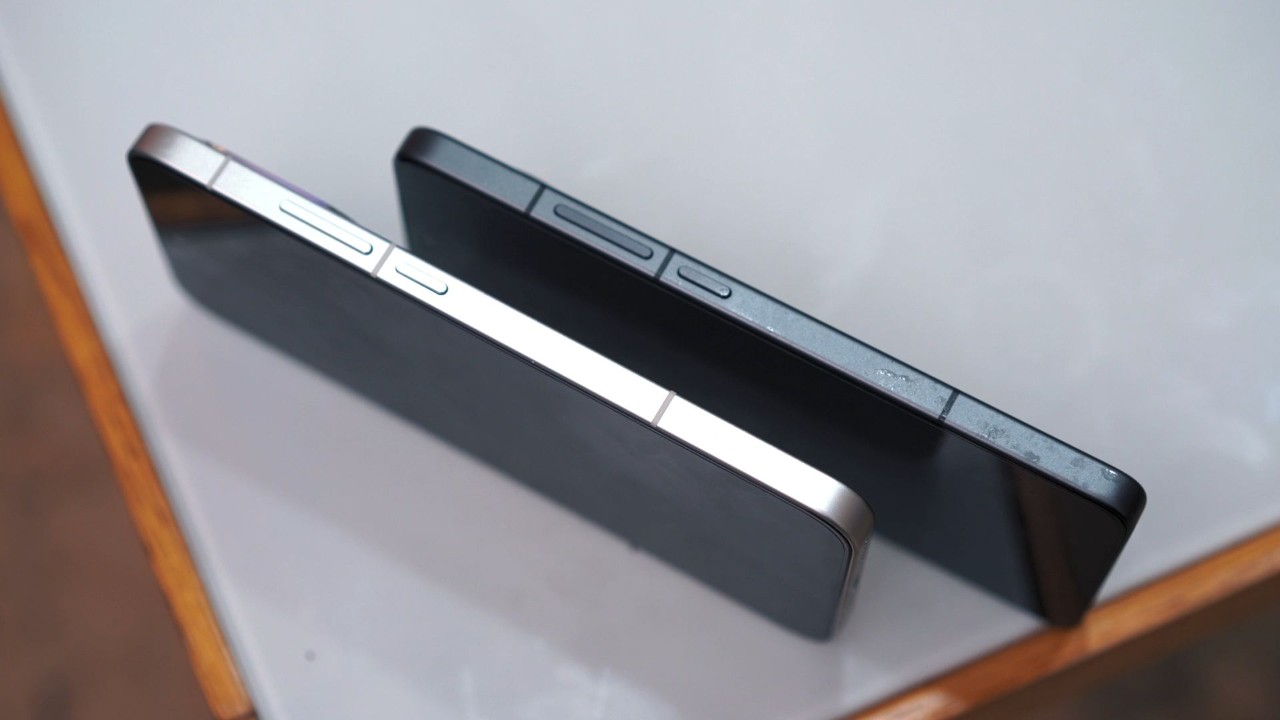
Now, putting them side by side, you’ll notice another key difference: the size. While both phones almost measure the same thickness at 8.2 mm, the POCO F7 is slightly wider and taller than the Pro model, so it’s a bit hefty in the hand.
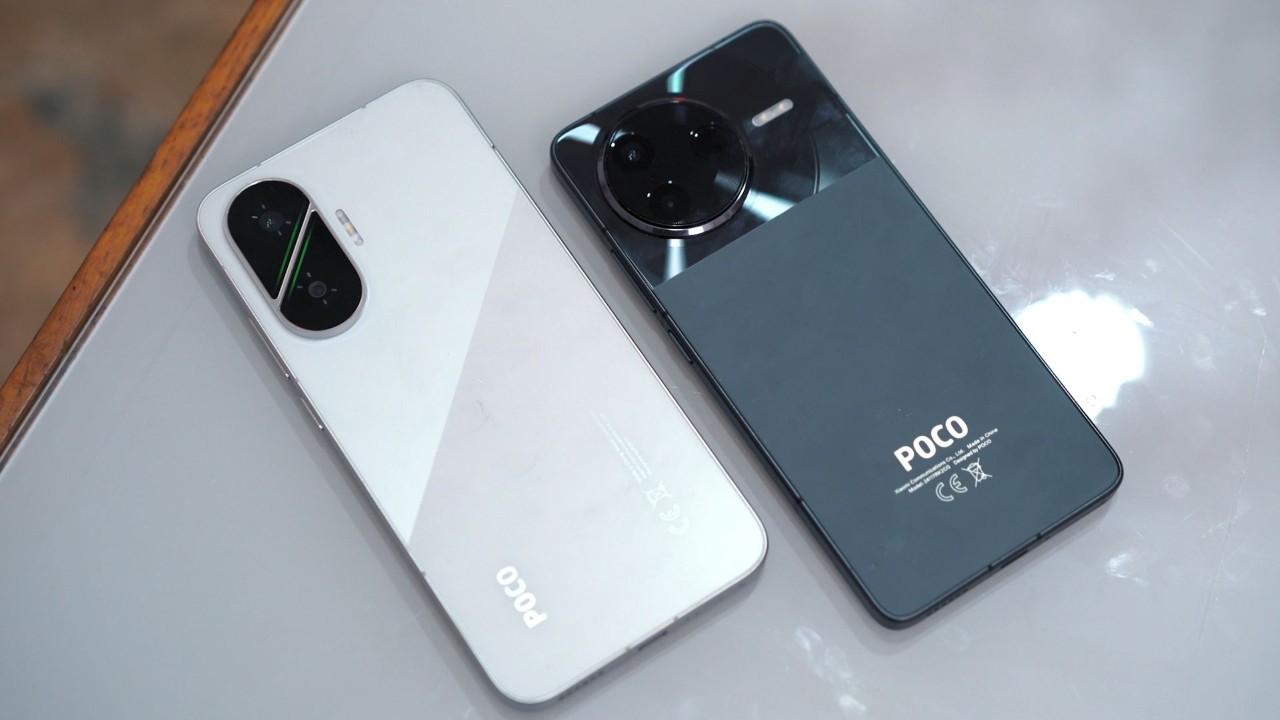
Yet another difference to see between the two phones are the rounded corners. The radius is much more pronounced on the base model than the Pro one, and honestly, I kinda dig this design.
These changes make it look a little iPhone-ish, and with that kind of camera island design, perhaps the POCO F7 could almost look like an iPhone 16 from afar. But, that’s just me.
Regardless, design is always subjective, and with the same level of durability, it’s just fair to give ‘em both a point this round.
Display, Multimedia, and Biometrics
With a bigger frame also means a bigger screen. The POCO F7 sports a large 6.83-inch AMOLED display, and it’s the biggest by far in any POCO F series device. It’s got a 1.5K resolution (2772 x 1280 pixels), runs at a smooth 120Hz refresh rate, and peaks at 3200 nits of luminance.
On the other hand, the POCO F7 Pro has the usual 6.67-inch AMOLED panel but with a higher screen resolution of Wide Quad HD+ (3200 x 1440 pixels). It also has a 120Hz refresh rate and the same level of peak brightness at 3200 nits.

Both phones get a layer of Corning Gorilla Glass 7i on top for added drop and scratch resistance.
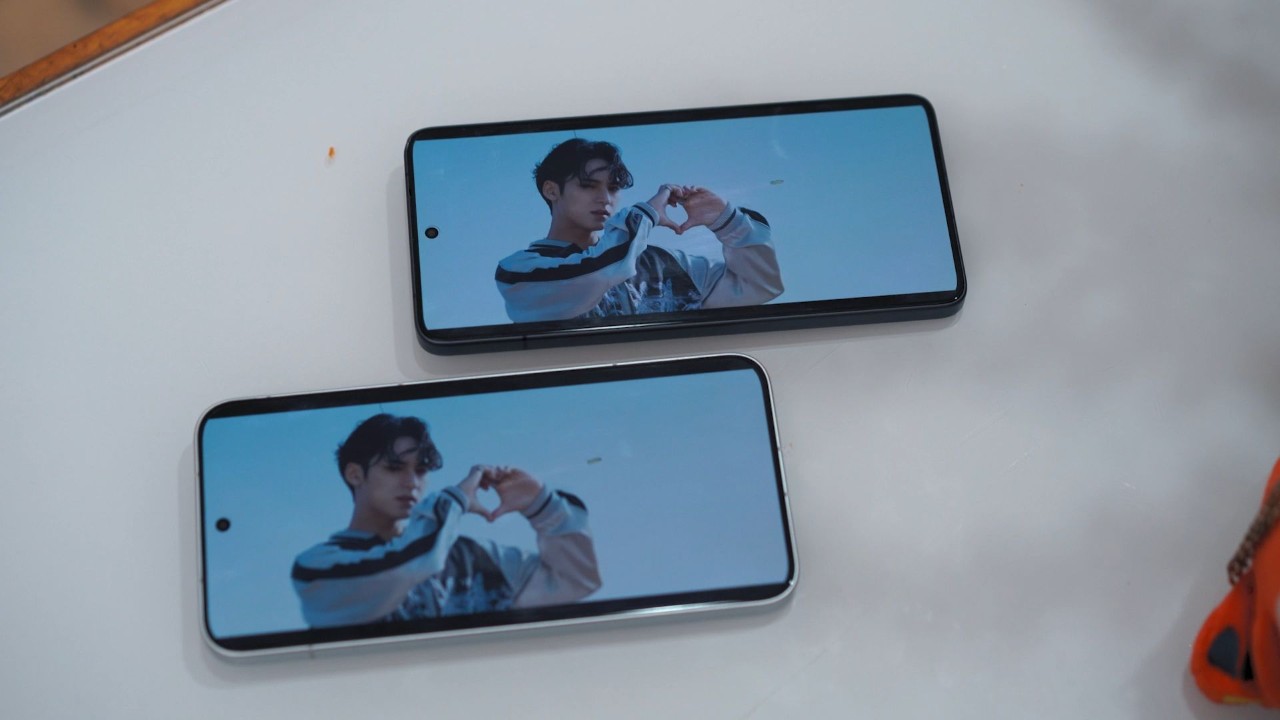
In terms of visual experience, both are pretty solid. As expected from AMOLED screens, both models provide vivid colors, good contrast, and true, deep blacks.
When it comes to audio quality, I hear a slight difference. Both phones feature dual stereo speakers and are definitely loud, but the POCO F7 Pro sounds clearer in the mids and highs compared to the F7 that goes a bit muffled at max volumes.
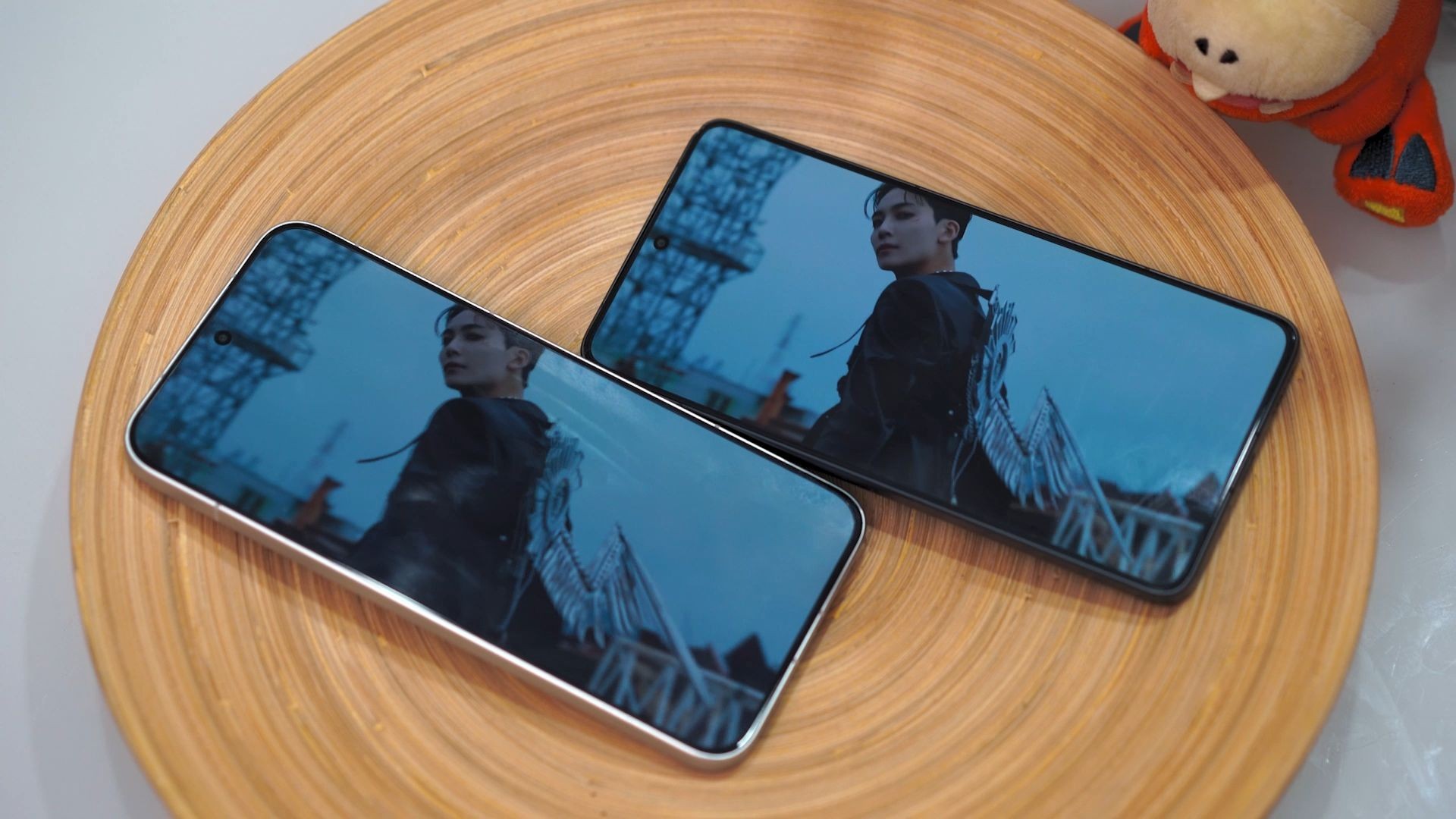
They both have a decent amount of bass, but as you’d expect, they’re not as good as with flagship devices. But all in all, both phones will deliver just fine for your daily entertainment needs.
For biometrics security, both phones feature facial recognition and an under-display fingerprint sensor (an optical one for the base F7, and an ultrasonic sensor for the F7 Pro). On paper, ultrasonic sensor is supposedly faster and more secure, but I’m glad to report that the unlocking experience was quick and snappy for both models.

In the display department, I feel like both phones have their own strengths. The POCO F7 Pro, despite the smaller screen, provides clearer audio, while the POCO F7 slaps with its larger screen and a respectable sound stage.
That said, this round leads to another tie.
Performance and Benchmarks
Now, let’s move over to one of the most crucial parts in this comparison: performance.
Powering the POCO F7 is the Snapdragon 8s Gen 4, making it the very first smartphone rocking this new chip that is available globally.
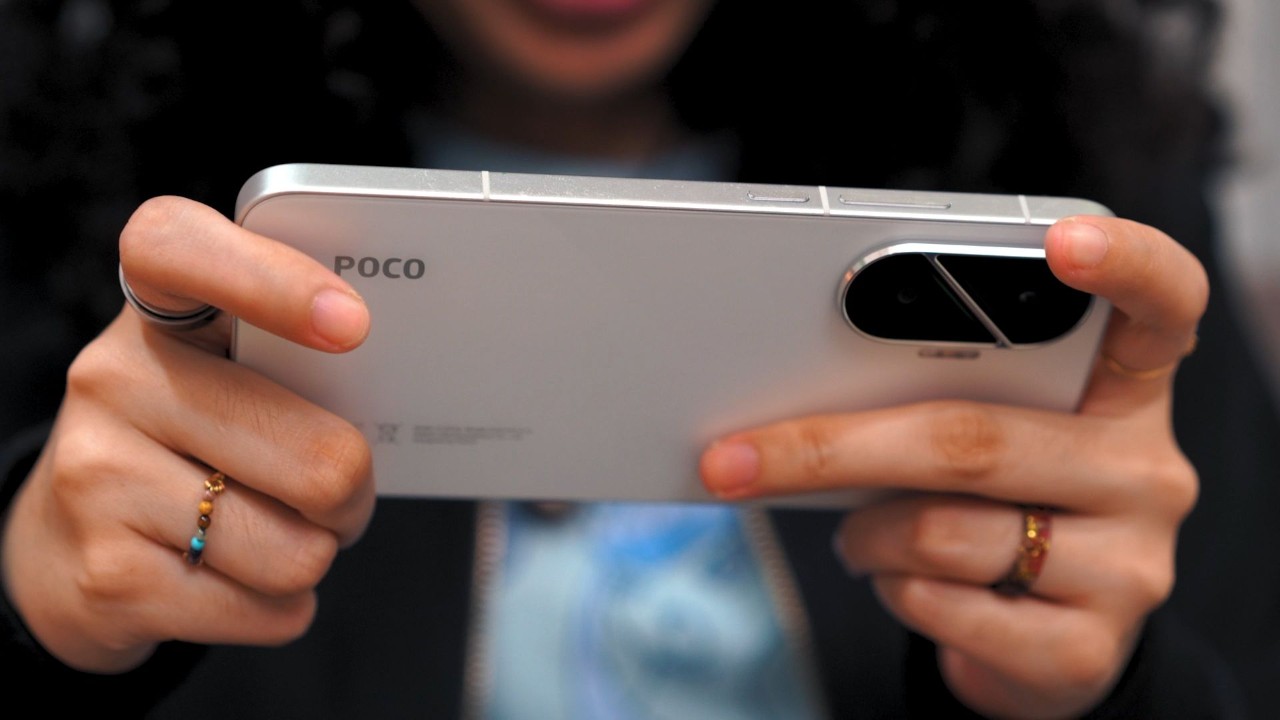
It’s officially known as a flagship-level chipset, built on a 4-nanometer process, and clocked at up to 3.21GHz. However, it’s technically not a true flagship. The Snapdragon 8s Gen 4 is said to be a step behind the 8 Elite, yet two steps ahead of the 8 Gen 2, which powered last year’s POCO F6 Pro.
And as you would’ve guessed already, this year’s POCO F7 Pro is equipped with the Snapdragon 8 Gen 3—it’s also a 4-nanometer chip with slightly faster clock speeds at up to 3.3GHz.
For config, both units that we have come with 16GB of RAM and 512GB of internal storage.
Taking a look at our benchmark results, the POCO F7 edges out the F7 Pro, delivering higher scores across the board, albeit with minor differences.
| Benchmark | POCO F7 | POCO F7 Pro |
| Chipset | Snapdragon 8s Gen 4 | Snapdragon 8 Gen 3 |
| AnTuTu V10 | 2,055,888 | 1,974,717 |
| AnTuTu Storage | 209,899 | 198,370 |
| S.Read Speed | 3698.0 MB/s | 3900.7 MB/s |
| S.Write Speed | 1696.0 MB/s | 3422.3 MB/s |
| 3DMark Wild Life | MAXED OUT | MAXED OUT |
| 3DMark Wild Life Extreme | 4,201 | Avg. FPS: 25.16 | 3,897 | Avg. FPS: 23.34 |
| Geekbench 6 CPU Single-Core | 2,034 | 2.087 |
| Geekbench 6 CPU Multi-Core | 6,414 | 6,267 |
| Geekbench 6 GPU OpenCL | 13,354 | 15,229 |
| Geekbench 6 GPU Vulkan | 18,561 | 16,673 |
| PCMark Work 3.0 performance | 15,346 | 15,843 |
| PCMark Work 3.0 battery life | 16 hours and 20 minutes | 15 hours and 59 minutes |
It was able to surpass the 2 million mark in ANTUTU, which POCO actually advertised. However, I must admit, all the tests were done with Ultimate mode enabled for both phones.
The F7 Pro’s score is not too far though, achieving over 1.9 million points. Looking at the 3DMark scores, the F7 got the higher score, again, with a slight bump in average frame rate—suggesting that it’s slightly better at handling more graphical tasks.
Setting the numbers aside, in real world use cases, you can barely see any difference.

You can expect solid performance for both phones, especially in gaming. Graphic-intensive titles like Zenless Zone Zero and Wuthering Waves ran smoothly at Medium to High Custom graphics settings with little to no stutters.
One thing to note is that the POCO F7 tends to get relatively hotter than the F7 Pro. This might be due to the Snapdragon 8s Gen 4 being a new chipset, and maybe it isn’t that optimized just yet.
In fact, we just got the latest software update with a change log that reads, “Fix: overheating issues in some cases.” So, there’s that. We just hope that more software optimizations can be done in future updates.

Performance-wise, both models are evenly matched. While the F7 features a newer chip, it doesn’t offer a significant advantage over that last year’s actual flagship chipset. That said, it still delivers the kind of flagship-level performance you’d expect, and at a cheaper price too.
Therefore, I’m giving it another tie in this round.
Cameras
As for cameras, on paper, both models feature a dual-camera setup that includes a 50-megapixel main sensor with OIS and an 8-megapixel ultrawide. At the front, both have a 20-megapixel selfie shooter.
The key difference lies in the main camera sensors: the Pro uses a Light Fusion 800 sensor, while the vanilla model is equipped with a Sony IMX882. This difference becomes apparent in image quality.

While images from both phones deliver sharp details and good contrast, the POCO F7 tends to produce cooler tones, whereas the F7 Pro leans toward warmer tones in typical shooting conditions.

However, when it comes to portraits, the base F7 does a better job. It delivers more vibrant colors and generally performs better in portrait mode, offering a more acceptable focal distance.
Be the judge of the image quality yourself with our sample shots below.
POCO F7 vs. POCO F7 Pro Sample Shots
Monday, Jun 23, 2025


In terms of video capture, both phones can shoot up to 4K at 60 fps. They perform quite well in this regard, offering stabilized shots and fast autofocus, although you can also notice difference in color reproduction here.
Battery Life
Battery-wise, the base F7 has the slight edge. For one, it packs a larger 6500mAh unit paired with 90W of charging. With that big of a battery capacity, POCO also threw in a 22.5W reverse wired charging, basically allowing the phone to be a convenient power bank for your other devices.
Meanwhile, the F7 Pro still has a solid 6000mAh of battery, also with 90W of fast charging support—which is a downgrade from last year’s F6 Pro with up to 120W charging.
When it comes to battery life, the extra capacity in the F7 doesn’t offer much of an advantage, at least in our benchmark tests. In the PCMark battery life test, the F7 lasted 16 hours and 20 minutes, which isn’t that far from the F7 Pro’s 15 hours and 59 minutes of runtime.
Neither model supports bypass charging, so keep that in mind if you plan to game while plugged in, as this could lead to higher heat buildup and potential battery wear over time.
Connectivity and Other Features
On the software side, both phones run Xiaomi’s HyperOS 2, based on Android 15.
The experience is virtually identical, complete with all the bells and whistles that HyperOS offers. Unfortunately, that also includes a significant amount of bloatware and system-wide ads.
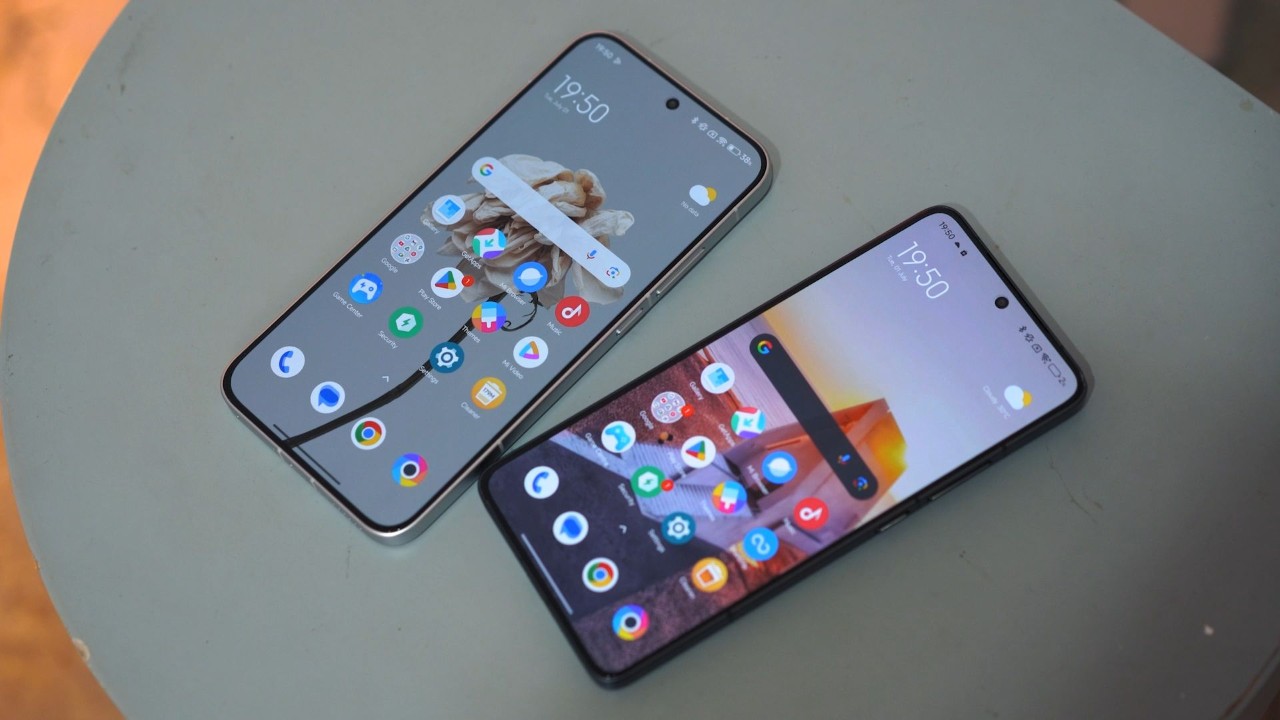
While you can manually remove or disable most of them in the Settings, it’s still quite a hassle, and sometimes, ads continue to appear even after you’ve disabled them. It’s not a dealbreaker per se, but it certainly annoys some users, myself included.
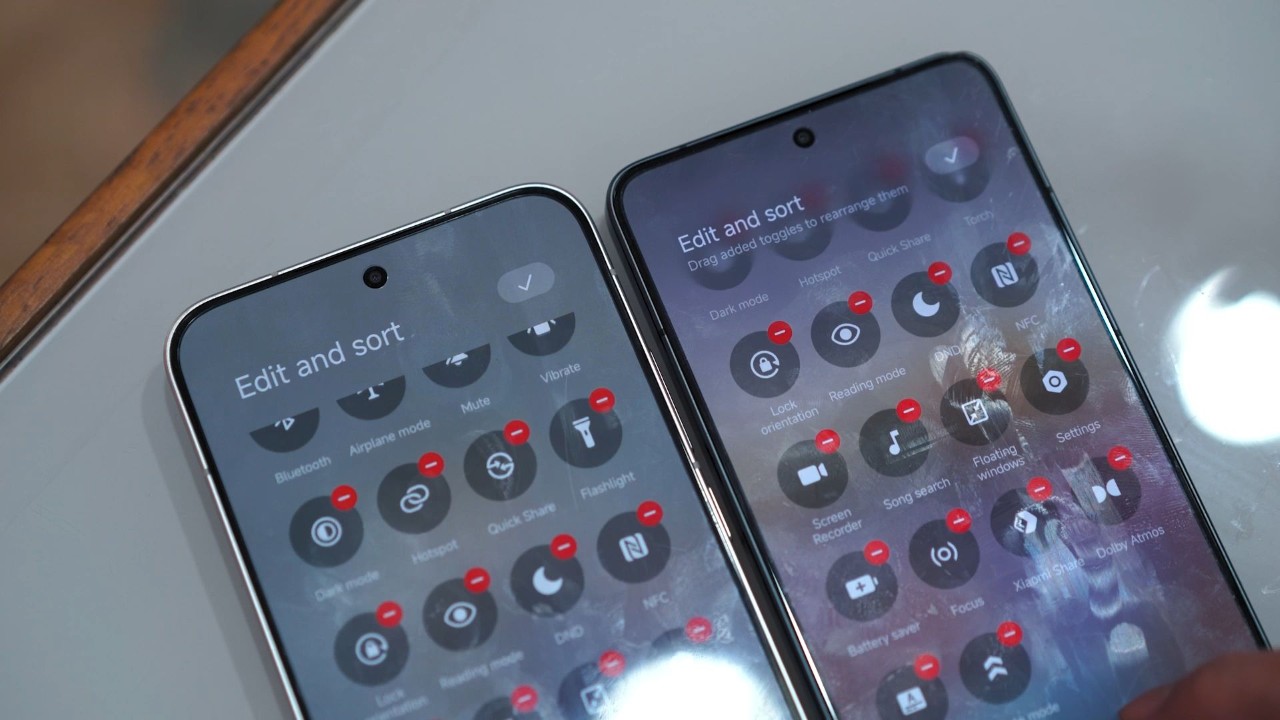
One key difference I noticed is that the F7 Pro features an advanced blurring effect on the notification and control panels, where UI elements overflow. This change hasn’t made its way to the regular F7 just yet.
As for update policy, I’m happy to report that both phones are promised to get up to four years of major OS updates and up to six years of security patches.
Connectivity-wise, you get all the essentials here: 5G, Wi-Fi 7, NFC, and an IR blaster.
Which one should you get?
Finally, let’s talk about the price and our verdict.
The POCO F7 starts at PHP 23,999, and for that price, Xiaomi did a few things better. It’s got a slightly better processing power, a more visually appealing design, and a larger battery pack. Essentially, you’re getting most of what the Pro variant brings for significantly less.

Meanwhile, the POCO F7 Pro, starting at PHP 27,999, still justifies its higher price with a more refined overall experience. It has a sharper display, clearer audio, an ultrasonic fingerprint sensor, and has better thermal management.

But at the end of the day, it’s the price that matters. So, if we’re talking about raw performance and value for money, then the vanilla POCO F7 delivers excellent hardware for the price. It’s indeed an easy recommendation over the Pro variant without the need to stretch your budget.
POCO F7 vs. POCO F7 Pro specs:
| POCO F7 | POCO F7 Pro |
|---|---|
| 6.83-inch 1.5K AMOLED | 6.67-inch WQHD+ AMOLED |
| 2772 x 1280 pixels, 120Hz, 447 ppi | 3200 x 1440 pixels, 120Hz, 526 ppi |
| 1700 nits (HBM), 3200 nits peak brightness | 1800 nits (HBM), 3200 nits peak brightness |
| Corning Gorilla Glass 7i | Corning Gorilla Glass 7i |
| Snapdragon 8s Gen 4 | Snapdragon 8 Gen 3 |
| 4nm, octa-core, up to 3.21GHz | 4nm, octa-core, up to 3.3GHz |
| 12GB LPDDR5x RAM | 12GB LPDDR5x RAM |
| 256GB, 512GB UFS 4.1 storage | 256GB, 512GB UFS 4.1 storage |
| Dual rear cameras: | Dual rear cameras: |
| - 50MP f/1.5 main, OIS (Sony IMX882) | - 50MP f/1.6 main, OIS (Light Fusion 800) |
| - 8MP ultrawide | - 8MP f/2.2 ultrawide |
| 20MP f/2.2 selfie shooter (hole punch notch) | 20MP selfie shooter (hole punch notch) |
| Dual nano-SIM | Dual nano-SIM |
| 5G, 4G LTE | 5G, 4G LTE |
| Wi-Fi 7 | Wi-Fi 7 |
| Bluetooth 6.0 | Bluetooth 5.4 |
| GPS, Beidou, Galileo, GLONASS, QZSS, NavIC | GPS, Beidou, Galileo, GLONASS, QZSS, NavIC, AGNSS |
| USB Type-C | USB Type-C |
| NFC | NFC |
| Under-display fingerprint sensor, face unlock | Under-display fingerprint sensor (ultrasonic), face unlock |
| IP68 dust and water resistance | IP68 dust and water resistance |
| Dual stereo speakers, Dolby Atmos/ Vision, IR blaster | Dual stereo speakers, Dolby Atmos/ Vision, IR blaster |
| Xiaomi HyperOS 2, Android 15 | Xiaomi HyperOS 2, Android 15 |
| 4 major OS upgrades + 6 years security patches | 4 major OS upgrades + 6 years security patches |
| 6500mAh battery | 6000mAh battery |
| 90W charging (wired) | 90W charging (wired) |
| 22.5W reverse wired charging | - |
| 163.1 x 77.9 x 8.2 mm | 160.26 x 74.95 x 8.12 mm |
| 215.7g | 206g |
| White, Black, Silver | Black, Silver, Blue |



0 Comments
Leave a Reply