

Xiaomi’s T-series has always been about striking that balance between flagship features and a price that doesn’t break the bank.

The new Xiaomi 15T Pro follows the same path with the Leica co-engineered optics but comes with a few upgrades: bigger screen, faster performance, and an improved battery life. It’s not a complete overhaul, but it’s definitely a more polished package this time around.

What do we mean about that? Well, you’re gonna find out here in this review.
Design and Construction
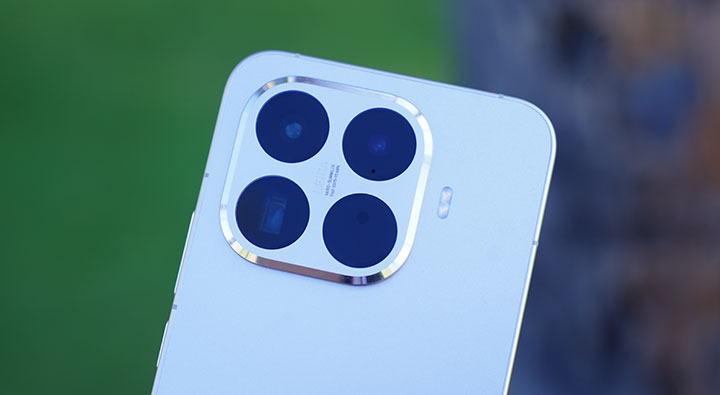
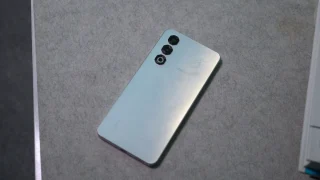
The Xiaomi 15T Pro almost has the same design cues as the 14T Pro with its boxy frame and large camera module, but it feels a little sleeker this time around.

At just under 8mm thick and a hair heavier (210 grams) than last year’s 209-gram model, it manages to pack in a larger battery despite the thinner profile.

The finish on the back panel is matte and at first glance, it seems to resist fingerprints better, but you can see some of your prints when at certain angles. Nontheless, you get a Gorilla Glass front with aluminum frame to give it a premium and durable feel.

Like the 14T Pro, you still get IP68 protection, but the 15T Pro goes a step further as the company states that it has a 6M13 aluminum alloy frame which is engineered to enhance structural integrity and drop resistance.

It’s a small bump, but one that makes the phone feel tougher. Color options are also different this time, with Black, Gray, and Mocha Gold which is our review unit’s color.

For buttons and ports, you’re looking at the usual stuff that you’re used to: the volume rocker and power button are on the right side; the SIM card tray, one half of the stereo speakers, and USB-C port at the bottom, while the other speaker is in the earpiece.

It looks like the IR Blaster is beside the camera module so you have to point your phone as if you’re taking a photo compared to how you usually hold remotes.
Display and Multimedia
Xiaomi’s displays have always been a highlight, and here the 15T Pro pushes brightness further than ever in their T-series. The 6.83-inch AMOLED panel hits 3200 nits peak and although it’s slightly bigger than last year’s model, it’s less bright compared to the 14T Pro’s 4,000 nits.

Nevertheless, resolution and refresh rate remained the same at 1.5K and 144Hz, and with HDR10+ and Dolby Vision, the experience is crisp and smooth whether you are gaming, streaming, or just browsing.

Audio, on the other hand, leans slightly in the opposite direction. The 14T Pro’s stereo speakers could get loud and stay crisp even at higher levels, but the 15T Pro’s dual stereo speaker setup sounds cleaner at moderate volumes while still being decently punchy, but struggles to be louder to my liking.

Still, you get an Under-display fingerprint sensor and face unlock for biometrics.

The moment you press your print on the sensor, it’s able to detect and unlock the device in a snap.
Cameras
The Leica collaboration continues to define Xiaomi’s flagship series and it shows with the Xiaomi 15T Pro. The device builds on its predecessor’s standard with refinements in processing and consistency.
With the Xiaomi 15T Pro, you get a 50MP main, a 50MP super telephoto and a 12MP ultrawide setup while having a 32MP front camera.

Photos still carry that Leica-inspired balance of natural color, clean contrast, and sharp detail. In bright conditions, both the 14T Pro and 15T Pro perform similarly, but the 15T Pro tends to handle tricky lighting with more composure, holding onto shadows without losing highlights.
Portrait shots look polished, with smoother subject separation than we often saw on the 14T Pro. Low-light photography is also improved, with cleaner results and less noise creeping into darker areas. The selfie camera produces similarly strong results, with autofocus and autozooming making it easier to capture clear group shots.

You still get Leica’s Authentic and Vibrant modes that the 14T Pro has but what stands out now is the consistency across all lenses for the 15T Pro. There’s less of a gap in tone and sharpness when switching between focal lengths, which makes the system feel more unified overall.
It was a blast to see the improvement of the 15T Pro especially coming from me, a Xiaomi 11T user. With my hobby in toy photography, I was able to see how the colors pop with little to no noise compared to what I’m used to.
Xiaomi 15T Pro sample photos
Sep 15 – 22, 2025


For video recording, you get up to 8K @ 30fps OR 4k @ 120fps for the rear camera while the front sensor shoots at 4K @ 30fps.
Sample front camera video:
Sample rear camera videos:
More sample photos:
Xiaomi 15T Pro
Sep 16 – 24, 2025


Performance and Benchmarks
Under the hood is where the 15T Pro shows the biggest leap. Inside the 15T Pro is the MediaTek Dimensity 9400+ which pushes things much further as it has Benchmark results scoring over 2.56 million points in AnTuTu compared to the 1.96 million we saw on the 14T Pro. Storage and productivity scores are also higher, which translates to faster responsiveness in daily use.

Gaming sees the most practical improvement. On the 14T Pro, heavier titles like Wuthering Waves slightly struggled to keep frame rates steady.
With the 15T Pro, demanding games such as Wuthering Waves and Persona 5: The Phantom X still show dips at ultra settings but are able to run smoothly. They remain far more stable when you set them at medium to high settings of course.
Lighter games like Umamusume run flawlessly, and even action-heavy titles like Dragon Ball Squadra stay fluid during intense moments. Mobile Legends, meanwhile, benefits from both performance and efficiency, with the 15T Pro lasting over 9 hours in continuous play, while the 14T Pro managed closer to 7.5 hours.

Thermals are also handled better this time around. The 15T Pro’s cooling solution keeps temperatures more comfortable, with minimal throttling even under sustained load and I was able to even finish long game modes like Wuwa’s Version 2.6 latest storyline.
The 15T Pro was able to showcase the game’s graphics and make me immersed in Iuno’s story which is about three hours long without skipping through the story.
Antutu Benchmark v10.5.2: 2,563,463
Antutu Storage Test v10.5.2:
Sequential Read Speed: 4,190 MB/s
Sequential Write Speed: 3810.7 MB/s
Random Read Speed: 1544 MB/s
Random Write Speed: 1376 MB/s
AI Read Speed: 680 MB/s
Geekbench 6.5 CPU: 2,642 (Single-Core), 8,009 (Multi-Core)
GeekBench 6.5 GPU: 20,705 (GPU OpenCL), 22,650 (Vulkan)
PCMark Work 3.0 Performance – 16,413
PCMark Work 3.0 Battery Life – 18 hours, 45 minutes
OS, UI, and Apps
In case you don’t remember, the 14T Pro launched with HyperOS 1 while the 15T Pro is said to come with HyperOS 3. Well, at least that’s what the brand says.
Currently, the unit we have is running on HyperOS 2 (with Android 15) right out of the box, but we do expect it to be the first devices to get the HyperOS 3 update once the phone officially launches.

Features like offline communication are new additions that expand the phone’s usefulness beyond typical flagship fare. Pre-installed apps are still around, but Xiaomi has at least organized them better into folders.
Like other Xiaomi devices launched this year, the Xiaomi 15T Pro boasts a set of useful AI capabilities. You can find see these features in the Xiaomi HyperAI tab under Settings. There’s Google Circle for easier searching, plus AI app boost that makes system apps like Notes, and Recorder. There’s also the AI Gallery tools like AI Enhance, Expand, Erase, and the like.

There’s a bit of bloatware included, but the good news is it’s easy to remove or uninstall if you don’t want it hanging around. They’re all in one folder too.
Overall, the software feels more polished even if some quirks remain.
Battery and Connectivity
This is another area where the 15T Pro steps up. The 14T Pro had a decent 5,000mAh battery coupled with 120W wired charging, which topped up quickly but drained faster than expected in heavy use.
With the 15T Pro, Xiaomi has decided to balance it: a 5,500mAh battery paired with 90W wired and 50W wireless charging. It’s not quite as fast to top up as the 14T Pro, but its battery life makes up for it.

On PCMark’s Work 3.0 Battery test, it lasted 18 hours and 45 minutes, compared to the 14 hours we saw on the 14T Pro.
Its endurance in gaming has also improved, with Mobile Legends lasting nine and a half hours compared to the 14T Pro’s 7 hours, 40 minutes. Video Loop Test showed a decent 20 hours and 9 minutes.

Charging is still fast enough to keep things convenient. A full top-up takes less than an hour, and a 20-minute plug-in can carry you through the rest of the day.

Connectivity is equally future-proofed on both phones, with dual 5G, Wi-Fi 7, NFC, Bluetooth 6, and IR blaster.

Mobile Legends Gameplay: 9 hours, 31 minutes at 50% brightness, 50% volume in WiFi
Video Loop Test: 20 hours, 9 minutes
PCMark’s Work 3.0 Battery Test: 18 hours, 45 minutes
Another thing to note is that Xiaomi finally decided to include the 90W charging brick with the 15T Pro, an omission they made on the 14T Pro last time.
Conclusion
The Xiaomi 15T Pro keeps the Leica identity and the strong display while addressing its predecessor’s weak points. Battery life is much stronger, gaming endurance has improved, and the new chipset delivers flagship-level scores that significantly exceeds that of its predecessor.

Not everything has improved though. The speakers remain a weak link, and some may miss the more striking colorways that the 14T Pro has. But as a whole, the 15T Pro feels like a more balanced and dependable device than the 13T Pro.
For users of the 15T Pro, this might not feel like a must-upgrade unless battery life and gaming performance are priorities. But for anyone like me who is coming from older hardware or looking for a flagship that blends Leica imaging, strong performance, and decent battery life, the Xiaomi 15T Pro is a great and refined choice.

The Xiaomi 15T Pro has a suggested retail price of Php 37,999 for the 12GB + 256GB variant and Php 39,999 for the 12GB + 512GB variant.
What we liked:
* Impressive performance from the Dimensity 9400+
* Much improved camera, esp. the telephoto
* Bigger and longer battery life
* Charging brick is back!
What we did not like:
* Reduced charging power
* Sound not too good
* Boring design
Xiaomi 15T Pro specs:
6.83-inch 1.5K AMOLED display @ 2772 x 1280 pixels, 447ppi
144Hz refresh rate, 3,200 nits (peak) brightness
Corning Gorilla Glass 7i
MediaTek Dimensity 9400+, 3nm, 8-cores, up to 3.73GHz
Immortalis-G925 MC12 GPU
MediaTek NPU 890
12GB LPDDR5x RAM
256GB, 512GB, 1TB UFS 4.1 storage
Triple rear cameras (co-engineered with Leica)
* 50MP f/1.62 Light Fusion 900 main, OIS (23mm)
* 50MP f/3.0 5x telephoto (115mm)
* 12MP f/2.2 ultrawide, 120˚ FoV (15mm)
32MP f/2.2 selfie shooter (21mm)
5G SA+NSA, dual nano-SIM (supports eSIM)
WiFi 7
Bluetooth 6 (dual BT)
GPS, GLONASS, Beidou, Galileo, NavIC, QZSS
IR sensor
NFC
Under-display fingerprint sensor
IP68 dust and water resistance
Dual stereo speakers, Dolby Atmos, 3-mic array, IR blaster
Xiaomi HyperOS 2, Android 15
5,500mAh HyperCharge battery, 90W wired, 50W wireless charging
162.7 x 77. 9 x 7.96 mm (dimensions)
210 grams (weight)
Black, Gray, Mocha Gold (colorways)


0 Comments
Leave a Reply