
We are back yet again with a recap for smartphone releases in the Philippines under PHP 20,000. Phones listed fell within the set budget at the time of writing.

Again, devices mentioned will reflect suggested retail prices upon release from January to March 2025. We’ll be giving you guys a quick look into specs, what the phones offer, and notable benchmarks if available.
With that, we hope to give viewers some insight into what the best pick might be with your budget considered. After all, we’re just looking for what gives us the best value-for-money at the end of the day.
So, let’s dive right into the smartphones released in the first quarter of the year under PHP 20,000.
Samsung Galaxy A26 5G
First on the list, we have the Samsung Galaxy A26 5G. This might be one of the more sensible pickups in the smartphone market today.

However, compared to its predecessor, changes feel incremental at first glance. What makes the phone a good option for now is that it offers One UI’s AI-powered features without having its price increased at all.
For specs, this phone has a 6.7-inch Super AMOLED display supporting FHD+ resolution capped at 120Hz. The screen’s also protected by Corning Gorilla Glass Victus+.
Powering this device is an Exynos 1380 with up to 8GB of RAM and 256GB of internal storage. Unlike the newer A-series devices, this phone still supports expandable storage up to 2TB via a microSD hybrid slot.
For cameras, it has triple-rear shooters headlined by a 50-megapixel main with OIS. It also has a 13-megapixel selfie snapper situated in a dew drop notch.
Plus, it packs a 5,000mAh battery with support for 25W of fast charging. As mentioned, this phone will ship with One UI 7 based on Android 15 and will support software updates until March 2031 as per Samsung. This means it’s good for six (6) years of uptime.
Other notable features include its IP67 rating, side-mounted fingerprint sensor, and NFC support. The Samsung Galaxy A26 5G is available in Black, Mint, and Peach Pink colorways.
This offering is available in the Philippines starting at PHP 15,990 with a storage configuration of 6GB and 128GB. It’s also available for PHP 17,990 with the more standard 8GB and 256GB combo.
Price: PHP 15,990 / 17,990
Lazada Lazada →
Shopee Shopee →
HONOR X9c
Up next, we have the HONOR X9c. This offering was the brand’s first prominent release this year touching up their line of tough smartphones.

Having reviewed it myself 12, I’d say it’s a solid pickup. Quite literally. It’s well-equipped to deal with a lot of things, ranging from scratches, drops, and even boiling.
For hardware, it has a 6.78-inch AMOLED with FHD+ resolution and a refresh rate of 120Hz. The screen also boasts double tempered Asahi glass protection to add to its, well, toughness.
Under the hood, it’s powered by a Snapdragon 6 Gen 1 with 12GB of RAM and 256GB of internal storage. While it is a bit dated, it’s still up to par performance-wise. We’ve been able to use it for the usual tasks like browsing, video streaming, and photography.
Speaking of, it has dual-rear shooters which include a 108-megapixel main with OIS paired with a 5-megapixel wide camera. For selfies, it has a 16-megapixel front camera.
For its battery, it has a capacity of 5,000mAh with support for 66W of HONOR SuperCharge. As per our PCMark Work 3.0 battery test, it has an uptime of 15 hours and 34 minutes. This is pretty decent and ensures that the phone’s more than usable for most of the day.
Other features include its IP65 rating, NFC, in-display fingerprint sensor, and facial recognition. The HONOR X9c retails for PHP 16,999, available in Jade Cyan, Titanium Black, and Titanium Purple colors.
It’ll ship with MagicOS 8.0 based on Android 14. We’ll leave our video review below for those interested.
Price: PHP 16,999
Lazada Lazada →
Shopee Shopee →
POCO X7
Moving on, we have the POCO X7 with a higher storage configuration compared to what we covered in a previous video.
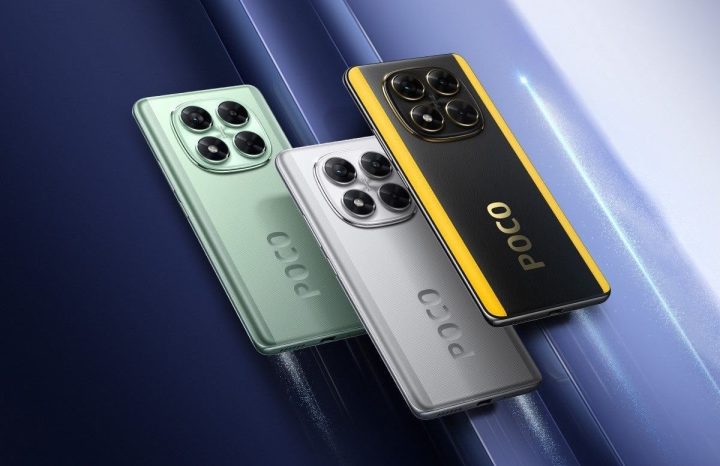
The phone has a 6.67-inch 3D-curved AMOLED screen supporting 1.5K resolution and a refresh rate of 120Hz. The display is covered with Corning Gorilla Glass Victus 2 as well.
The phone packs a Dimensity 7300 Ultra with 12GB of RAM and 512GB of internal storage. This chipset has an average AnTuTu score around 677K, which should be telling as a midrange offering.
For photos and the like, it has a triple-rear shooter setup. This includes a 50-megapixel main with OIS, 8-megapixel ultrawide, and 2-megapixel macro. At the front, it has a 20-megapixel selfie shooter.
The X7 packs a 5,110mAh battery with 45W of fast charging support. Wrapping up, other features include its IR blaster, IP68 rating, stereo speakers, facial recognition, and an in-display fingerprint sensor.
This variant of the POCO X7 ships with Xiaomi HyperOS and is available in Silver, Green, and Black for PHP 16,999.
Price: PHP 16,999
Lazada Lazada →
Shopee Shopee →
POCO X7 Pro
Of course, we also have the POCO X7 Pro. As mentioned in my published review of the device, this phone is positioned to be a great find in 2025. For those that missed it, you should definitely check it out as it boasts impressive specs at an affordable price.

Similar to the base model, it has a 6.67-inch AMOLED display with the same resolution and refresh rate. However, it has a higher 3,200-nit peak brightness level and is protected by Gorilla Glass 7i instead.
It’s also powered by a Dimensity 8400 Ultra with 12GB of RAM and 512GB of UFS 4.0 storage. This chipset got the device a score of around 1.6 million as per our Antutu benchmark test. Needless to say, this phone’s pretty cracked as is.
For cameras, it only has dual-rear shooters opposed to the base model’s triple-rear setup. On paper, the specs show similar numbers to the base model save for the missing macro sensor.
Contrary to what some might think, this change isn’t bad! Based on experience, photos taken with the device turned out pretty good. Check them out below.
POCO X7 Pro Sample Photos
Jan 8 – 11, 2025


For battery, the X7 Pro has a 6,000mAh capacity with a higher charging speed of 90W. As per our PCMark Work 3.0 Battery Test, it had an uptime of 15 hours and 2 minutes.
While POCO is known for offering good devices at a modest price, they’re also known for low battery life. All things considered though, the score we got was decent. It’s good for most of the day, which I’m sure most native POCO users looking to upgrade would appreciate.
For other features, it’s pretty much the same with the base model. This includes an IR blaster, face unlock, an in-display fingerprint sensor, stereo speakers, and an IP68 rating.
The POCO X7 Pro ships with Xiaomi HyperOS, available starting at PHP 16,999. We’ll leave our video review below if you want to see it in action. For reference, our review unit had 12GB of RAM and 512GB of storage, which is priced at PHP 19,999.
Price: PHP 16,999-19,999
Lazada Lazada →
Shopee Shopee →
Redmi Note 14 Pro 5G
It wouldn’t be a midrange roundup without Redmi’s Note line of smartphones. For this price range, we have the Redmi Note 14 Pro 5G. As per our published review, this iteration of the device looks the best so far.

This phone has a 6.67-inch AMOLED screen with 1.5K resolution and a refresh rate of 120Hz. It’s also covered by a layer of Gorilla Glass Victus 2 for protection.
Just like the POCO X7, powering it is a Dimensity 7300 Ultra. This phone comes with up to 12GB of RAM and up to 512GB of storage.
It was able to give us a rough score of around 680K in Antutu. Overall, it’s decent and shows promise for those that need a reliable mobile gaming device.
For optics, it has a 200-megapixel main with OIS, an 8-megapixel ultrawide, and a 2-megapixel macro sensor at the rear. It also comes equipped with a 20-megapixel selfie shooter.
Redmi Note 14 Pro 5g
Oct 19 – 23, 2024


If you want a quick rundown of how the cameras are, the main camera is pretty good. However, the ultrawide and macro aren’t up to par. This is evident with how obvious the post-processing turns out to be after taking a shot.
Rounding up the specs, it has a 5,110mAh battery with support for 45W of fast charging. Other features include its eSIM support, NFC, stereo speakers, stereo speakers with Dolby Atmos, and IP68 rating.
The Redmi Note 14 Pro 5G runs on Xiaomi HyperOS as well, with its price starting at PHP 17,999. The higher configuration with 12GB of RAM and 512GB of storage is priced at PHP 19,999.
Price: PHP 17,999, PHP 19,999
Lazada Lazada →
Shopee Shopee →
Nothing Phone (3a)
Next, we have the Nothing Phone (3a), one of the quirkier entries in the list. Design-wise, it’s quite similar to its predecessor save for a more visor-like build for its camera enclosure.

It has a 6.77-inch AMOLED display with FHD+ resolution and a refresh rate of 120Hz. But now, it’s protected by Panda glass instead. It’s powered by a Snapdragon 7s Gen 3 with up to 12GB of RAM and up to 256GB of internal storage.
In our review of the device, it was able to give us a score of around 780K in Antutu. We also recommended that it was decent for gaming, able to run casual and MOBA games with ease.
This phone also has a triple-camera setup, which includes a 50-megapixel main with OIS, 50-megapixel telephoto, and an 8-megapixel ultrawide. At the front, it has a 32-megapixel shooter for selfies.
Nothing Phone (3a) sample photos
Mar 14 – 16, 2025


To sum up how they perform, they’re a bit inconsistent. The phone relies a lot on post-processing to revamp its shots. This could mean a lot of trial and error with filters and lighting conditions.
Next, the phone packs a 5,000mAh battery with 50W of fast charging support. Other features include reverse wired charging, an in-display optical fingerprint sensor, and an IP64 rating for dust and splash resistance.
The Nothing Phone (3a) ships with Nothing OS 3.1 out of the box, and starts at PHP 19,999. Take note though, this is for its configuration with 8GB of RAM and 128GB of storage.
Price: PHP 19,999
Lazada Lazada →
Shopee Shopee →
Samsung Galaxy A36 5G
Last but not least, we have the Samsung Galaxy A36. Having reviewed it myself, this phone is a true mid-ranger and is a great find for the year.

It has a 6.7-inch Super AMOLED screen with FHD+ resolution and a refresh rate of 120Hz. Powering it is a Snapdragon 6 Gen 3 with up to 8GB of RAM and up to 256GB of internal storage. Unfortunately, this iteration of the device does not support expandable storage anymore.
As per our benchmarks though, this phone was able to score a modest 600K in Antutu. From my experience though, the phone should be able to keep up with modern games. Of course, this is provided that graphic settings aren’t throttled high enough.
For optics, the phone has a 50-megapixel main, 8-megapixel ultrawide, and 5-megapixel macro at the rear. There’s also a 12-megapixel camera at the top of the display.
Samsung Galaxy A36 5G Sample Photos
Mar 16 – 19, 2025


Generally, the cameras provide users with a well-rounded experience. What really surprised me was how decent it performed at night. But, it isn’t all sunshine. I still feel like the phone could’ve done without its macro sensor.
Maybe in the future, Samsung could add a telephoto camera for the A-series line instead just to shake things up.
Moving on, the A36 packs a sizable 5,000mAh battery with support for 45W of fast charging. It’ll also ship with One UI 7 based on Android 15, which is guaranteed support for six years of OS updates and security patches.
The Samsung Galaxy A36 5G retails for PHP 19,990 with 6GB of RAM and 128GB of internal storage. If users need a bit more memory and space, it’s also available for PHP 21,990 with 8GB of RAM and 256GB of storage instead.
Price: PHP 19,990
Lazada Lazada →
Shopee Shopee →



0 Comments
Leave a Reply