
Teknologi nirkabel baru baru saja diambil dan diuji di luar laboratorium yang dilaporkan dapat mentransmisikan data secepat 1GB per detik — sekitar seratus kali lebih cepat dibandingkan standar kami untuk kecepatan Wi-Fi saat ini.
Li-Fi is able to send this much data by using VLC technology (visible light communication, not the media player software). It was invented in 2011 by Herald Haas after being able to send significant amounts of data from simply flickering a single LED compared to what a cellular tower could transmit. Back then, he was able to record a chart-topping 224 gigabits per second of data. For comparison, ScienceAlert puts it as downloading 18 movies of 1.5GB each every second.
"Currently we have designed a smart lighting solution for an industrial environment where the data communication is done through light. We are also doing a pilot project with a private client where we are setting up a Li-Fi network to access the Internet in their office space.”
And now this same principle was used in offices as an initial trial in real-life situations. Haas mentions that all that needs to be done is to place a microchip to every potential illumination device and this would give it dual functionalities -- illumination and wireless data transfer.
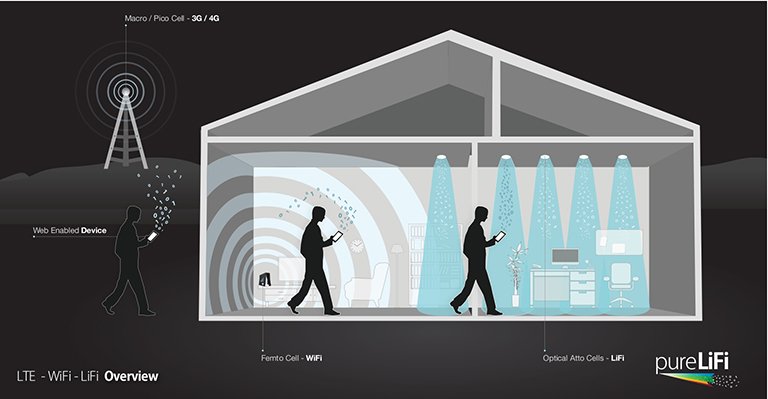
By rapidly flicking these specially-designed LEDs on and off, it could send specific messages in binary code that could then be retrieved and decoded by devices. Rest assured that these flickering of light is done at extreme speeds that make it invisible to the human eye.
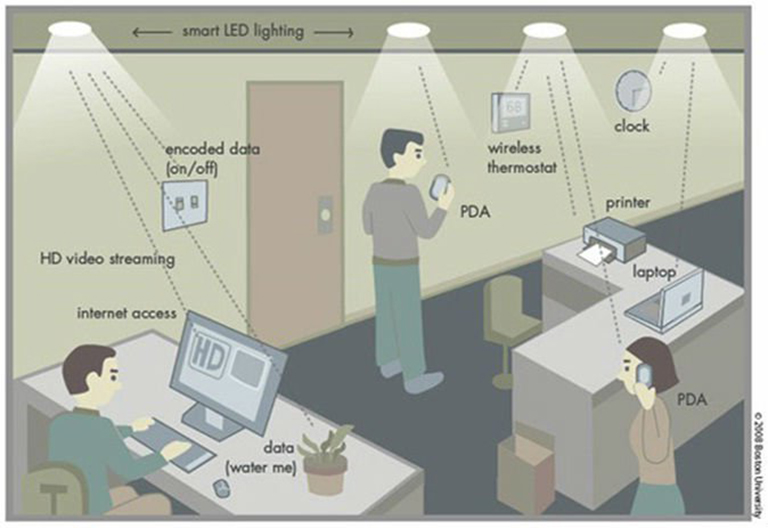
There are a lot more interesting things to learn from Li-Fi (like being more secure and efficient, for example) which you can read here.
Jika tes terus berhasil, ada peluang besar (pun intended) bahwa kita akan menggunakan LED tidak hanya untuk menerangi rumah kita tetapi juga untuk terhubung ke Internet.



paano kung may mag block ng ilaw