

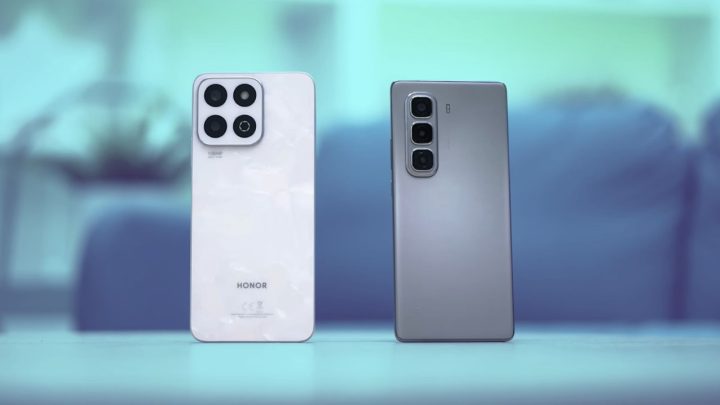
HONOR X7cは最近フィリピンで話題になっており、文字通りです。実は、Honorはこの電話のいわゆる「全方向防水」を主要な販売ポイントとして宣伝しています。
直接的に言及はしていませんが、Infinix HOT 50 Pro+も同じレベルの防水性能を備えています。ただし、これはこの2機種の比較ポイントの一つに過ぎません。
追加の保護に加えて、9,000ペソ未満という同様の価格帯で他に何を提供していますか?
Infinix HOT 50 Pro+ と HONOR X7c の比較レビューで確認してみましょう。さっそく始めましょう!
設計と建設
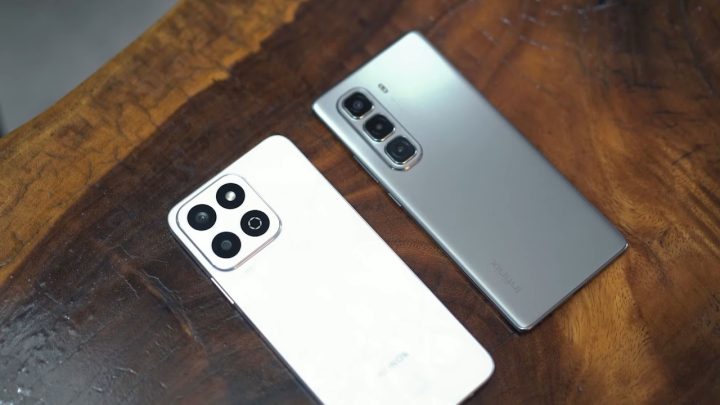
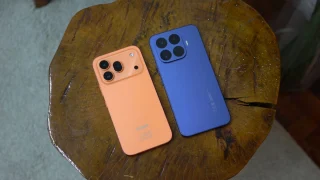
外観は、各電話が独自のデザイン言語を持っています。Infinix HOT 50 Pro+ は、左寄せのカメラアレイを備えた、かなりユニークでありながら親しみやすい外観を特徴としています。

よく見ると、電話には正方形のモジュールが付いており、カメラアイランドには輪郭に凹凸のあるエッジデザインが施されています。
ただし、見た目は3つのカメラがあるように見えても、実際には2つしかありません。この比較の後半でカメラについて詳しく説明します。
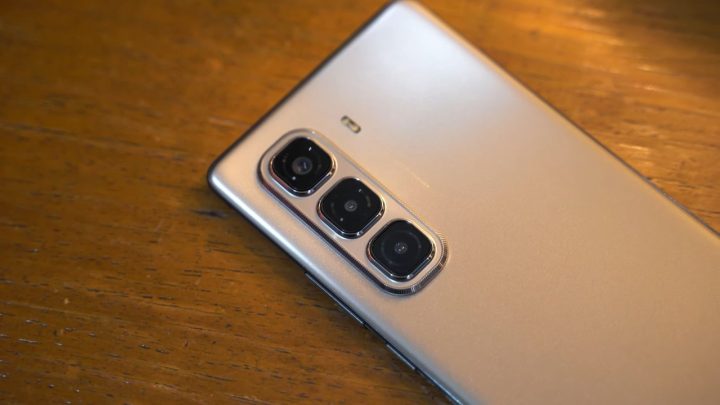
HOT 50 Pro+ は全体に微妙な曲線が施されており、側面から見るとよりスリムに見えます。電話のサイズはわずか6.8 mmで、競合他社よりも軽く、重さはたったの162グラムです。フレームはほぼフラットで、プラスチック製の背面はマット仕上げになっており、汚れが付きにくくなるはずです。
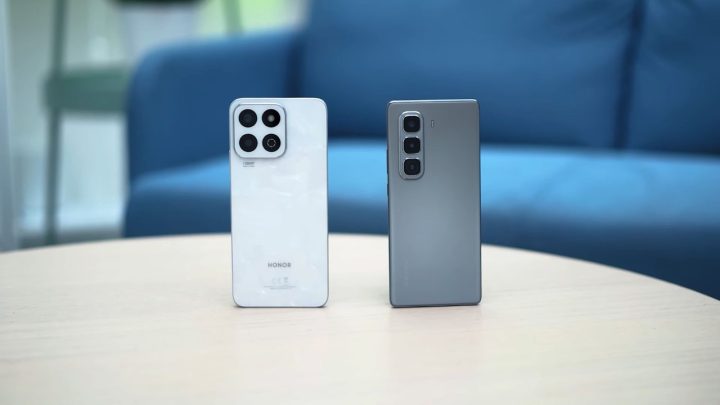
一方、HONOR X7cは左側に四角形のカメラアイランドを備えた馴染みのあるデザインを採用しています。また、Infinixと同様に、HONORもカメラが4つあるように見せていますが、実際にはデュアルリアカメラの構成です。
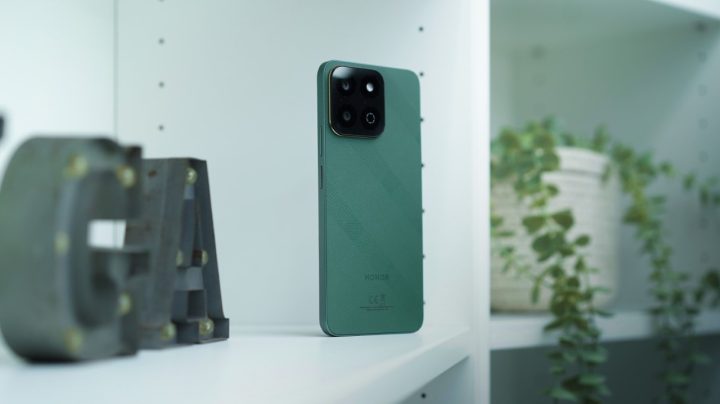
背面パネルの残りは、フェイクレザー調で、上部にチェック柄のようなパターンが施されています。フレームもフラットでカラーも合わせられていますが、電話はやや厚みがあり、重量はそれぞれ8.24 mmと196グラムです。
さて、X7cの最大の売りである防水性について話しましょう。HonorはX7cが水中に沈められ、高圧の水を浴びせても、電話が意図した通りに動作する様子を披露しました。ただし、これはX7cが極端なテスト向けではないことを思い出させるためのものです。

私がHONOR X7cレビューで説明したように、この電話はIP64評価しか取得しておらず、散水程度の水しか保護できません。技術的には短時間プールに落としても耐えられるかもしれませんが、防水性能は徐々に低下するため、やはり注意が必要です。

他のスマートフォン、特に9000ペソ未満のものを見ると、このいわゆる防水性能が実はそれほど特別ではないことに気付くかもしれません。HONOR X7c と同様に、Infinix HOT 50 Pro+ も基本的に同じレベルの防水性能、IP54 を備えているからです。
耐久性においてX7cを際立たせているのは、5つ星の落下耐性認証を取得している点で、そこも大きな特徴です。
デザインは主観的なものですが、Infinix HOT 50 Pro+ の洗練されたシックなプロファイルは無視できません。そして、驚くべきことに、その極薄ボディはファッションステートメントであり、予算型スマートフォンからは期待できないものです。

HONOR X7cの耐久性のあるボディは確かに主要な強みの一つですが、競合製品ほどエレガントには見えません。また、両方の電話は同じレベルの防水性能を備えており、X7cの耐衝撃性は、保護ケースを装着すればそれほど重要ではありません。
というわけで、このラウンドはInfinix HOT 50 Pro+に譲ります。
ディスプレイ、マルチメディア、バイオメトリクス
両方の電話を裏返すと、曲面ディスプレイとフラットディスプレイが目に入ります。ここで、二つの間に大きな違いがあることがわかります。

HOT 50 Pro+は、6.78インチのフルHD+ 3D曲面AMOLEDパネルを搭載し、最大輝度は1300ニットで、Gorilla Glass 5で保護されています。
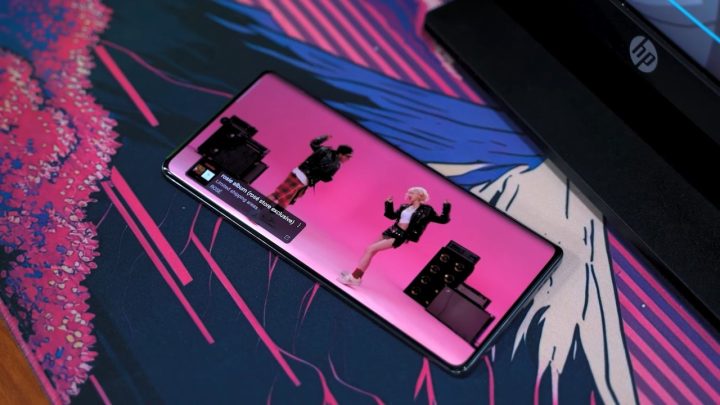
一方で、HONOR X7c のディスプレイはかなりがっかりで、6.77インチの HD+ TFT LCD パネルを搭載し、最大輝度は 850 ニットに達します。
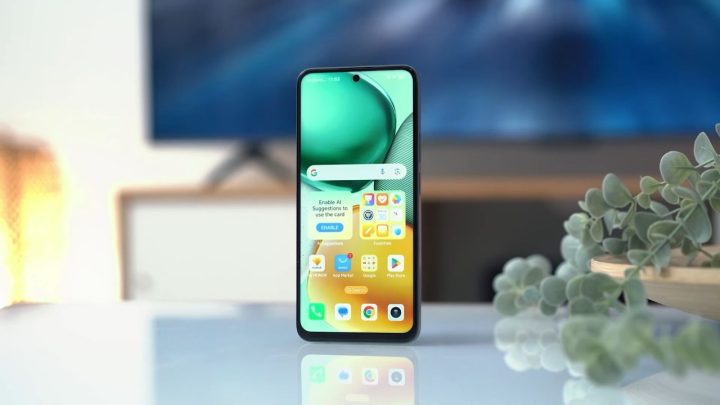
両方の画面は120Hzのリフレッシュレートで動作しますが、HOT 50 Pro+だけがWidevine L1をサポートしており、X7cはWidevine L3のみです。これは、電話のディスプレイがHD+、すなわち1610×720ピクセルに制限されているため、納得できます。
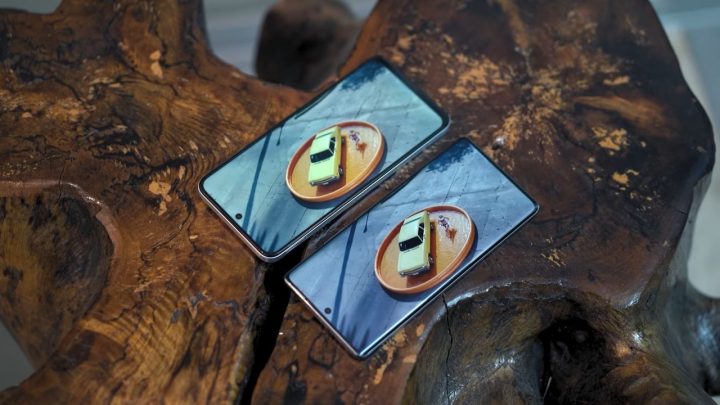
予想通り、HOT 50 Pro+ の鮮やかな色彩と満足のいく深い黒で、AMOLED ディスプレイのおかげで視聴体験は格段に向上しています。X7c については、低解像度の LCD パネルから期待できるものです。視野角も TFT タイプの LCD を使用しているため、あまり良くありません。
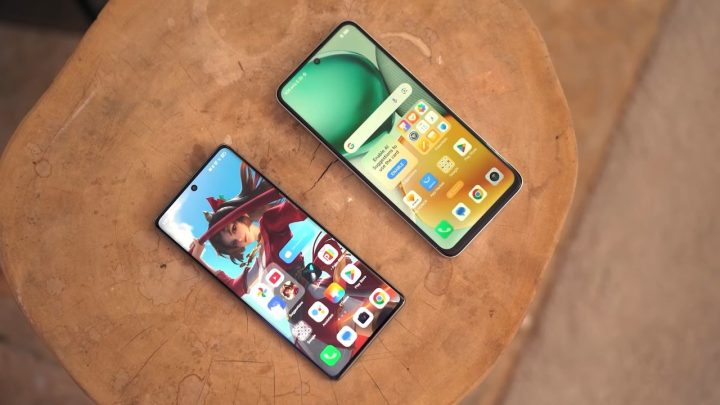
両方の電話は没入感のあるオーディオのためにデュアルステレオスピーカーを搭載していますが、HOT 50 Pro+ のみがJBLによるサウンドチューニングが施されています。その上、HOT 50 Pro+ はディスプレイ下指紋センサーを備えているのに対し、X7c はサイドマウントの指紋センサーとなっています。

With its high-resolution AMOLED screen alone, the Infinix HOT 50 Pro+ easily secures another point this round.
Performance and Benchmarks
Now, let’s talk about performance.
The HOT 50 Pro+ is equipped with the MediaTek Helio G100 and the HONOR X7c is powered by the Snapdragon 685. Both phones come with the same configuration with 8GB of RAM and 256GB of internal storage. Gladly, both phones offer expandable storage via microSD.

In our testing, both garnered decent scores in ANTUTU. The HOT 50 Pro+ managed to get 446,101 points and the HONOR X7c got a lower score of 310,613 points.
Furthermore, the HOT 50 Pro+ managed to get more than triple the score of the HONOR X7c in both Geekbench 6 CPU Single Core and GPU tests as you can see below.
| Benchmark | Infinix HOT 50 Pro+ | HONOR X7c |
|---|---|---|
| Chipset | MediaTek Helio G100 | Qualcomm Snapdragon 685 |
| AnTuTu V10 | 446101 | 310,613 |
| 3DMark Wild Life | - | 650 |
| Geekbench 6 Single-Core | 742 | 470 |
| Geekbench 6 CPU Multi-Core | 2,034 | 1,463 |
| Geekbench 6 GPU OpenCL | 1,489 | 382 |
| Geekbench 6 GPU Vulkan | 1,498 | FAILED |
| PCMark Work 3.0 performance | 11,024 | 9,867 |
| PCMark Work 3.0 battery life | 13 hours and 53 minutes | 25 hours and 54 minutes |
The MediaTek Helio G100 being a gaming chipset that it is, these results just make sense.

Despite the good numbers, you may have to set your expectations when it comes to gaming. For low-demanding titles such as Mobile Legends and other MOBA games, both phones can handle them just fine.

However, for graphically intensive titles like Genshin Impact, don't expect a smooth experience. While playable at very low graphics settings, the gameplay can be frustrating due to inconsistent frame rates and overall low visual quality.
Setting all that gaming stuff aside, both phones are surely decent enough for your day-to-day tasks. While the numbers say that the HOT 50 Pro+ has a slight edge in graphical performance, that doesn’t really translate well to real world use cases.
So, with that, I’ll give both phones a point again this round.
Cameras
For optics, the HOT 50 Pro+, despite the camera island looking like it has three sensors, only two of these are actual cameras: a 50-megapixel main shooter and the crowd-favorite, a 2-megapixel depth sensor.
The same goes for the HONOR X7c, also with a dual rear setup led by a 108-megapixel main camera, and a 2-megapixel depth sensor.
Images captured from both phones are decent with acceptable colors and seemingly subpar quality. You can see obvious grain even on those images taken in well-lit environments and despite the HONOR X7c having a higher megapixel count, the images look mostly soft.
Check out our sample shots as seen on the phones' individual reviews to see how these phones perform in various shooting conditions:
In the camera department, both phones get the job done but they’re nothing out of the ordinary. So, again, I’ll give them both a point this round.
Battery Life
When it comes to battery life, the HONOR X7c has the upper hand here. It packs a larger 6000mAh unit paired with 35W of fast charging.

The Infinix HOT 50 Pro+ gets the usual 5,000mAh battery with 33W of charging.
Looking at our PCMark battery life test, that significant bump in capacity yielded an impressive result for the X7c, outlasting the competition with an entire day of runtime at 25 hours and 54 minutes.
The HOT 50 Pro+ on the other hand, lasted 13 hours and 8 minutes which is still a decent score, considering it uses a high-resolution AMOLED display.
I figured that since the X7c utilizes an HD+ LCD panel, it wouldn’t draw that much power, contributing to the phone’s longer battery life.
Regardless, the HONOR X7c deserves the point this round.
Connectivity and Other Features
On the software side of things, both phones run Android 14 out of the box with the HOT 50 Pro+ and the HONOR X7c skinned with XOS 14.5 and MagicOS 8.0, respectively.
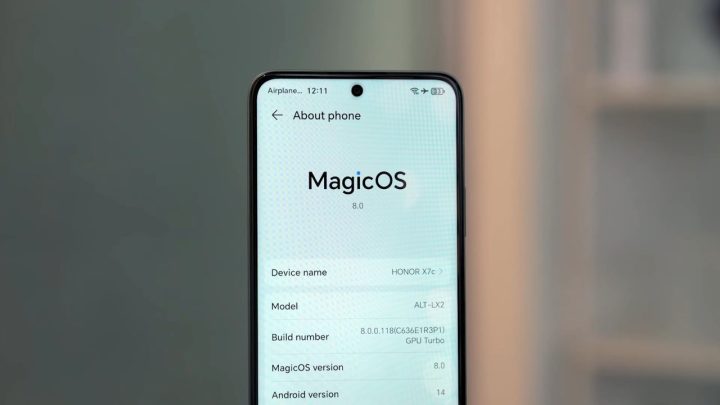
Personally, I would prefer the MagicOS skin just because it has less bloatware aside from the first-party HONOR apps, and it also has a more polished look.

While I’ve seen improvements on XOS in terms of UI design, the amount of bloatware is unbearable. Although, since these phones belong in the budget segment, that just becomes a minor issue.
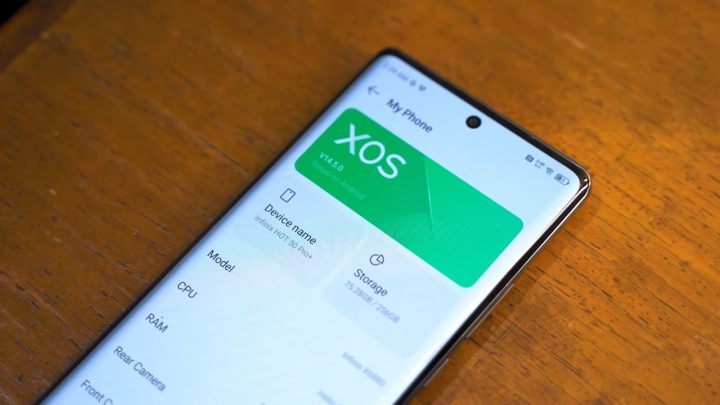
I like the fact that Infinix is being transparent on software support that they’re gonna provide for the HOT 50 Pro+. It gets a guaranteed upgrade to Android 15 and has up to two years of security patches.
Meanwhile, Honor did not mention a thing about the X7c’s update policy. But users can expect the same treatment as usual with at least one major OS upgrade and up to two years of security patches as well.
Connectivity-wise, all the essentials are here including 4G and NFC. What’s interesting is the 720-degree NFC card reading feature on the HOT 5O Pro+. This means that the phone can read NFC-enabled devices at any angle, which would be ideal for wireless payment transactions.

And we should not forget the 3.5 mm audio jack on the HONOR X7c which is a rare sight these days. However, that doesn’t really give it a big advantage. So, in this regard, I will give a point to both models.
Price and Verdict
When it comes down to it, the Infinix HOT 50 Pro+ takes the lead in this budget showdown with its sleek design, superior display, and respectable performance, coming in at just PHP 8,499 (8+256GB).

Its crisp, curved AMOLED display combined slim and light build make it a standout in the sub-9K peso price range. While it falls behind in battery life compared to the competition, it’s clear that Infinix’s phone offers more bang for your buck.

The HONOR X7c, priced at PHP 8,999 (8+256GB), shines in durability with its drop and water resistance and even outlasts the competition in terms of battery life. However, its lower-resolution display and less compelling design leave it a step behind.
It is indeed a solid pick if longevity and endurance are your top priorities. But it looks like the Infinix HOT 50 Pro+ is the more well-rounded option offering a taste of premium without a premium price.
So, are you Team HONOR or Team Infinix in this comparison review? Share your thoughts in the comments below!
HONOR X7c vs Infinix HOT 50 Pro+ specs:
| HONOR X7c | Infinix HOT 50 Pro+ 4G |
|---|---|
| PHP 8,999 | 8+256GB | PHP 8,499 | 8+256GB |
| 6.77-inch HD+ TFT LCD | 6.78-inch FHD+ 3D-Curved AMOLED display |
| 1610 x 720 pixels, 120Hz refresh rate | 2436 x 1080 pixels, 120Hz refresh |
| 850-nit peak brightness | 1300-nit peak brightness |
| - | Corning Gorilla Glass 5 |
| Qualcomm Snapdragon 685 | MediaTek Helio G100 |
| 6nm, 8-cores, up to 2.8GHz | 6nm, 8-cores, up to 2.2GHz |
| 6GB, 8GB RAM (+8GB extended memory) | 8GB RAM |
| 128GB, 256GB storage | 256GB storage |
| Expandable via microSD | Expandable up to 1TB via microSD |
| Dual rear cameras: | Dual rear cameras: |
| - 108MP f/1.75 main | - 50MP f/1.6 main |
| - 2MP f/2.4 depth | - 2MP depth |
| 8MP f/2.0 selfie shooter (hole punch notch) | 13MP f/2.2 selfie shooter (hole punch notch) |
| Dual SIM | Dual nano-SIM |
| 4G LTE | 4G LTE |
| Wi-Fi 5, 802.11 a/b/g/n/ac | Wi-Fi |
| Bluetooth 5.0 | Bluetooth 5.2 |
| GPS | GPS, Beidou, GLONASS, Galileo, QZSS |
| USB Type-C | USB Type-C |
| 3.5mm audio jack | - |
| NFC | NFC | features 720-degree card reading |
| Side-mounted fingerprint sensor | Under-display fingerprint sensor |
| IP64 dust and splash resistance | IP54 dust and splash resistance |
| Dual stereo speakers, 300% high-volume mode | Dual stereo speakers (tuned by JBL) |
| MagicOS 8.0 (Android 14) | XOS 14.5, Android 14 |
| 6000mAh Li-po battery | 5000mAh battery |
| 35W charging (wired) | 33W charging (wired) |
| 166.9 x 76.8 x 8.24 mm | 8.09 mm (Midnight Black) | 164.10 x 74.43 x 6.8 mm |
| 196g | 194g (Midnight Black) | 162g |
| Midnight Black, Forest Green, Moonlight White (colorways) | Titanium Grey, Dreamy Purple, Sleek Black (colorways) |



0 Comments
Leave a Reply