

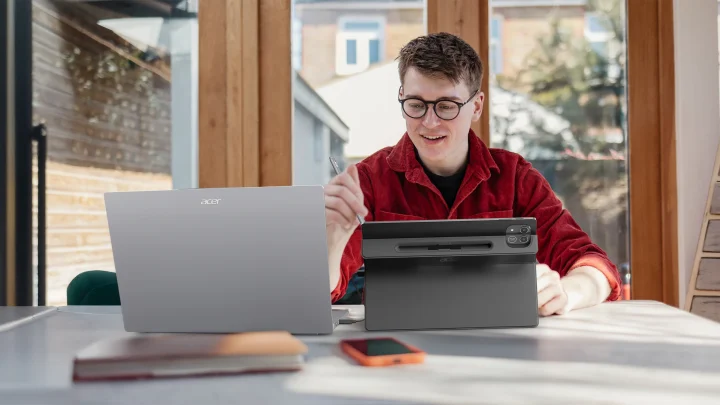
Acer is changing its approach to tablets by using a screen shape usually found on premium laptops. The company launched three new models running Android 16: the Iconia Duo S14, the Iconia Duo S12, and the more affordable Iconia Duo D12.
All three models use a taller 3:2 screen ratio. This design gives you more vertical space, making it much easier to read documents, sketch, or edit videos compared to standard wide screens. To help with daily workflows, every model supports a microSD card up to 1 TB, offers around ten hours of battery life, and works with optional tools like an active stylus, a magnetic kickstand, and a clip-on keyboard.
Now, what’s different about each one?
The top-tier model is the Acer Iconia Duo S14, built for creative professionals who need a massive screen on the go. It packs a 14.2-inch 2.8K OLED display with a smooth 120Hz refresh rate and excellent color accuracy. Inside, Acer uses a MediaTek Dimensity 8300 processor to handle heavy multitasking and AI apps. This model stands out because it has two USB-C ports that support both video input and output, meaning you can easily plug it into your laptop and use the tablet as a high-quality second monitor.
It also includes a fingerprint scanner on the power button, Wi-Fi 6E, a 13/5-megapixel dual camera system with dual-mic technology for video calls, and four stereo speakers for media consumption.
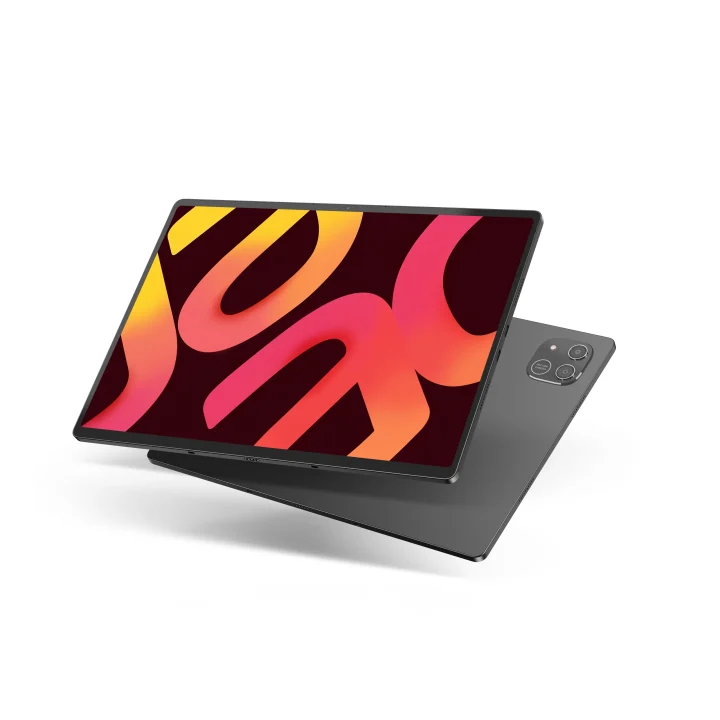
If you want those same high-end features in a smaller size, the Iconia Duo S12 packs a similar punch into a 12.2-inch aluminum body. It keeps the sharp 2.8K OLED quality (with 600 nits of brightness to boot!) but adds a special nano-texture glass. This matte finish cuts down on reflections and keeps the screen free of fingerprints when you use a stylus. To keep the smaller device cool, Acer equipped it with a MediaTek Dimensity 7400 processor, making it a great fit for artists or professionals who often work outside in bright light.
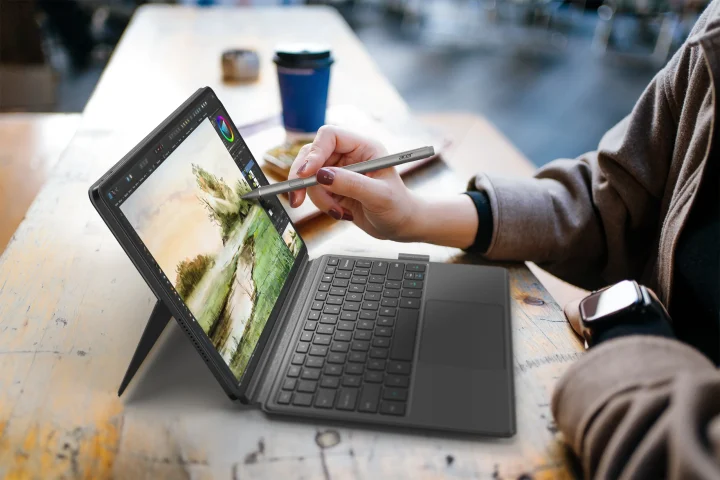
The most budget-friendly option is the Acer Iconia Duo D12, which brings the useful 3:2 screen shape to a much wider audience. It features a 12.2-inch screen with a slightly lower but still crisp 2400×1600 resolution and a fluid 90Hz refresh rate. It runs on a reliable MediaTek Helio G99 chip with 8GB of RAM. This setup handles regular office work, web browsing, and casual drawing perfectly without the high price tag of the OLED versions.
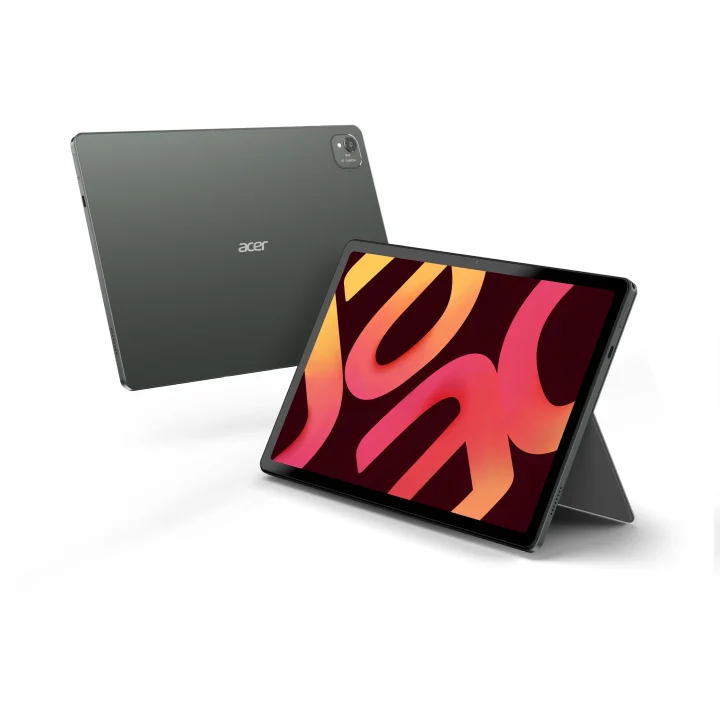
Catering to various types of buyers, you won’t go wrong with any one of these devices either way.
Which are you most interested in?
Acer Iconia Duo S14 (S14-11M) specs:
14.2-inch 2.8K (2880 x 1840) 3:2 OLED display, 120Hz, 100% DCI-P3, 400 nits
MediaTek Dimensity 8300 octa-core CPU
8GB LPDDR5 RAM
Up to 256GB UFS storage
microSD expandable up to 1TB
13MP + 5MP (macro) dual rear cameras, dual-mic
8MP front camera
Quad stereo speakers
Two USB Type-C ports (DisplayPort in/out, Two-Way Display)
WiFi 6E, Bluetooth 5.2
Fingerprint scanner (power button)
10,000mAh battery (~10 hrs)
Android 16
311 x 217.1 x 6.2 mm, 730g
Optional: active stylus, magnetic kickstand, keyboard
Acer Iconia Duo S12 (S12-11M) specs:
12.2-inch 2.8K (2800 x 1840) 3:2 OLED display, up to 600 nits, anti-glare/anti-fingerprint nano-texture glass
MediaTek Dimensity 7400 octa-core CPU
8GB LPDDR5 RAM
Up to 256GB UFS storage
microSD expandable up to 1TB
13MP rear camera
8MP front camera
Dual stereo speakers
Single USB Type-C port
WiFi 6, Bluetooth 5.3
8,000mAh battery (~10 hrs)
Android 16
271.65 x 183.13 x 6.5 mm, 580g, aluminum alloy chassis
Optional: active stylus, magnetic kickstand, keyboard
Acer Iconia Duo D12 specs:
12.2-inch WQXGA (2400 x 1600) 3:2 LCD display, 90Hz
MediaTek Helio G99 octa-core CPU
8GB LPDDR4 RAM
128GB UFS storage
microSD expandable up to 1TB
8MP rear camera
5MP front camera
Dual stereo speakers
USB Type-C
WiFi 6
8,000mAh battery (~10 hrs)
Android 16
Optional: active stylus, magnetic kickstand, keyboard







0 Comments
Leave a Reply