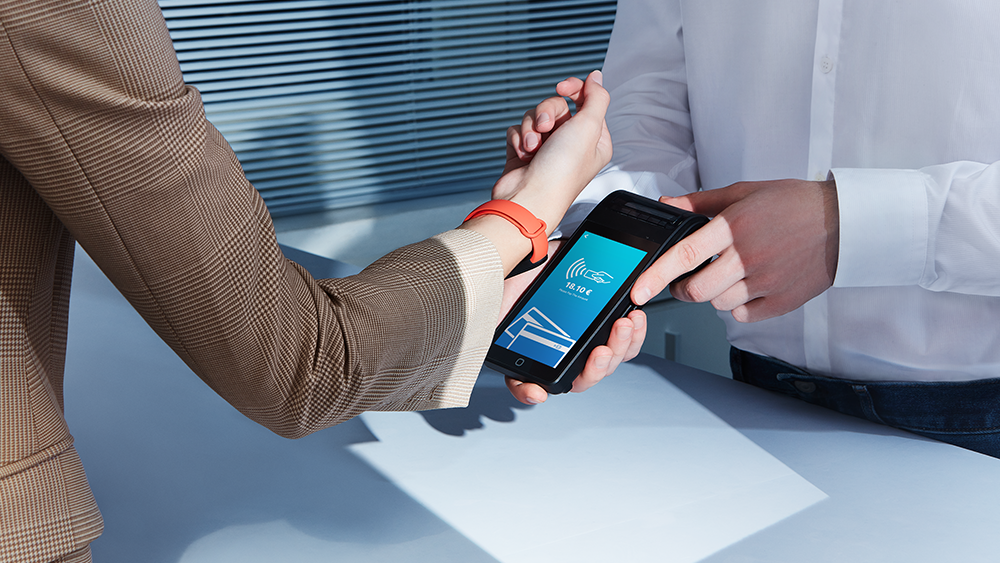





Among the more familiar would be Bluetooth, NFC, and RFID. RFID Radio Frequency Identification (RFID) refers to a wireless system comprised of two components, namely tags and readers. The reader is a device that has one or more antennas that can emit radio waves and/or receive signals back from the RFID tag. From here, we could identify three types of RFID systems. In addition, RFID could also operate in higher frequencies. In terms of day-to-day applications, RFID technology would be observable in inventory tracking, logistics, driving, shipping, manufacturing, retail, entertainment, and so on. Tracing its development from RFID technology, NFC has an effective point-to-point range of 10 centimeters or less, and could transfer even smaller amounts of information. Since Bluetooth and RFID work with greater distances, it would expose them to more interference than NFC could expect to encounter. Read more in our articles including "What's the difference? Bluetooth vs NFC vs RFID" and "Easytrip Self-Service Kiosk now available at CALAX Customer Service".

In an increasingly wireless world, new technologies emerge to ensure people are connected. Among the…
Sep 12, 2022
The Easytrip Self-Service Kiosk is now available at the CALAX Customer Service Center, offering quick…
Dec 5, 2021
San Miguel Corporation (SMC) has announced that starting July 12, 2021, the 18-km elevated Skyway…
Jul 19, 2021
Motorists passing through RFID-only designated lanes with insufficient load for the third time will be…
May 2, 2021
Easytrip now offers over 50,000 reloading stations in Luzon. Easytrip RFID allows cashless transactions in…
Mar 17, 2021
If you’ve ever tapped an ID or payment card on a reader, been through a…
Feb 25, 2021Among the more familiar would be Bluetooth, NFC, and RFID. RFID Radio Frequency Identification (RFID) refers to a wireless system comprised of two components, namely tags and readers.
The reader is a device that has one or more antennas that can emit radio waves and/or receive signals back from the RFID tag. From here, we could identify three types of RFID systems. In addition, RFID could also operate in higher frequencies.
Our coverage of rfid includes: "What's the difference? Bluetooth vs NFC vs RFID"; "Easytrip Self-Service Kiosk now available at CALAX Customer Service"; "Skyway Stage 3 now dedicated to Class 1 vehicles with Autosweep, no trucks". Each article provides unique insights and information.