0:00Sup peeps, early Fugate and 2026 just
0:03barely started. We already have two
0:04newest smartphone launches here in the
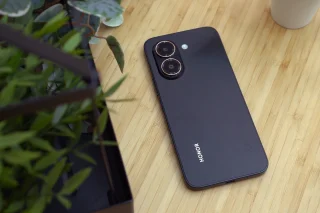
0:06Philippines. Meet the Honor X90 5G and
0:09the Poco M8 5G. On one side, we have the
0:12Honor signature style of offering extra
0:14durable build. On the other, we have
0:15Poco’s familiar approach balancing
0:17performance, looks, and software
0:19features. But aside from those main
0:21selling points, how do these phones fare
0:23against each other? Let’s find out in
0:25this comparison review. [music]
0:31>> [music]
0:33>> Let’s start with the design and
0:34durability. And as expected, this is
0:36where the Honor X90D really shines.
0:38Honor pushes the X90D to the limits with
0:40IP66, 68,69, and 69K rating. Drop
0:44resistance is rated up to 2.5 m, which
0:46far superior than most competitors in
0:48this price range. The Poco M8, on the
0:50other hand, focuses on style and
0:52lightweight design. At 7.35 millimeter
0:54thin and 178 grams, it’s one [music] of
0:57the slimmest in its class. The curved 3D
0:59back with a two-tone matte finish looks
1:01premium and repels fingerprints
1:02decently. That said, we actually did a
1:05bunch of durability tests on the X90D
1:07where it survived drops and water
1:09splashes without issue. Although the
1:11Poco M8 is light and easy to hold in
1:13terms of raw toughness, Honor takes the
1:15lead as it can withstand real life
1:17accidents and rough conditions.
1:18Therefore, the X9D secures a point this
1:20round. Turning over to front, both
1:22[music] delivers decent screens and
1:24multimedia experiences, though in
1:25slightly different ways. The Honor X9D
1:28comes with a 6.79 in AMOLED panel, full
1:31HD plus resolution, and a 120 Hz refresh
1:33rate. The flat display avoids accidental
1:35touches and glare, while the thin bezels
1:37of a mere 1.3 mm allaround make it feel
1:40immersive and modern. Meanwhile, the
1:42Poco M8 features a tad bit smaller of
1:446.77 in curved AMOLED screen with the
1:47same 120Hz refresh rate. For some, the
1:49subtle curve at the edges adds a premium
1:51feel and it’s not that obtrusive. Plus,
1:53it adds more comfort in hand. The audio
1:55performance for Ro is solid, too.
1:57[music] But we find the Pocus speakers
1:58feel slightly thinner as compared to
2:00Honor’s fuller sound. For biometric
2:02security, both comes with face unlock
2:04and an underd display fingerprint
2:05sensor, which are fast and reliable. In
2:07short, both phones do offer impressive
2:09multimedia experiences. Although Honor
2:11has a slight edge in audio quality, and
2:13[music] I actually prefer a screen with
2:15flat edge design. Poco still impresses
2:17with its vibrant visuals and more
2:18comfortable grip. So for that, both get
2:20a tie in this round. Now on to cameras.
2:23The Honor X9D carries a dual rear setup
2:25with a 108 MP main camera with OIS and a
2:285 MP ultra wide lens, while the front
2:30has a 16 megapixel shooter. For the Poco
2:33M8, it has a 50 megap main sensor and a
2:352 meap depth sensor with a 20 megapixel
2:38front camera. In real world views, the
2:40main camera of the X90 produces sharp,
2:42detailed shots with good color accuracy
2:44and decent dynamic range, while the M8
2:46daylight shots are bright and colorful,
2:49though some images can appear a bit
2:50soft, especially in close-ups. Low light
2:52performance is acceptable for both, but
2:55as you’d expect, noise is noticeable in
2:57darker scenes. Portrait mode for both
2:59are almost close to each other as they
3:01both do a decent job separating the
3:03subject from the background. This is a
3:05comparison video for the Honor X90 5G
3:08and the Pogo M8 5G. Shooting both at 4K
3:12at 30 frames per second. So, here.
3:17Okay, one more time. If I could fix the
3:19cards. There we go.
3:22Again.
3:24Okay, here are your colors
3:28and details.
3:31Okay, so yeah, what do you guys think?
3:33Let us know in the comment section
3:34below. This is a comparison video for
3:37the Honor X90 5G and the Poco M8 5G
3:41shooting both at 4K at 30 frames per
3:43second. So, here
3:48one more time if I could fix the parts.
3:50There we go
3:53again.
3:55Okay, here are your colors
3:58and details.
4:02Okay. So, yeah. What do you guys think?
4:04Let us know in the comment section
4:05below.
4:07>> Both can sometimes over smooth skin
4:09tones. However, selfies are clear and
4:11natural in color for both devices, but
4:13the M8’s texture details come out a bit
4:16soft, while the X9D struggles slightly
4:17in low light situation. As for video
4:19capture, the X9D can go up to 4K at 60
4:22frames per second on the rear camera and
4:241080p at 30 frames per second on the
4:26front. While the M8 only supports 4K
4:28recording at 30 frames per second on the
4:30rear camera and 1080p at 30 frames per
4:32second on the front. Besides that, the
4:33Honor X9D comes with OIS. You won’t find
4:36any OIS with the M8, but it does have
4:38electronic stabilization, which is
4:39fairly basic. The X90’s OIS isn’t
4:42perfect, though. Even with it turned on,
4:43you’ll still see some shake if you’re
4:45walking slowly or just panning the
4:46camera. Both phones includes a few AI
4:49tools like AI erase and beautify, which
4:51can help clean up unwanted objects or
4:53enhance photos without needing third
4:54party apps. Overall, both phones are
4:57capable for everyday photography and
4:58video. The X90 has a slight advantage in
5:01clarity and details, so it takes a bit
5:02of the edge here in this round. Looking
5:04at performance, the X90 takes a small
5:06lead in raw power. Its Snapdragon 6 Gen
5:094 chipset is slightly faster than the
5:10Snapdragon 6 Gen 3 on the M8. In [music]
5:13daily use, the phone is smooth and
5:14responsive. Apps launch quickly,
5:16multitasking is easy, and navigating
5:18through menus feels fluid. Gaming
5:20performance is solid for mid-tier
5:21titles, while graphic intensive games
5:23may struggle to maintain [music] smooth
5:25frame rates above 30 FPS. As for
5:27thermals though, the X90 [music] stayed
5:30relatively cooler and it didn’t overheat
5:32during our testing. The Po M8 did warm
5:34up, particularly on the camera island
5:36when playing demanding titles. You can
5:38see our benchmark results here.
5:51>> [music]
6:00>> Overall, in terms of raw performance,
6:02the two devices are closely matched,
6:04ending this round with a tie. Software-
6:06wise, the Poco M8 has a clear edge, at
6:08least in terms of software support. It
6:10runs on Hyper OS 2 on Android 15
6:12bringing a smooth and intuitive
6:14experience with plenty of customization
6:16option. Features like AI erase, AI
6:17beautify and Google Gemini. It’s also
6:19reassuring to know that Poco promises
6:21four years of OS and security updates
6:23[music] which adds confidence for
6:24long-term use. The Honor XD on the other
6:26hand runs on Magic OS 9 based on Android
6:2915. It’s clean, functional, and comes
6:31with suite of AI tools like AI
6:33translate, AI writing, and AI edit all
6:35compiled in the gallery and system app.
6:37While they are very useful, Poco offers
6:39a more refined software experience. And
6:41on top of that, Honor has yet to
6:43announce a clear update policy for the
6:45X90. Despite the fact multitasking is
6:47pretty smooth, split and floating
6:49windows features are handy, and the
6:51overall system is responsive. So, in
6:53this round, I’m giving the point over to
6:54Coco. Talking about the battery life,
6:57this is where things get more
6:58interesting for the X90. It packs with a
7:00huge 8,300 mAh silicon carbon battery
7:03paired with 66 watts of wire charging.
7:05In our usage, which includes streaming
7:07videos, social media scrolling, and
7:09casual gaming, [music]
7:10it comfortably lasted over two days on a
7:12single charge. Despite the big capacity,
7:14charging it to full doesn’t take too
7:16long, which is a little over an hour to
7:18get it from zero to 100%. The Poco
7:20[music] M8 takes a slightly different
7:21approach with a 5,520 mAh battery with
7:2445 watts fast charging. [music] Despite
7:26the smaller capacity, it still provides
7:28a full day of use with ease and can top
7:30off quickly when needed. Unfortunately,
7:32[music] both phones still doesn’t
7:34support bypass charging. Both phones
7:35cover essential connectivity features,
7:37including 5G, NFC, Wi-Fi, [music]
7:40Bluetooth, GPS, and an IR blaster for
7:42the Poco. Neither has EIM support,
7:44though. So, with both phones being able
7:46to battery life and connectivity you can
7:47rely on for everyday use, I’ll give it
7:49[music] another tie here, too. To wrap
7:51this up, both the Honor X9D and Poco M8
7:53bring strong points to the table. The
7:55Honor X9D stands out for its durability,
7:57massive battery, and flat
7:58scratchresistant display. It’s ideal for
8:01users who want long-lasting performance
8:02and durability without worrying about
8:04drops or spills. Its durable build alone
8:07definitely gets the win in this
8:08comparison. The Poco M8, on the other
8:10hand, shines in software experience
8:12offering a smooth featurerich interface
8:14with multiple AI tools and a strong
8:16update policy. This on top of a nice
8:18curved display, an elegant design, and a
8:21decent powerful raw performance make
8:23another compelling options in its class.
8:25Ultimately, both phones are solid
8:26choices here. If you value durability
8:28and has slightly faster charging
8:30support, the Honor X9D has a clear edge.
8:32But if you care more about software
8:34polish, the Poco M8 will not disappoint.
8:36[music] And as for its price, the Poco
8:38M8 5G starts at 12,999 pesos, while the
8:42Honor X90 has a starting price of 17,999
8:46pesos. Choosing between them depends on
8:48your priorities, but [music] either way,
8:50you’re getting a reliable and
8:51well-rounded mid-range smartphone, and
8:53that’s about it. How about you? What do
8:55you think of this comparison review?
8:56Share your thoughts in the comments
8:58below. If you find it useful and
8:59interesting, leave a like and subscribe
9:01to YouTube channel for more techreated
9:03content. Continue to visit yugget.com
9:05and follow us on our social media to get
9:06the latest tech news, events, and
9:08reviews. Again, [music] this has been
9:10Earl and I’ll see you guys in the next
9:12one. Bye.
⚠️ This transcription is auto-generated from YouTube captions. Some text may not be 100% accurate.



0 Comments
Leave a Reply