

Display
The 5.15-inch display has a full HD resolution and a 428ppi pixel density that looks gorgeous and very bright. The edge-to-edge glass display makes it seem that the Mi 5 is almost bezel-less along the sides. While other flagship handsets like the Galaxy S7 and LG G5 have much higher screen resolution (2560×1440 pixels), the 1080p screen resolution of the Mi 5 is still at par and even gave the handset an advantage by pulling higher scores in our Antutu benchmark.
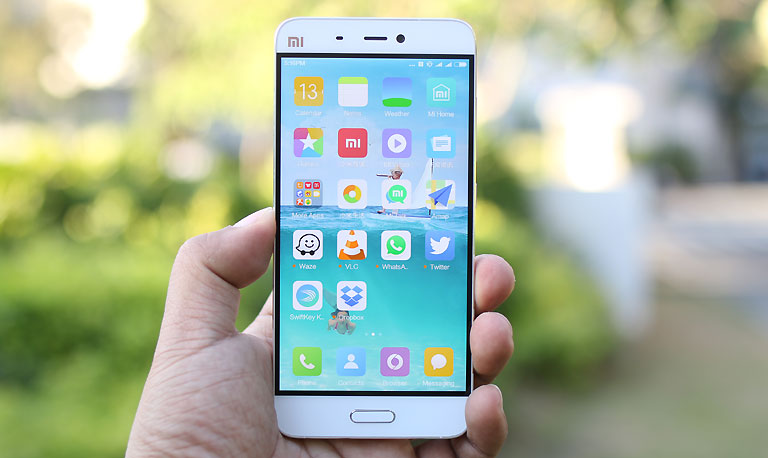
The screen is clear, crisp and very bright. Outdoor visibility is amazingly good. Under direct sunlight (high noon), the home screen is still visible and the SMS and dialer windows are still clear with their white background.
The edge-to-edge glass looked really nice on the Mi5 but the bezels on the sides become more prominent once you turn on the display. The screen is protected by Gorilla Glass 4 as as well as the curved back panel.
OS, Apps and UI
The Xiaomi Mi 5 runs on MiUI 7.2.5 which is basically a customized version of Android 6.0 Marshmallow. It is a simple UI but very nice and clean with tons of themes available in its own App Store.
The MiUI interface is flat and linear and the absence of an app drawer means you just have to create more home screens or group your apps into folders. This is the similar approach to iOS on the iPhone and the Emotion UI of Huawei devices.
Our unit did not have Google Play Store but got a fix by installing Google Installer from the Mi forums. From there we were able to install Google Play Framework as well as the basic Google Apps like GMail, Google Maps, Calendar and Google Play Services.

Xiaomi has had a good reputation of providing fast and regular updates to their devices and this is something very few other brands can match. Evennduring the time we reviewed out unit we’ve had at least two system updates.
Another huge advantage of the Mi5 is the developer community around it. There are hundreds and thousands of customization options in the Theme Store, most of them can be downloaded for free.
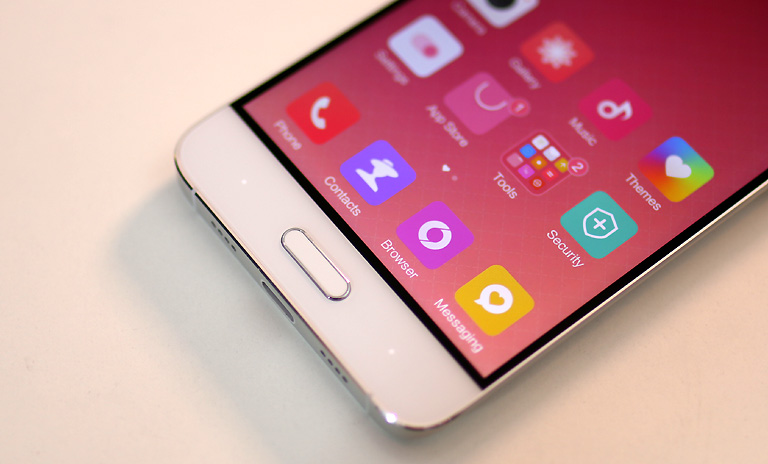
If there’s one thing that annoys us is the amount of bloatware that comes with it. Aside from native Mi apps, there are a lot of 3rd-party Chinese apps that came with the device (since our unit is the Chinese version, perhaps the international version is cleaner). This is only aggravated by the fact that the 32GB storage only has 25GB usable space and there’s no expansion slot.
Camera and Multimedia
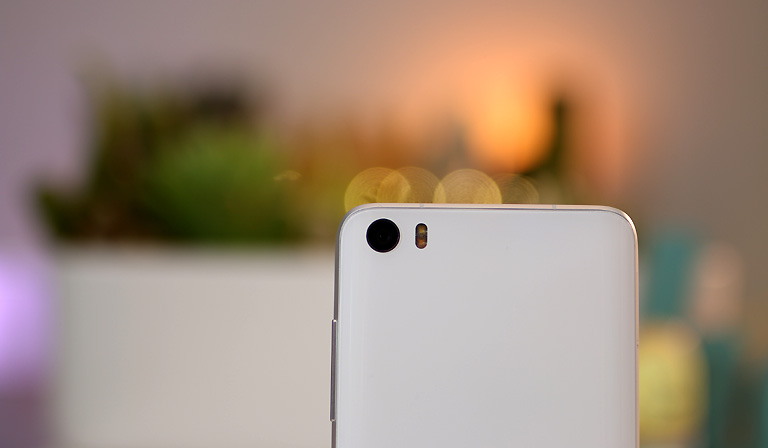
The 16-megapixel camera at the back uses a Sony IMX298 PDAF with 4-axis OIS. This is the same Exmor RS sensor used in the Huawei Mate 8 and Vivo Xplay 5 with a sensor size of 1/2.8″ and cell size of 1.12 microns. It is a fairly capable camera with very good daylight images.
Check out the photo gallery below:









It’s fast, focuses really quick and produces really sharp and accurate photos.
Video quality is equally good with the image stabilization kicking in when needed. Check out the clips below for some samples:
Low-light photos are good but half the time it finds it hard to focus on the subject and eventually takes slightly blurred shots. It does a better job compared to the iPhone 6S or the Galaxy S6 but falls short of the Galaxy S7.
Sound quality from the loudspeakers at the bottom is really nice and relatively loud. There are two sets of 4 pinholes (serves as speaker grills) at the bottom end but only the right side actually works while the left side was made just for symmetry. At maximum volume, the sound registers a high of 79dB in Sound Meter.

The IR blaster is placed up top and can be used as a universal remote control for appliances. Xiaomi already had a Mi Remote app pre-installed and it worked with almost all appliances at home. It’s easy to use and supports hundreds of home appliances and brands.


Dear Abe,
Will Smart’s LTE network work on this beauty?
Thanks!