
Xiaomi’s highly anticipated Redmi Note 14 Series is launching very soon in the Philippines, with the standard Redmi Note 14 being one of the key models in the lineup.
Naturally, one question on everyone’s mind is: “What’s different?”
To help answer that, let’s take a closer look at how the Redmi Note 14 compares to last year’s Redmi Note 13 in terms of raw specifications.

| Redmi Note 14 (4G) | Redmi Note 13 (4G) |
|---|---|
| 6.67-inch FHD+ flat AMOLED | 6.67-inch FHD+ flat AMOLED |
| 2400 × 1080 pixels, 120Hz | 2400 x 1080 pixels, 120Hz |
| 1800-nit peak brightness | 1800-nit peak brightness |
| Corning Gorilla Glass 5 | Corning Gorilla Glass 3 |
| MediaTek Helio G99-Ultra | Qualcomm Snapdragon 685 |
| 6-nm, 8-cores, up to 2.2GHz | 6nm, 8-cores, up to 2.8GHz |
| Up to 8GB LPDDR4X RAM | 6GB, 8GB LPDDR4x RAM |
| Up to 256GB UFS 2.2 storage | 128GB, 256GB UFS 2.2 storage |
| Expandable up to 1TB via microSD (hybrid slot) | Expandable up to 1TB via microSD (hybrid slot) |
| Triple rear cameras: | Triple rear cameras: |
| - 108MP f/1.7 main | - 108MP f/1.75 main |
| - 2MP f/2.4 depth | - 8MP f/2.2 ultrawide |
| - 2MP f/2.4 macro | - 2MP f/2.4 macro |
| 20MP f/2.2 selfie shooter (hole punch notch) | 16MP f/2.4 selfie shooter (hole punch notch) |
| Dual SIM | Dual nano-SIM |
| 4G LTE | 4G LTE |
| Wi-Fi 802.11a/b/g/n/ac | Wi-Fi 5 |
| Bluetooth 5.3 | Bluetooth 5.1 |
| GPS, A-GPS, GLONASS, BDS, Galileo | GPS, GLONASS, BDS, GALILEO |
| USB Type-C | USB Type-C |
| 3.5mm audio jack | 3.5mm audio jack |
| NFC | NFC |
| Under-display fingerprint sensor, face unlock | Under-display fingerprint sensor, face unlock |
| IP54 dust and splash resistance | IP54 splash and dust resistance |
| Dual stereo speakers, Dolby Atmos, IR blaster | Dual stereo speakers, Dolby Atmos, IR blaster |
| Xiaomi HyperOS, Android 14 | MIUI 14 (Android 13) |
| 5500mAh battery | 5000mAh battery |
| 33W charging (wired) | 33W wired charging |
| 163.25 x 76.55 x 8.16 mm | 162.24 x 75.55 x 7.97mm |
| 196.5g | 188.5g |
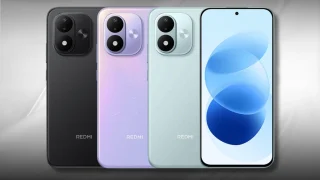
| Mist Purple, Lime Green, Midnight Black, Ocean Blue | Midnight Black, Mint Green, Ice Blue, Ocean Sunset |
Redmi Note 14 (4G) advantages:
- Slightly better chipset
- Stronger display protection
- Higher megapixel count for selfie camera
- Slight bump in battery capacity
Redmi Note 13 (4G) advantages:
- Lower starting price
- Ultrawide camera
Design
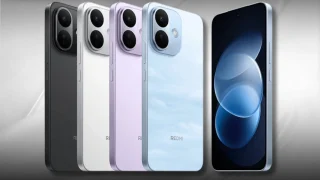
Not much has changed on the outside except the redesigned camera array.
Instead of just individual camera rings, the new model encapsulates the triple camera system on a square, color-matched island. Even the LED flash is revamped to a vertical slit rather than a circular one.
The new model also retains the flat sides and flat display aesthetic, continuing the design trend of its predecessor.
Display
Display-wise, not much has changed.
The Redmi Note 14 retains the 6.67-inch Full HD+ AMOLED display with 120Hz refresh rate. It does have a better drop resistance thanks to a newer Gorilla Glass 5 on top (previously, the Redmi Note 13 had a Gorilla Glass 3).
For biometrics, the optical under-display fingerprint sensor is also retained.
Aside from those, there’s nothing else to write home about.
Chipset
The Redmi Note 14 finally ditches the Snapdragon 685 and opted to a slightly more capable chip, the MediaTek Helio G99-Ultra.
Built on the same 6nm process with octa-core architecture, the Helio G99-Ultra operates at a slightly lower clock speed of 2.2GHz, compared to the 2.8GHz of the Snapdragon 685.
While the Helio G99-Ultra doesn’t bring a massive leap in processing power, it should be able to improve a bit in gaming performance.
We’ll be able to assess the difference in performance more thoroughly once we have the new model for a full review.
Memory and Storage
RAM and storage configuration remain unchanged in the new Redmi Note 14. It still has up to 8GB of LPDDR4x RAM and 256GB of UFS 2.2 storage—that’s still expandable via microSD.
Cameras
This is where things get tricky. While the Note 14 retains a triple rear setup, one camera unit is a downgrade.
Specifically, the 8-megapixel ultrawide is replaced by a 2-megapixel depth sensor. The other two sensors remain the same including a 108-megapixel main shooter and a 2MP macro.
Battery and Charging
Battery-wise, the new model packs a tad bit larger 5500mAh unit (from 5000mAh). This might explain the increase in size whereas the Redmi Note 14 got slightly thicker at 8.16mm (from 7.97 mm).
Meanwhile, charging speed remains the same—rated at 33W via USB Type-C.
Connectivity and Other Features
Connectivity-wise, both models have the essentials: 4G cellular, NFC as well as an IR blaster, and the good ol’ 3.5mm headphone jack.
On the software side, as expected, the Redmi Note 14 gets the more updated Android 14-based HyperOS 1 out of the box.
Other notable features include dual stereo speakers with Dolby Atmos support, and IP54 rating for dust and splash resistance.
Price
Fortunately, ahead of launch, we already got a sneak peak on how the pricing looks like for the new Redmi Note 14 Series.
According to our report, the vanilla Redmi Note 14 starts at PHP 8,999 for the 8GB+128GB trim. On the other hand, last year’s Redmi Note 13 was priced at PHP 7,999 for the 6GB+128GB variant.
As for the 256GB trim, the price stays the same at PHP 9,999.
Wrapping this up, the Redmi Note 14 is a textbook example of an incremental update. The design is almost identical, with only the camera array getting a more polished and refined look.
The most noticeable improvement is in terms of raw processing thanks to its slightly more capable MediaTek Helio G99-Ultra chipset, which should offer better gaming performance. A bigger battery and updated Android 14-based HyperOS are welcome additions, too.
Arguably, the removal of the 8MP ultrawide for a 2MP depth sensor might leave some users wanting more versatility.
With all that said, if you already have the Redmi Note 13, upgrading to the newer model is definitely a choice… but it is quite unnecessary.





Title should use “DIFFERENCE” for grammatical correctness