
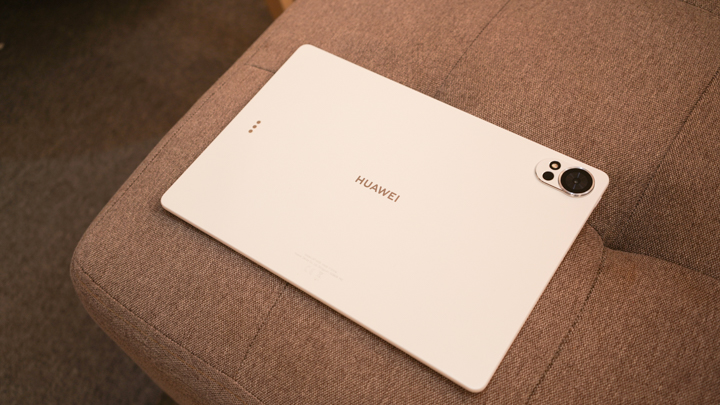
HUAWEI MatePad 12 X (2026) Review



The HONOR 400 5G comes as a fresh, new release in the mid-range segment. For less than Php25K, it offers solid performance with the Snapdragon 7 Gen 3 chip, a nice 2K AMOLED display, and a capable camera experience with a whopping 200-megapixel main shooter.

On paper alone, the HONOR 400 5G does make itself one of the most promising mid-range phones that you can get today.
What else is a promising mid-range phone, you ask? It is none other than the Samsung Galaxy A56. And despite being launched after nearly three months, this one still proves to be a solid option in its class.
You get that premium, signature Galaxy look, a solid performance as well, powered by the Exynos 1580 chip, and flexible triple rear cameras, headlined by a 50-megapixel primary sensor.
But the question remains: for under PHP 25,000, which one offers more value for your money? Let’s have a rundown of advantages and disadvantages for each model in our comparison review of the HONOR 400 5G versus the Samsung Galaxy A56.
First off: the looks, and we see significant design changes for both models in this area.
Gone is the oval-shaped camera island on the HONOR 400 and is replaced by a sort of a trapezoidal module that houses its dual camera setup. This adds a touch of uniqueness to its overall design, and it surely looks way better than its predecessor, the HONOR 200, in my opinion.

Our unit is in the Desert Gold colorway which sports a matte back, and a smooth, metal frame. It has a slim profile measuring 7.3 mm thin, and it’s light in the hands, too, weighing only 184 grams.
Moving over to the Galaxy A56, it retains the signature Galaxy look but with a little twist. The three cameras are still aligned vertically on the left, but instead of having separate camera lenses or rings just like the Galaxy A55, there is now an oval-shaped module housing all three cameras on top of it, except the LED flash.

The Galaxy A56 unit that we have comes in the Lightgray colorway sporting a glass back in glossy finish, and a metal frame as well. It is a tad bit heavier though, weighing almost 200 grams. And as for the frame, it’s more or less the same size, measuring 7.4 mm thin, but it is wider at 77.5 mm.
The bump in dimensions and weight makes sense as the Galaxy A56 sports a larger screen, which we’ll get to in a bit.
For added protection, I’m happy to report that both get strong dust and water resistance ratings albeit the Galaxy A56 is IP67-rated while the HONOR 400 is rated IP66.
In terms of design and build, both phones do look sleek and practical. Although, what sets the Galaxy A56 apart is its additional protection from front to back. Both the display and rear panels are covered by Corning Gorilla Glass Victus+ making them more resistant to drops and scratches.
Thus, the Galaxy A56 gets the first point for offering a more durable overall build.
Flip both phones over, and you’ll be greeted by varying display sizes. The HONOR 400 5G is relatively smaller, featuring a 6.56-inch AMOLED display, but with a slightly higher 2K screen resolution (at 2780 by 1264 pixels).

Meanwhile, the Samsung Galaxy A56 goes for a 6.7-inch Super AMOLED display with a slightly lower yet still crisp Full HD+ screen resolution (at 2340 x 1080 pixels).
Both run at a smooth 120Hz screen refresh rate, and both sport flat display panels which I personally prefer over curved ones. So, that’s good to have.
Despite the difference in screen resolution though, the Galaxy A56’s display is equally good as the HONOR 400’s. Colors look nice and vivid, and you can expect an enjoyable visual experience for both models.

Audio experience on the other hand, well… both phones offer a decent sound stage at best. They both have dual stereo speakers albeit the HONOR 400’s audio comes out a bit flat, lacking detail, and the Galaxy A56 isn’t as loud to our liking. Still, for casual viewing, both phones will do just fine.

These are mid-range phones after all, so you’d have to set your expectations.
Now, in terms of biometrics security, both phones provide an under-display fingerprint sensor alongside face recognition.
For display protection, as I mentioned earlier, the Galaxy A56 features Corning Gorilla Glass Victus+. Fortunately, the HONOR 400 also comes with scratch-resistant glass, leveling the playing field in this round.
So, both phones get a point this round.
Performance-wise, you won’t get disappointed on either of the two phones.
The HONOR 400 5G boasts the Snapdragon 7 Gen 3, a 4-nanometer chipset configured with 12GB of RAM and 512GB of internal storage.

Meanwhile, the Galaxy A56 boasts Samsung’s in-house chip, the Exynos 1580, which is also built on a 4-nanometer process. Our unit came with 8GB of RAM and 128GB of internal storage.

Now, before you jump into the comments saying that Exynos still sucks… Well, I have good news for you: it doesn’t. As you can see in our benchmark tests, the Galaxy A56 yielded relatively better results across the board, except the ANTUTU Storage, and that’s likely because it has lower RAM and storage capacities.
Anyways, in ANTUTU, the Galaxy A56 scored over 900,000 points which is relatively higher than that of the HONOR 400’s 850,000 score.
The same goes for the Geekbench CPU and GPU tests, where the Galaxy A56 outperformed the competition, most especially in the GPU tests, scoring nearly twice as high. This implies that the Galaxy A56 can handle more graphically demanding tasks, however in real world use cases, you’d barely notice any difference.

You can expect both phones to run smoothly on your day-to-day tasks. For gaming though, you may have to set your expectations. While both phones can run casual games just fine, the more graphic-intensive titles like Wuthering Waves or Zenless Zone Zero are only playable in low graphics settings, as you would expect from a mid-range device. But that’s about it.
With the higher benchmark scores, ideally, I would be compelled to give the point this round to the Galaxy A56. However, since the HONOR 400 offers double the storage, that’s 512GB compared to the A56’s default 256GB, it’s more reasonable to call this round a tie.
| Benchmark | HONOR 400 5G | Samsung Galaxy A56 |
|---|---|---|
| Chipset | Qualcomm Snapdragon 7 Gen 3 | Samsung Exynos 1580 |
| AnTuTu V10 | 857,998 | 902,412 |
| AnTuTu Storage | 96,586 | 68,190 |
| S.Read Speed | 1929.7 MB/s | 1722.0 MB/s |
| S.Write Speed | 1828.7 MB/s | 1024.0 MB/s |
| 3DMark Wild Life | 5,403 | Avg. FPS: 32.36 |
| Geekbench 6 CPU Single-Core | 1,155 | 1,356 |
| Geekbench 6 CPU Multi-Core | 3,163 | 3,901 |
| Geekbench 6 GPU OpenCL | 3,472 | 6,856 |
| Geekbench 6 GPU Vulkan | 4,069 | 6,875 |
| PCMark Work 3.0 performance | 13,450 | 14,292 |
| PCMark Work 3.0 battery life | 14 hrs & 58 mins | 15 hrs & 15 mins |
Moving on to camera performance, this is where we can see quite a big difference.
The Galaxy A56 features a triple rear setup consisting of a 50-megapixel main shooter, a 12-megapixel ultrawide, and a 5-megapixel macro lens. This is the very same setup from the Galaxy A55, mind you.

As for the HONOR 400, it boasts a dual rear setup led by a 200-megapixel primary sensor alongside a 12-megapixel ultrawide. Interestingly, in comparison with its predecessor, the HONOR 200, its cameras are reduced from three sensors to just two sensors.

It’s kind of a bad change as they took out a 50-megapixel telephoto lens in exchange of a higher 200-megapixel sensor, but I digress.
Image quality is generally good on both models, offering vibrant colors, sharp details, and solid dynamic range. However, photos captured by the HONOR 400 stand out a bit more to my liking. The way it handles image processing works like a charm, and what I mean by that is most often than not, shots taken with the HONOR 400 are mostly ready for upload without any further editing.

Check out our sample shots right here to get a better idea of how these phones perform.
As for video, both phones support optical image stabilization, capable of shooting up to 4K at 30 fps. Just like the image quality, videos come out generally good from both phones, and the OIS helps a lot to keep your shots clean and stabilized.
Despite us saying that higher megapixels don’t necessarily equate to better quality, the HONOR 400 seems to be living up to expectations. It performs relatively better than the competition, at least in capturing images, so I’ll give it the point this round.
For more sample shots, head over to our full reviews below:
Battery-wise, the HONOR 400 has a clear edge on paper at least. Despite its slim and lightweight design, it packs a larger 6000mAh battery, which is possible using silicon-carbon tech. It also has a faster charging at 80W.

On the other hand, the Galaxy A56 packs a 5000mAh unit paired with 45W of charging.

However, our battery life tests tell a different story. With a larger capacity, you expect the HONOR 400 to last longer, right? Well, in our testing, it was the opposite. The Galaxy A56 lasted a bit longer by at least 15 minutes.
I presume that it’s a difference in chipset efficiency or the HONOR 400 just needs software optimizations, but that’s quite a bummer at this point.
Both lasted just about 15 hours of runtime in PCMark battery test (14 hours and 15 minutes for the HONOR 400, and 15 hours and 15 minutes for the Galaxy A56)—not that great but should be decent enough for most users.
Besides, it only takes less than an hour at most for the HONOR 400 to fully charge, and the Galaxy A56 takes over an hour to get from zero to 100% charge.
In this regard, it seems there is no clear winner, so I’m giving a point to both models this round.
On the software side, both phones run Android 15 out of the box whereas the HONOR 400 and the Galaxy A56 are skinned with Magic0S 9.0 and One UI 7, respectively. I’m happy to report that both models are promised to get up to six years of software updates.

Samsung and Google were the first ones to commit such a long software support duration, and it’s nice to see other manufacturers like Honor to do the same.

Both software look good in terms of UI design and functional with lots of neat features to tinker with, especially with their own take on AI. Stuff like Google’s Circle to Search, AI Image Editor, and the likes are readily available for both phones.

There’s little bloatware to be seen here as well, offering a clean software experience. UI design differs, of course, but design is subjective, so I’ll let you be the judge of that.
Both have the essential connectivity features including 5G, NFC, and Wi-Fi 6. An additional utility for the HONOR 400 though is the inclusion of an IR blaster, convenient for using the phone as a universal remote for your home appliances.
However, that alone won’t be enough to earn the HONOR 400 the full point this round. And since both phones will last you for many years to come, it’s just right to make it another tie this round.
So, we have come to the last part of this comparison review, and with all the facts mentioned, which one truly offers more value for money?
If it’s only the price we’re talking about, then the HONOR 400 5G sweeps the competition, priced at only PHP 22,999 for the 12GB+512GB configuration. With that double storage capacity alone, you’re surely getting the most out of your money.

On top of that, it provides a capable camera experience, a nice 2K screen, and a solid overall performance at a price that’s hard to beat.
However, that doesn’t mean the Samsung Galaxy A56 should be off your radar.

From the outset, it’s an easy recommendation for anyone looking for a solid all-rounder under Php25K. As for its price, it starts at PHP 23,990 for the 8GB+128GB trim, but if you have more cash to spare, the 256GB variant goes for PHP 25,990.
| HONOR 400 5G | Samsung Galaxy A56 |
|---|---|
| PHP 22,999 | 12GB+512GB | PHP 23,990 | 8GB+128GB PHP 25,990 | 8GB+256GB |
| 6.56-inch 2K+ AMOLED | 6.7-inch FHD+ Super AMOLED |
| 2780 x 1264 pixels, 120Hz refresh rate | 2340 x 1080 pixels, 120Hz refresh rate |
| 5000 nits (HDR) peak brightness | 1200 nits (HBM) peak brightness |
| (Unspecified) scratch resistant glass | Corning Gorilla Glass Victus+ |
| Qualcomm Snapdragon 7 Gen 3 | Samsung Exynos 1580 |
| 4nm, octa-core, up to 2.63GHz | 4nm, octa-core, up to 2.9GHz |
| 12GB RAM | 8GB RAM |
| 512GB storage | 128GB, 256GB storage |
| Dual rear cameras: | Triple rear cameras: |
| - 200MP f/1.9 main, OIS | - 50MP f/1.8 main, OIS |
| - 12MP f/2.2 ultrawide | - 12MP f/2.2 ultrawide |
| - | - 5MP f/2.4 macro |
| 50MP f/2.0 selfie shooter (hole punch notch) | 12MP f/2.2 selfie shooter (hole punch notch) |
| Dual nano-SIM (supports eSIM) | Dual nano-SIM (supports eSIM) |
| 5G, 4G LTE | 5G, 4G LTE |
| Wi-Fi 6 | Wi-Fi 6 |
| Bluetooth 5.4 | Bluetooth 5.3 |
| GPS, AGPS, GLONASS, BeiDou, Galileo, QZSS | GPS, Glonass, Beidou, Galileo, QZSS |
| USB Type-C | USB Type-C |
| NFC | NFC (supports Digital Key) |
| Under-display fingerprint sensor (optical) | Under-display fingerprint sensor (optical) |
| IP66 dust and water resistance | IP67 dust and water resistance |
| Dual stereo speakers, IR blaster | Dual stereo speakers |
| Magic0S 9.0, Android 15 | One UI 7, Android 15 |
| 6000mAh Si/C battery | 5000mAh battery |
| 80W charging (wired) | 45W charging (wired) |
| 156.5 x 74.6 x 7.3 mm | 162.2 x 77.5 x 7.4 mm |
| 184g | 198g |
| Desert Gold, Tidal Blue, Midnight Black (colorways) | Lightgray, Graphite, Pink (colorways) |
Product links






Apple, Asus, Cherry Mobile, Huawei, LG, Nokia, Oppo, Samsung, Sony, Vivo, Xiaomi, Lenovo, Infinix Mobile, Pocophone, Honor, iPhone, OnePlus, Tecno, Realme, HTC, Gionee, Kata, IQ00, Redmi, Razer, CloudFone, Motorola, Panasonic, TCL, Wiko
Best Android smartphones between PHP 20,000 - 25,000
Smartphones under PHP 10,000 in the Philippines
Smartphones under PHP 12K Philippines
Best smartphones for kids under PHP 7,000
Smartphones under PHP 15,000 in the Philippines
Best Android smartphones between PHP 15,000 - 20,000
Smartphones under PHP 20,000 in the Philippines
Most affordable 5G phones in the Philippines under PHP 20K
5G smartphones in the Philippines under PHP 16K


