

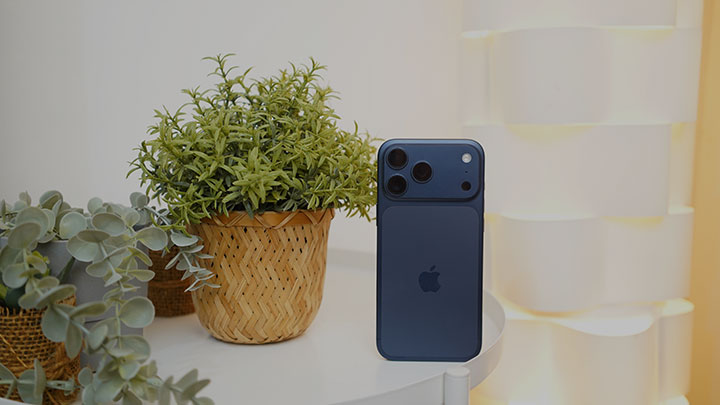
When the iPhone 17 Pro Max was originally announced, it attracted mixed reactions from the usual iPhone crowd. While this iteration included a lot of design changes, some of them didn’t sit well with old-time users, yet still many are excited about it.
As a matter of disclosure, I have not substantially used an iPhone since the iPhone X, and except maybe for a couple of weeks on the iPhone 15 Pro.
So, while I am doing this review, I have wholeheartedly committed to switching to the iPhone 17 Pro Max so I can make a much better judgement — whether I will miss something from the Android ecosystem or I actually find a very useful feature only the iPhone has to offer.

It’s been more than a month since the new iPhone 17 series has been launched in the Philippines and we’ve also had a good-enough time get a deep-dive of the iOS ecosystem that I have not been familiar with for the longest time.

As such, this review will mostly tackle or focus on things that are different across the pond rather than compare the unit to its predecessor. I will make an early apology if some parts of this review will come off as iPhone vs. Android but that’s the lens that I am coming from.
Design and Construction
The iPhone 17 Pro Max takes it design roots all the way back from the iPhone 12 Pro Max (in 2020) with a slightly noticeable refinements with the iPhone 15 Pro Max (in 2023) that included the shift to titanium body and contoured edges.

This time around, Apple decided to switch back to an aluminum frame. The change from stainless-steel to titanium and now to aluminum was done due to two major factors — thermal conductivity that helps in heat dissipation and lighter weight. Add to that the fact that an anodized aluminum allows for wider color options like the Cosmic Orange colorway we now have on the iPhone 17 Pro and Pro Max.

I personally prefer the titanium body but also understand the compromise with thermals, so I guess, aluminum it is!
While I like the bigger screen (6.9″ Super Retina display) of the iPhone 17 Pro Max, the Pro variant is more comfortable to use with one hand. It’s a little cumbersome to do one-handed typing on the 17 Pro Max, more so if you add a case with it. I guess it’s a matter of preference — bigger screen with two-handed operation, or slightly smaller one that’s comfortable with one-handed use.
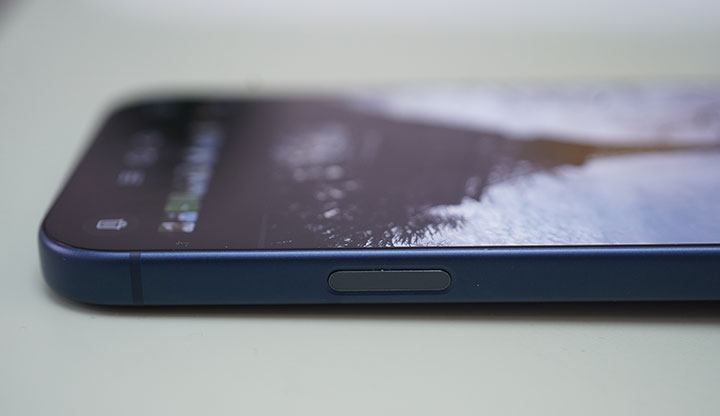
With an 8.75mm thin profile and at 231 grams, the phone is on the heavy side, beating the 15 Pro Max (221 grams) and 16 Pro Max (227 grams).

As part of the redesign of the new iPhone 17 Pro Max, Apple added a massive island around the camera module, often referred to as the “plateau“. This raised the placement of the 3 cameras, the LED flash and sensors. This wasn’t just a cosmetic design but was designed to house most of the internal circuitry of the device, leaving the entire back panel all just for the Li-ion battery (there’s a bigger 5,088 mAh capacity for the e-SIM only model).
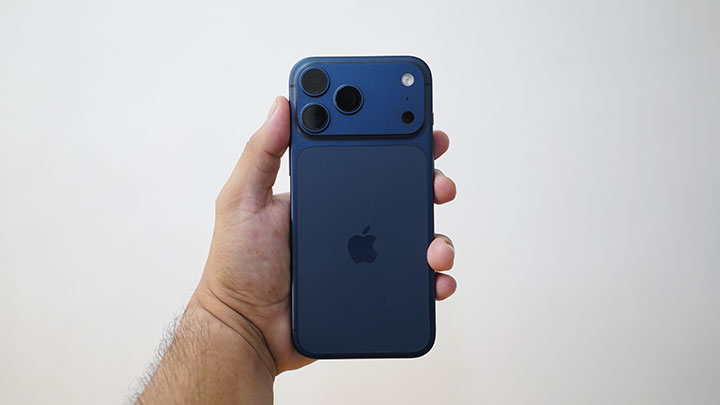
While 4,823 mAh isn’t anywhere near the biggest capacity for any flagship phone these days, Apple managed to maximize it through software optimizations and a little bit of engineering, such as the vapour chamber to make the device cooler during heavy loads like gaming or shooting 4K videos.
Display and Biometrics
The iPhone 17 Pro Max uses an OLED-based “Super Retina XDR” display with LTPO technology (which allows for an adaptive 120Hz refresh rate). The 6.9-inch display has a 2868 × 1320 pixel resolution at about 460 ppi pixel density.

Apple also markets it as an HDR-capable, always‑on display with high peak brightness and wide color (P3) support. It is rated around 3,000 nits peak outdoor brightness, with 1,600 nits HDR peak and 1,000 nits typical, plus Dolby Vision HDR support.

What I really liked about the display on the iPhone 17 Pro Max is the clarity, the right balance of contrast and color that gives the impression of some level of depth. The screen is just different — very crisp and vivid.
The iPhone 17 Pro Max uses Apple’s latest Ceramic Shield glass and emphasizes features like Dynamic Island, True Tone, and tight iOS color management.
I’m always biased towards fingerprint scanners (Touch ID) and this was one of reasons the last iPhone that I actually owned and used for the longest time was the iPhone X (I had a short, two-month stint using the iPhone 15 Pro).

With the new iPhones, it’s Face ID or password. While not really so used to Face ID, this feature is actually so close to flawless that you don’t have to actually think about it and it just works. I still occasionally tap the power button (perhaps due to muscle memory) when unlocking the phone, but I guess I’ll just have to get used to it soon.
If you are like me who has thousands of photos stored on the phone over the years, you will have to major problems — searching for that one photo from months ago that you really need (a receipt or important)
Camera and Multimedia
For the longest time, people have been choosing the iPhone over any other smartphone is because of its camera. The iPhone 17 Pro Max is no exception, even adding a few more tweaks to make taking photos easier and more compelling.

The triple 48MP fusion cameras all perform equally impressive you wouldn’t notice their difference most of the time.
iPhone 17 Pro Max Main Camera
Oct 16 – Nov 13, 2025


Main (wide) camera
• 48MP Fusion Main camera, 24 mm equivalent focal length (1x).
• ƒ/1.78 aperture, second‑generation sensor‑shift OIS, and 100% Focus Pixels for fast, reliable autofocus.
iPhone 17 Pro Max Ultrawide
Oct 7 – Nov 11, 2025


Ultra‑wide camera
• 48MP Fusion Ultra Wide camera, 13 mm equivalent focal length (0.5x).
• ƒ/2.2 aperture with a 120° field of view and macro support, allowing close‑up “48MP macro” shots.
iPhone 17 Pro Max Telephoto
Oct 7 – Nov 13, 2025


Telephoto camera
• 48MP Fusion Telephoto camera using an updated tetraprism design.
• 100 mm (4x) and 200 mm (8x optical‑quality) equivalents at ƒ/2.8, with 3D sensor‑shift OIS and autofocus for long‑reach shots.
From all the sample shots we’ve taken, the iPhone 17 Pro Max performed very good on all 3 rear cameras. Shots are crisp and accurate, with fine details and good color saturation. Low-light shots are good to very good with fine details still captured without too much noise.
17 Pro Max Selfie
Oct 16 – Nov 23, 2025


The iPhone also uses a new 18MP Center Stage front camera with a square sensor, designed for both selfies and video calls.

Center Stage allows for single or multiple people to be automatically adjusted within the frame so there is no need to adjust the camera distance or angle. The camera detects any number of people and basically manages the framing on its own.

The device features a dedicated, multi-functional Camera Control button (also called the “Capture Button”) that functions as a sophisticated physical shutter button and also allows for gesture-based camera setting adjustments.
Here are some sample night shots taken with the main camera:
iPhone 17 Pro Max Night Shots
Oct 16 – Nov 13, 2025


Here are some macro photos taken with the iPhone 17 Pro Max:
iPhone 17 Pro Max Zoom
Tuesday, Oct 7, 2025


The iPhone 17 Pro Max is a very video‑centric device, with major upgrades in frame rates, ProRes, and spatial capture compared to older models.

There is a wide range of recording options you can do on this phone:
* 4K HDR (Dolby Vision) at 24, 25, 30, 60, 100, or 120 fps on the main Fusion camera, giving options from cinematic to ultra‑smooth high frame rate video or 1080p HDR (Dolby Vision) at 25, 30, 60, or 120 fps, plus 720p HDR at 30 fps.
* Supports ProRes video recording up to 4K at 120 fps when using external storage, enabling slow‑motion and color grading options. Offers ProRes RAW, Apple Log 2, ACES (Academy Color Encoding System), and genlock support, clearly targeting professional and multicam workflows.
* Slo‑mo up to 1080p at 240 fps, and also 4K Dolby Vision slow‑mo up to 120 fps on the Fusion Main camera for high‑detail slow motion.
* Dual Capture lets you record simultaneously from front and rear cameras up to 4K Dolby Vision at 30 fps, ideal for reaction plus scene videos.
* Records in HEVC and H.264, plus ProRes and ProRes RAW for supported workflows. Captures Spatial Audio or stereo using four studio‑quality microphones, with wind noise reduction, audio zoom, and Audio Mix features.
What I liked most about the cameras is that regardless of which of the 3 cameras you use, you are getting almost the same level of quality and output.

The Photo Gallery of the iPhone has the widest filtering or classification option I’ve seen (Collections). From selecting photos of people, places and time frames (trips) to the type of media or shots (video, selfies, portraits, slow-mo, time-lapse), it is all there for you to quickly and easily browse through and share.
OS, UI and Apps
The new iPhone 17 Pro Max runs on the latest iOS 26. It is the 19th and the current major release of Apple’s iOS operating system for the iPhone.

If you’re an old-time iPhone user, navigation and gesture commands should be easy and intuitive. Perhaps, the most glaring changes you will notice is the glass effect.
The iOS 26 “glass effect” refers to Apple’s new Liquid Glass design language, a translucent, reflective visual style that makes UI elements (like Control Center, app icons, toolbars) appear as if made of rippling, dynamic glass, blending with your wallpaper for a fluid, 3D feel.

However, if you are coming from an Android device, there will be some learning curve to go through in the first few weeks or months. As I have experienced, there are quite a number of things that I had to un-learn and re-learn when switching to the iPhone during the term of this review. Things get easier once you figure them out as it’s either one click away or you’ll have to dig deeper into the settings to activate.
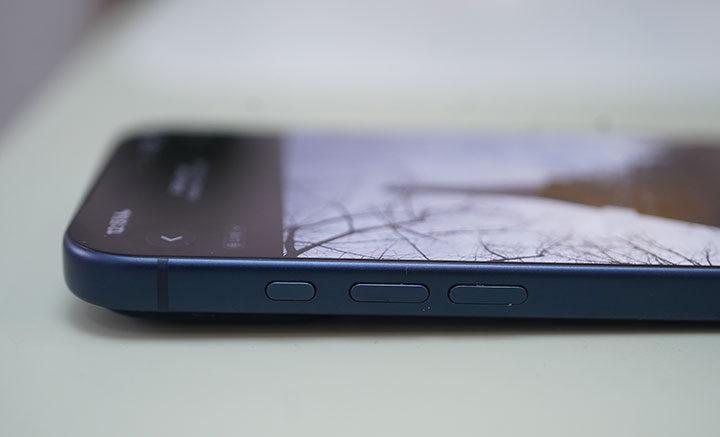
The Action button, introduced on Pro models, allows quick toggles for silent mode, camera, flashlight, and shortcuts without software reliance.
If there’s one thing I personally find annoying, it would be the iCloud service. While I understand the value of a unified cloud service, the ecosystem constantly reminds me that it is already full even after I disabled it. I am used to Dropbox as cloud storage and while it has an option to auto-upload photos and videos from my gallery, once I disable it, it is set and forget.

It’s like there is a pro-active push for me to subscribe to more iCloud+ storage. I don’t really mind that extra Php49/month for 50GB more but it feels too pushy when I think I don’t really need it yet. Besides, I am already subscribed to DropBox Plus 2TB for $10/month.
Benchmarks and Performance
The iPhone 17 Pro max uses the newest chipset from Apple, the A19 Pro chip. This is comprised of a 6‑core CPU with 2 performance and 4 efficiency cores, 6‑core GPU with Neural Accelerators and 16‑core Neural Engine. It comes with 12GB of RAM and up to 2TB of internal storage. Our review unit has 512GB of internal storage.

The Apple A19 Pro is a very powerful chip that peaks at 4.26GHz, has hardware-accelerated Ray Tracing for realistic lighting and graphics in games. It can handle AAA games better and smoother – Resident Evil, Death Stranding, Assassin’s Creed Mirage, Wuthering Waves, and Arknights: Endfield should have no problem playing at the highest settings.

Synthetic benchmark tests also showed the iPhone 17 Pro Max scoring 2,489,896 points in Antutu benchmarks.
Here’s the complete suite of benchmarks we ran on the device:
GeekBench 6.5 CPU: 3,792 (Single core), 9,675 (Multi-core)
GeekBench 6.5 GPU Metal: 45,121
Antutu v10.1.4: 2,489,896
Antutu Storage: 3,259MB/s (Read), 3,783MB/s (Write), 428MB/s & 126MB/s (Random Read/Write)
While benchmark scores normally provide absolute performance numbers (like storage speed test, etc), they’re not an end-all, be-all indicator as to the true potential of a device. In the case of the iPhone 17 Pro Max, both test sores and real-world performance gave us what we’d expect in a flagship series.
Connectivity and Battery
Connectivity is something you’d either love or hate about the iPhone. You get all the basics here — Bluetooth, UWB, NFC, WiFi 7 (802.11be) with 2×2 MIMO, GPS, 5G NR with support for sub‑6 GHz and (in some regions) mmWave, plus 4G LTE, UMTS/HSPA+, and GSM/EDGE fallback. You also get USB Type-C with USB 3 speeds and DisplayPort support.
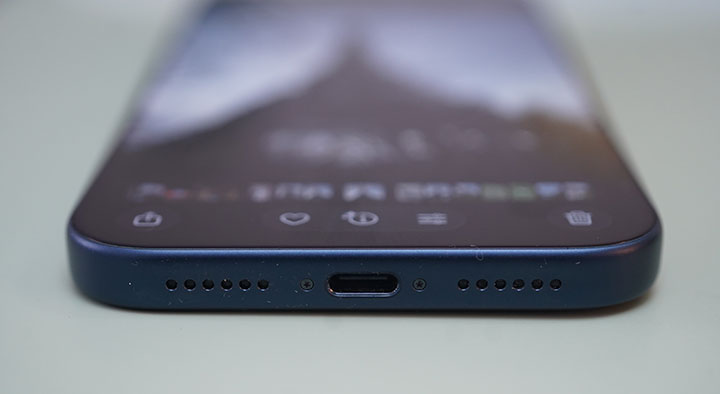
If you’re into the whole Apple ecosystem, this is heaven. You have AirDrop that can be used across different devices (Mac, iPad and iPhone) and iCloud as a second cloud storage connected to any or all of them as long as you sign in to the same Apple ID.

For those who enjoyed Air Drop on the iPhone, iPad and Mac, as well as Quick Share on Android, we should all be glad to hear that both these file sharing feature now works across Pixel devices and should roll out in other Android smartphones soon.
Likewise, if you are working within the same Apple ecosystem, you will notice faster file transfer rates with the iPhone 17 Pro Max as well, due to the inclusion of the N1 networking chip (tried this with the Macbook Air M3, MacBook Pro M5 along with the iPhone 17 Pro Max). A wired connection can also increase AirDrop speeds even further on compatible devices.
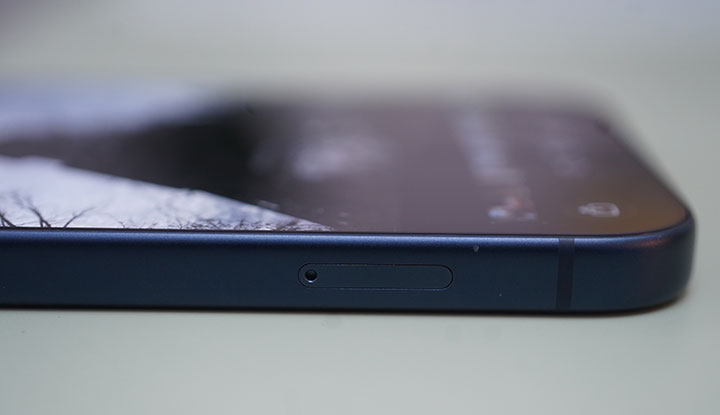
For the Philippines, we get the nano-SIM and e-SIM configuration while other regions might get dual e-SIM support.
I am also quite impressed on the fact that the Apple Watch and the AirPods Pro that I am reviewing with the iPhone 17 Pro Max has that tight yet seamless connectivity between each other. Getting notifications when the accessories are with me or I’ve left them is something I’ve been longing for but only the Apple ecosystem can deliver flawlessly.

Battery life is something that iPhones have had to struggle with for many years now. It is perhaps one of the main reasons I lot of long-time users complain and would-be users fear of switching.
And while it is true that the iPhone 17 Pro Max does not carry such a large-capacity battery (4,823 mAh), Apple still found a lot of ways to maximize this in order to deliver the longest battery life on any iPhone.
As a result, we found that the iPhone 17 Pro Max manages to last us the whole day — sometimes even reaching the next morning or, if the night is longer than usual, we’d likely reach for the charger before heading to sleep.
In our standard video loop test, the device lasted 30 hours and 32 minutes on a single full charge playing a full HD 1080p movie at 50% brightness, zero volume and in airplane mode. This is pretty impressive results that compare with most other flagship phones we’ve tested before, like the Galaxy S25 Ultra.
Charging the phone is actually fast on the first 50% of the battery, lasting about 20 minutes or so; but, to reach the full charge, it may take some 90 minutes or more.
Conclusion
About a month after I migrated to the iPhone 17 Pro Max (from 8 years of being on Android), I had to relearn a lot of things — from the interface, navigation, and features.
Since then, I would not say I have completely gotten used to it by now (it’s been more than a month since I migrated), but there are a few things that got me hooked and loving it.

There’s AirDrop which replaced DropBox as an intermediary when transferring to my MacBook Air. The Center Stage front camera is also great for taking the best selfies. I love the Action button, but I still sometimes forget to use it when launching the camera. Lastly, the Dynamic Island has the most intuitive and best utilization I have ever seen in any phone.

From a hardware perspective, the iPhone 17 Pro Max has a lot to offer and performs better if not at par with most other flagship-level smartphones in the market today.
What really sets it apart is the iOS operating system and the Apple ecosystem. Once you get hooked, it will be hard to let go and it will eventually influence the way you use and interact with the device.

For long-time iPhone users, the iPhone 17 Pro Max is still a worthy upgrade, despite what some may think as a compromise on the engineering material and features that have long been available to Android users.
Despite that, the improved thermals, longer battery, performance and camera are all better than its predecessors.
For Android users, the iPhone 17 Pro Max can slug it out with any other flagship smartphone out there. With the strong marriage between hardware and software, Apple still maintains that dominance many others can only wish for or try hard to emulate.
iPhone 17 Pro Max price in the Philippines:
256GB – PHP 86,990
512GB – PHP 101,990
1TB – PHP 116,990
2TB – PHP 146,990
What we liked about the iPhone 17 Pro Max:
* Powerful A19 Pro chipset
* All 3 cameras are equally impressive
* Biggest storage on any phone at 2TB
* Big, bright screen
What we liked less:
* Aluminum material feels less premium and prone to scratches
* Can burn a hole in your pocket!
Apple iPhone 17 Pro Max specs:
6.9-inch Super Retina XDR display
2868 x 1320 pixels @ 460ppi
120Hz ProMotion refresh rate
Always-On display
Ceramic Shield Glass 2 protection
Ceramic Shield Glass back panel
Apple A19 Pro chip
6‑core CPU with 2 performance and 4 efficiency cores
6‑core GPU with Neural Accelerators
16‑core Neural Engine
Apple N1 wireless chip
Vapor chamber cooling
256GB, 512GB, 1TB, 2TB storage options
48MP fusion main camera
48MP fusion ultra wide
48MP fusion telephoto (8x optical zoom, 40x digital zoom)
ProRes RAW, Apple Log 2
18MP center stage front camera
eSIM only option
Wi-Fi 7
Bluetooth 6
GPS
NFC
Thread
Rated IP68 dust and water resistance
iOS 26
Li-Ion 4,823 mAh battery, MagSafe & Qi2 25W wireless charging
Cosmic Orange, Deep Blue, Silver (colors)

0 Comments
Leave a Reply