
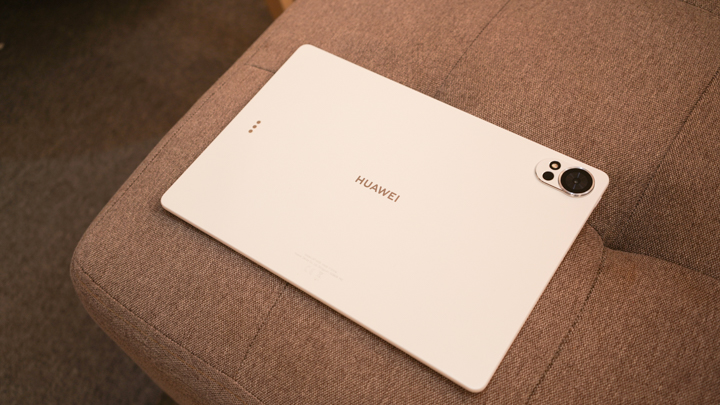
HUAWEI MatePad 12 X (2026) Review



The midrange smartphone scene is more competitive than ever, and the Infinix NOTE 50 Pro and Redmi Note 14 5G are two devices aiming to grab your attention. Both pack impressive specs, stylish designs, and everyday performance that punches above their price.
Whether you’re into mobile gaming, photography, or multitasking on the go, these phones offer plenty to like. But which one truly delivers the better overall experience? Let’s find out which one’s ready to be your next daily driver.

The Redmi Note 14 5G offers a minimalist design with its matte-finish plastic back, plastic frame, and Corning Gorilla Glass 5 on the front for added scratch protection. Its slightly curved edges make it comfortable to hold, and at 190g, it strikes a nice balance between being lightweight and sturdy.
The IP64 rating gives peace of mind against dust and minor splashes, although you’ll want to keep it away from water. The minimal camera bump keeps the rear panel looking clean and the IR blaster is a thoughtful, practical bonus for controlling appliances. There’s also a 3.5mm headphone jack too which is a feature you don’t see quite often nowadays.

On the other hand, the Infinix NOTE 50 Pro steps into more premium territory with its ArmorAlloy metal frame, giving it a noticeably more durable and high-end feel. At around 198g, it’s slightly heavier, but the added heft gives it a reassuring, solid presence in the hand.
Its octagon-shaped camera module gives it a bold, distinctive look compared to the Redmi’s more subtle rear design. While its glossy finish can pick up fingerprints easily, Infinix includes a leather-textured case in the box. Like the Redmi, it offers IP64 dust and splash resistance, dual SIM support, USB-C, and an IR blaster.

On the front, the Infinix NOTE 50 Pro impresses with a slightly larger 6.78-inch Full HD+ AMOLED display that ups the refresh rate to 144Hz, making scrolling, gaming, and general use feel incredibly fluid.

With up to 1,300 nits of brightness, it holds up well even in bright outdoor settings, and the thin bezels add to the sleek appeal. The in-display fingerprint sensor and face unlock work efficiently, registering biometric data swiftly.
Where the NOTE 50 Pro really shines is audio: it’s equipped with dual stereo speakers tuned by JBL, delivering clear highs and mids, though the bass could be punchier.

Overall, it offers an engaging multimedia experience, whether you’re watching videos, gaming, or just listening to music.
The Redmi Note 14 5G features a 6.67-inch AMOLED display with a 120Hz refresh rate and HDR10+ support. It delivers rich colors, deep contrast, and sharp detail, while its peak 1,915 nits of brightness ensures excellent outdoor visibility.

The thin bezels help maintain a clean, modern look. For security, the Redmi has an optical under-display fingerprint sensor, which is quick and responsive, providing smooth access alongside face unlock.
The dual stereo speakers are loud enough for everyday use, but I often found myself cranking the volume to the max, especially in noisy settings. The mids are clear, making vocals and dialogue stand out, but the bass feels underwhelming. For casual use, the speakers do the job, but for a richer audio experience, headphones or an external speaker are the way to go.

While the Redmi Note 14 5G offers superior brightness and HDR10+ support, the Infinix NOTE 50 Pro edges ahead overall thanks to its smoother 144Hz refresh rate and larger screen, which enhance the experience for gamers and heavy multimedia users. For those prioritizing ultra-smooth visuals, the Infinix takes the slight win here.

When it comes to cameras, the Redmi Note 14 5G has the clear edge on paper and in practice. It packs a 108MP main sensor with OIS, supported by an 8MP ultrawide and a 2MP macro lens, offering versatile shooting options.

The main camera delivers sharp, detailed shots even in challenging lighting, with good dynamic range and balanced colors, though they tend to lean slightly cool. The ultrawide is handy for group shots or wide scenes, while the macro lens is more of a bonus for close-ups, though results can vary.
Video tops out at 1080p 30fps with electronic stabilization, and selfies see a notable upgrade this generation with a 20MP front camera, providing solid quality for social sharing.
Redmi Note 14 5G sample photos:
The Infinix NOTE 50 Pro, on the other hand, comes with a 50MP main camera, an 8MP secondary sensor, and a flicker sensor.
While the 50MP headline sounds promising, image quality is more modest. In good lighting, it produces decent color and clarity, though dynamic range can struggle, especially in shadow-heavy scenes. Low-light performance is serviceable but noticeably softer with less vibrant colors.

Up front, the 32MP selfie camera captures sharp selfies, though it lacks an LED flash this time around. For video, the NOTE 50 Pro offers up to 2K at 30fps on both cameras and electronic stabilization at 1080p high frame rates, but without OIS or built-in EIS, handheld footage can be shaky.
Infinix NOTE 50 Pro sample photos:
Overall, the Redmi Note 14 5G pulls ahead in the camera department with its higher-resolution main sensor, optical stabilization, and more versatile lens setup, making it the stronger choice for those prioritizing photography. The NOTE 50 Pro holds its own for casual use and social media, but its camera performance feels more budget-tier, especially in low light or demanding conditions as its AI tends to overcompensate a bit too much.
As the mid-range smartphone space continues to heat up, the Redmi Note 14 5G and Infinix NOTE 50 Pro have emerged as two of the most talked-about devices. Both offer impressive specs at wallet-friendly prices, and on paper, they seem remarkably well-matched — but real-world performance often reveals subtle differences that matter.
The Redmi Note 14 5G arrives with the MediaTek Dimensity 7025-Ultimate processor, boasting an AnTuTu score of around 469 thousand, along with up to 12GB of RAM. However, it isn’t able to run 3DMark’s Wild Life benchmark tests due to the lack of support from its GPU.

Nonetheless, it’s able to have smooth everyday performance and solid gaming capabilities in popular titles like Call of Duty Mobile. However, when it comes to more demanding games such as Zenless Zone Zero and Wuthering Waves, the Redmi begins to show its limits. Even on the lowest settings, stutters and sluggish navigation tend to get in the way, making these cutting-edge games a tough ask for the device.

The Infinix NOTE 50 Pro, meanwhile, is powered by the MediaTek Helio G100 Ultimate, a chip introduced in August 2024 that, while modest in raw benchmarks, delivers a surprisingly well-rounded experience. With a clock speed of up to 2.2GHz and a Mali-G57 MP2 GPU, the Infinix handles casual gaming with impressive consistency.

Call of Duty Mobile runs smoothly at medium settings, and even during extended play sessions, the device manages heat efficiently, maintaining performance without noticeable slowdowns — an area where many mid-range phones tend to falter.
What stands out most with the Infinix is its well-balanced performance. It may not top benchmark charts, but it offers a polished experience across tasks: responsive multitasking, stable gaming, and smooth app switching — all without heating up or slowing down noticeably.

Ultimately, both the Redmi Note 14 5G and Infinix NOTE 50 Pro bring excellent value to the table. Redmi offers strong numbers and 5G support, making it a smart choice for those focused on connectivity and synthetic performance. Yet, the Infinix NOTE 50 Pro continues to impress with its everyday stability, effective memory management, and gaming consistency.
For users seeking a well-balanced device that can handle the demands of everyday life — and a bit more — the Infinix NOTE 50 Pro just edges out to be the more of a decent choice.
You can check out benchmark scores right here to get a better grasp:
| Infinix NOTE 50 Pro | Redmi Note 14 5G |
|---|---|
| AnTuTu 10.4.7: 440,442 | Antutu v10.4.8: 469,112 |
| AnTuTu Storage Test 10.4.7: 52115 Read: 9948 Read Speed: 1000.3MB/s Write: 9788 Write Speed: 853.0MB/s Random Access: 22620 Read Speed: 304.0MB/s Write Speed: 288.0MB/s AI Read: 5760 AI Speed: 144.0MB/s | Antutu Storage Test v10.4.9: 52024 Read: 9991 Read Speed: 1004.7MB/s Write: 9524 Write Speed: 830.0MB/s Random Access: 25149 Read Speed: 296.0MB/s Write Speed: 264.0MB/s AI Read: 7360 AI Speed: 184.0MB/s |
| PCMark Work 3.0: 11,054 | PCMark Work 3.0: 11,000 |
| Geekbench 6 CPU Single-Core: 723 Multi-Core: 1969 | Geekbench 6 CPU Single: 950 Multi: 2246 |
| Geekbench 6 GPU OpenCL: 1481 Vulkan: 1463 | Geekbench 6 GPU OpenCL: 136 Vulkan: 133 |
| 3DMark Wild Life Overall score: 1363 Average frame rate: 8.17 | 3DMark Wild Life Overall score: N/A Average frame rate: N/A |
| 3DMark Sling Shot Overall score (OpenFL ES 3.0): 3631 Graphics score: 3715 Physics score: 3364 | 3DMark Sling Shot Overall score (OpenFL ES 3.0): 134 Graphics score: 105 Physics score: 3380 |
The Infinix NOTE 50 Pro runs XOS 15 based on Android 15, and it offers a more feature-packed software experience. One of its standout features is Folax, an AI assistant that can take voice commands, summarize images and documents, and provide quick insights to answer your questions.

The Folax Smart Touch feature allows users to interact with content on the screen through gestures or a button, while AI Screen Recognition makes it easy to extract and share text or images with simple voice commands. The AI Image Search feature allows you to quickly find specific photos by describing them, streamlining your gallery search. Additional AI-powered features like the AI Wallpaper Generator and AI Cutout provide more customization options, enhancing the overall user experience.

On the other hand, Redmi Note 14 5G runs on Xiaomi’s HyperOS 1 based on Android 14. The UI is clean and user-friendly, with a responsive home screen and easy access to key settings via the redesigned notification shade. Xiaomi has included a solid suite of essential apps like Security for device optimization, Mi Share for fast file transfers, and Mi Remote to control appliances using the phone’s IR blaster.

Additionally, Mi Cloud ensures your data is safely backed up, and the integration with both the Google Play Store and Xiaomi’s GetApps store offers a wide selection of apps. Regular software updates keep the device running smoothly with new features and improvements.

While the Redmi Note 14 5G offers a solid, clean, and customizable Android experience with a focus on performance and security, the Infinix NOTE 50 Pro leans heavily into AI-driven features that help simplify tasks and improve productivity. Features like the Folax AI assistant and Smart Touch give the Infinix device a distinct edge for users looking for more intelligent and hands-on interactions.

With its AI features, fast charging, and cutting-edge interaction, the Infinix NOTE 50 Pro takes the point here in this segment.
When it comes to battery life, the Redmi Note 14 5G and Infinix NOTE 50 Pro both pack plenty of power, but they take slightly different approaches that cater to different kinds of users.
The Redmi Note 14 5G features a 5,110mAh battery with 45W turbo charging. In the PCMark Battery Life test, the Redmi achieved a total of 17 hours and 35 minutes. This reflects its ability to handle light gaming, web browsing, video streaming, and photography without breaking a sweat.
In day-to-day use, this translates into a phone that comfortably lasts from morning to night without needing a midday charge. However, when it comes time to top up, the Redmi’s 45W charging takes around an hour and a half to go from near empty to full, which is respectable but not among the fastest in the market.

The Infinix NOTE 50 Pro takes a slightly different approach, focusing on cutting-edge charging technology. It comes with a 5,200mAh battery that already offers solid all-day use, but what really stands out is its 90W FastCharge for wired charging and 30W wireless charging. This level of fast charging is almost unheard of in a smartphone priced under 12K.
In daily use, the Infinix easily lasts through a full day. The real advantage shows up when it is time to recharge. With its 90W fast charging, the Infinix went from 20 percent to full in under an hour, which means less downtime and more time enjoying the device.

Interestingly, the Infinix scored 13 hours and 6 minutes in the PCMark Battery Life test, which is lower than the Redmi’s result. While the synthetic benchmark shows a gap in pure battery endurance, the Infinix’s fast and wireless charging capabilities more than make up for it. This combination gives users confidence that even if the battery runs low, a short charging session will quickly get them back on track.
The Redmi shines in sheer battery endurance, making it ideal for users who prioritize maximum unplugged time. On the other hand, the Infinix stands out with its superior fast charging and wireless charging support, offering a level of convenience that reduces battery anxiety. For those who value speed, flexibility, and premium extras, the Infinix NOTE 50 Pro quietly takes the lead in this battery battle.
Both the Infinix NOTE 50 Pro and the Redmi Note 14 5G bring a lot to the table, especially considering their price points.

The Redmi impresses with its vibrant AMOLED display boasting excellent brightness, a reliable 108MP main camera with OIS, and a user-friendly software experience that feels polished and familiar. It’s a phone that delivers solid performance across the board, especially for everyday users and mobile photographers.

On the other hand, the Infinix NOTE 50 Pro edges ahead in a few key areas that make it stand out. Its premium ArmorAlloy metal frame, ultra-smooth 144Hz AMOLED display, faster 90W charging, and ambitious AI features give it an edge for users who want more cutting-edge hardware. While the Infinix slightly trails in raw camera performance, it makes up for it with a larger screen, faster refresh rate, and class-leading charging tech.

In the end, the Infinix NOTE 50 Pro feels like the slightly more well-rounded winner for those prioritizing performance, display smoothness, and future-forward features, while the Redmi Note 14 5G remains a strong contender for those who value camera performance, software polish, and exceptional screen brightness. Both are excellent options—it just depends on where your priorities lie.
The Redmi Note 14 5G is priced at PHP 16,999 for the 12GB+512GB variant and PHP 13,999 for the 8GB+256GB model, while the Infinix NOTE 50 Pro offers a more affordable option at PHP 11,999, making it a tempting choice for budget-conscious buyers who still want solid performance.
| Infinix NOTE 50 Pro | Redmi Note 14 5G |
|---|---|
| 6.78-inch FHD+ AMOLED | 6.67-inch FHD+ flat AMOLED |
| 2436 x 1080 pixels, 144Hz refresh rate | 2400 × 1080 pixels, 120Hz |
| 1300 nits peak brightness | 2100-nit peak brightness |
| - | Corning Gorilla Glass 5 |
| MediaTek Helio G100 Ultimate | MediaTek Dimensity 7025-Ultra |
| 12GB LPDDR4X RAM | 8GB, 12GB LPDDR4X RAM |
| 256GB UFS 2.2 storage | 256GB, 512GB UFS 2.2 storage (+up to 1TB via microSD [hybrid slot]) |
| Dual rear cameras: | Triple rear cameras: |
| - 50MP main, OIS | - 108MP f/1.7 main, OIS |
| - 8MP lens | - 8MP f/2.2 ultrawide |
| - Flicker sensor | - 2MP f/2.4 macro |
| 32MP selfie shooter (hole punch notch) | 20MP f/2.2 selfie shooter (hole punch notch) |
| Dual nano-SIM | Dual nano-SIM |
| 4G LTE | 5G, 4G LTE |
| Wi-Fi 6 | Wi-Fi 802.11a/b/g/n/ac |
| Bluetooth 5.4 | Bluetooth 5.2 |
| GPS | GPS |
| USB Type-C | USB Type-C |
| - | 3.5mm headphone jack |
| NFC | NFC |
| Under-display fingerprint sensor | Under-display fingerprint sensor |
| IP64 dust and splash resistance | IP64 dust and splash resistance |
| Dual stereo speakers, Active Halo lighting, IR blaster | Dual stereo speakers, Dolby Atmos, IR blaster |
| XOS 15, Android 15 | Xiaomi HyperOS, Android 14 |
| 2 years OS updates + 3 years security patches | (Unspecified software support duration) |
| 5200mAh battery | 5110mAh battery |
| 90W charging (wired) + 30W wireless | 45W charging (wired) |
| Supports bypass charging | - |
| 163.26 x 74.43 x 7.32 mm | 162.4 x 75.7 x 7.99 mm |
| 198g | 190g |
| Titanium Gray, Enchanted Purple (colorways) | Midnight Black, Coral Green, Lavender Purple (colorways) |






Apple, Asus, Cherry Mobile, Huawei, LG, Nokia, Oppo, Samsung, Sony, Vivo, Xiaomi, Lenovo, Infinix Mobile, Pocophone, Honor, iPhone, OnePlus, Tecno, Realme, HTC, Gionee, Kata, IQ00, Redmi, Razer, CloudFone, Motorola, Panasonic, TCL, Wiko
Best Android smartphones between PHP 20,000 - 25,000
Smartphones under PHP 10,000 in the Philippines
Smartphones under PHP 12K Philippines
Best smartphones for kids under PHP 7,000
Smartphones under PHP 15,000 in the Philippines
Best Android smartphones between PHP 15,000 - 20,000
Smartphones under PHP 20,000 in the Philippines
Most affordable 5G phones in the Philippines under PHP 20K
5G smartphones in the Philippines under PHP 16K


Shahzaib says:
🌱 Noobs🏆1
Is ke price kia hab
Geri Mclaren Molit says:
🌱 Noobs🏆1
Redmi note 14 4G & 5G is good Gaming.