
We recently got our hands on the POCO F7 Pro and the realme GT 7 Dream Edition. Two phones that are shaking up the flagship killer segment with serious hardware and surprisingly premium features.

Both promise great performance, impressive displays, and fast charging speeds But which one actually gives us the better value in 2025?
Let’s get into it.
Design and Build

Let’s start with their design and construction.
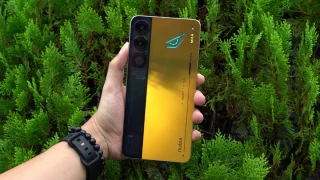
The realme GT 7 Dream Edition shares most of its features with the standard GT 7 but opts for a more refined look, dawning an Aston Martin Formula One team aesthetic both inside and out. The green colorway is sleek, pretty, and sturdy; featuring an aluminum mid frame with yellow accenting around the camera housing and power button.

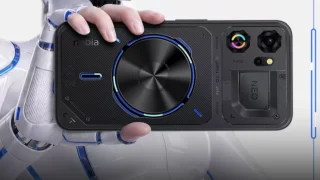
In contrast, the POCO F7 Pro leans towards a more gameresque look at the rear. Compared to the GT 7, it sports flat sides (also sporting an aluminum frame,) a two-toned matte glass back, and a camera module that feels a bit more utilitarian. It’s slightly lighter at 206g compared to the GT 7’s 211g but phones are still easy enough to handle.

Now when it comes to ingress protection, realme gets the win with its better IP69 rating, compared to POCO’s already solid IP68. Yep IP69, meaning realme’s actually more dust-tight and built to handle water jets, not just submersion.
For display protection both handsets feature Corning Gorilla Glass 7i.

And so, design is subjective to the end user’s taste, but the winner for this round has to be the realme GT 7, for its arguably more premium design and slightly higher IP rating.
Display
Moving over to display, both phones come with gorgeous AMOLED panels that feature 120Hz refresh rates, but there are some clear differences.

The POCO F7 Pro features a 6.67-inch 2K Flow AMOLED panel, and an impressive 3200 nits of peak brightness.
The realme GT 7 Dream Edition goes for a slightly larger 6.78-inch 1.5K LTPO AMOLED panel, with a wild 6000 nits of peak brightness, making it far more visible under direct sunlight.
Both panels are also Widevine L1 certified, meaning both are certified with Dolby Vision and HDR10+ support.

When it comes to media consumption or watching our favorite video content on each device, both high-resolution displays deliver sharp and vibrant picture quality with deep blacks.
Audio output from the GT 7 is without a doubt louder than the F7 Pro’s too, but the clarity from both device’s speakers seem about the same, with some distortion at higher volumes.

When it came to biometrics, both phones offer in-display fingerprint scanners that recognize prints at about the same time. However, the POCO F7 Pro get’s an ultrasonic scanner which we here in Yugatech believe is more secure than the one optical scanner found in the realme GT 7.
In terms of unlocking recognition speeds with Face Unlock, both handsets seem on par here as well.
So for this round, it seems really tough. Both displays are great for consuming content, the realme’s LTPO AMOLED panel gets brighter but the POCO’s display gets more pixels!
And with that said, it’s a tie for the display segment.
Performance

Here’s where things get spicy.
The POCO F7 Pro is powered by the Snapdragon 8 Gen 3 chipset, Qualcomm’s best-in-class chip, configured with 12GB LPDDR5X RAM and up to 512GB UFS 4.1 storage. It runs buttery smooth across apps, games, and multitasking.
On the other hand, the realme GT 7 Dream Edition is powered by the MediaTek Dimensity 9400e, also a 4nm chipset optimized for AI tasks and gaming. It’s backed by 16GB LPDDR5X RAM and 512GB UFS 4.0 storage. By the way, it’s worth mentioning that standard GT 7 models only get up to 12GB of memory.
To the naked eye, both perform just as good as each other in real-world use like web browsing and research, productivity workflows such as document editing and writing, and gaming.
| Device: | POCO F7 Pro | realme GT 7 (Dream Edition) |
|---|---|---|
| Chipset: | Qualcomm Snapdragon 8 Gen 3 | MediaTek Dimensity 9400e |
| RAM | 12GB | 16GB |
| Antutu v10 | 1,882,402 | 2,137,034 |
| Geekbench Single-Core | 2,176 | 2,107 |
| Geekbench Multi-Core | 6,534 | 6,988 |
| Geekbench OpenCL | 14,727 | 13,509 |
| Geekbench Vulkan | 16,375 | 14,276 |
| 3D Mark Wild Life | -- | Maxed Out! |
| PCMark Work 3.0 | 16,191 | 13,372 |
| Antutu v10 Storage | 198,370 | 214,074 |
| Seq. Read | 3900.7 MB/s | 4018.7 MB/s |
| Seq. Write | 3422.3 MB/s | 3538.0 MB/s |
But when we take a look at the benchmark numbers, the GT 7 Dream Edition pulls ahead in overall performance, multi-core processing, and surprisingly storage speeds, making it better suited for demanding apps, multitasking, and future-proofing.
Meanwhile, the POCO F7 Pro shows stronger results in single-core tasks for productivity workflows and raw GPU compute scores, suggesting it’s better optimized for day-to-day performance, quick app launches, and slightly better responsiveness.
In short: realme wins in peak performance and longevity, while POCO delivers reliable speed and efficiency for a bit less in terms of on-board memory.
So for the performance department, it’s another tie once again with realme’s GT 7 Dream edition pulling slightly ahead thanks to the Design and Build segment.
Cameras

Both phones bring solid camera systems for the price to the table.
The realme GT 7 Dream Edition features a 50MP Sony IMX906 main sensor with PDAF and OIS, a 50MP telephoto, and an 8MP ultrawide. Up front, it sports a 32MP Sony IMX615 selfie shooter.
The POCO F7 Pro also has a 50MP Light Fusion 800 main sensor with PDAF and OIS, an 8MP ultrawide, and a 20MP front camera. Without its own dedicated telephoto sensor, can the POCO F7 Pro keep up with the realme GT 7?
In real-world use, surprisingly both camera systems produce detailed, well-balanced shots, whether in the standard 1x focal length, 2x telephoto (crop for the POCO), or ultrawide.
The GT 7 produces images with a cooler WB and better highlight preservation. The F7 Pro tends to lean towards a warmer WB with a more evident pink tint and tends to lift the shadows more, leading to some loss in shadowed details.
POCO F7 Pro sample photos (POCO F7 Pro vs realme GT 7 Dream Edition)
Jun 4 – 5, 2025
realme GT 7 sample photos (POCO F7 Pro vs realme GT 7 Dream Edition)
Jun 4 – 5, 2025
In comparison, the GT 7 either preserves the shadows as shot or pulls it down a bit resulting in more contrasty shots overall. Because of this, ultrawide shots can also seem a lot more sharp at quick glances.
Arguably, we can chalk-up our taste for image quality to preference but for us, the realme GT 7 Dream Edition takes the cake here in the camera department. And this doesn’t necessarily mean the POCO F7 Pro takes bad shots either, the GT 7 just does it arguably better especially with a dedicated telephoto sensor.
OS, Apps and UI

For software, both phones run on Android 15 out of the box. We get HyperOS 2 for the F7 Pro, and realme UI 6.0 for the GT 7.
User interfaces are another thing we can chalk-up to preference. Those more akin to either brand will definitely like their respective interface more.
Both UI’s in 2025 offer a slew of customization in terms of themes and functionality. Condescending notifications from annoying apps can easily be turned off from the drop-down menu, and most unwanted apps can be uninstalled from both devices.
But if I had to choose, I’d be going for HyperOS 2, just out of preference for quick-launch shortcuts for opening the camera when the screen is turned off.
With that said, what usually breaks a tie here for software is after-sales support.
The realme GT 7 Dream Edition is promised 4 years of major OS updates and 6 years of security patches. The POCO F7 Pro on the other hand is guaranteed the same 4 major OS upgrades and 6 years of security patches too.
So, in terms of software, it’s another tie between these 2025 flagship killers. But can the POCO F7 Pro catch up?
Battery

Powering the POCO F7 Pro is a 6000mAh lithium-polymer battery with 90W HyperCharge, while the realme GT 7 Dream Edition carries a larger 7000mAh high-silicon battery with faster 120W SUPERVOOC charging.
We can charge the POCO F7 Pro up from empty to full in less than 40 minutes. The realme GT 7 Dream Edition tops up from empty in exactly 40 minutes, which isn’t really a slight for the GT 7 after considering it does get a larger capacity.
When it comes to our PCMark Work 3.0 Battery Test results, the F7 Pro lasted 15 hours and 59 minutes, while the GT 7 Dream Edition garnered a result of 22 hours and 50 minutes!
Both devices were set to their max display resolutions when running this test.
So for battery, the obvious winner here is the realme GT 7 Dream Edition, not only does it charge quicker but also lasts longer, thanks to its battery tech and more efficient display.
Connectivity

In terms of connectivity, both devices have support for 5G, Wi-Fi 7, Bluetooth 5.4, and infrared sensors for using them as smart remotes.
But realme adds some AI-powered tricks like AI call screening, gesture controls, and a SignalCatcher chip for better WiFi and mobile data connectivity in remote areas.
And so for connectivity, once again the realme GT 7 takes the point for its extra features.
Verdict and Conclusion
Now before we get to our verdict, let’s dial in how much both phones cost.
The POCO F7 Pro is available from official POCO retailers in the Philippines for PHP 27,999 for the 256GB storage config and PHP 29,999 for 512GB storage variant.
The realme GT 7 Dream Edition comes in a bit higher at PHP 39,999 (that’s 10K more than the F7 Pro’s 512GB variant, but is seemingly justified with the better camera setup, bigger battery, and nicer build.
The standard realme GT 7 with 12GB of RAM is slightly more affordable at PHP 37,999, which is also 10K more than the lower spec’d F7 Pro, but this time we get more storage.
So, which should you get?
If you’re after the best value, a powerful Snapdragon chip, and flagship features at a lower price, the POCO F7 Pro is a fantastic pick.

But if you want the better all-around experience, the brighter display, slightly better cameras, longer battery life, and smarter features, the realme GT 7 Dream Edition or standard version is the more future-proof buy.

POCO F7 Pro Specs:
6.67-inch 2K Flow AMOLED display
3200 x 1440 pixels, 120Hz, 526 ppi
3200 nits peak brightness
Corning Gorilla Glass 7i
Qualcomm Snapdragon 8 Gen 3
4nm, octa-core, Adreno 750 GPU
12GB LPDDR5X RAM
256GB, 512GB UFS 4.1 storage
50MP f/1.6 main, Light Fusion 800 sensor, OIS
8MP f/2.2 ultrawide
20MP selfie camera
Dual nano-SIM
5G, 4G LTE
Wi-Fi 7
Bluetooth 5.4
Dual-frequency GPS
USB Type-C
NFC
Under-display fingerprint sensor (ultrasonic), face unlock
IP68 dust and water resistance
Dual stereo speakers, IR blaster
Xiaomi HyperOS 2, Android 15
6000mAh battery
90W HyperCharge (wired)
160.26 x 74.95 x 8.12 mm
206g
Black, Silver, Blue (colorways)
realme GT 7 specs:
6.78-inch 1.5K LTPO AMOLED
2780 x 1264 pixels, 120Hz refresh rate
6000 nits peak brightness
ArmorShell Glass
MediaTek Dimensity 9400e
4nm, octa-core, up to 3.4GHz
16GB LPDDR5x RAM
512GB UFS 4.0 storage
Triple rear cameras:
– 50MP f/1.8 Sony IMX906 main, OIS
– 50MP f/2.0 telephoto, OIS (2x optical zoom)
– 8MP f/2.2 ultrawide, 112° FoV
32MP f/2.4 Sony IMX615 selfie shooter (hole punch notch)
Dual nano-SIM
5G, 4G LTE
Wi-Fi 7
Bluetooth 5.4
Dual-band GPS, multi-band BDS, GLONASS, Galileo, QZSS, NavIC
USB Type-C
NFC
Under-display fingerprint sensor
IP69 dust and water resistance
Dual stereo speakers
realme UI 6.0, Android 15
7000mAh Si/C battery
120W charging (wired)
Supports bypass charging
162.42 x 76.13 x 8.3 mm
~206g
Aston Martin Green





100