
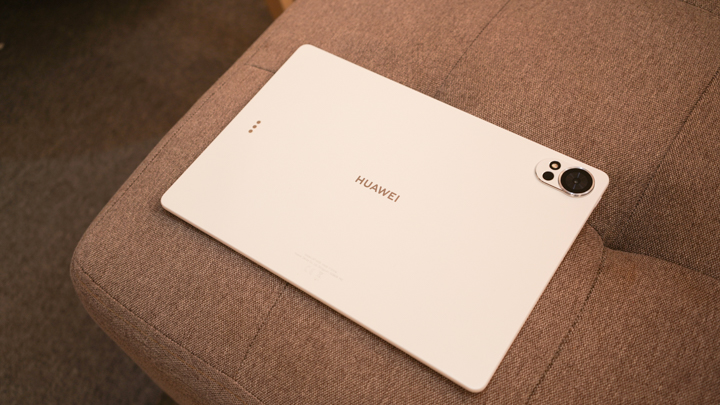
HUAWEI MatePad 12 X (2026) Review



The sub-PHP 10,000 smartphone segment is one of the most competitive in the market. Not only do the phones in this bracket have to be priced well, but they need to perform. Of course, people do have to set their expectations. These are very affordable phones after all.

If you check out what some brands are offering, you can tell the bar is getting higher and higher. With that, does the new POCO M7 4G still have a shot of taking a piece of the action?
On paper, when it comes to the specs, it’s just average apart from the large 7,000mAh battery. But of course, real-world use is always a different story. Its best advantage? The starting price of just PHP 7,499.

The design of the POCO M7 4G looks nothing like the M6 series we tried out last year. This phone adopts a more minimalist design, especially for the Carbon Black color review unit we have.
The single rear camera is located on the slim vertical camera island. Yes, it might have two lenses, but it’s only a single shooter. The rest of the phone is made out of plastic. From the frame to the back panel, it’s all plastic.
It’s not exactly the best feeling plastic out there, but the important bit is that it feels sturdy. There’s no flexing when I try to bend it. Not to mention, it also features an IP64 rating for dust and water resistance.

One thing I do have to mention about the POCO M7 4G is that it’s quite a big phone. It’s a bit longer and wider than what I’m used to, which did make it feel awkward to use at first. Despite its big size, it’s surprisingly lightweight, weighing just 224 grams. It’s also relatively thin at just 8.3mm thick.
For the black color, it’s relatively smudge-resistant. The only thing you’ll be wiping down often is the camera island. I can’t say for sure about the Chrome Silver or Aqua Blue colors, but they look fire from the photos.

The volume rocker and power button are easily accessible on the right side of the phone. The dual-SIM card and microSD slot are on the left. At the bottom, you’ll find the USB-C port and the single loudspeaker.
Nothing too special about its design, at least for this black unit. For what it is, the construction is solid and sturdy. It’s just a bit big, but you’ll get used to it after a while. Instead, what surprised me about this phone was the display.

Since the M7 4G is a large phone, POCO decided to make use of its size by fitting a larger-than-usual display. The display measures 6.9 inches and features a full HD+ resolution (2340 x 1080) with a peak brightness of 850 nits. As you would expect, it’s not an OLED panel given its price point. Instead, it’s an IPS LCD unit.

However, I was surprised at how nice the display on the POCO M7 4G is. The colors are quite vivid, and they pop out on screen if you’re watching something colorful like anime. The blacks aren’t that deep, but there’s no greyish color on screen.
Thanks to its large size, it was enjoyable to watch shows on this phone. Sadly, it only has a mono-speaker, which is easily covered by your fingers. Despite being a mono-speaker, it is loud, and it does have decent sound quality.

Even when maxed out, there’s no noticeable drop in quality. The vocals and mids are clear too, but there’s barely any bass, which is to be expected.
Not to mention it also has a 144Hz refresh rate, which gives it smooth animations all around. It’s best enjoyed for gaming, but I’ll reserve my thoughts about that for later.
It’s not the brightest screen with only 850 nits max, which does make it a bit hard to see when it’s very sunny outside. But from my experience with this phone, most of the time you’ll be able to make out everything happening on screen. This includes watching shows outside to touch some grass.

There are only two cameras on the POCO M7 4G. At the rear, you have a 50MP main shooter, but it does come with PDAF. The second lens at the bottom of the camera island? That’s just an auxiliary lens. The other camera is located at the front – an 8MP camera for selfies.

There’s nothing to write home about the cameras on the M7 4G. The rear camera performs more than decently when used in well-lit environments. It’s sharp, and the phone’s algorithm does a great job balancing the contrast, shadows, and highlights.
However, the colors are a bit too vivid in my opinion. If you pixel peep, you’ll also notice that the edges of some items are quite soft. Still, you can work with it, just play around with the edit a little bit.

The camera works best at 1x zoom, but 2x zoom is also usable. Just don’t expect anything when you go beyond that. The drop in quality is very noticeable. It’s a similar story when shooting in low light.
In low light, there’s a lot of noticeable grain in the image. In addition, the colors are no longer that accurate. You can use night mode, but it barely makes a difference when compared to the regular photo mode.

As for the video, the phone records at a maximum of 1080P@30FPS. The quality is very much identical to the photos we were able to capture. Decent during the day, not so during the night. Remember, there’s no OIS. Unless you have very steady hands, there will be a lot of camera shake in your videos.
Just check out our samples below, and see for yourself.
The POCO M7 4G runs on Android 15 skinned with Xiaomi HyperOS 2. The OS looks nice, and if you have ever used a Xiaomi phone before, it’s very much the same.
It’s smooth too, but there are times when the phone lags or an app takes too long to open, even when I’m just going through the settings. I’m not entirely sure if it’s because of the OS, but I suspect it’s likely because of the chipset. But again, we’ll talk more about it later.

There’s minimal bloatware, which is a huge plus. They are also all contained in one folder, making it easy to delete everything in one go. But there I do get notifs from ads, which is quite annoying.
Since this is a budget phone, it doesn’t come with any of the AI features on higher-end POCO models. No AI-eraser in the gallery or anything of the like. However, you do get Gemini assistant, which is a nice plus to have.

Here, we get to the weakness of the POCO M7 4G – the performance. Given its price point, I didn’t expect it to be powerful. Under the hood, it only runs a Snapdragon 685 chipset. Our review unit is also the base model with only 6GB of RAM and 128GB of storage.

Sadly, this combo is lacking for this phone and its OS. Even when you’re just swiping through the menu, you’ll get the occasional lag. It also takes a while to boot up apps. You can leave apps running in the background, but it’s best to close the ones you aren’t using.
From my experience, there were times when the phone just closed when I tried to take a photo. And before you say I hit the power button accidentally, that wasn’t the case. But for getting work done or scrolling through social media and even the internet, it’s more than adequate.

As for gaming, it’s not exactly the best phone. It’s quite disappointing, especially since it features a display that supports 144Hz. It can run games like Mobile Legends, but not on the max settings. On Genshin Impact, it was suffering from frame rate drops even when all of the settings were at the lowest, and I’m just moving the camera around.
The benchmark scores also backed up the lackluster performance we experienced with the POCO M7 4G.
Antutu – 363745
Geekbench 6
CPU Single – 472
CPU Multi – 1554
GPU OpenCL – 378
GPU Vulkan – N/A
3DMark – 650
PCMark Work 3.0 Performance – 8479

While the performance may be a bit underwhelming, we were very impressed with the battery life of the POCO M7 4G. It packs a 7,000 mAh battery pack, which is huge for its price point.
Even before running our benchmarks, I could already tell this phone isn’t power hungry at all. I was able to use it for three days straight without needing to recharge. For reference, I was using it mainly to watch videos and take photos for this review.
As for the benchmarks, it was able to record 20 hours and 57 minutes using PCMark’s battery test. Using our video loop test, it scored 46 hours and 57 minutes. Both tests were done in airplane mode, zero volume, and 50 percent brightness.

With that, this phone won’t need to charge that often, even if you use it a lot. Charging speeds are decent too, with 33W wired charging. It even has 18W reverse wired charging, allowing it to be used as a power bank of sorts.
As for connectivity, you get the usual – Bluetooth 5.0, dual-band Wi-Fi, GPS, and even an infrared port.
The POCO M7 4G definitely had a lot of potential. It features a large 6.9-inch display with a 144Hz refresh rate and a 7,000mAh battery that lasts a very long time.

At the price of PHP 7,499 for the 6+128GB variant, it would have been a solid choice overall if not for the lackluster performance it offers. There is an 8+256GB variant available too for PHP 8,499, and I’m genuinely curious if this variant would have performed better overall.
It’s hard to pick the POCO M7 4G given our experience with it, considering how competitive this segment of smartphones has become. What’s frustrating is that this phone definitely has a lot of potential if the performance issues were addressed, and the price point is retained.

Still, if performance isn’t important for you, then you won’t be let down by this phone’s nice display and long battery life. But, what do you think of this POCO M7 4G?
Would you cop this for its affordable price tag or would you pick something else within the same price point? Whatever the case share your thoughts in the comments below.
What we liked:
Really long battery life
High refresh rate display
Affordable price point
What we didn’t like:
Lacklust performance
Lag and stuttering even in menu
POCO M7 4G specs:
6.9-inch FHD+ (2340 x 1080) IPS LCD, ~374 ppi
144Hz refresh rate, 850 nits (peak)
Qualcomm Snapdragon 685
Adreno 610 GPU
6GB, 8GB RAM
128GB, 256GB internal storage
microSD card support
50MP main camera (f/1.8)
Auxiliary sensor
LED flash
8MP front camera
Dual SIM
HSPA+, 4G LTE
Wi-Fi 5
Bluetooth 5
GPS
NFC
IR blaster
USB Type-C
Xiaomi HyperOS 2 (Android 15)
7,000mAh battery
33W fast charging, 18W reverse wired charging
IP64 rating
171.1 x 80.5 x 8.6mm (dimensions)
224 grams (weight)
Aqua Blue, Carbon Black, Chrome Silver (colors)






Apple, Asus, Cherry Mobile, Huawei, LG, Nokia, Oppo, Samsung, Sony, Vivo, Xiaomi, Lenovo, Infinix Mobile, Pocophone, Honor, iPhone, OnePlus, Tecno, Realme, HTC, Gionee, Kata, IQ00, Redmi, Razer, CloudFone, Motorola, Panasonic, TCL, Wiko
Best Android smartphones between PHP 20,000 - 25,000
Smartphones under PHP 10,000 in the Philippines
Smartphones under PHP 12K Philippines
Best smartphones for kids under PHP 7,000
Smartphones under PHP 15,000 in the Philippines
Best Android smartphones between PHP 15,000 - 20,000
Smartphones under PHP 20,000 in the Philippines
Most affordable 5G phones in the Philippines under PHP 20K
5G smartphones in the Philippines under PHP 16K


miro says:
🌱 Noobs🏆1
Hello, good review, I tested the M7 4G, 8 gb ram version, 256 gb memory, I didn’t notice any slowdowns, it ran very smoothly. Regards