
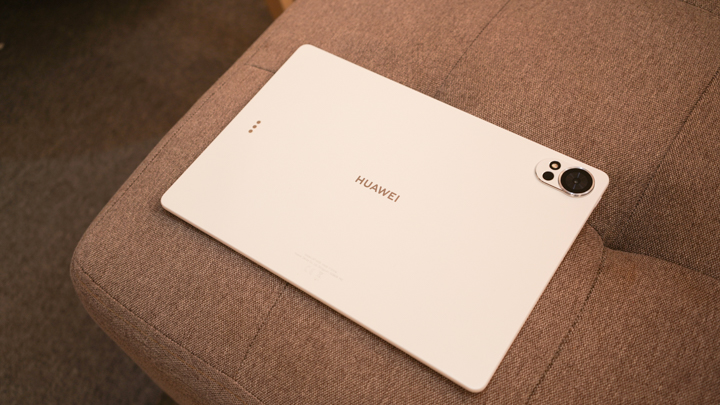
HUAWEI MatePad 12 X (2026) Review



Tablets are continuing to be on the rise lately and Redmi’s newest edition, the Redmi Pad 2 4G solidifies this. Having 4G capabilities allows for connectivity no matter where you go.

On paper, the Redmi Pad 2 4G boasts an 11-inch 2.5K display with a smooth 90Hz refresh rate, a quad-speaker setup enhanced by Dolby Atmos, a massive 9000mAh battery, and Xiaomi’s freshly refined HyperOS interface.
Powered by the MediaTek Helio G100-Ultra chipset, this device promises steady performance while keeping power consumption and heat generation in check.
But how does it actually perform in daily use? We took a deep dive into all aspects of the Redmi Pad 2 to find out whether it’s worth your time and money.
Right away, the Redmi Pad 2 4G stands out with its sleek metal unibody construction that feels far more premium than its price might suggest. The solid build inspires confidence whether you’re holding it for long reading sessions or using it on the go. You also have that two-tone design which makes it distinct from its WiFi model.

At just 7.36mm thick and weighing 510 grams, it’s slim enough to be highly portable without sacrificing sturdiness. You can comfortably hold it in one hand while reading eBooks or news articles, or prop it up with a stand or case during video calls or movie marathons. The flat edges and rounded corners not only look modern but make it easier to grip securely.
The rear panel is minimalistic, featuring only a small single-camera module that sits flush enough not to cause the tablet to wobble when placed on a flat surface. On the sides, all physical buttons—power and volume rocker—are thoughtfully positioned along the top-left edge when holding the device in landscape mode, the orientation most users prefer for multimedia and productivity.
Connectivity options include a USB-C port located at the bottom edge that supports charging, data transfer, and USB On-The-Go (OTG), allowing you to connect external devices such as flash drives or wired peripherals. However, the tablet does include a 3.5mm headphone jack.


Overall, the Redmi Pad 2’s build quality feels surprisingly premium for its price. It strikes a fine balance between durability and portability, making it a device that you can comfortably carry everywhere and use daily without worry.
At the heart of the multimedia experience is the Redmi Pad 2 4G’s 11-inch IPS LCD display, which boasts a resolution of 2560 x 1600 pixels. This 2.5K panel delivers sharp, detailed images with a pixel density around 274 pixels per inch, making text crisp and easy to read—ideal for extended reading sessions, browsing, or working on documents.
The screen refreshes at 90Hz, a feature that enhances the smoothness and responsiveness of the interface. Whether scrolling through social media feeds, navigating menus, or playing casual games, the higher refresh rate makes interactions feel noticeably more fluid and polished compared to the standard 60Hz displays found in many tablets.

Brightness levels are solid, with peak brightness rated at 600 nits for outdoor use and 500 nits indoors. This ensures that the display remains readable in a variety of lighting conditions, including bright daylight. The panel is also TÜV Rheinland certified for Low Blue Light, Flicker-Free technology, and Circadian Friendly usage, all of which contribute to reducing eye strain during prolonged use.
Audio performance is one of the tablet’s standout features. It includes a quad-speaker setup enhanced with Dolby Atmos technology, providing a rich and immersive sound experience. The four speakers are positioned at the tablet’s corners, producing clear stereo separation when held in landscape mode. Volume output is impressively loud, enough to fill a medium-sized room comfortably.

The sound quality delivers crisp mids and highs, ensuring vocals and dialogue come through cleanly. While bass response is naturally limited due to the slim form factor, the overall audio clarity remains impressive at most volume levels. At very high volumes, some compression artifacts become noticeable, but this is a minor tradeoff considering the tablet’s affordable price point.
In sum, the Redmi Pad 2 offers a display and multimedia experience that punches well above its weight, delivering sharp visuals and immersive audio suitable for movies, music, gaming, and everyday tasks.
Cameras on tablets tend to be basic, and the Redmi Pad 2 is no exception. It features a single 8MP rear camera and a 5MP front-facing camera, both designed primarily for productivity and communication rather than photography enthusiasts.

The rear camera is best suited for scanning documents, capturing notes on a whiteboard, or snapping quick reference photos. In well-lit environments, it produces usable images with decent color accuracy, although fine details are soft and dynamic range is limited. Indoor or low-light shots quickly show noise, and the camera struggles to retain detail in shadows and highlights.
Video recording is capped at 1080p at 30 frames per second without any form of image stabilization, so footage can appear shaky unless you have a steady hand. Audio recorded with video is clear enough, although background noise may occasionally intrude.

The front camera is positioned centrally for landscape mode, which suits video conferencing and online classes. It performs adequately in bright lighting but struggles in dimmer conditions, resulting in grainy video and washed-out colors. For typical video calls on platforms like Zoom, Google Meet, or Microsoft Teams, it is sufficient and reliable.
There are no additional camera features such as ultra-wide lenses, night mode, or macro capabilities. The camera setup is functional and practical, meeting the basic needs of productivity and communication without trying to compete with dedicated smartphone cameras.
At the core of the Redmi Pad 2’s performance is the MediaTek Helio G100-Ultra chipset. It is paired with options of 4GB, 6GB, or 8GB of LPDDR4X RAM, alongside 128GB or 256GB of UFS 2.2 storage. Storage is further expandable via a microSD card slot that supports up to 2TB, allowing users to carry a large library of files, media, and apps.

In everyday use, the tablet feels responsive and smooth. Navigating through the user interface, switching between apps, or opening productivity tools like Google Docs happens without noticeable lag. The 90Hz display complements the chipset’s capabilities by making animations and scrolling feel fluid and polished.
Gaming performance is suitable for casual to moderate play. Popular titles such as Pokémon Unite run well at high settings with stable frame rates, making it enjoyable for light competitive play. Other games like Path to Nowhere perform acceptably on medium to high settings, though there can be occasional stutters during visually intense moments such as special effects or ultimate abilities.

More demanding games like Wuthering Waves or Zenless Zone Zero push the chipset to its limits. These titles are playable but require settings to be turned down to low for a smoother experience. Frame rates may drop during combat sequences, and texture loading can be noticeably slower.

Benchmark tests reflect the tablet’s positioning in the entry-to-mid-level performance range. While it won’t compete with flagship devices, it handles daily multitasking, streaming, and light gaming with confidence. It is well suited to users who need a device for media consumption, note-taking, browsing, and casual app use.
The Redmi Pad 2 runs HyperOS 2, Xiaomi’s newest Android skin, built on top of Android 15. Compared to older MIUI builds, this version is lighter, more refined, and better optimized for tablets.
The interface is responsive, with clean visuals, minimal animation lag, and intuitive gesture controls. Oddly enough, split-screen and floating windows are not supported on this tablet. Nonetheless, switching between apps or pinning YouTube in a small window while browsing is seamless.

Out of the box, there are a few Xiaomi-branded apps and promoted shortcuts, but most can be uninstalled. The tablet is Google Play certified, so you’ll have access to all major apps from the Play Store, including productivity tools, streaming apps, and games.
One area that stands out is ecosystem integration. If you own a Xiaomi phone or laptop, you can sync calls, clipboard content, and use multi-device casting between the Pad 2 and your other devices. This is similar to Huawei’s Super Device and Samsung’s Galaxy Ecosystem, though more lightweight in implementation.

The Redmi Pad 2 does support a stylus, which can be a handy accessory for note-taking or sketching. However, it lacks any magnetic attachment or wireless charging features, so you’ll need to keep track of it separately and charge it via a USB Type-C cable. This means the stylus experience is functional but not as seamless as some other tablets with integrated stylus solutions.

The Redmi Pad 2 4G is the 4G variant of the model. There is a WiFi variant as well but both are equipped with Wi-Fi 5 (802.11ac) and Bluetooth 5.3 connectivity. Wireless signals remain strong and stable during everyday activities such as HD video streaming, video conferencing, or online gaming. Pairing with Bluetooth accessories like headphones, keyboards, or mice is quick and straightforward.

With this variant, if you need internet access on the go, you wouldn’t need a mobile hotspot or tethering from a smartphone. The ability to have a SIM card on a tablet allows users to continue to stay connected, letting users stay connected all through the tablet itself (provided that a SIM card is inserted).
Battery life is one of the tablet’s strongest attributes. The large 9000mAh battery consistently delivers exceptional endurance, lasting up to two full days under typical use cases involving streaming, reading, browsing, and light productivity. During intensive use, screen-on time can reach approximately 14 hours.

In standardized testing, the tablet scored over 21 hours in the PCMark Battery Test, underscoring its ability to outlast many devices in continuous usage scenarios. Such longevity is a major advantage for users who need a reliable companion for extended study sessions, travel, or remote work without frequent charging.
Charging speed caps at 18W, requiring around 2 to 2.5 hours for a full recharge. While not the fastest charging available, this is adequate given the battery’s impressive capacity and endurance. Charging every couple of nights is generally sufficient to keep the device powered through busy days.
The Redmi Pad 2 delivers a balanced tablet experience focused on essentials: a vibrant and smooth display, robust audio performance, long battery life, and reliable day-to-day performance. It doesn’t chase after cutting-edge or ultra-premium features but instead focuses on what matters most for everyday users.

The cameras are basic yet functional for communication and productivity, while the software provides a clean and efficient environment enhanced by useful multitasking capabilities. The solid metal construction and premium feel further elevate its appeal, making it a device you’ll feel confident carrying and using regularly.

If you’re looking for a dependable Android tablet that excels at media consumption, light gaming, note-taking, and video calls, the Redmi Pad 2 is a smart choice. Its combination of a sharp 2.5K display, immersive quad speakers, and long-lasting battery makes it a versatile companion for a wide range of tasks, all while keeping budget considerations in mind.
The Redmi Pad 2 has a starting price of PHP 10,499 in Shopee.
What We Like:
What We Don’t Like:
REDMI Pad 2 (4G) specs:
11-inch 2.5K IPS LCD
2560 x 1600 pixels, 90Hz refresh rate
600 nits (outdoor mode) brightness
MediaTek Helio G100-Ultra
6GB, 8GB LPDDR4x RAM
128GB, 256GB UFS 2.2 storage
Expandable up to 2TB via microSD
8MP f/2.0 single rear camera
5MP f/2.2 selfie shooter
Supports SIM card slot
4G LTE
Wi-Fi 5
Bluetooth 5.3
GPS
USB Type-C
3.5mm audio jack
Face unlock
Quad stereo speakers, Dolby Atmos
Xiaomi HyperOS 2, Android 15
9000mAh battery
254.58 x 166.04 x 7.36 mm (dimensions)
510 grams (weight)
Graphite Gray, Mint Green (colorways)






Apple, Asus, Cherry Mobile, Huawei, LG, Nokia, Oppo, Samsung, Sony, Vivo, Xiaomi, Lenovo, Infinix Mobile, Pocophone, Honor, iPhone, OnePlus, Tecno, Realme, HTC, Gionee, Kata, IQ00, Redmi, Razer, CloudFone, Motorola, Panasonic, TCL, Wiko
Best Android smartphones between PHP 20,000 - 25,000
Smartphones under PHP 10,000 in the Philippines
Smartphones under PHP 12K Philippines
Best smartphones for kids under PHP 7,000
Smartphones under PHP 15,000 in the Philippines
Best Android smartphones between PHP 15,000 - 20,000
Smartphones under PHP 20,000 in the Philippines
Most affordable 5G phones in the Philippines under PHP 20K
5G smartphones in the Philippines under PHP 16K