
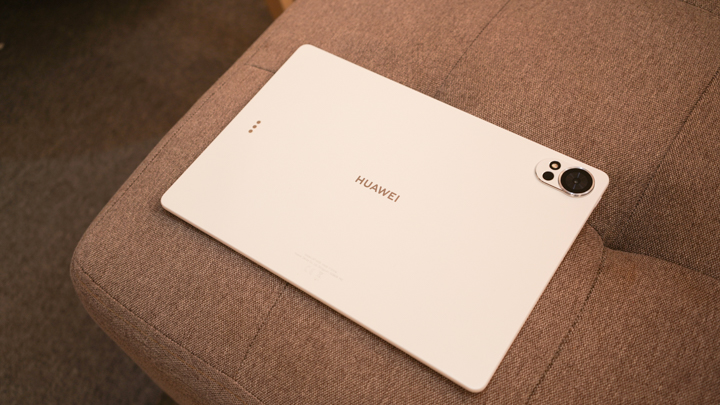
HUAWEI MatePad 12 X (2026) Review



The Redmi Pad 2 Pro 5G enters the tablet race with serious ambition: a large 12.1-inch 2.5K display, a 120 Hz refresh rate, the Snapdragon 7s Gen 4 chipset, and a massive 12,000 mAh battery.

Whether we need a tablet for streaming, productivity, or light gaming, this one aims to combine value and performance.
Let’s see how it stacks up in everyday use.
The Pad 2 Pro sports a large 12.1-inch form factor but keeps a thin profile (7.5 mm) and weighs around 610 g. The build feels solid with its metal-alloy body, clean edges, and minimalist styling.

In its horizontal orientation, its volume rocker can be found on top along with two noise-cancelling mics and a hybrid dual nano SIM card tray. Its power button and half of the quad speaker setup can be found on the left side.
While the USB Type-C port, 3.5mm audio jack, and other half of the speaker can be found on the right.

There is actually a non-cellular version of this tablet available in other regions, and the key difference between them is the slight change in rear panel designing.
The camera housing looks like it came from a base-model fruitphone only enlarged, and its LED flash is placed where a second camera sensor would be, nonetheless it still looks very clean.

The tablet feels stable to hold and use on the desk, couch or our laps, though its size means it’s less one-hand friendly.
It’s also worth noting that the Wi-Fi only model doesn’t come with the patterned polycarbonate panel at the rear. Overall, the build quality is strong enough to compete in its price segment.

For display it sports a 12.1-inch 2.5K (2560×1600) IPS LCD panel with up to 120 Hz refresh rate. Its brightness peaks at 600 nits, which translates to the tablet being usable outdoors but not necessarily the best for it.
It’s Widevine L1 certified so there are no issues with codecs for video streaming apps or even locally stored video files. The larger-than-a-phone panel size and high refresh rate make it well suited for watching our favorite shows or movies, browsing the web and even productivity or creative work.

We were pleasantly surprised by the display panel’s glossy finish after getting a little tired of anti-glare layers. On one hand, it handles reflections poorly but on the up side, it really makes the IPS panel pop with great contrast and color accuracy.
The quad-speaker setup isn’t anything to rave about but it does support Dolby Atmos and Hi-Res Audio. It features great loudness and a sound stage leaning more towards highs and mids, between 50% to 80% of the volume bar gave us the most optimal listening experience.

There’s even a 300% max volume mode for max loudness but also introduces distortion along with it. It’s funny, right before 300% is 200% but when counting how many steps it takes to get to that level from muted, it comes down to less than 20 button presses.
Overall for display and multimedia, the Redmi Pad 2 Pro 5G provides a good multimedia experience. The glossy IPS panel in combination with the loud speakers provide a good balance of color accuracy and contrast with great loudness.

In terms of biometric security, it only has optical facial recognition and it works as expected. And if it doesn’t work as expected, we recommend users try updating their face data more than once in varying lighting conditions.
This tablet takes a modest approach for its camera hardware (as tablets often do). It features a 13 MP sensor at the rear and an 8MP front camera for selfies.

In real-world use, the rear camera works adequately for document scanning, quick snaps or video calls, but don’t expect the best quality, it is a tablet after all.
The front cam is decent for video‐conferencing or casual selfies, but the large tablet form factor means it’s less comfortable as a hand-held camera.
If the end-user’s primary concern is camera quality, smartphones still lead but for tablet use, the cameras found on the Redmi Pad 2 Pro 5G are serviceable.

The Redmi Pad 2 Pro runs Xiaomi’s HyperOS 2 and supports tablet-optimized features like split-screen, drag-and-drop multitasking, and optional accessories like a smart pen or keyboard (sold separately).
Overall the UI is smooth, but every now and then we notice some lag or choppy animations, which we believe comes from the stability of HyperOS 2 but isn’t necessarily a deal-breaker. (Although, it can get annoying at times.)

Another thing that annoyed us was weird widget designs with even weirder dimensions that kept us from being able to move them around in an area on a blank home page where anyone would think it would be possible. For example, centering some of the default clock widgets that be default lean to the left, their widths do not take up the whole space, yet we can’t move them to the right?

The other app-optimization caveat is certain tablet versions of apps may not yet be fully optimized for full screen or landscape orientation. Although, this may be more of the app developers’ faults more than it is the tablet’s. Either way, we faced no actual user-experience breaking issues with the overall software experience that couldn’t be fixed with a software update.

Under the hood the Redmi Pad 2 Pro 5G features a Snapdragon 7s Gen 4, a 4nm chipset consisting of an octa-core processor with clock-speeds that go up to 2.7 GHz and an Adreno 810 GPU.
Our review unit is configured with 8GB of LPDDR4X RAM (with 4GB of virtual RAM extension) and 256GB of UFS 2.2 internal storage.
We primarily used the tablet for note taking, video calls, web browsing, document editing, and even some creative work with apps like Canva. No major issues to report here either.
For those interested in the numbers, check out our benchmark scores below.
| Device: | Redmi Pad 2 Pro 5G |
|---|---|
| Chipset: | Qualcomm Snapdragon 7s Gen 4 |
| RAM | 8GB |
| Antutu v10.5.2 | 762,256 |
| Geekbench Single-Core | 1,256 |
| Geekbench Multi-Core | 3,312 |
| Geekbench OpenCL | 3,614 |
| Geekbench Vulkan | 4,783 |
| 3D Mark Wild Life | -- |
| PCMark Work 3.0 | 14,803 |
| Antutu V10 Storage | 67,242 |
| Seq. Read | 1,056.6 MB/s |
| Seq. Write | 925.5 MB/s |

Considering its benchmark scores, the tablet is fast and efficient for multitasking, productivity, and entertainment. It handles everyday workloads and creative apps smoothly, while GPU scores indicate solid graphics performance for casual to mid-level gaming. The storage speed results ensure quick app loading and seamless data transfers.

For gaming we were able to run Genshin Impact with graphics set to the Medium preset at 60 fps. This was how far we could push it for optimized long-term gameplay.
Overall for performance, the Redmi Pad 2 Pro 5G stands out as one of the more powerful tablets in its class, combining smooth performance, reliable efficiency, and great value for both work and play.

One of the standout specs is the huge 12,000 mAh battery capacity on the Pad 2 Pro 5G.
The large battery combined with efficient hardware means long usage sessions for streaming, reading, browsing or editing.
It gets 33W wired fast charging and 27W reverse wired charging, which definitely helps in a pinch when you only have a Type-C to C cable, your phone and the tablet with you.

In practice, you can expect a full day of heavy use or several days of light to moderate use. In PCMark’s Work 3.0 Battery Test, the tablet lasted 18 hours and 51 minutes.
So, if battery endurance is a priority the Pad 2 Pro is a strong contender.

As a 5G-enabled tablet the Pad 2 Pro supports cellular data and high-speed networks, which is great for portability when WiFi isn’t available. It even gets eSIM support, which users can use with one physical SIM inserted.
Furthermore the second SIM slot can also be used for expandable storage via microSD of up to 2TB.
Apart from that it sports WiFi 6, Bluetooth 5.4, and even a 3.5mm audio jack for wired listening or even connecting microphones.
The inclusion of cellular support and expandable storage gives it flexibility for users who travel or want a more capable tablet as a workstation or media hub.

The Redmi Pad 2 Pro 5G offers a compelling mix of large high resolution display, nice build, strong battery life, and capable performance, all for PHP 19,999.
For those of you who do not need a cellular data connection, there is a WiFi-only model in the same configuration that goes for PHP 17,599.
While the cameras are average and the charger isn’t ultra-fast, the overall package is well balanced for streaming, productivity, reading, and light creative tasks.
If you’re looking for a feature-rich tablet that won’t demand flagship pricing, the Redmi Pad 2 Pro 5G is one of the top value picks in its class.
What we LIKED:
What we Liked LESS:

Redmi Pad 2 Pro 5G specs:
Display: 12.1-inch 2.5K (2560 x 1600) IPS LCD, 120Hz refresh rate, 600 nits brightness
Processor: Qualcomm Snapdragon 7s Gen 4
GPU: Adreno 710
RAM: 8GB
Storage: 128GB / 256GB / 512GB UFS 3.1 (expandable via microSD)
Rear Camera: 8MP
Front Camera: 8MP
Network: Dual nano-SIM, 5G SA/NSA, 4G LTE
Connectivity: Wi-Fi 6, Bluetooth 5.3, GPS, USB Type-C
Biometrics: Face Unlock
Audio: Quad speakers with Dolby Atmos
Battery: 12,000mAh with 33W fast charging (USB-C PD 3.0)
OS: HyperOS 2 (based on Android 14)
Dimensions: 280 x 181 x 7.5 mm
Weight: 571 g
Colors: Graphite Gray, Mint Green, Ocean Blue






Apple, Asus, Cherry Mobile, Huawei, LG, Nokia, Oppo, Samsung, Sony, Vivo, Xiaomi, Lenovo, Infinix Mobile, Pocophone, Honor, iPhone, OnePlus, Tecno, Realme, HTC, Gionee, Kata, IQ00, Redmi, Razer, CloudFone, Motorola, Panasonic, TCL, Wiko
Best Android smartphones between PHP 20,000 - 25,000
Smartphones under PHP 10,000 in the Philippines
Smartphones under PHP 12K Philippines
Best smartphones for kids under PHP 7,000
Smartphones under PHP 15,000 in the Philippines
Best Android smartphones between PHP 15,000 - 20,000
Smartphones under PHP 20,000 in the Philippines
Most affordable 5G phones in the Philippines under PHP 20K
5G smartphones in the Philippines under PHP 16K
Miguel Ty says:
🌱 Noobs🏆1
Fixed the specs list at the bottom.
Thanks guys!
Deric17 says:
🌱 Noobs🏆1
Confused about battery capacity. You say its 12000mah but on the specs below it you indicated its just 10000mah. I just checked the official website and GSMArena, it says just 10000mah. On Shopee and some Youtube reviewers, it also says 12000mah. So which is which?
João Vitor de Jesus Nascimento says:
🌱 Noobs🏆1
You guys have put the Redmi Pad Pro data in the final specs.