

If you’re someone who loves gaming on your phone, streaming videos, or juggling a ton of apps at once, the new POCO F8 Pro promises a lot.
On the surface, it brings a mix of raw performance, upgraded visuals, improved audio, and a smoother software experience.
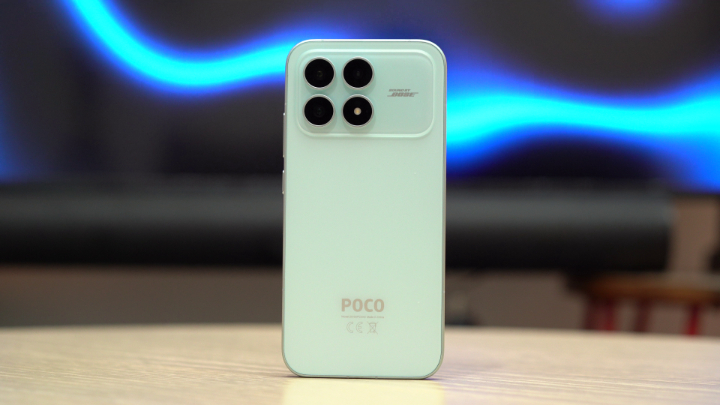
Aside from those, this one comes with flagship-level hardware, stereo speakers tuned by Bose, and a battery that claims to last all day even under heavier workloads. That said, the F8 Pro sounds like a major step up from its predecessor.
But hardware and spec sheet don’t always tell the full story. What matters is how everything feels in day-to-day use and how well the phone performs in actuality.

So, we are going to put it through the ringer and see if the POCO F8 Pro actually lives up to all the promises it puts forward.
Design and Construction
First, let’s talk about the design.
The F8 Pro keeps things simple and solid. It has a glass front, a glass back, and a metal frame wrapping around the sides. This combination gives it a sturdy and premium feel the moment you pick it up. The flat panel and flat back help the phone sit cleanly on a table without wobbling every time you tap it.

At around 199 grams, it leans slightly on the heavier side, but the weight is evenly distributed so it still feels balanced in hand.
For I/Os, everything is positioned where you expect it to be. On the right side, you get the volume rocker and the power button. At the bottom, you will find the main speaker, the USB-C port, and the SIM card tray. Meanwhile, the top houses the secondary speaker which works together with the bottom one for that louder Bose-tuned stereo sound.



A fun detail here is that if you compare it to the F7 Pro which also launched this year in March, POCO did not keep the newer design. They went back to the look of the F6 Pro which gives the F8 Pro a familiar and more classic POCO feel. Some might find it a step back, but it does give the F8 Pro a more refined and less experimental look.
The IP68 rating is one of the best things POCO kept. It adds peace of mind whether you deal with rain, moisture, sweat, or accidental spills. It is not meant for underwater photography, but for everyday situations, it is a major benefit that many midrange phones still skip today.

POCO also retained the IR blaster, which remains one of Xiaomi’s signature features. It is one of those tools you do not think about until the moment you need it and suddenly your phone becomes the only remote control in the room.
The back finish depends on the colorway you get. Some versions have a more matte coating that resists fingerprints, while others go for a slightly reflective surface that adds a bit of personality.
The overall theme is clean, measured, and understated, which works well for anyone who wants a device that looks premium but not loud.
Display, Multimedia, and Biometrics
The display is arguably one of the strongest features of the F8 Pro. You are getting a 6.59-inch AMOLED panel that is bright, colorful, and responsive. The resolution is slightly above Full HD, giving you crisp visuals without being too heavy on battery consumption.

The 120Hz refresh rate keeps navigation smooth and fluid, and the very high 2560 Hz touch sampling rate makes this an excellent touchscreen for fast-paced gaming.
Peak brightness reaches up to 3500 nits, giving the F8 Pro outstanding visibility under direct sunlight. Colors look rich but natural and POCO avoided oversaturation that makes content look artificial.

The stereo speakers tuned by Bose are another welcome upgrade. You immediately notice the improved clarity and balance. Vocals sound crisp, instrument separation is cleaner, and even at high volume the speakers avoid distortion.
The in-display ultrasonic fingerprint sensor is fast and responsive. It works even with slightly damp fingers and unlocks reliably. The placement is a bit higher for my liking, but you can get used to it after a while.

Altogether, the F8 Pro delivers a strong multimedia experience that is significantly better than earlier generations.
Cameras
The F8 Pro features a triple camera system consisting of a 50-megapixel main sensor, an 8-megapixel ultrawide lens, and a 50-megapixel telephoto lens. It is a very capable setup for anyone who wants versatile photography without paying flagship prices.
The main camera produces sharp photos with good detail. Colors lean slightly warm but still look pleasant and natural. Dynamic range is respectable, handling bright skies and darker shadows well in most situations. It does a decent job in backlit conditions too.

The telephoto lens is the highlight because very few phones in this segment offer a real optical zoom. Detail remains strong at moderate zoom levels and the lens lets you capture faraway subjects that normal phones simply cannot.
At very high zoom or in low light, noise becomes noticeable and details soften, but the lens remains practical and usable.

The ultrawide lens performs fine for landscapes, group shots, and architecture. It is not the sharpest ultrawide camera out there, but it keeps color tuning close to the main lens which is something many midrange phones struggle with. Distortion at the edges is also controlled reasonably well.
Low-light performance is decent for the main camera with Night Mode. It brightens the scene and preserves color fairly well, although noise becomes more visible and details do not always hold up.
The ultrawide and telephoto struggle more in dark environments, so stable hands and good lighting conditions help a lot.
POCO F8 Pro sample photos
Nov 16 – 24, 2025


The 20-megapixel front camera produces clean and natural looking selfies. Skin tones look realistic, and beauty effects stay subtle. It is good for video calls and everyday social posting.

You can record videos up to 8K, although 4K offers more consistent stabilization and better overall results. Footage in 4K looks sharp with vibrant colors and the optical stabilization keeps camera shake at minimum. The telephoto lens can be used for zoomed video, but stabilization becomes limited at the highest zoom level.
Rear camera:
Front camera:
Overall, this camera setup strikes a great balance between versatility and performance for its expected price.
Performance
The POCO F8 Pro is easily one of the strongest performers in its category. It uses the Snapdragon 8 Elite chipset paired with up to 12GB of LPDDR5x RAM and 512GB of storage.
Apps open instantly, switching between tasks feels seamless, and even heavier workloads run smoothly. The device scored over 2.6 million on AnTutu V10 which is in flagship territory.

| Benchmark / Test | Result |
|---|---|
| Antutu v10.5.2 | 2,661,660 |
| Antutu Storage Test v10.5.2 | 245,583 |
| S.Read | 42,760 – 4,299.7 MB/s |
| S.Write | 47,265 – 4,119.0 MB/s |
| R.Access | 130,598 – R.Speed: 1,304.0 MB/s / W.Speed: 1,616.0 MB/s |
| AI Read | 24,960 – 624.0 MB/s |
| 3DMark Wild Life | MAXED OUT! |
| 3DMark Wild Life Extreme | 6,401 – Average FPS: 38.33 |
| Geekbench 6 CPU (Single / Multi) | 1,442 / 6,700 |
| Geekbench 6 GPU OpenCL | 18,015 |
| Geekbench 6 GPU Vulkan | 23,782 |
| PCMark Work 3.0 Performance | 21,768 |
| PCMark Work 3.0 Battery Life | 17 hours 50 minutes |
Gaming performance is excellent as expected. With the recommended settings the phone provides on first launch, heavy games like Wuthering Waves, Umamusume: Pretty Derby, and Pokémon Unite all run smoothly. Based on our calculations:
- Wuthering Waves lasts around 8 hours and 40 minutes
- Umamusume: Pretty Derby lasts around 9 hours and 40 minutes
- Pokémon Unite lasts around 12 hours and 15 minutes

Frame rates remain stable on Medium to High settings. Animations stay fluid and touch controls feel responsive which is important especially for competitive games.
Even during long gaming sessions, the phone stays manageable in terms of thermals. It does warm up, but not to the point where it disrupts gameplay. The Snapdragon 8 Elite handles graphics and background tasks well without heavy throttling.

For daily use, everything feels fast and responsive. Whether you are browsing, messaging, editing photos, watching videos or even gaming, the F8 Pro handles it all without hesitation.
OS, UI, and Apps
The F8 Pro runs Android 16 with HyperOS 3 out of the box. The interface feels lighter, faster, and cleaner than older versions. Animations are smoother, too, and transitions feel more natural this time around.

HyperOS 3 introduces better multitasking tools such as improved split screen handling and floating windows that are easier to resize and move around. The Game Turbo panel is upgraded too, with better performance monitoring, improved resource allocation, and more precise control over frame rate and touch response.
Notifications are grouped smarter and follow a cleaner layout. Quick toggles and settings are easier to reach. Privacy features also receive upgrades, giving more precise control over permissions and letting you mask sensitive data inside apps.
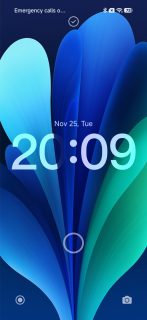
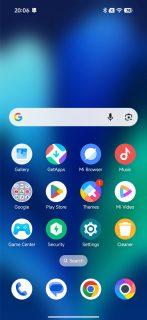
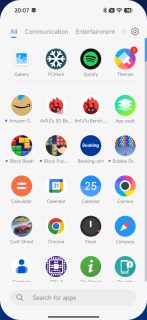
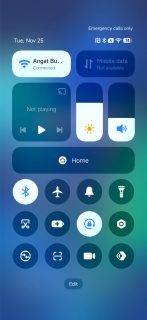
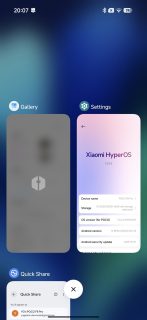
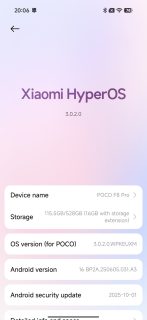

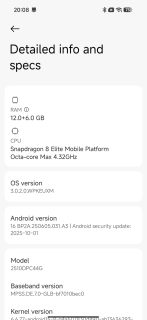
Customization remains a strong feature of HyperOS. You can change icon shapes, fonts, themes, and wallpapers, and the system remains smooth even after applying several modifications.
HyperOS 3 introduces HyperIsland, a Dynamic Island-like feature that brings notifications, live updates, and shortcuts into a small interactive area around the selfie camera notch. It’s a clever way to keep important information accessible without interrupting what you’re doing.

For example, you can see incoming calls, music playback, or timers at a glance, and tap them for quick controls or detailed views. It makes multitasking feel more natural and keeps your screen less cluttered while giving you interactive notifications in a single spot.

There are some pre-installed POCO and Xiaomi apps, but they stay minimal and do not disrupt the experience.
My one gripe though is they haven’t still updated the app icons. It’s still the old, circular icons from before, but if you’re like me who tinker with the Themes app, I can easily replace them if I wanted too.
Connectivity and Battery Life
Connectivity is complete with 5G, Wi-Fi 7, Bluetooth 5.4, NFC, and multi band GNSS. Everything works as expected. Calls are clear, Wi-Fi performance is stable, and Bluetooth connections remain reliable even with multiple accessories.

Battery life is definitely one of its strongest suits. The 6210mAh battery easily lasts an entire day with heavy use. Even with doing a bunch of activities like social media, streaming, gaming, and productivity apps, the battery did not drain that quickly.
PCMark battery tests gave it around 17 hours and 50 minutes which confirms how efficient the Snapdragon 8 Elite is, combined with the large battery capacity.

Charging is fast thanks to the 100W wired charger. Wireless charging is not included, but the wired speed makes up for it. Reverse-wired charging up to 22.5W is also available for topping up accessories and other devices.
However, our unit did not come with a charging brick, so that’s quite a letdown.
Verdict
So, what do we think about the POCO F8 Pro? Indeed, it is one of those devices that clearly aims to deliver a flagship experience at a more accessible price.
The POCO F8 Pro is available in two storage variants, and both come with early bird discounts. The 12GB + 256GB model has an SRP of PHP 29,999, but its early bird price from November 26 to December 9 brings it down to PHP 26,299.
The higher 12GB + 512GB configuration is priced at PHP 31,999 with an early bird offering of PHP 28,299 during the same period.
On Shopee, buyers can get an additional limited PHP 500 discount along with a POCO voucher specifically for the POCO F8 Pro. The phone is also available on Lazada, although the discounts and voucher availability may vary depending on the store and date.

The POCO F8 Pro offers strong performance, a polished display, excellent battery life, and a flexible camera system that is good enough for content creation and social media. The speakers tuned by Bose are a major upgrade that improves the multimedia experience.
The Snapdragon 8 Elite handles everything you throw at it, and battery life during gaming and daily use is impressive.

Overall, the POCO F8 Pro is a well-balanced unit, and while it is not perfect, the combination of power, display quality, solid battery life, camera versatility, and software improvements make it a strong choice for anyone wanting a near flagship experience without spending a ton of cash.
What we liked:
- Strong performance from Snapdragon 8 Elite
- Good battery efficiency
- HyperOS 3
- Speaker quality
What we didn’t like:
- Camera struggles with noise in low light
- Higher fingerprint sensor placement
- Slight heating during longer and maxed out graphics in gaming sessions
POCO F8 Pro specs:
6.59-inch FHD+ AMOLED
2510 x 1156 pixels, 120Hz refresh rate
3500 nits (peak) brightness
Corning Gorilla Glass 7i
Qualcomm Snapdragon 8 Elite
3nm, octa-core, up to 4.32GHz
12GB LPDDR5X RAM
256GB, 512GB UFS 4.1 storage
Triple rear cameras:
50MP f/1.88 main, OIS
50MP f/2.2 telephoto
8MP f/2.2 ultrawide
20MP selfie shooter (punch hole notch)
Dual nano-SIM (supports eSIM)
5G, 4G LTE
Wi-Fi 7
Bluetooth 5.4
GPS
USB Type-C
NFC
Under-display fingerprint sensor (ultrasonic), face unlock
IP68 dust and water (submersion) resistance
Dual stereo speakers (sound by Bose), Dolby Atmos
HyperOS 3, Android 16
6210mAh battery
100W charging (wired)
22.5W reverse wired charging
157.49 x 75.25 x 8.0 mm
199g
Titanium Silver, Blue, Black (colorways)

> What we liked:
> • Strong performance from Dimensity 9400
eh? is it not Snapdragon 8 Elite?