
If you’re working with a budget under PHP 10,000, two phones that may catch your eye are the POCO M7 4G and the HONOR X7d. Both cater to users who want something reliable for daily use, but they approach that goal with very different priorities.
The POCO M7 focuses heavily on battery endurance and straightforward practicality, while the HONOR X7d leans toward durability and better multimedia features.
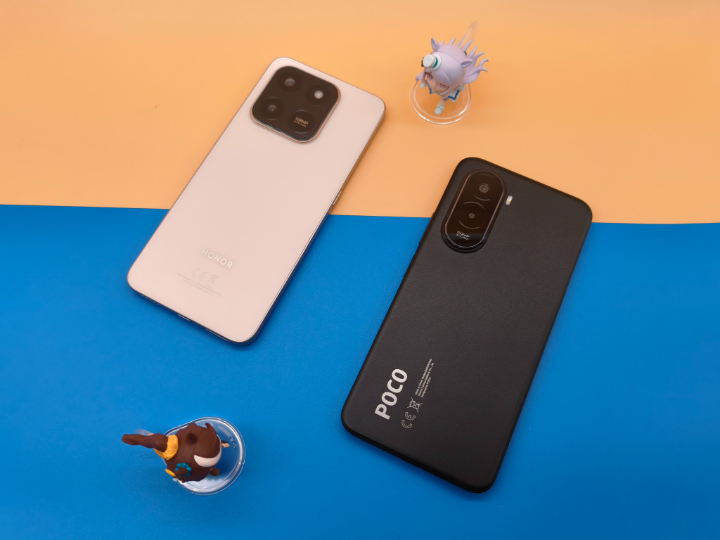
So which one suits you better? Let’s break it down right here in this comparison review.
Design and Construction
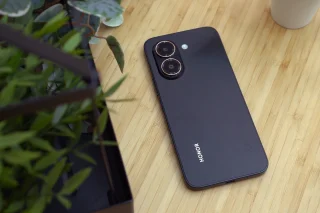
Design-wise, the POCO M7 4G keeps things simple. It uses an all-plastic, flat-edged build with a basic Carbon Black look that resists fingerprints fairly well. It’s on the thicker and heavier side at 8.3 mm and 224 grams, so it feels somewhat chunky but durable. POCO does include an IP64 rating, which gives it some added confidence against dust and light water splashes.
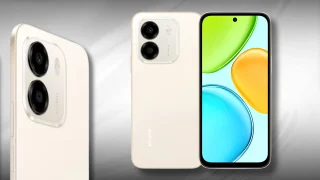
The HONOR X7d, meanwhile, may also be plastic, but it has a more refined approach with a curved matte finish and a large square-shaped camera island that gives it a more modern flair. Our Dessert Gold unit even feels somewhat playful with its doughnut-like tone.

It’s also SGS 5-star drop-resistant, meaning it can survive 1.5-meter drops, and the IP65M rating goes further than POCO’s. It offers resistance against stronger water jets and even short submersion up to 0.5 meters for up to one minute according to HONOR’s marketing. It’s not meant to be dunked regularly, but it’s designed to survive accidental splashes and brief water exposure better than most phones in its class.
So, while POCO keeps it traditional and sturdy, HONOR pushes the narrative of being built for the on-the-go type of users.
Display, Multimedia, and Biometrics
The POCO M7 comes in bigger size with a 6.9-inch IPS LCD running at a smooth 144Hz refresh rate and Full HD+ resolution. It is large and fairly sharp, though brightness tops out at 850 nits, which may struggle under harsh sunlight. It only has a single bottom speaker, which can get easily blocked when gaming or watching videos.

Meanwhile, the HONOR X7d takes a different route with a slightly smaller 6.77-inch TFT LCD at 120Hz and 800 nits peak brightness. It doesn’t reach POCO’s refresh rate or resolution advantage, and with Widevine L3, streaming platforms are limited to 720p on Netflix and 1080p on YouTube without HDR support. Bezels are noticeable, especially the chin.
However, sound is where the X7d hits back. The phone offers stereo speakers with volume that can go up to 400%, delivering a louder, fuller sound stage that’s more enjoyable for videos and podcasts.

For unlocking methods, both use a side-mounted fingerprint scanner embedded into the power button along with face unlock. Both are fast, so usability is pretty much even here.
Between the two, POCO’s display is technically better on paper for sharpness and refresh rate, but HONOR’s stereo setup gives it the edge in entertainment especially if you’re particular with your audio immersion.
Cameras
When it comes to cameras, both phones take different approaches, but interestingly, despite the HONOR X7d having the higher resolution main sensor at 108-megapixels, the POCO M7 4G can still hold its ground in some cases. Like we always say, higher megapixel count doesn’t necessarily mean better image quality.

The POCO M7 features a 50-megapixel main camera paired with a secondary sensor and an 8-megapixel selfie camera. In good lighting, photos are sharp, colorful, and punchy, often producing more vibrant shots that can look livelier straight out of the camera.
Even if they lean slightly toward saturation, many users may actually find POCO’s output more visually appealing without much need for post-editing. Low-light performance does drop with softer details and some noise, but for casual social media uploads, the results are still usable.
POCO M7 comparison shots
Oct 25 – 27, 2025


The HONOR X7d, with its 108-megapixel main shooter and 2-megapixel depth sensor, does capture more detail and maintains a more neutral and natural tone. However, some might find the colors a bit flatter compared to POCO’s more eye-catching look. The 8-megapixel front camera offers solid selfies, though not drastically better than POCO’s.
HONOR also supports AI tools like AI Eraser, AI Beautification, and AI Upscale, which are handy for quick edits.
HONOR X7d comparison shots
Oct 24 – 27, 2025


HONOR’s X7d tends to produce images that are brighter out of the box, but this often comes at the expense of fine detail. The saturation can be a little too aggressive, causing some shots, especially outdoor scenes and skin tones, to look more processed than natural.
HONOR X7d sample video (rear camera):
HONOR X7d sample video (selfie camera):

POCO’s M7, on the other hand, captures more detail overall, giving photos a sharper and more realistic appearance. Colors are still lively but don’t cross into cartoonish territory, which makes POCO’s results more pleasing and usable in real-world scenarios. Personally, I prefer how the POCO handles detail retention and overall image clarity.
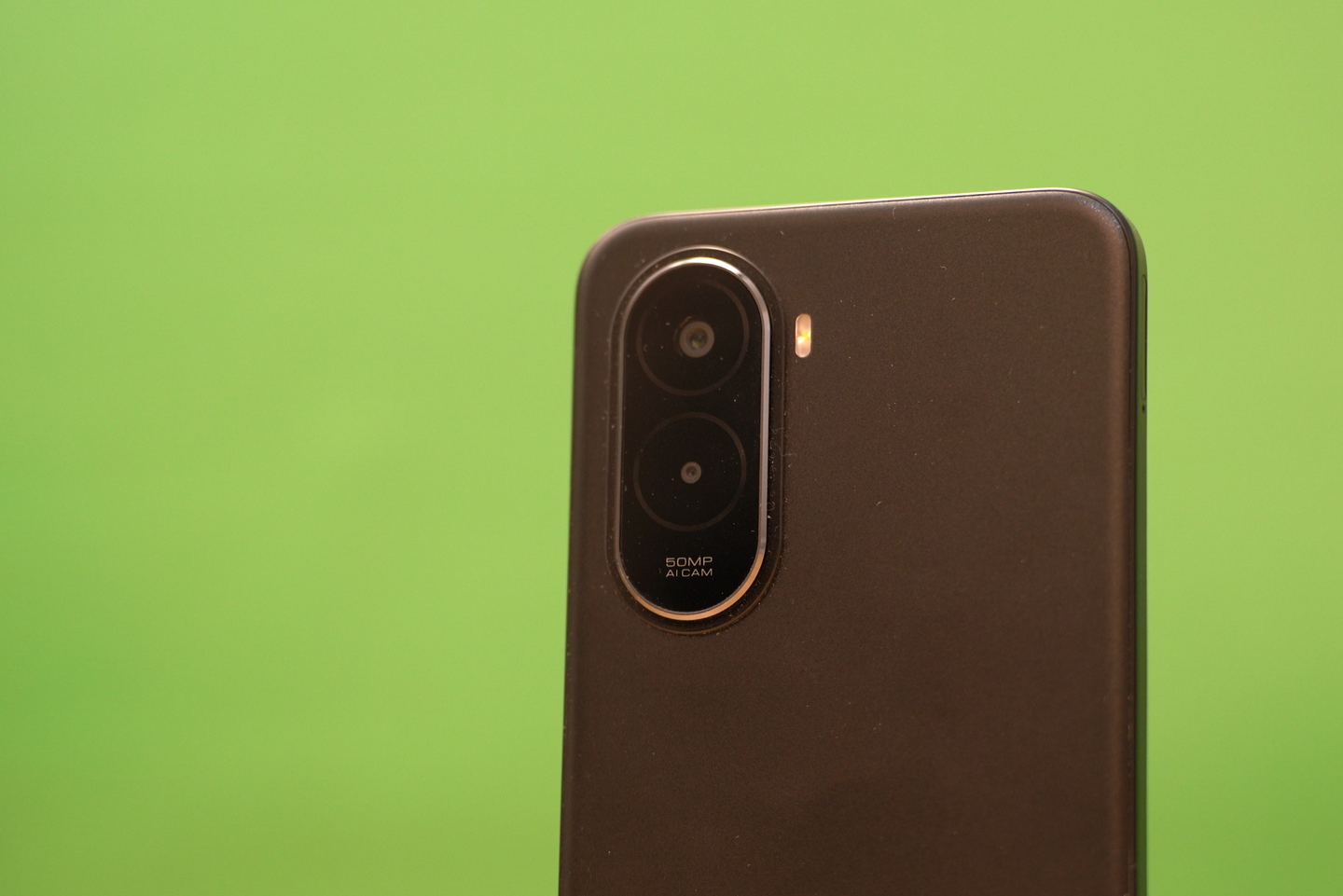
POCO M7 sample video (rear camera):
POCO M7 sample video (selfie camera):
Video recording is capped at 1080p at 30fps on both phones, with HONOR adding a Dual-View mode for creative shots.
So, while HONOR has the technical advantage in resolution and editing features, users who prefer more vibrant shots may actually find the POCO M7 4G’s images more satisfying and visually engaging right out of the box.
Performance
Interestingly, both phones run on the Qualcomm Snapdragon 685, a 6nm chipset for daily multitasking and casual gaming. On the POCO M7’s side, configurations include 6GB RAM with 128GB storage or 8GB RAM with 256GB of storage. It handles everyday apps well, lighter games like MOBAs run smoothly, though heavier titles require low settings, and reviewers have noted occasional random shutdowns when using the camera.

The HONOR X7d comes with 8GB RAM plus an extra 8GB of virtual RAM and a fixed 512GB storage option. When it comes to raw numbers, the HONOR X7d pulls slightly ahead in most tests especially in Antutu, where it scores over 500K compared to the POCO M7’s 360K. That means, the HONOR X7d generally handles heavier tasks a bit more smoothly.
In Geekbench, both phones are pretty close for everyday CPU power, with almost identical single-core and multi-core scores. Even in graphics performance, their GPU scores are nearly the same, so gaming performance feels very similar on both.

However, the HONOR X7d also shows better performance in long-term productivity tasks like in PCMark, which suggests it stays more stable when multitasking or switching between apps. It even has faster storage speeds, which helps apps open quicker and makes the phone feel a bit snappier overall.
So, in simple terms: both are capable for casual use, but the HONOR X7d is a little stronger, especially in overall performance and long-term smoothness. The POCO M7 is still reliable for everyday use, just not as powerful on paper.
| Device: | HONOR X7d (4G) | POCO M7 4G |
|---|---|---|
| Chipset: | Qualcomm Snapdragon 685 | Qualcomm Snapdragon 685 |
| RAM | 8GB | 6GB |
| Antutu v11 | 511,048 | 363,745 |
| Geekbench Single-Core | 469 | 472 |
| Geekbench Multi-Core | 1,500 | 1,554 |
| Geekbench OpenCL | 385 | 378 |
| Geekbench Vulkan | -- | -- |
| 3D Mark Wild Life | 661 (3.96 Avg. FPS) | 650 |
| PCMark Work 3.0 | 10,096 | 8,479 |
| PCMark Battery 3.0 | 16 hours and 27 minutes | 20 hours and 57 minutes |
OS, UI, and Apps
The POCO M7 4G runs on HyperOS 2 based on Android 15. It’s lightweight and smooth, but ads within the UI and occasional bloatware can feel intrusive unless all manually disabled. You still get modern features like Circle to Search, which adds value to the experience.

The HONOR X7d runs MagicOS 9 on top of Android 15. It comes with suggested or pre-installed apps that are easy to uninstall. The AI Mobile Assistant button is a mixed bag though.
It may not appeal to tech-savvy users, but can be useful for seniors or casual users who prefer pressing one button to take screenshots or enable the flashlight. Despite that, the system feels stable and optimized for everyday users.

Overall, HyperOS is cleaner but has ads around it while MagicOS feels more stable and user-friendly for non-power users.
Connectivity and Battery Life
Battery life is where POCO makes its biggest statement. The 7000mAh battery can last two to three days depending on usage, and lasted 20 hours and 57 minutes in PCMark test. Charging is at 33W and it also supports 18W reverse charging which essentially means you can turn it into a power bank for other devices.

The HONOR X7d’s 6500mAh battery isn’t the biggest, but it’s still impressive. It yielded a runtime of 16 hours and 27 minutes in PCMark Work 3.0 and lasted 20 hours and 7 minutes in our video loop test. Charging is faster at 35W and tops up in around an hour and a half.
If you want a phone that can practically outlast your weekend trip without charging, POCO is the pick. If you still want great endurance but prefer a slightly quicker recharge and a slimmer form factor, HONOR holds its ground well. With that, they both get a tie here.
Verdict
The POCO M7 4G starts at PHP 7,499 for the 6GB + 128GB model and PHP 8,499 for the 8GB + 256GB variant, making it more affordable. It’s designed for users who value long-lasting battery life, a bigger display, and simple reliability without premium features.
The HONOR X7d costs PHP 9,999 and justifies the extra cost with a massive 512GB storage, stereo speakers, water and drop resistance, more stable optimization, and a more refined build.
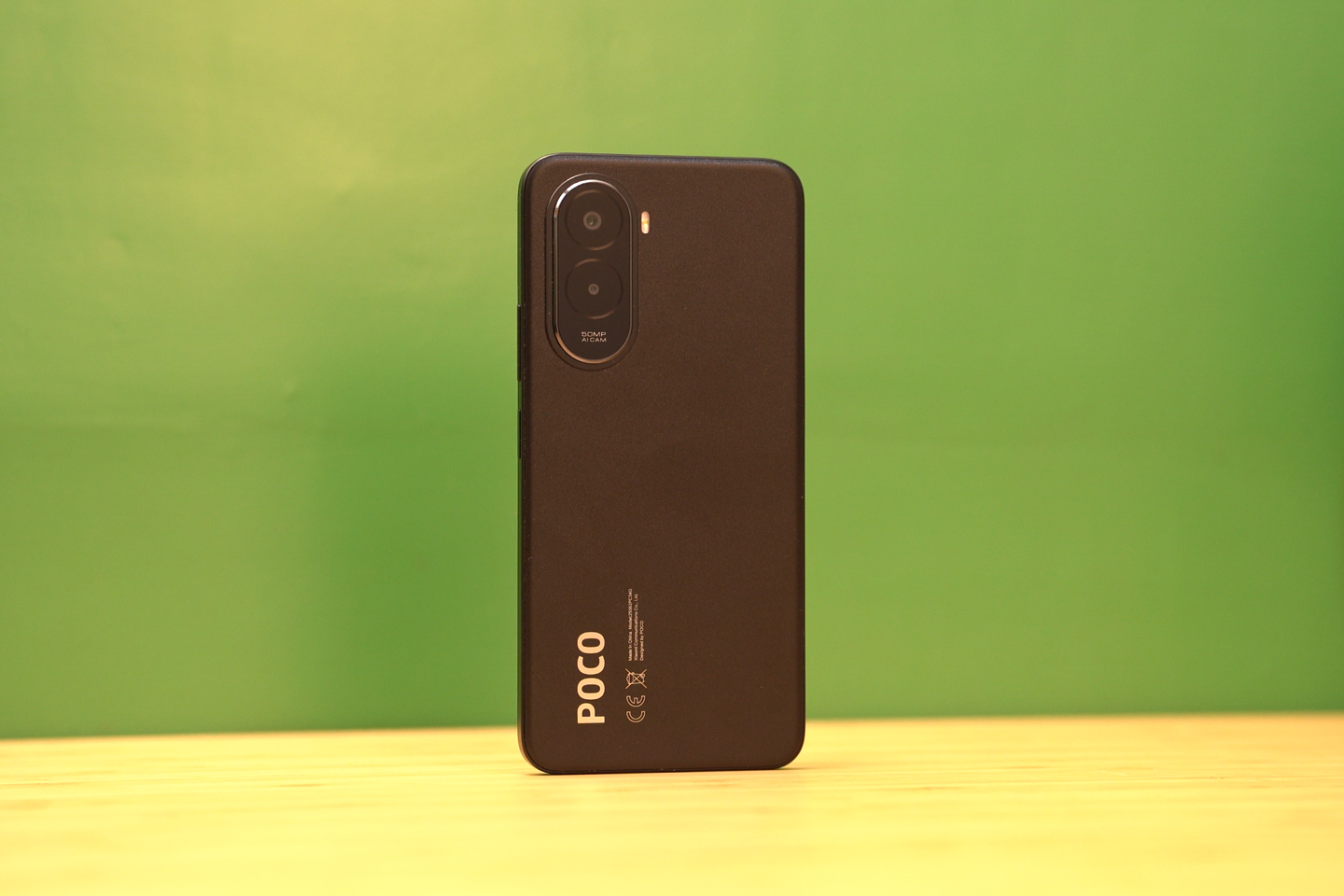
At the end of the day, these two phones are clearly built for different types of people. If you want something that just keeps going for days, has a big screen for watching or scrolling, and gives you the most practical setup for the lowest price, then the POCO M7 4G is the smarter pick. It’s a phone that focuses on lasting throughout the day without trying too hard to impress.
But if you’d rather have a phone that feels a bit more premium to use every day, can handle accidental drops or sudden rain, gives you louder stereo sound, and already comes loaded with a ton of storage, then the HONOR X7d feels more complete overall. It may cost a bit more, but it also gives you more assurance in long-term use.

Both are really solid for under 10K, so it honestly comes down to your lifestyle. Whether you’re someone who wants a battery tank you barely have to charge with, or someone who wants a more well-rounded device that looks and feels a bit more polished, your choice depends on what you value more.
Ultimately, the choice is yours.
| HONOR X7d specs: | POCO M7 4G specs: |
|---|---|
| 6.77-inch HD+ TFT LCD (1610 x 7208) | 6.9-inch FHD+ (2340 x 1080) IPS LCD, ~374 ppi |
| 120Hz refresh rate, 800 nits (peak) | 144Hz refresh rate, 850 nits (peak) |
| Qualcomm Snapdragon 685 | Qualcomm Snapdragon 685 |
| 8GB RAM | 6GB, 8GB RAM |
| 512GB internal storage | 128GB, 256GB internal storage (microSD card support) |
| 108MP main camera (f/1.75) | 50MP main camera (f/1.8) |
| 2MP depth | Auxiliary sensor |
| 8MP front camera | 8MP front camera |
| Dual nano-SIM | Dual SIM |
| 4G LTE | HSPA+, 4G LTE |
| Wi-Fi 802.11 a/b/g/n/ac | Wi-Fi 5 |
| Bluetooth 5 | Bluetooth 5 |
| GPS | GPS, NFC, IR blaster |
| USB Type-C (2.0) | USB Type-C |
| MagicOS 9 (Android 15) | Xiaomi HyperOS 2 (Android 15) |
| 6,500mAh battery | 7,000mAh battery |
| 35W HONOR SuperCharge (wired charging) | 33W fast charging, 18W reverse wired charging |
| IP65M | IP64 rating |
| 166.89mm x 76.8mm x 8.24mm (dimensions) | 171.1 x 80.5 x 8.6mm (dimensions) |
| 208g (weight) | 224 grams (weight) |
| Desert Gold, Ocean Cyan, Velvet Black (colors) | Aqua Blue, Carbon Black, Chrome Silver (colors) |



0 Comments
Leave a Reply