
It’s not even a year since the POCO F7 Pro was released back in March, and now… we already have the new POCO F8 Pro.

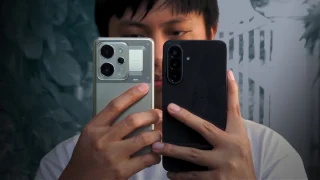
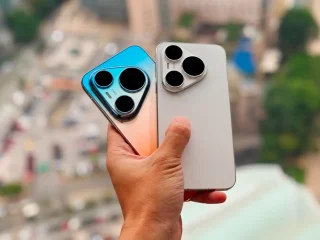
What’s interesting about this new release is POCO decided to go back to an older look, I mean just look at it beside last year’s F6 Pro.

Anyways, looks aren’t just what we’re after in this comparison, the F8 Pro certainly got notable improvements across the board. What are those improvements exactly? We’ll do a rundown of those in this comparison review.
Design and Construction
Now, like I said earlier, design is what really piques my interest about the POCO F8 Pro. They actually went back with the F6 Pro’s design. So, instead of the circular camera island like with the F7 Pro, the F8 Pro opted for a rectangular module, similar to the F6 Pro.

Notably, this design language aligns with higher-end Xiaomi models like the 15T Pro that we reviewed recently.
This definitely gives the F8 Pro’s design a more premium vibe in my opinion. And as a POCO F6 Pro owner myself, I’m just happy that my phone won’t be looking outdated anytime soon.
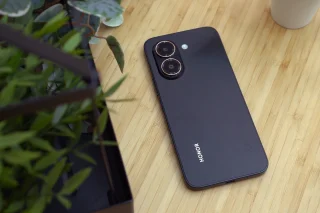
At the same time, it looks a bit more playful in this Blue colorway. Meanwhile, our F7 Pro looks more sedate in this Black color option. Both phones combine that glass back and metal frame with flat-edge design.

The F8 Pro is relatively smaller in size, sporting a 6.59-inch display panel as compared to the F7 Pro’s 6.67-inch. This also makes it lighter and more comfortable to hold, as it weighs only 199 grams versus 206 grams on the F7 Pro.
When it comes to extra protection, I’m happy to report that both models are IP68-rated for dust and water resistance.
Design may be subjective, but personally, I would dig the F8 Pro’s look more in this case. However, since there is no definitive change in terms of build quality, I will end this round with a tie.
Display, Multimedia, and Biometrics
Flip both phones over, you’ll be greeted by crisp AMOLED panels. The POCO F7 Pro has a 6.67-inch Wide Quad HD+ display, while the F8 Pro has a slightly smaller 6.59-inch Full HD+ screen. You read that right, the F8 Pro has a tad bit lower screen resolution, but I bet you’d barely notice the difference.

Both panels run at up to 120Hz refresh rate and both are protected by Corning Gorilla Glass 7i for peace of mind. Peak brightness is about the same, with the F8 Pro capping out at 3500 nits and the F7 Pro with max 3200 nits.
Sadly, no LTPO tech in here just yet for both models.
The bezel size is about the same as well, but as you can see, the F8 Pro has slightly more rounded corners, adding more comfort in hand.
Interestingly, POCO says the F8 Pro has a “HyperRGB display” that essentially delivers sharp, detailed visuals while consuming less power. But again, I barely notice any difference. Both screens look crisp, bright, and vivid to me.

Although, that reduced power consumption did actually matter, since we apparently got longer battery life on the F8 Pro. We’ll get to that in a bit.
Now, one of the things the F8 Pro really improved upon is its audio quality. The overall sound stage is fuller, with clearer highs and mids, and more bass.
What’s even better is you get a more symmetrical stereo sound as it now comes with a dedicated second speaker at the top. On the other hand, the F7 Pro relies on its earpiece that doubles as the stereo speaker- you get the idea.

If it’s not obvious from the back, the F8 Pro is “co-tuned” with Bose, an American company known for making high-end audio equipment. So it makes sense that it delivers a better sound stage, I mean, as it should.
For biometrics security, both have ultrasonic fingerprint sensor, although these could definitely use a better placement. Not gonna lie, they are placed too high for my liking. Nonetheless, both register my prints quickly and it’s the same case for face recognition.

So, their screens are good either way, but it boils down to audio quality, and the F8 Pro nails it better than the F7 Pro. Therefore, I’m giving the first point advantage to the F8 Pro this round.
Performance and Benchmarks
Moving over to performance, the F8 Pro’s chipset upgrade is no joke. Coming from the Snapdragon 8 Gen 3 on the F7 Pro, which is last year’s flagship chip for context, the new model is now equipped with the Snapdragon 8 Elite.

For config, both units that we have got 12GB of LPDDR5X RAM and 512GB of UFS 4.1 storage. To better illustrate the differences, let’s look at our benchmark results.
In AnTutu version 10, the F8 Pro hit over 2.6 million which is significantly higher than that of the F7 Pro at 1.9 million points. In 3DMark Wild Life Extreme, the F8 Pro, yet again, achieved a higher score and a higher average frame rate, suggesting it is better at gaming.
The same higher result goes for the rest of our benchmark tests.
| Benchmark | POCO F8 Pro | POCO F7 Pro |
|---|---|---|
| Chipset | Snapdragon 8 Elite | Snapdragon 8 Gen 3 |
| AnTuTu V10 | 2,661,660 | 1,974,717 |
| AnTuTu Storage | 245,583 | 198,370 |
| S.Read Speed | 4299.7 MB/s | 3900.7 MB/s |
| S.Write Speed | 4119.0 MB/s | 3422.3 MB/s |
| 3DMark Wild Life | MAXED OUT | MAXED OUT |
| 3DMark Wild Life Extreme | 6,401 | Avg. FPS: 38.33 | 3,897 | Avg. FPS: 23.34 |
| Geekbench 6 CPU Single-Core | 1442 | 2,087 |
| Geekbench 6 CPU Multi-Core | 6700 | 6,267 |
| Geekbench 6 GPU OpenCL | 18,015 | 15,229 |
| Geekbench 6 GPU Vulkan | 23,782 | 16,673 |
| PCMark Work 3.0 performance | 21,768 | 15,843 |
| PCMark Work 3.0 battery life | 17 hrs & 50 mins | 15 hrs & 59 mins |
Weirdly enough, despite having literally the same RAM and storage specs, the F8 Pro yielded faster read and write speeds than the F7 Pro.
Setting the numbers aside, when it comes to navigation and multi-tasking, both phones perform just about the same. App loading times are fast, and switching from different apps is a breeze. Animations here and there feel smoother with the F8 Pro, most likely because it’s running the newer HyperOS 3 version.
Gaming on the other hand, the experience is definitely way better on the F8 Pro. Hands down.

Setting the graphics and frame rate at max for the games we tested was no hassle on this guy. Although, I wouldn’t recommend leaving the games at that for long play-throughs.
While you can technically do that with the F7 Pro, too, the frame rates wouldn’t be as smooth, and the graphics will be capped at High settings only as compared to the F8 Pro. So, there’s that.
POCO F8 Pro sample gameplay (Wuthering Waves):
POCO F7 Pro sample gameplay (Wuthering Waves):
But, if you’ve tweaked the right settings or just leave it to recommended settings, both models can definitely handle more than 60 fps of stability. The temps are manageable for the most part and didn’t go uncomfortably hot during our sessions for both phones.
That said, it’s just fair for the F8 Pro to secure another point this round, mainly thanks to its more powerful chipset.
Cameras
Now, let’s talk about cameras.
Aside from the design reverting to an older generation, the F8 Pro also brings back triple rear cameras, except it’s a better setup this time around.

It has a 50-megapixel main shooter with OIS, an 8-megapixel ultrawide lens, and instead of just throwing a macro sensor as its third lens, the F8 Pro finally adds a 50-megapixel telephoto sensor.
This makes it possible to shoot images at 2.5x optical zoom without losing much detail.

On the other hand, the F7 Pro basically has the same 50-megapixel main camera and 8-megapixel ultrawide sensor.

Their selfie shooters are also using a 20-megapixel sensor. That said, you can pretty much imagine how similar they would perform in this regard.
Taking a look at our sample shots, both phones capture images with good clarity, especially with shots taken through their main sensors.
Sample shots (1x) | POCO F8 Pro vs. F7 Pro
Monday, Nov 24, 2025
Sample shots (2x
2.5x, 0.6x) | POCO F8 Pro vs. F7 Pro · Monday, Nov 24, 2025

Color reproduction is a bit odd to my liking though. The image leans toward warmer tones for both phones, and the default exposure could do some improvements. It seems like the images, in general, look brighter than they’re supposed to be.
As for ultrawide shots, both phones handle sharpness decently, but as expected, noise starts to creep in for low-light scenarios. And we should not forget the telephoto sensor on the F8 Pro, capturing better shots at 2.5x optical zoom, while the F7 Pro is capped at 2x digital zoom.
Moving on to video, it’s also about the same for both phones. Shots are stabilized thanks to OIS, both can focus on subjects quickly, and clarity is on point. But again, with the telephoto lens, the F8 Pro does output better videos at higher zoom ranges.
POCO F8 Pro sample video:
POCO F7 Pro sample video:
For more sample shots, head over to our separate full reviews below:
Camera-wise, while not much has changed for everything else, the telephoto lens is definitely a neat addition. So, the POCO F8 Pro earns its three-point advantage this round.
Battery Life
As far as battery life is concerned, it’s safe to say that both phones do me a solid.
The F8 Pro packs a slightly larger 6210mAh battery paired with 100W of wired charging. Meanwhile, the F7 Pro is equipped with a 6000mAh unit with support for 90W of wired charging.

Unfortunately, still no bypass charging here, but both phones support 22.5W of reverse wired charging, which could come in handy for charging other devices or accessories.


Now, the difference in battery capacity isn’t that big if you think about it. But going back to the topic of reduced power consumption with the F8 Pro’s display, it’s possibly one of the factors that made its battery life better on paper.
In our PCMark battery life test, it yielded a result of 17 hours and 50 minutes. That’s about two hours longer than the F7 Pro’s 15 hours and 59 minutes of runtime.
So, stacking all the facts: a more efficient chip, less power consuming display, and a faster charging rate, then the F8 Pro can provide better battery life in general. Thus, it gets yet another point this round.
Connectivity and Other Features
On the software side, the POCO F8 Pro ships with the latest Android 16 and HyperOS 3 on top. The F7 Pro did ship with Android 15 and HyperOS 2, but we haven’t gotten the update yet as of writing.

The first thing that I noticed right away is that the F8 Pro still uses the old-looking, outdated POCO icons from before. It’s a minor nitpick, but a custom theme should be enough to make the home screen and app drawer look a lot better.

Aside from that, it may not be that noticeable on the naked eye, but some of the animations on HyperOS 3 look more fluid and smoother. There are new features like the HyperIsland (which is Xiaomi’s own take on Apple’s Dynamic Island), the redesigned control center, new notification icons, and many more.

As usual, you’ll find a substantial amount of bloatware and ads for both phones, but they can be easily uninstalled should you want to get rid of them.
In terms of update policy, we don’t have the info yet about the F8 Pro, but with reference to the F7 Pro’s 4 major OS upgrades and 6 years of security patches, we can expect it to be more or less the same for the F8 Pro.
Connectivity-wise, we pretty much get all the essentials here, including Wi-Fi 7, 5G, NFC, and IR blaster. What sets the F8 Pro apart is it finally supports eSIM(!) which both the F7 Pro and F7 Ultra lacked.

So, with a newer Android version out of the box and eSIM support, the F8 Pro takes this round easily.
Verdict
With the POCO F8 Pro launching mere months after the F7 Pro, it was quite a bittersweet reaction, personally. To me, it seemed like the F7 Pro was an “eccentric” release, for the lack of better term.

Coming back to an old design is something you don’t normally see in the smartphone space. But all things considered, the F8 Pro feels more like a high-end flagship now.
Based on our rundown, the F8 Pro is no doubt the better pick between the two phones that have been released this year. It boasts a subjectively better design, a better audio-visual experience, a telephoto camera, and most importantly, a more powerful raw performance.

As for pricing though, it is a bit more expensive now, starting at PHP 29,999 SRP for the 12GB+256GB trim. Regardless, this new release is definitely worth getting.
Don’t get me wrong, the POCO F7 Pro is still a good choice in its own right. It still has a flagship-tier processing power, basically the same camera performance except the telephoto, a solid battery life, and a nice software experience.

Not to mention, it’s about to be a good deal, considering the huge discounts it could potentially get during the holidays. It retailed for PHP 27,999 (12GB+256GB) and the price could go down anytime soon, so keep an eye out for those upcoming sales.
| POCO F8 Pro | POCO F7 Pro |
|---|---|
| 6.59-inch FHD+ AMOLED | 6.67-inch WQHD+ AMOLED |
| 2510 x 1156 pixels, 120Hz refresh rate | 3200 x 1440 pixels, 120Hz refresh rate |
| 3500 nits (peak) brightness | 1800 nits (HBM), 3200 nits peak brightness |
| Corning Gorilla Glass 7i | Corning Gorilla Glass 7i |
| Qualcomm Snapdragon 8 Elite | Qualcomm Snapdragon 8 Gen 3 |
| 3nm, octa-core, up to 4.32GHz | 4nm, octa-core, up to 3.3GHz |
| 12GB LPDDR5X RAM | 12GB LPDDR5x RAM |
| 256GB, 512GB UFS 4.1 storage | 256GB, 512GB UFS 4.1 storage |
| Triple rear cameras: | Dual rear cameras: |
| - 50MP f/1.88 main, OIS | - 50MP f/1.6 main, OIS |
| - 50MP f/2.2 telephoto | - 8MP f/2.2 ultrawide |
| - 8MP f/2.2 ultrawide | - |
| 20MP selfie shooter (punch hole notch) | 20MP selfie shooter (hole punch notch) |
| Dual nano-SIM (supports eSIM) | Dual nano-SIM |
| 5G, 4G LTE | 5G, 4G LTE |
| Wi-Fi 7 | Wi-Fi 7 |
| Bluetooth 5.4 | Bluetooth 5.4 |
| GPS | GPS, Beidou, Galileo, GLONASS, QZSS, NavIC, AGNSS |
| USB Type-C | USB Type-C |
| NFC | NFC |
| Under-display fingerprint sensor (ultrasonic), face unlock | Under-display fingerprint sensor (ultrasonic), face unlock |
| IP68 dust and water (submersion) resistance | IP68 dust and water resistance |
| Dual stereo speakers (sound by Bose), Dolby Atmos | Dual stereo speakers, Dolby Atmos/ Vision, IR blaster |
| HyperOS 3, Android 16 | HyperOS 2, Android 15 |
| - | 4 major OS upgrades + 6 years security patches |
| 6210mAh battery | 6000mAh battery |
| 100W charging (wired) | 90W charging (wired) |
| 22.5W reverse wired charging | 22.5W reverse wired charging |
| 157.49 x 75.25 x 8.0 mm | 160.26 x 74.95 x 8.12 mm |
| 199g | 206g |
| Titanium Silver, Blue, Black (colorways) | Black, Silver, Blue |

0 Comments
Leave a Reply