
The new Infinix GT30 Pro is arguably the brand’s most capable budget gaming smartphone yet. It comes with all the features you’d want in a gaming phone. You get an AMOLED display with high refresh rate capable of all-day 120FPS gaming, a powerful chipset, but without the gaming phone tax.
Best of all, it even comes with shoulder triggers called GT Triggers and a Gaming Kit, which features a Thermal MagCase and MagCharge Cooler—accessories you would expect from a gaming phone.
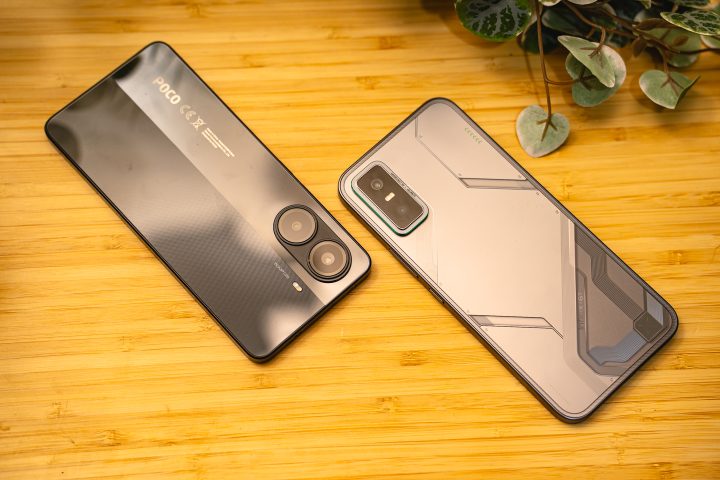
But how does it compare to another great budget gaming phone we tried out earlier this year – the POCO X7 Pro? Released around January 2025, this device also received praise for its powerful chipset and long battery life.
Both the Infinix GT30 Pro and POCO X7 Pro are very affordable smartphones, but let’s see which one will come out on top.
Design and Construction
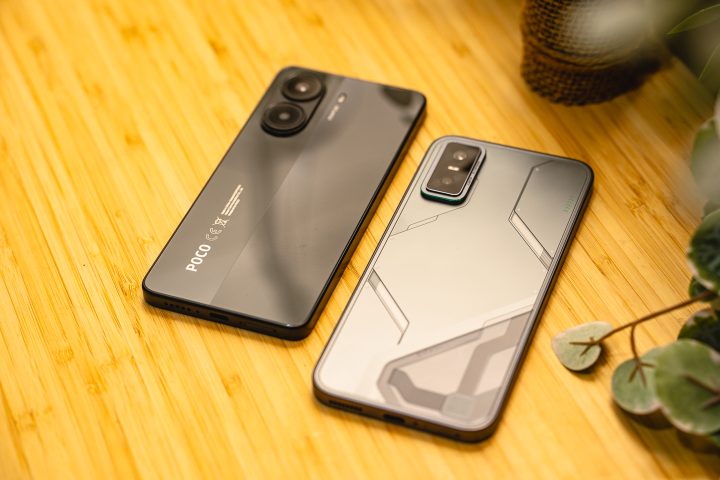
Let’s start with the design. Both phones clearly target different audiences when it comes to styling.
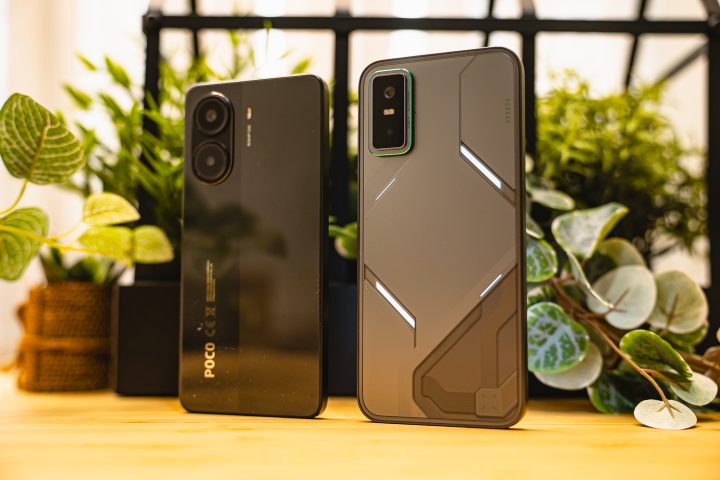
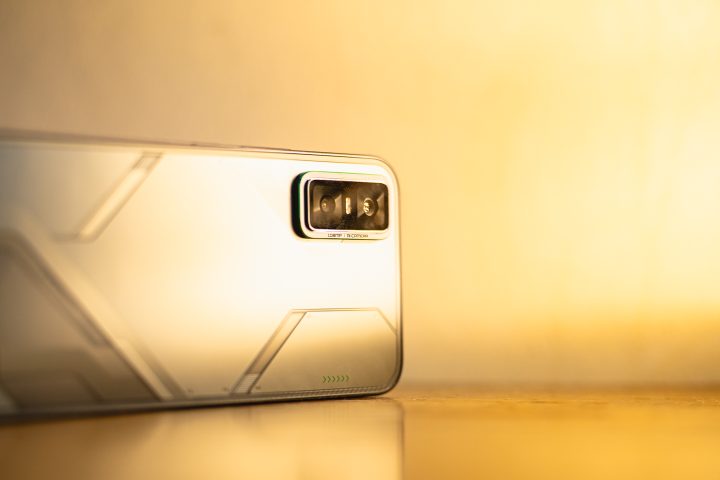
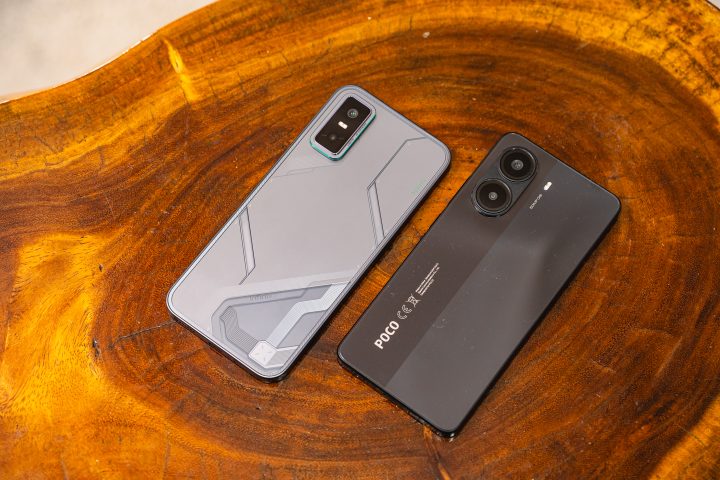
Starting with the Infinix GT30 Pro, it’s clear this phone is aimed at gamers. It features an aggressive back panel design with LED lighting, dubbed Mechanical Light Waves, and a mechanical aesthetic. There’s a rectangular camera module with a green accent all around, which further adds to the gamer vibe.
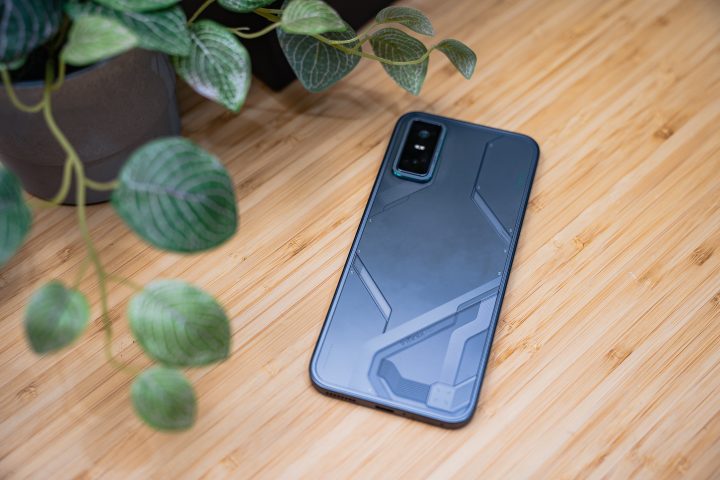
The materials used are quite decent. You get a plastic back with a glossy finish and a plastic frame. Despite that, the phone feels sturdy in hand. The LED lighting is fully customizable and can pulse to music, notifications, or can be permanently turned on, which is a nice touch for those who enjoy a bit of flair.
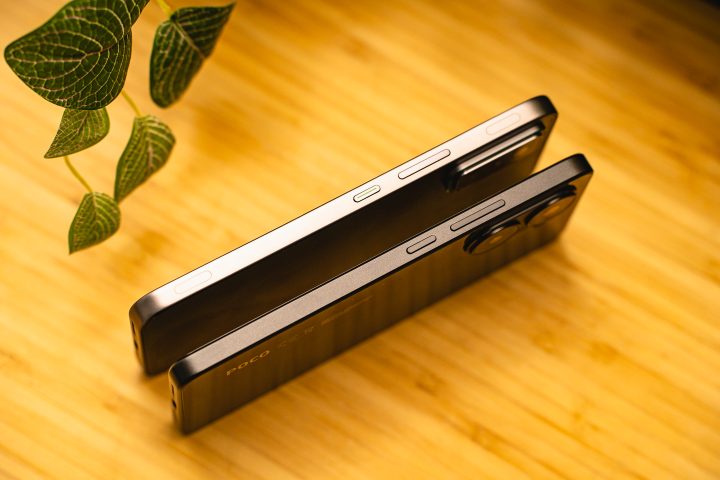
But of course, one of the best features of the GT 30 Pro is the GT Triggers. The GT Triggers or shoulder triggers as they are usually called, are something you would normally find on high end gaming phones.
When not gaming, the triggers can be used to activate apps like the camera. You can even use the triggers as a shutter when taking photos.
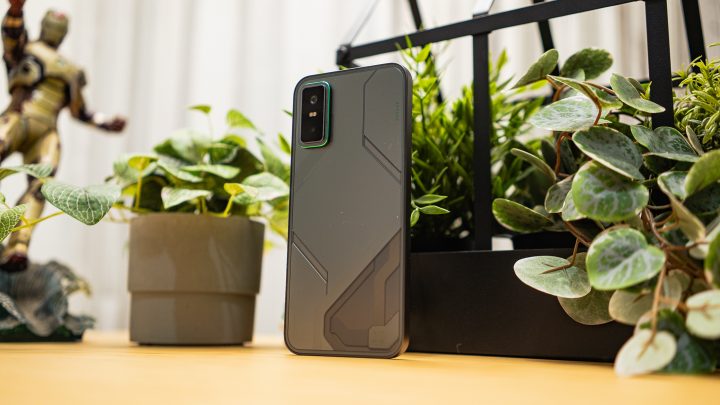
Now moving over to the POCO X7 Pro, the design is a lot more minimalist and sleek, similar to traditional smartphones. You get a matte two-tone finish back panel without any of the gamer aesthetics. The camera island is more subdued and for a cleaner look and feel.
Unlike the GT 30 Pro, the POCO uses a glass back paired with a metal frame, giving it a more premium feel overall.

In terms of protection, the GT30 Pro is rated for IP64 while the X7 Pro comes with IP68 rating.
Overall, style is subjective so whether you want the gamer vibe or clean look is up to you. But there’s no doubt that the GT Triggers are amazing to have for a gaming phone of this price.
With that, the Infinix GT30 Pro takes the first point in this comparison.
Display and Multimedia

Now onto the displays. Both phones offer vibrant screens, but they differ in some key ways.
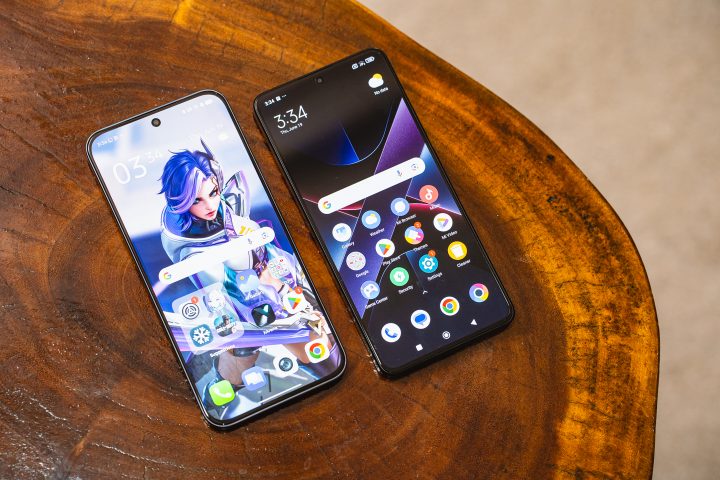
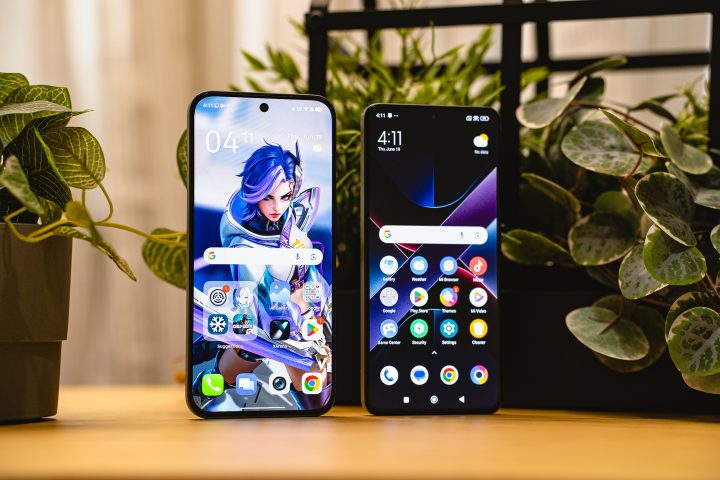
The Infinix GT30 Pro comes with a 6.78-inch AMOLED panel with Full HD+ resolution and a 144Hz refresh rate. That’s faster than the standard 120Hz we see in most devices at this price point. It makes animations and games feel extra smooth.
It also supports HDR10+ for a more vivid and immersive visual experience. When outside, you can make use of up to 4500 nits of peak brightness. This ensures you can see everything on screen in almost all environments.
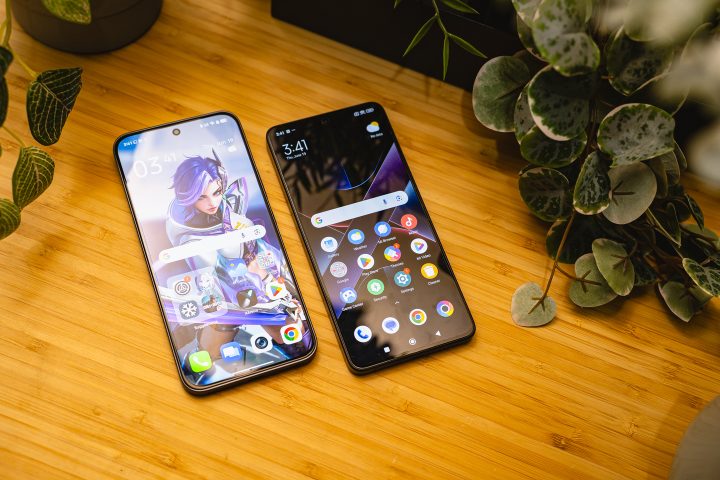
On the other hand, the POCO X7 Pro uses a slightly smaller 6.67-inch 1.5K AMOLED panel, similar to the GT 30 Pro. However, it only has a 120Hz refresh rate. While the refresh rate isn’t as high, it does have a more capable panel. In addition to HDR10+, it also supports Dolby Vision.
Both displays look great, with deep blacks and vivid colors, offering a nice visual experience. They’re well protected too, both having a Corning Gorilla Glass 7i.

However, in side-by-side comparisons, the POCO’s display comes out slightly sharper and more vivid. The colors pop more, and you can see the difference between the two. When gaming though, the 144Hz refresh rate of the GT30 Pro helps make everything smoother, and you can have an advantage over your competition.
As for the speakers, they’re equally matched, too. The GT 30 Pro and the X7 Pro both have dual stereo speakers. JBL tunes the GT 30 Pro’s speakers, but only the X7 Pro has support for Dolby Atmos. Despite that, they’re both loud and have a decent sound stage out of the box.
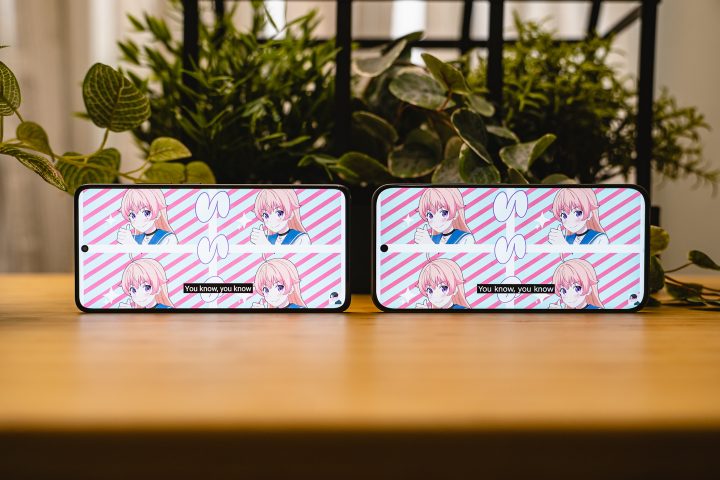
With that, it’s hard to say one has an advantage over the other. So for this round, it’s a tie.
Cameras
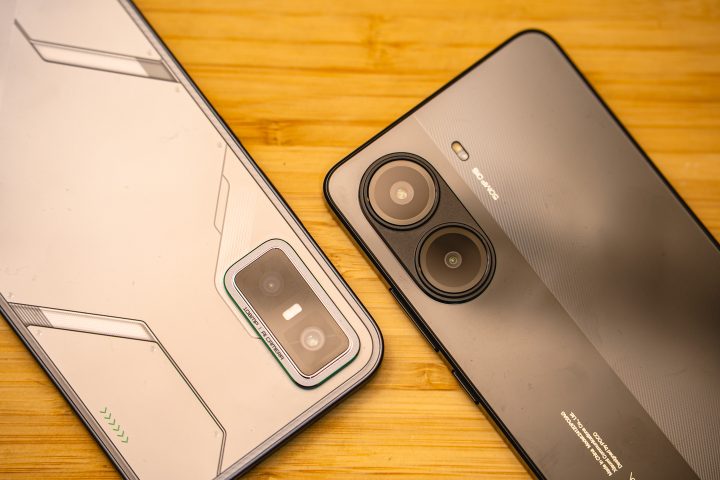
Moving on to the cameras, both the Infinix GT 30 Pro and the POCO X7 Pro have dual rear cameras. They might have different specs, but the outputs are somewhat similar.
The Infinix GT 30 Pro is equipped with a 108MP main shooter with PDAF and a 8MP ultrawide camera. There’s also a 13MP front camera for selfies.
The 108MP main camera takes some vivid and detailed photos in well-lit environments. They’re sharp and have nice contrast too, with a good balance between the shadows and highlights. Meanwhile, the ultrawide is great too, but there is a noticeable quality when you start losing light.
Don’t try to shoot beyond 3x zoom or in low-light either. If you do, you will immediately notice the drop in quality when the lighting conditions aren’t the best.
Meanwhile, the POCO X7 Pro comes with a 50MP main shooter and an 8MP ultrawide camera. While it doesn’t have the same megapixel count, the main camera does benefit from OIS in addition to PDAF, making it a lot easier to capture images and video if you don’t have steady hands.
In daylight, both phones capture sharp images with decent color accuracy, though POCO’s shots tend to have more natural tones. However, there’s also a drop in quality when in low light or going beyond 3x zoom. The drop isn’t as noticeable as compared to the Infinix though, so plus points there.

For video, both phones can record up to 4K@60FPS, and the outputs are similar to the images we’ve seen. However, the Infinix does have the stabilization option available at 4K60FPS, while UltraSteady on the POCO is limited to 1080P30FPS.
You can check out the gallery below, and see the difference for yourself.
Considering how the outputs are similar with just slight variations on how the phones process the images, we would say it’s a tie once again for this round.
Performance and Benchmarks
Now for the performance, both phones are no slouch.
The Infinix GT30 Pro is powered by the MediaTek Dimensity 8350 Ultimate chipset paired with up to 12GB of RAM and 512GB of storage. In comparison, the POCO X7 Pro uses the MediaTek Dimensity 8400 Ultimate also paired with up to 12GB of RAM and up to 512GB of storage.

Both chipsets are very capable of handling your day-to-day tasks without any issues whatsoever. But we are talking about gaming phones here, so let’s focus more on that.
Both phones handle light and graphic intensive titles with ease. On both phones, Genshin Impact can be run on medium to high settings at 60FPS, and you won’t get any framerate drops even in the most intense of battles.

In Call of Duty: Mobile, the graphics were set to the highest settings, and the phones handled them without issues. So no matter which phone you choose, you will have a great gaming experience. However, it’s only the GT 30 Pro that passes 120 FPS in CODM constantly, similar to higher-end smartphones. On the other hand, the POCO X7 pro is only limited to 90 FPS.
Both phones do have slight heating issues, but it’s a bit more noticeable on the GT 30 Pro. However, only the GT 30 Pro is available with an external cooler similar to other gaming phones.
Benchmark-wise, both phones score close on Antutu, with the X7 Pro taking the lead by a small margin. The gap is a bit bigger on the other benchmarks, but still close. You can check them out below.
INFINIX GT 30 Pro
Antutu – 1,429,882
3D Mark Wild Life -Maxed Out!
PCMark Work 3.0 Performance – 16,648
Geekbench 6
CPU Single – 1,200
CPU Multi – 4,154
GPU Vulkan -8,215
GPU OpenCL – 7,907
POCO X7 PRO
Antutu – 1625075
3DMark Wild Life – Maxed Out!
PCMark Work 3.0 Performance – 14327
Geekbench 6
CPU Single – 1533
CPU Multi – 6191
GPU Vulkan – 11986
GPU OpenCL – 10977
Given how close they are in terms of real-world performance, it’s another tie for both phones.
Battery
Battery life is one of the POCO X7 Pro’s strong suits. It packs a 6000mAh cell with 90W fast charging. During our time with the phone, it lasted us an entire day of use, and it still had some juice left afterward. The PCMark battery benchmark showed similar results with 15 hours and 2 minutes of battery run time.
In comparison, the Infinix GT 30 Pro only comes with a slightly larger than usual 5500mAh battery, 45W fast charging, and 35W wireless charing. From our experience, the battery does drain rather quickly but it’s to be expected from a gaming phone. Using the same benchmark, it only lasted 8 hours and 48 minutes, which is nearly half of the X7 Pro.
With that, the POCO X7 Pro takes another point in this comparison.
Conclusion
So, it’s very much a tie between the Infinix GT 30 Pro and the POCO X7 Pro. It goes to show just how competitive the budget gaming phone segment has become. However, we have yet to talk about the price.
In terms of pricing, the Infinix GT 30 Pro is the more affordable option at PHP 13,999 for the 8+256GB variant and PHP 15,999 for the 12+512GB variant. There is also a PHP 2,000 discount for both variants if you get yours during the promo period.
In comparison, the POCO X7 Pro starts at PHP 16,999 for the 8+256GB variant, while the 12+512GB variant retails for PHP 19,999. That’s a big price difference for similar performance values. Not to mention the GT 30 Pro also comes with GT Triggers, which isn’t found on the X7 Pro.
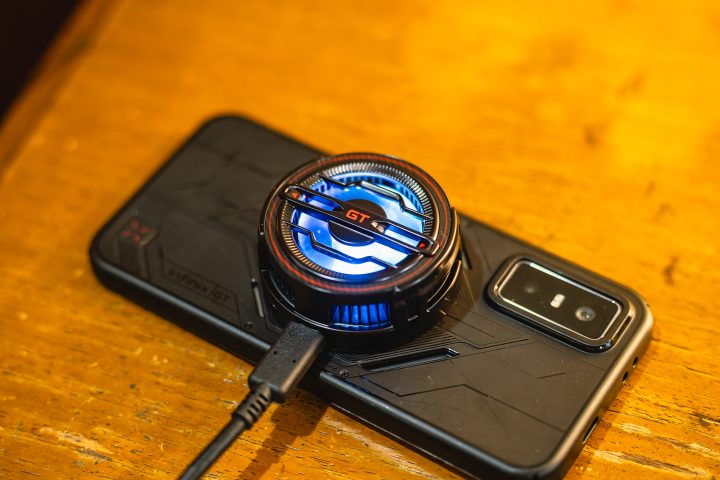
With that, the Infinix GT 30 Pro comes out on top with its affordable price point. Not to mention you can also get it with the Gaming Kit which comes with a MagCharge Cooler and MagCharge case to enhance your gaming experience further.
That’s not to say the POCO X7 Pro is a bad phone though. It’s just a bit more expensive than the Infinix, for a minimal bump in performance.
Still, which one would you pick – the Infinix or the POCO? Share your thoughts in the comments below.
Infinix GT 30 Pro specs:
6.78-inch 1.5K AMOLED display (1224 × 2720 pixels)
144Hz refresh rate, up to 4,500 nits peak brightness (1,600 nits typical)
240Hz touch sampling rate, 2160Hz instant touch sampling rate, 2304Hz PWM dimming
Corning Gorilla Glass 7i protection
MediaTek Dimensity 8350 Ultimate (4nm)
1 x Cortex-A715 @ 3.35GHz, 3 x Cortex-A715 @ 3.20GHz, 4 x Cortex-A510 @ 2.20GHz
Mali-G615 MC6 GPU
8GB / 12GB LPDDR5X RAM (+12GB virtual RAM)
256GB / 512GB UFS 4.0 storage (no microSD card slot)
108MP main camera (f/1.89, PDAF) + 8MP ultra-wide (f/2.2, 111°)
13MP front camera (f/2.2)
Dual stereo speakers, USB Type-C audio (no 3.5mm jack)
JBL, 24-bit/192kHz Hi-Res & Hi-Res Wireless audio
5G, Dual nano-SIM
Wi-Fi 6 (802.11 a/b/g/n/ac/ax), dual-band, Wi-Fi Direct, 2×2 MIMO
Bluetooth 5.4
NFC, IR Blaster, FM radio
GPS, GLONASS, GALILEO, NavIC
XOS 15 (based on Android 15)
In-display fingerprint sensor
IP64 dust and splash resistance
Customizable RGB LEDs on the back, pressure-sensitive gaming triggers
5,500mAh battery with 45W wired, 30W wireless, 10W reverse wired, 5W reverse wireless charging, Bypass Charging 2.0
163.7 x 75.8 x 8 mm (dimensions)
189g (Dark Flare), 188g (Blade White)
Blade White, Shadow Ash, Dark Flare (Gaming Master Edition) color options
POCO X7 Pro specs:
6.67-inch CrystalRes 1.5K Flow AMOLED display
120Hz adaptive refresh rate
700 nits (typ), 1,400 nits (HBM), 3,200 nits (peak)
12-bit color depth, Dolby Vision
Corning Gorilla Glass 7i protection
MediaTek Dimensity 8400 Ultra
1x Cortex-A725 @ 3.25GHz
3x Cortex-A725 @ 3.0GHz
4x Cortex-A725 @ 2.1GHz
Mali-G720 MC7 GPU
12GB RAM
512GB UFS 4.0 storage
50MP Sony IMX882 main camera (f/1.5, 26mm, 1/1.95-inch sensor, OIS)
8MP ultrawide (f/2.2, 15mm, ¼-inch sensor)
20MP front camera (f/2.2)
Dual stereo speakers
5G
Dual nano-SIM
Wi-Fi 6
Bluetooth 5.4
GPS
NFC
USB Type-C
Fingerprint sensor (in-display, optical)
Face unlock
IR blaster
Xiaomi HyperOS (Android 15)
6,000mAh battery
90W HyperCharge support (wired, in-box charger)
IP68 rating for dust and water resistance
160.8 x 75.2 x 8.3 mm (dimensions)
198 grams (weight, vegan leather)
Black/Yellow, White, Green (colors)






Another paid BS comparison, the Poco X7 Pro consistently scores more than 20% higher than the infinix across the board, you can’t chalk up and say that difference in benchmark results is within the margin of error. This is why I hate Filipino “tech journalists” cause practically all of them are either paid shills or are just too afraid of upsetting a brand for fear of not getting a review unit.