
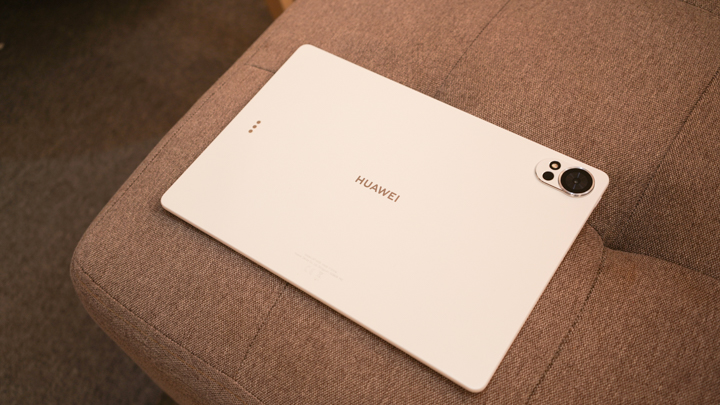
HUAWEI MatePad 12 X (2026) Review



Xiaomi has officially announced that it will hold a major launch event on May 22 in China to unveil multiple products, including the company’s first SUV – the Xiaomi YU7. According to today’s announcements, the new Xiaomi 15S Pro and the Xiaomi Pad 7 Ultra will both debut with the newly self-developed in-house O1 processor built on a 3nm process.

The Xiaomi 15S Pro will be the company’s first smartphone to feature the Xring O1 chipset. According to reports, the phone is expected to inherit the 15 Pro’s design and display—featuring a 6.73-inch 2K quad-curve screen with LTPO 120Hz refresh rate and ultrasonic fingerprint reader.
The 15S Pro may house a 6100mAh battery and support 90W wired charging and 50W wireless charging. Camera hardware may include a Leica-branded triple setup with 50-megapixel sensors and a 10x periscope telephoto lens. UWB support returns for car integrations with Xiaomi SU7/YU7 series.
The company will also unveil the Xiaomi Pad 7 Ultra flagship tablet on May 22. The device will feature a 14-inch OLED panel equipped with ultra-thin bezels and a notch possibly supporting 3D facial recognition. Apart from featuring the O1 chip, the tablet is expected to support 120W charging.
According to Xiaomi CEO Lei Jun, the Xiaomi O1 has now entered mass production, becoming one of the few 3nm chips in the mobile industry. Built on TSMC’s 3nm process, the O1 chip has been under development for years, with Xiaomi reportedly investing over ¥13 billion (~$1.8 billion) in its R&D.

A recent Geekbench listing revealed that the Xring O1 chip uses a 10-core architecture and includes an Immortalis-G925 GPU, designed to deliver flagship-level performance. Benchmark scores for the O1 reach 3119 (single-core) and 9673 (multi-core) on Geekbench.
Xiaomi’s investment in the Xring O1 chip is part of a broader strategy to reduce reliance on external chip suppliers like Qualcomm and MediaTek. The company has committed to investing at least ¥50 billion (~$6.9 billion) over the next decade into chip design, signaling a significant shift towards vertical integration and self-reliance in key technologies.
The launch event on May 22 will not only showcase Xiaomi’s advancements in mobile and tablet technology but also mark a significant milestone in the company’s journey towards becoming a major player in the semiconductor industry.






Apple, Asus, Cherry Mobile, Huawei, LG, Nokia, Oppo, Samsung, Sony, Vivo, Xiaomi, Lenovo, Infinix Mobile, Pocophone, Honor, iPhone, OnePlus, Tecno, Realme, HTC, Gionee, Kata, IQ00, Redmi, Razer, CloudFone, Motorola, Panasonic, TCL, Wiko
Best Android smartphones between PHP 20,000 - 25,000
Smartphones under PHP 10,000 in the Philippines
Smartphones under PHP 12K Philippines
Best smartphones for kids under PHP 7,000
Smartphones under PHP 15,000 in the Philippines
Best Android smartphones between PHP 15,000 - 20,000
Smartphones under PHP 20,000 in the Philippines
Most affordable 5G phones in the Philippines under PHP 20K
5G smartphones in the Philippines under PHP 16K


