
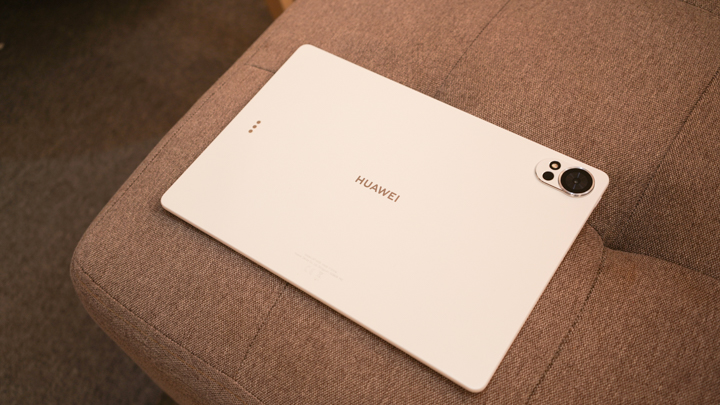
HUAWEI MatePad 12 X (2026) Review



If you look at the development of smartphones nowadays, fast charging is one of the features that gets regularly improved. However, while we still get smartphone models equipped with big batteries, there’s not a lot of improvement in this regard for consumers to be excited about. But why, though? Why does it look like smartphone manufacturers prioritize charging rate over battery capacity?

Battery life wasn’t a problem during the days of feature phones. You can charge it for a couple of hours and then use it for days. You can even swap batteries as backup or replacement. It became an issue when smartphones arrived. And one of the features that brands like to promote then is battery capacity.
I remember getting impressed by a smartphone that packed 4,000mAh. These devices could last for 2 to 3 days of heavy use. But before we even had time to be impressed with 5,000mAh or 6,000mAh, smartphone manufacturers introduced fast charging. Well, that’s because one of the downsides of having a big battery is that it takes hours to charge using a regular charger. With fast charging, you can have a full battery in less than two hours.
Fast-charging technology kept on improving. From the typical 20W, we can now see 200W just around the corner, capable of charging a smartphone in 30 minutes. On the other hand, battery capacity is stagnant at around 4,000mAh to 5,000mAh. You’ll see devices with 6,000mAh but primarily for chunky gaming smartphones. From this perspective, we’d notice that fast-charging tech is advancing rapidly while battery tech is taking its time.
This is not to say that nothing is being done to improve battery technology. Right now, there’s a solid-state battery that is more compact, has a higher energy density, is capable of even faster charging, and is safer than the conventional battery. We’re yet to see that in smartphones, but it has massive potential in other applications, including electric vehicles (EV). However, it’s still in the early stages of development.
But there are also reasons smartphone manufacturers may prioritize improving charging rate over increasing battery capacity:
Thin smartphones are still preferred. The bigger the battery capacity, the thicker the device. And now that consumers prefer a sleek-looking smartphone, chunkiness is to be kept at the minimum.
Most smartphones nowadays are packed with features that make people want to use them more, and many users are looking for ways to charge their devices quickly to keep up with the pace.
Improving charging technology can be easier and more cost-effective to implement than increasing the battery capacity, the latter of which, as stated in number 2, will affect design.
And for these reasons, maybe this is why we see fast charging getting the most attention. We’re now also seeing considerable improvements in wireless charging. And I see this trend continuing until solid-state batteries become mainstream or other technology gets introduced.






Apple, Asus, Cherry Mobile, Huawei, LG, Nokia, Oppo, Samsung, Sony, Vivo, Xiaomi, Lenovo, Infinix Mobile, Pocophone, Honor, iPhone, OnePlus, Tecno, Realme, HTC, Gionee, Kata, IQ00, Redmi, Razer, CloudFone, Motorola, Panasonic, TCL, Wiko
Best Android smartphones between PHP 20,000 - 25,000
Smartphones under PHP 10,000 in the Philippines
Smartphones under PHP 12K Philippines
Best smartphones for kids under PHP 7,000
Smartphones under PHP 15,000 in the Philippines
Best Android smartphones between PHP 15,000 - 20,000
Smartphones under PHP 20,000 in the Philippines
Most affordable 5G phones in the Philippines under PHP 20K
5G smartphones in the Philippines under PHP 16K