0:00Xiaomi dropped a bunch of new phones
0:01under its Redmi and Poco subbrands, and
0:04my first thought was, “These devices
0:07look suspiciously familiar.” As it turns
0:09out, aside from having almost identical
0:12looks, the Poco M8 Pro 5G and the Redmi
0:15Note 15 Pro Plus 5G are pretty much
0:18twins when it comes to hardware as well.
0:20The biggest difference here is the
0:22price. Poco starts at 16,999 pesos,
0:25while Redmi jumps all the way to 25,999
0:29pesos. That’s a massive 9,000 peso price
0:31gap. Sure enough, the Redmi Note 15 Pro
0:33Plus should look better on paper, right?
0:36Actually, more worth buying? Well,
0:38that’s exactly what we’re going to find
0:40out in this comparison review. I’m your
0:42host, CJ. Roll that intro.
0:45[music]
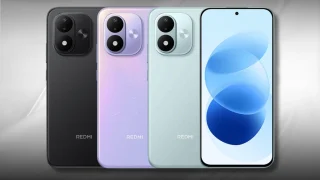
0:51Looking on the outside, they’re
0:52practically the same. We get a squirle
0:55camera island over here and subtle
0:57curved edges all around. If it’s not for
0:59the different placements for the Poco
1:01and Redmi monikers, I’d already be
1:03confused which is which. Poco also has
1:06this two-tone finish on the back panel.
1:08It’s actually a three-tone finish
1:09because of the carbon print on the
1:11sides. Meanwhile, our Redmi unit opts
1:13for a full leather housing that’s more
1:15resistant to smudges, it seems. With
1:17this new iteration, Redmi apparently
1:20also joined the trend of marketing
1:21insanely durable mid-range phones. The
1:24Note 15 Pro Plus in particular has IP66,
1:28IP68, IP69, and IP69K ratings. These
1:33essentially mean that the phone gets the
1:35highest level of dust and water
1:36resistances yet for a smartphone.
1:38Interestingly, while Poco isn’t really
1:40marketing it as a big selling point, the
1:43M8 Pro actually has the same IP ratings
1:45as the Redmi. Yes, the exact the same.
1:48And wait, there’s more. Both phones do
1:51have SGS five-star certifications for
1:53drop, bend, and crush resistances. So,
1:55that’s a really nice addition,
1:57especially to Poco considering its lower
1:59price tag. That being said, points for
2:02both phones in the design segment.
2:03Flipping over to the display, you might
2:06expect it to be a little bit different,
2:08but no, it’s also exactly the same from
2:10size, resolution, and luminance. And
2:13that’s not exactly bad news. Both phones
2:15support a 6.83 83 in 1.5K AMOLED display
2:19with quad curved edge design. The
2:21curvature is not too pronounced, so
2:23there will be less glares on the sides,
2:25which is good. They both run at 120 Hz
2:27and both have peak brightness of 3200
2:30nits. And for that extra durable build,
2:33both screens have the same Gorilla Glass
2:34Victus 2 on top with basically the same
2:37hardware, there isn’t much to compare,
2:39is there? [music] You get vivid colors,
2:41deep blacks, and thin bezels all around.
2:43Perhaps the only real difference here is
2:45the audio quality. While both are
2:47certainly loud and clear, the Note 15
2:49Pro Plus does offer punchier bass.
2:51Regardless, I’m still easily immersed
2:53watching content on these phones as they
2:55both have stereo speakers. For biometric
2:58security, both phones feature optical on
3:00the display fingerprint sensors and face
3:01recognition. Both are fast to register,
3:04too. But as we’d always recommend, opt
3:06for the fingerprint sensor for a more
3:08secure unlocking method. Again, both
3:10phones have the same specs here. So,
3:12I’ll end the display segment in another
3:14tie. Now, in terms of performance, once
3:17again, it’s the same story. Powering
3:19them is the Snapdragon 7S Gen 4 clocked
3:22at up to 2.7 GHz. Configuration is a bit
3:25different, though, with the Redmi having
3:27a base option default to 12 GB of RAM,
3:30while the Poco gets 8 GB of RAM. It only
3:32gets to 12 GB for the 512 GB model. By
3:36the way, the memory and storage specs
3:38for both phones are LPDDR4X
3:40and UFS [music] 2.2. too. Taking a look
3:42at our benchmark results, both phones
3:44achieved more or less the same figures.
3:46N22 version 10 both scored over 800,000
3:49points as a bit of contrast with
3:51Geekbench and PC Mark scores. But yeah,
4:06these phones still perform similarly in
4:08real world use. Navigation is smooth,
4:10multitasking is a breeze, and gaming is
4:12okay. Playing graphic intensive games
4:14like Genchin Impact runs smoothly at 60
4:17fps on medium graphics. Both phones use
4:19the same thermal system to keep things
4:21cool. We still did experience a bit of
4:23heat when gaming, but not to an alarming
4:26amount. So, in the performance segment,
4:28it’s obviously going to be another tie.
4:30Things get a little more interesting
4:32when talking about the cameras. While
4:34both feature dual rear setups, their
4:36main sensors are entirely different. The
4:38Poco has a 50 megapixel main shooter
4:40while the Redmi jumps to a 20 megapixel
4:42sensor. Both having OIS support. Their
4:45secondary sensors are the same though.
4:47Both use an 8 megapixel ultrawide and
4:49the selfie cameras match as well with a
4:5132 megapixel sensor on each. Like we
4:53always say, higher megapixel count
4:56doesn’t necessarily mean better image
4:57quality. Let’s take a look at our sample
4:59shots. In most cases, Redmi does capture
5:02more details in shots. Redmi is also
5:04able to capture images at four times
5:06zoom as compared to Poco’s two time
5:08zoom. Weirdly enough, there are times
5:10that Poco shows sharper details. That
5:12said, when it comes to image quality,
5:14Poco still managed to come close.
5:16Post-processing differs a bit with Poco,
5:19adding more aggressive contrast, while
5:21Redmi is sticking to more natural
5:22looking colors. As expected, ultrawide
5:25shots look virtually the same. And as
5:27for video quality, it’s the same case
5:29here. Both capped at 4K 30fps. The
5:32optical stabilization does its job here
5:34and you can see that both phones can
5:36handle fairly well.
5:37>> This is the Redmi Note 15 Pro Plus 5G
5:40shooting at 4K at 30 frames per second.
5:42So check again. [snorts]
5:46And then if we go
5:52it
5:55here are your colors and details.
6:00So yeah, what do you guys think? Let us
6:02know in the comment section below. This
6:04is the Poco M8 Pro 5G shooting at 4K at
6:0730 frames per second. So this one looks
6:08like Oops.
6:13And then
6:16So if we
6:18Wow.
6:24You go.
6:25Here are your colors.
6:30details. So yeah, what do you guys
6:32think? Let us know in the comment
6:33section below. So while Poco offers up
6:35to par camera performance with the
6:37competition, it makes sense to give the
6:39point this round to the Redmi. Mainly
6:41thanks to better image processing and a
6:43more flexible image [music] cropping.
6:45Battery-wise, this is yet another
6:47similarity for both phones, each having
6:496,500 milliamp R silicon carbon
6:52batteries. At this point, you might
6:54already know where this is heading. In
6:56our PC Mark battery test, the results
6:58were pretty close. The Pok M8 Pro 5G
7:00lasted 17 hours and 6 minutes, while the
7:03Redmi Note 15 Pro Plus managed 16 hours
7:06and 40 minutes. Charging doesn’t take
7:07too long either, with both getting 100
7:09Ws of wired charging. On top of that,
7:12these phones can also act as handy power
7:14banks featuring 22.5 watts wired reverse
7:17charging. Sadly, neither phone has
7:19bypass charging, but with such a fast
7:20charging capability, I think I’ll let
7:23that slide. So, again, it’s going to be
7:25another tie this round. Software-wise,
7:27I’m a bit disappointed for both [music]
7:28models. They ship with older software
7:30versions out of the box, and that is the
7:33Xiaomi Hyper OS2 based on Android 15.
7:35Regardless, it’s a pretty smooth and
7:37featurerich UI, [music]
7:39albeit it shows ads here and there.
7:41Probably the biggest difference here in
7:43terms of software features is that the
7:44Redmi comes with Xiaomi HyperAI,
7:47including tools for AI writing, AI
7:49interpreter, and AI dynamic wallpapers
7:52among others. Meanwhile, Poco is left
7:54with the basic ones like Google Circle
7:56to search and gallery tools like AI
7:58erase and stuff. Redmi also gets points
8:00for update consistency since Xiaomi
8:02tends to prioritize rolling out software
8:04updates to its Redmi devices before
8:06Poco. So, this might mean that the Note
8:0815 Pro Plus might get Hyper OS3 based on
8:10Android 16 sooner than the M8 Pro. Let’s
8:13talk now about connectivity. Equipped
8:15with the same chipset, you guessed it,
8:17both get similar features with 5G, Wi-Fi
8:206, Bluetooth 5.4, and NFC. And as a
8:23Xiaomi staple, each get an IR blaster to
8:25boot. But Redmi does have an advantage
8:27here as it offers eim support. So,
8:30that’s a plus. That also means Redmi
8:32secures a point this round. [music] Now,
8:34before we move on to our verdict, let’s
8:36have a look at the price. As mentioned
8:38earlier, the Poco M8 Pro 5G starts at
8:4116,999 pesos for the 8 GB plus 256 GB
8:45model, while the 12 GB plus 512 GB
8:48config retails for 19,999 pesos, which
8:51is the variant we have here. And as for
8:53the Redmi Note 15 Pro Plus 5G, its
8:56starting price is 25,999 pesos for the
8:5912 GB plus 256 GB. and the price goes to
9:0227,999
9:04pesos for the 512 GB model. So, after
9:07spending time with both phones, the
9:09verdict is pretty clear here. And
9:11honestly, it’s a little bit funny. The
9:13Poco M8 Pro 5G and the Redmi Note 15 Pro
9:16Plus 5G are for the most part the same
9:18phone. Same design language, same
9:21display, same performance, same battery
9:23life, [music] same charging speeds, and
9:25even the same durable builds. In
9:27day-to-day use, it’s hard to justify why
9:30one cost significantly more than the
9:32other. The Redmi does have its moments,
9:34though. The wider suite of AI tools are
9:36nicer, eim support is a welcome bonus,
9:38and software consistency is a plus. If
9:41you care about those things and you
9:42don’t mind paying extra, then the Note
9:4415 Pro Plus makes sense. But the thing
9:46is that 9 peso price difference is hard
9:49to ignore. For most people, the Poco M8
9:51Pro 5G delivers nearly the same
9:54experience for a lot less money. It’s
9:56the smarter choice, offering better
9:57value for money and arguably the phone
10:00Poco accidentally made too good for its
10:02own lineup. So, if you want a more
10:04complete experience with a few nice
10:05toes, go Redmi. But if you want of
10:08maximum value for money, Poco takes the
10:11cake. So, there you have it. What do you
10:13think of this comparison between the
10:14Poco M8 Pro 5G versus the Redmi Note 15
10:17Pro Plus 5G? Are you team Poco or team
10:19Redmi at least in this comparison? Share
10:21your thoughts in the comment section
10:22below. If you find this video helpful or
10:24informative, hit that thumbs up,
10:26subscribe to hit that bell icon so you
10:27notify our future uploads. See us on our
10:29socials. That’s Facebook, Instagram, X,
10:30and Tik Tok. And see you.com for the
10:32latest tech news and reviews. Once
10:34again, this has been CJ and I’ll see you
10:35guys in the next video. Bye. See you
10:37later.
⚠️ This transcription is auto-generated from YouTube captions. Some text may not be 100% accurate.







0 Comments
Leave a Reply