
Nothing has finally entered the flagship space with the release of the Nothing Phone (3). It features that iconic yet somehow different design, a “flagship chip” which isn’t quite THE flagship chip (you’ll know why shortly), and of course, a hefty price hike.
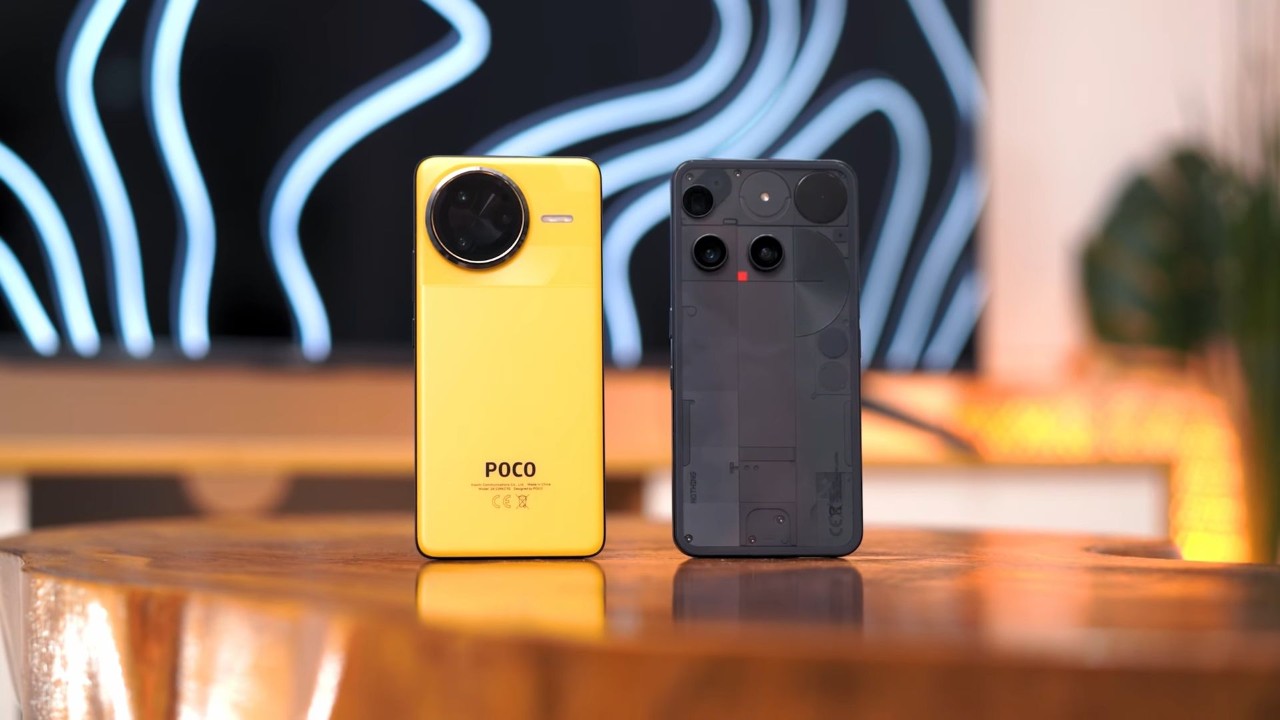
Spoiler alert: the Nothing Phone (3)’s starting price is officially PHP 44,999—and that begs the question: is it worth getting as a solid flagship starter? Or would you be better off with the more affordable POCO F7 Ultra, which offers almost the same flagship-level experience at a significantly lower price?
That’s what we’re here to find out in this comparison review.
Design and Construction
First, let’s talk about the design. As soon as you see these devices, you’ll immediately know which is which.
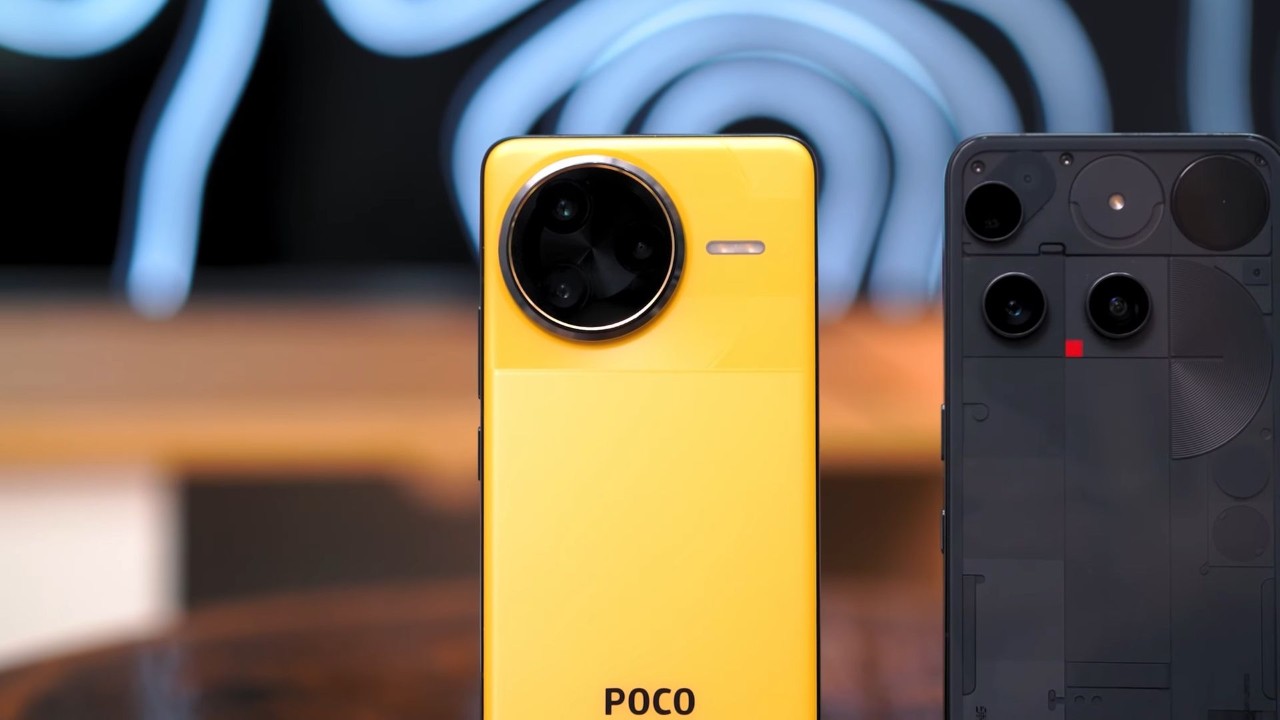
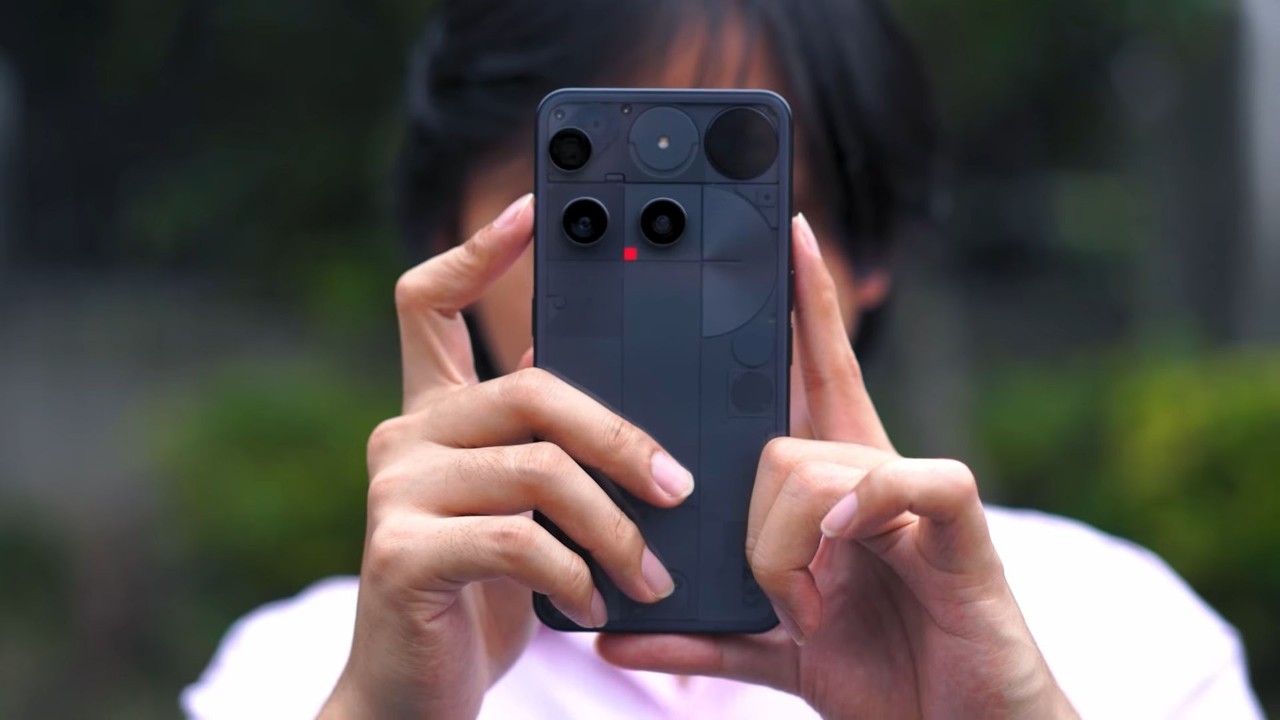
The one with a quirkier design is, of course, the Nothing Phone (3). Our unit is in the Black colorway, and it surely carries Nothing’s DNA with that transparent and industrial look.
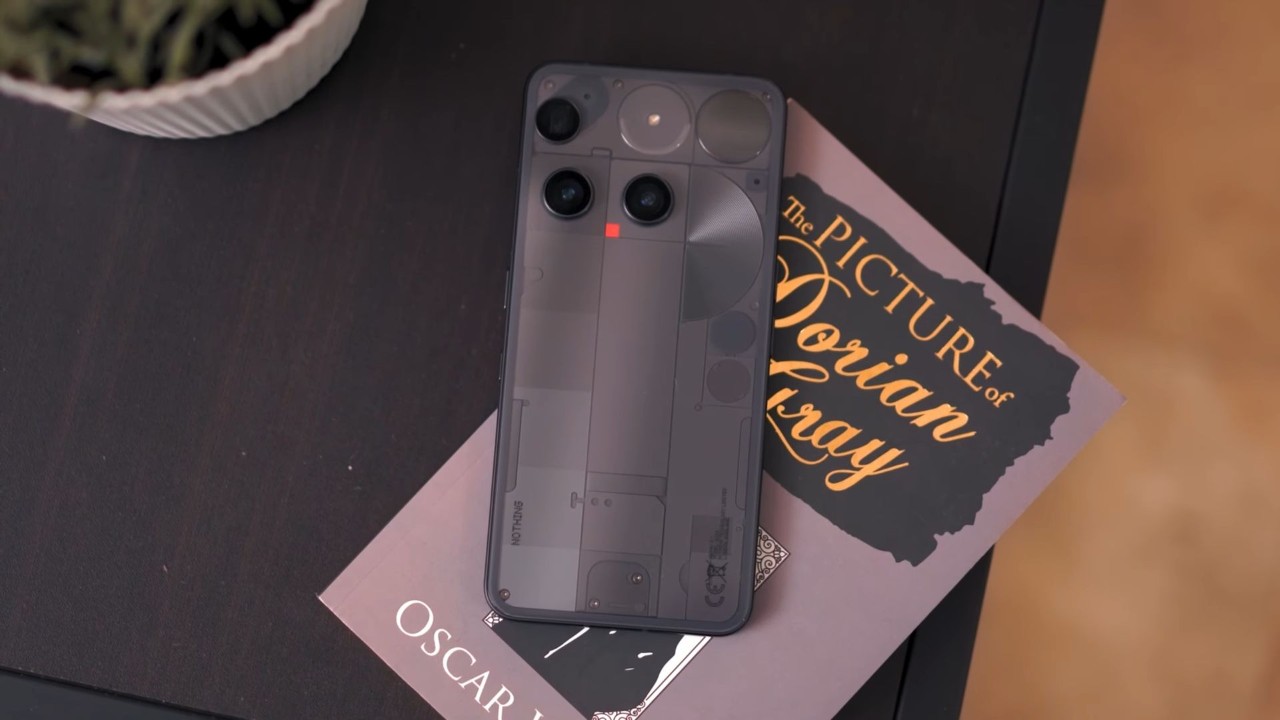
However, the iconic Glyph lights are gone and now replaced with the so-called Glyph Matrix—a mini screen at the rear housing 489 mini-LEDs in a dot-matrix fashion. With the Glyph Matrix, the phone’s back is now a bit more functional, doing beyond just the usual Glyph notifications.
Going back, the Phone (3) sports a triple camera setup at the rear and design-wise, it’s quite a drastic change from the Phone (3a). It’s also a divisive one for that matter because of that… awkward telephoto lens placement.
The phone sports a flat-edge design accompanied with an aluminum frame and a thin layer of Gorilla Glass on both the front and back panels for that extra peace of mind.
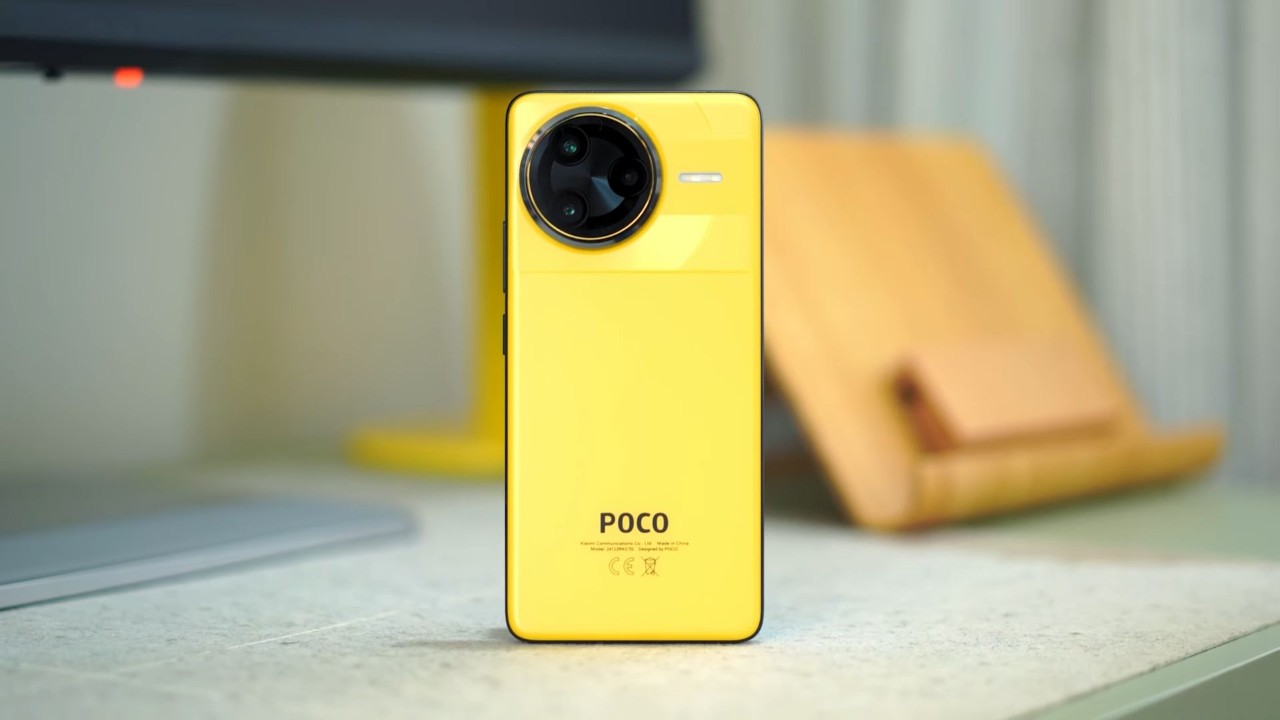
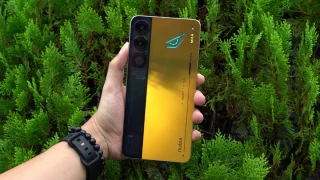
Moving over to the POCO F7 Ultra, it goes for a more minimalist look yet a loud one because of that color. Our unit comes in Yellow with a circular camera island on the top-left corner, and you’ll notice some decorative lines splashed around it.

While its frame is flat, the back housing curves on the edges making it slightly more comfortable to hold. Aside from that, there’s not much to write home about.
Notably, both phones are almost the same size and thickness. The Phone (3) is 8.99 mm thick and weighs 218 grams while the F7 Ultra measures 8.39 mm and is a bit lighter at 212 grams.
Both models are also IP68-rated providing enhanced resistance against dust and water submersion.
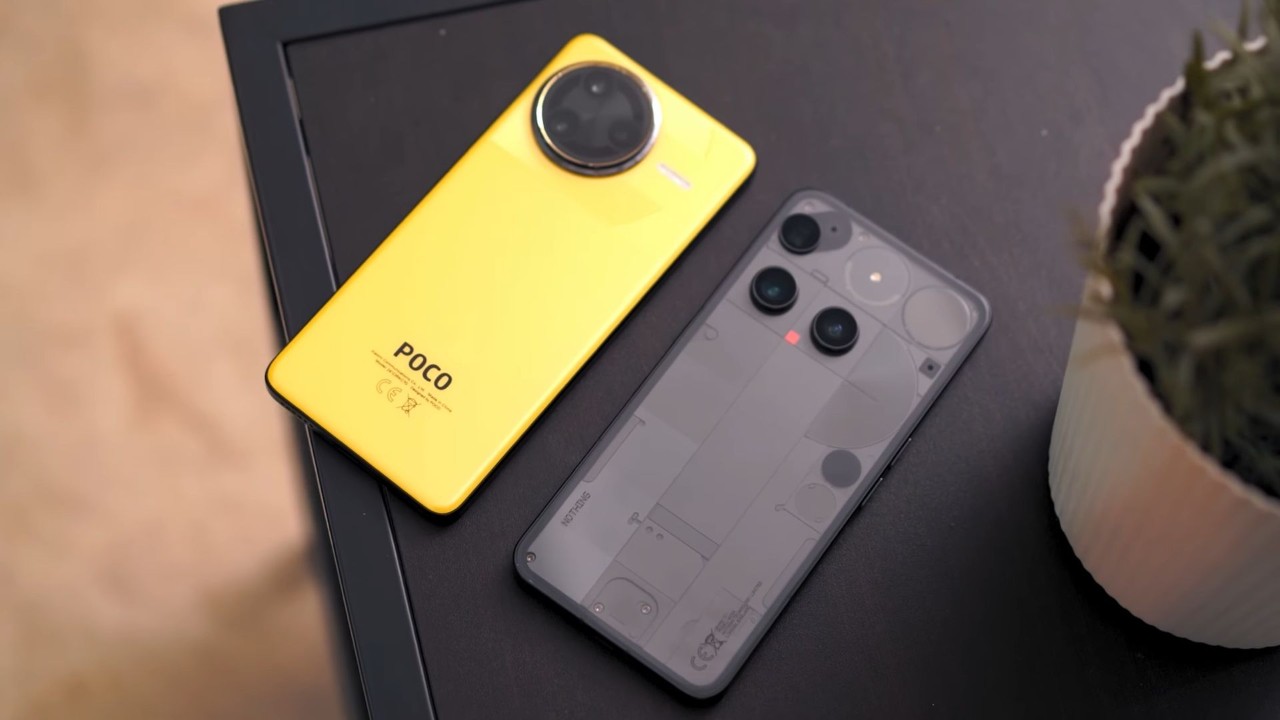
Now, when it comes to design, I would generally prefer the unique and functional aesthetics of the Phone (3). Though the POCO F7 Ultra comes with a more simplistic look, when placed next to the Phone (3), my eyes would easily be drawn to the Nothing phone. No cap.
At the end of the day, design is subjective, and with each having no significant advantage over the other, then it’s just fair to give ‘em both a point this round.
Display, Multimedia, and Biometrics
Flip both phones over, we are greeted by vivid AMOLED screens of the same size. Both models sport 6.67-inch AMOLED panels running at 120Hz refresh rate, but that’s where the similarities end.

The Nothing Phone (3)’s display has a Full HD+ resolution with 460 ppi, a peak brightness of 4500 nits, and Gorilla Glass 7i on top.
On the other hand, the POCO F7 Ultra boasts a higher screen resolution at 1.5K, a higher pixel density at 526 ppi, though a lower peak brightness at 3200 nits, and has POCO Shield Glass.
There are no specifics as to how strong these glasses are, but they should at least have some level of drop or scratch resistance.

What’s a bit of a downside from the Phone (3) though is the lack of LTPO, despite being marketed as a “true flagship”. The POCO F7 Ultra also doesn’t feature an LTPO panel, but its more affordable price tag can justify that, in my opinion.
Setting that aside, both phones provide a satisfying visual experience. I had no issues watching my favorite content on YouTube and Netflix for both models—offering vivid colors, good contrast, and true, deeper blacks.

In terms of audio quality, the Nothing Phone (3) does earn my compliments for delivering a noticeably better sound stage. The highs and mids are loud and detailed, while the bass really pops and has the kind of punch that you’d expect out of a premium device.
The POCO F7 Ultra does offer almost the same level of clarity across the highs and mids, however, the bass is not as punchy to my liking.
For biometric security, both phones feature under-display fingerprint sensors, albeit the POCO F7 Ultra uses a more advanced ultrasonic sensor. The Nothing Phone (3) is left with an optical one, which is another thing you could consider as something that could have been better.
That said, both phones are quick to recognize my thumb, unlocking almost instantly the moment I press my it. My one small gripe, however, is the placement of the Phone (3)’s fingerprint sensor—it’s positioned way too low on the screen.
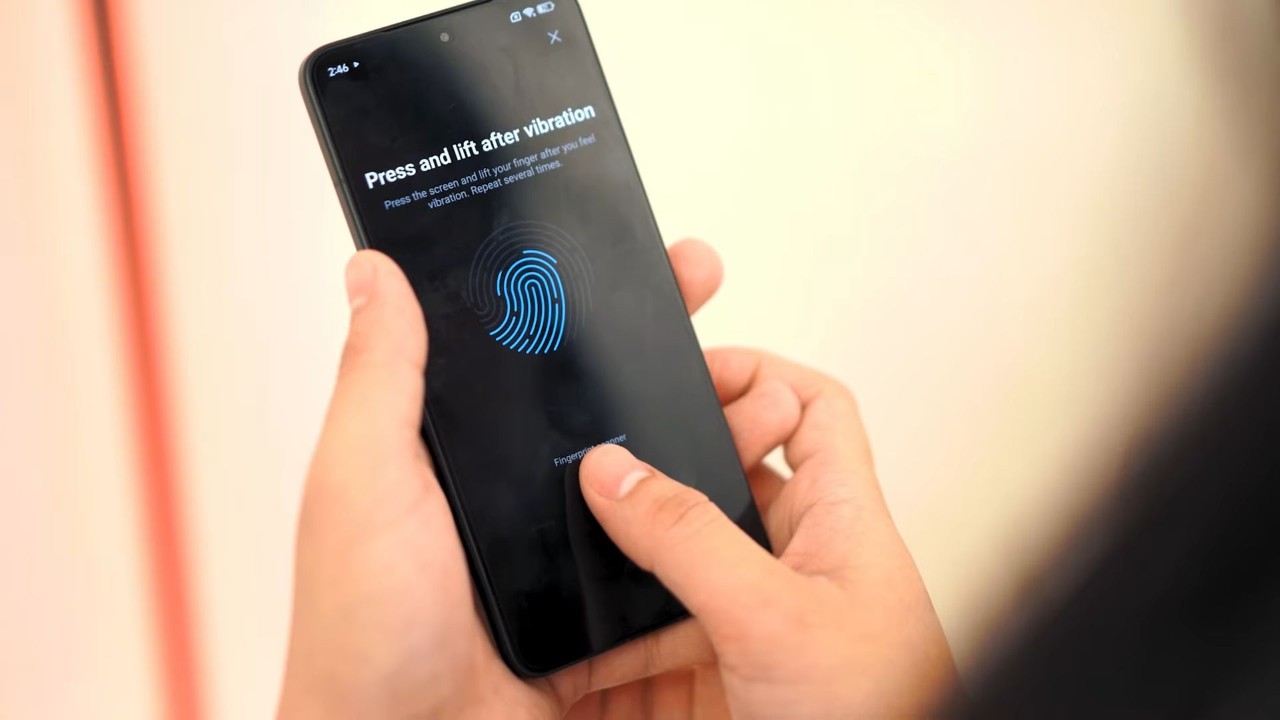
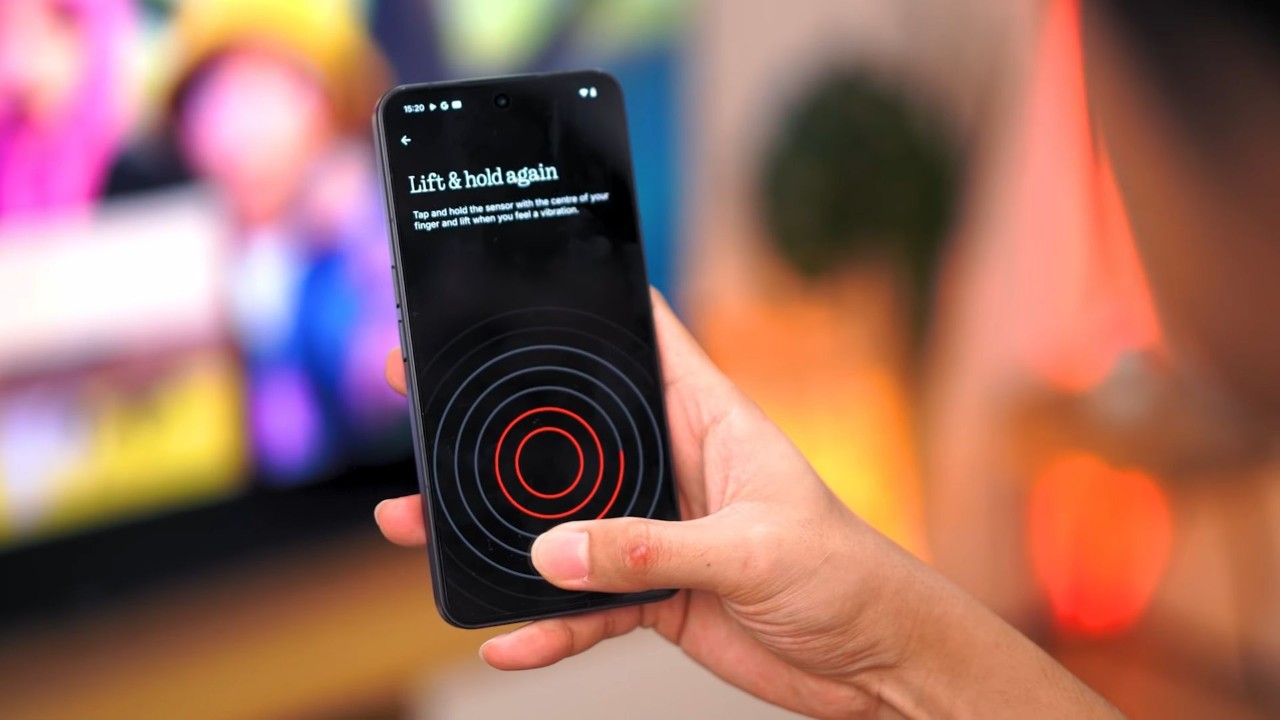
I have long fingers, so it shouldn’t matter that much, but this makes it less ergonomic compared to the F7 Ultra, which has the sensor placed comfortably near the center.
However, that doesn’t really give the F7 Ultra a major advantage in the multimedia aspect. Therefore, this round, I’m giving the point to the Nothing Phone (3) as it delivers an overall better audio experience.
Performance and Benchmarks
Now, in terms of performance, the Nothing Phone (3) definitely raises an eyebrow. It’s powered by the Snapdragon 8s Gen 4, which isn’t exactly the most powerful chipset out there, let alone a “true flagship” one.
What’s really interesting is that the POCO F7 Ultra, despite its significantly lower cost, managed to get the bleeding-edge Snapdragon 8 Elite.
While the Snapdragon 8s Gen 4 is pretty powerful on its own, our benchmark results clearly show the significant advantage that the”true flagship chip” offers.
In our ANTUTU test, the Phone (3) surpassed 1.9 million points and that’s already a solid result. Meanwhile, the POCO F7 Ultra achieved a higher score at 2.3 million points.
| Benchmark | Nothing Phone (3) | POCO F7 Ultra |
|---|---|---|
| Chipset | Qualcomm Snapdragon 8s Gen 4 (4nm) | Qualcomm Snapdragon 8 Elite (3nm) |
| AnTuTu V10 | 1,962,026 | 2,388,511 |
| AnTuTu Storage | 238,590 | 183,800 |
| S.Read Speed | 4004.7 MB/s | 3671.7 MB/s |
| S.Write Speed | 3791.7 MB/s | 3957.3 MB/s |
| 3DMark Wild Life | MAXED OUT | MAXED OUT |
| 3DMark Wild Life Extreme | 4,121 | Avg. FPS: 24.68 |
| Geekbench 6 CPU Single-Core | 2,143 | 2,347 |
| Geekbench 6 CPU Multi-Core | 6,741 | 8,307 |
| Geekbench 6 GPU OpenCL | 13,612 | 18,060 |
| Geekbench 6 GPU Vulkan | 18,687 | 24,246 |
| PCMark Work 3.0 performance | 14,772 | 17,608 |
| PCMark Work 3.0 battery life | 17 hrs & 49 mins | 14 hrs & 16 mins |
The same trend is true for other tests, with the F7 Ultra consistently delivering notable gains across the board. Except, the Phone (3)’s ANTUTU storage results showed faster read and write speeds.
Setting the numbers aside though, I would say, the average user won’t notice any difference. Using both phones is a breeze. Navigation is absolutely smooth, and each device can handle everything you throw at it.

On the subject of gaming, despite not having the highest-end chip, the Nothing Phone (3) does hold its ground. The phone handled graphic-intensive titles like Wuthering Waves or Zenless Zone Zero really well without any noticeable stutters.

As for the POCO F7 Ultra, playing such graphically demanding games is a piece of cake. Notably, another advantage it offers is frame generation feature. This makes your gameplay far smoother with the phone automatically inserting new frames thanks to a dedicated display chip called VisionBoost D7.
In fact, there’s a specific frame generation setting on Wuthering Waves that is present on the F7 Ultra, but not on the Phone (3).
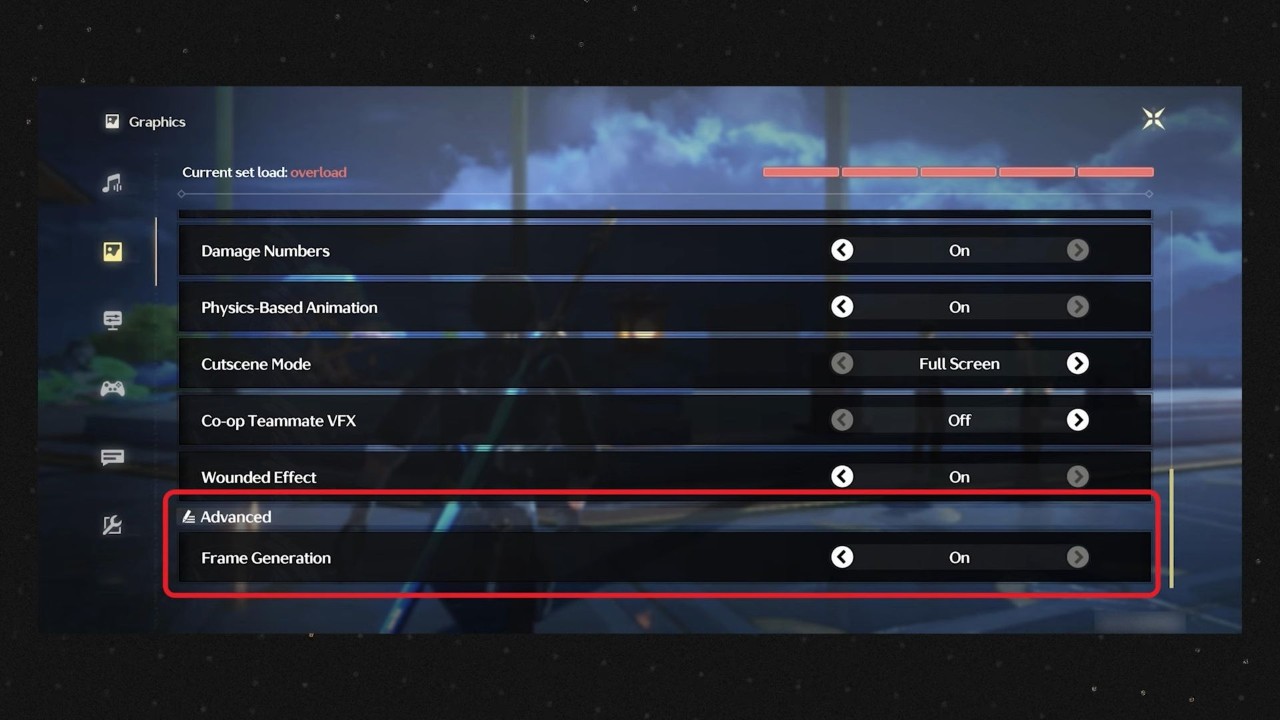
So, performance-wise, it is a hard fact that the POCO F7 Ultra smashes the competition with its superior processing power. Thus, it secures the point this round keeping the match even.
Cameras
For optics, the Nothing Phone (3) does counter with a slightly better camera system. All of its cameras come in 50-megapixel sensors, including a primary camera, an ultrawide lens, a periscope telephoto, and a selfie camera.
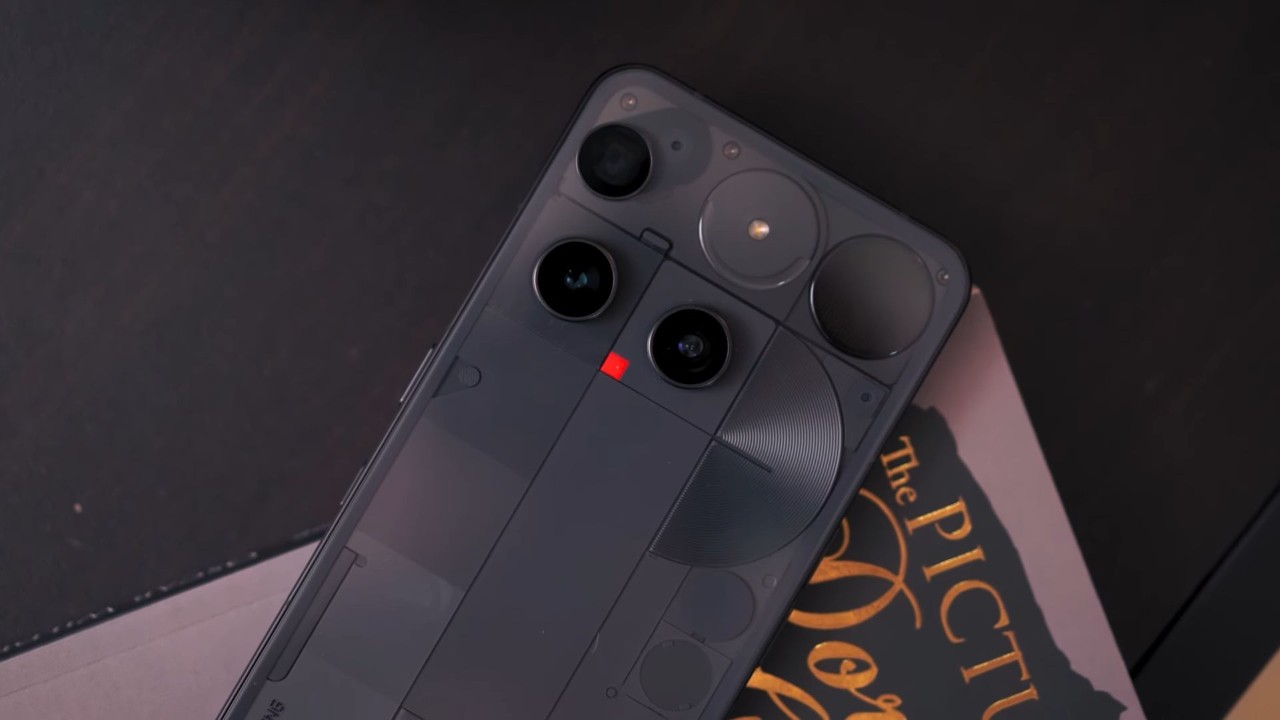
On the other hand, the POCO F7 Ultra has similar setups, but not the same amount of megapixels. It features a 50-megapixel main shooter, another 50-megapixel for telephoto, a 32-megapixel ultrawide, and a 32-megapixel selfie shooter.

Taking a look at our sample shots, you can see that there’s not a lot of difference in terms of image quality. The sharpness is on point, colors are accurate, and both offer a good amount of dynamic range. The F7 Ultra is on the warmer side though, while the Phone (3) applies a cooler tone.
Nothing Phone (3) vs. POCO F7 Ultra sample shots
Jul 19 – 24, 2025


It’s only when you zoom in that the POCO F7 Ultra captures a bit softer image. It’s the same case for zoom shots, possibly because the Phone (3) uses a more advanced periscope telephoto camera.
The quality even gets worse in ultrawide shots for the F7 Ultra.
As for video, the F7 Ultra can shoot up to 8K at 24 fps while the Phone (3) is capped at 4K 60fps. That’s a neat advantage, but when shooting at the same resolution and frame rate (4K 60fps), both phones do a great job.
The quality is superb with nice colors, and the stabilization works great for both models.
While both phones appear to handle videos quite well, the level of quality that the Phone (3) offers in terms of capturing images is relatively better in my opinion. So, it secures another point this round.
For more sample shots, head over to our separate full reviews below:
Battery Life
Battery life is another interesting topic in this comparison. While the POCO F7 Ultra packs a larger 5300mAh battery, the Nothing Phone (3) with a 5150mAh unit lasted far longer in our testing.

The Phone (3) surpassed 17 hours and 49 minutes of runtime in our PCMark battery life test. That is over three hours longer than the F7 Ultra lasting only 14 hours and 16 minutes.
That was apparently the outcome despite the F7 Ultra supposedly having a more efficient chip paired with a larger battery pack.
As for charging, the F7 Ultra does have an advantage, featuring a blazing fast 120W of wired and 50W of wireless charging. The Phone (3) still gets a decent 65W of wired and 15W of wireless charging. Sadly, both phones, do not support bypass charging.
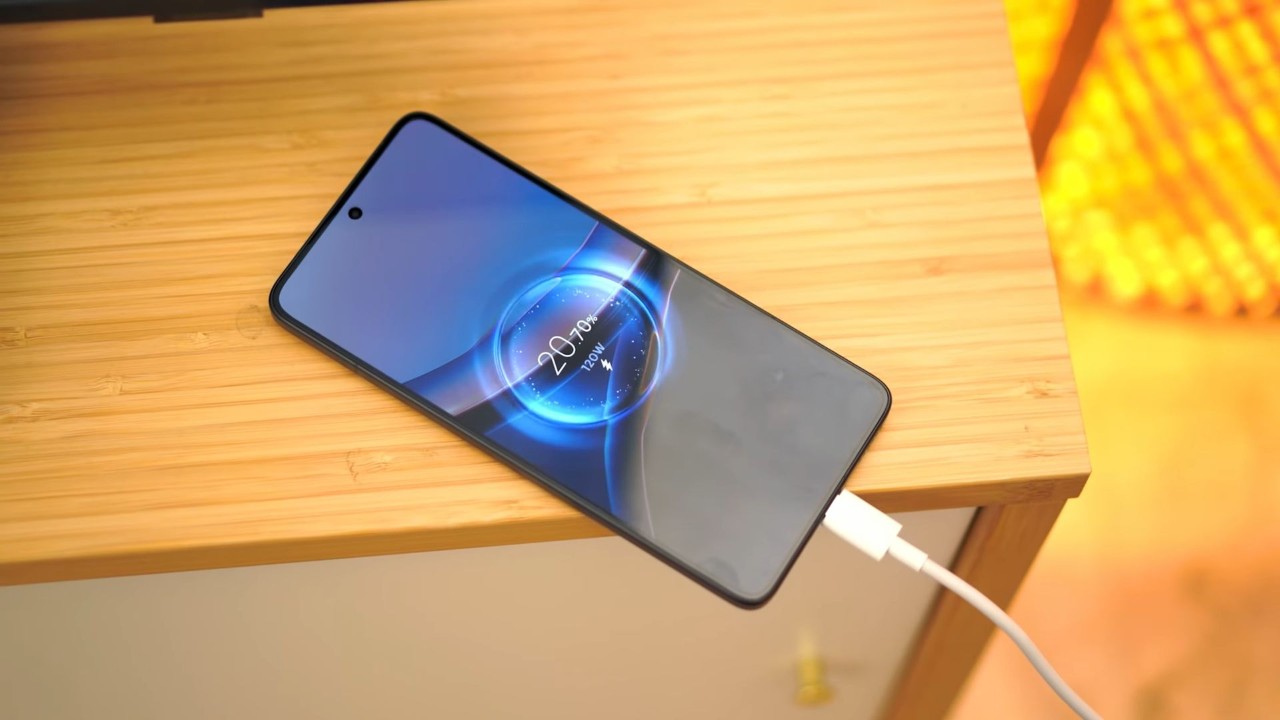
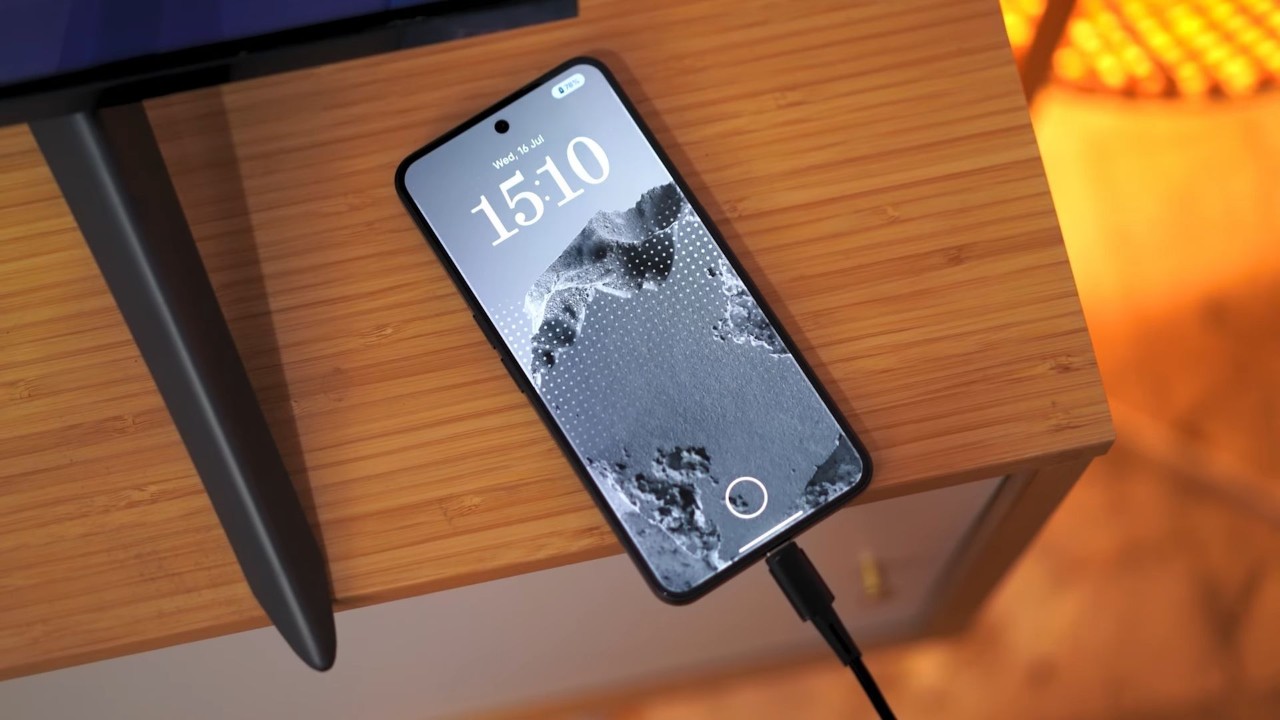
A major drawback for me though is the lack of the charging brick in the box—unfortunately, the Phone (3) does exactly that.
While battery life is always a key factor when comparing devices, what matters even more is convenience, at least for me. I’m specifically talking about getting everything you need with a single purchase.
That’s where the F7 Ultra comes in. It includes a 120W charging brick right in the box, which not only saves you the hassle of a separate purchase but also cuts down on extra cost.
For that reason, I’m giving the point to the F7 Ultra in this round.
Connectivity and Other Features
Software-wise, we see quite the disparity here.
Both run the latest Android 15 software out of the box. The POCO F7 Ultra opts for a more iOS-inspired UI with its HyperOS 2, while the Nothing Phone (3) stays in line with the ideal vision of Android through its Nothing OS 3.5.
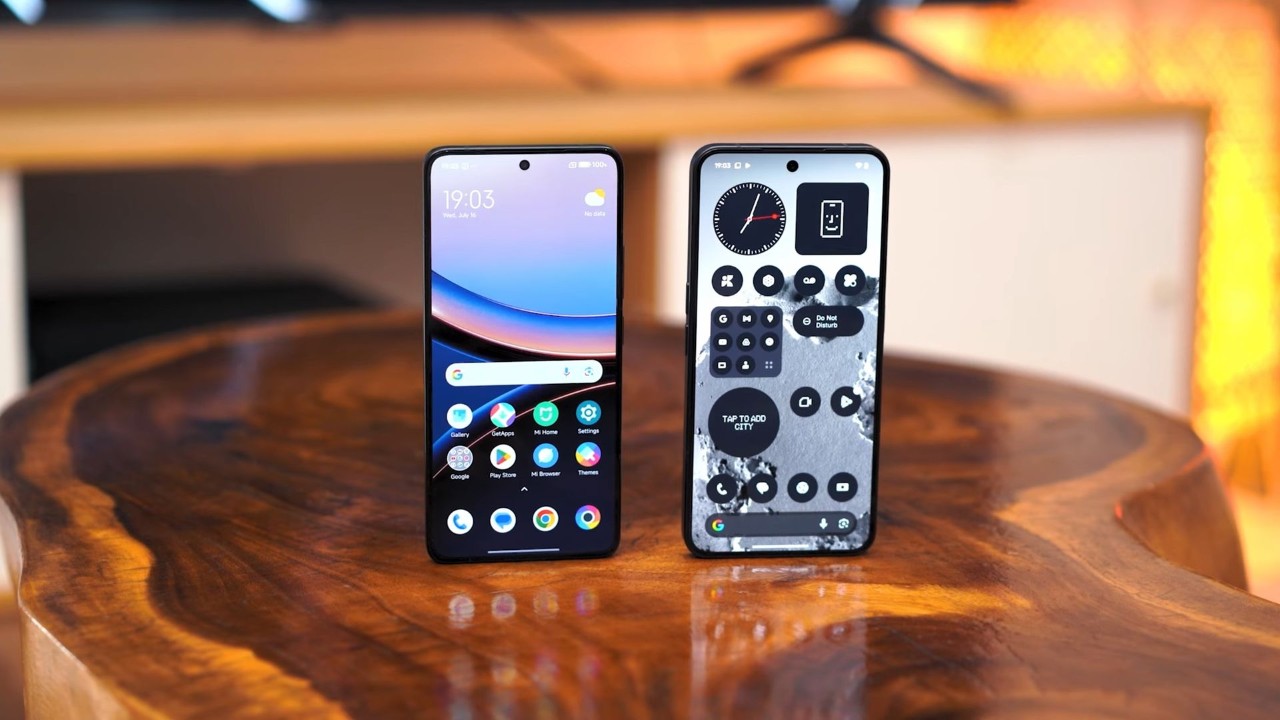
For the most part, both systems provide a generally great software experience. However, my one complaint for the POCO F7 Ultra is the presence of ads and bloatware on the system level.
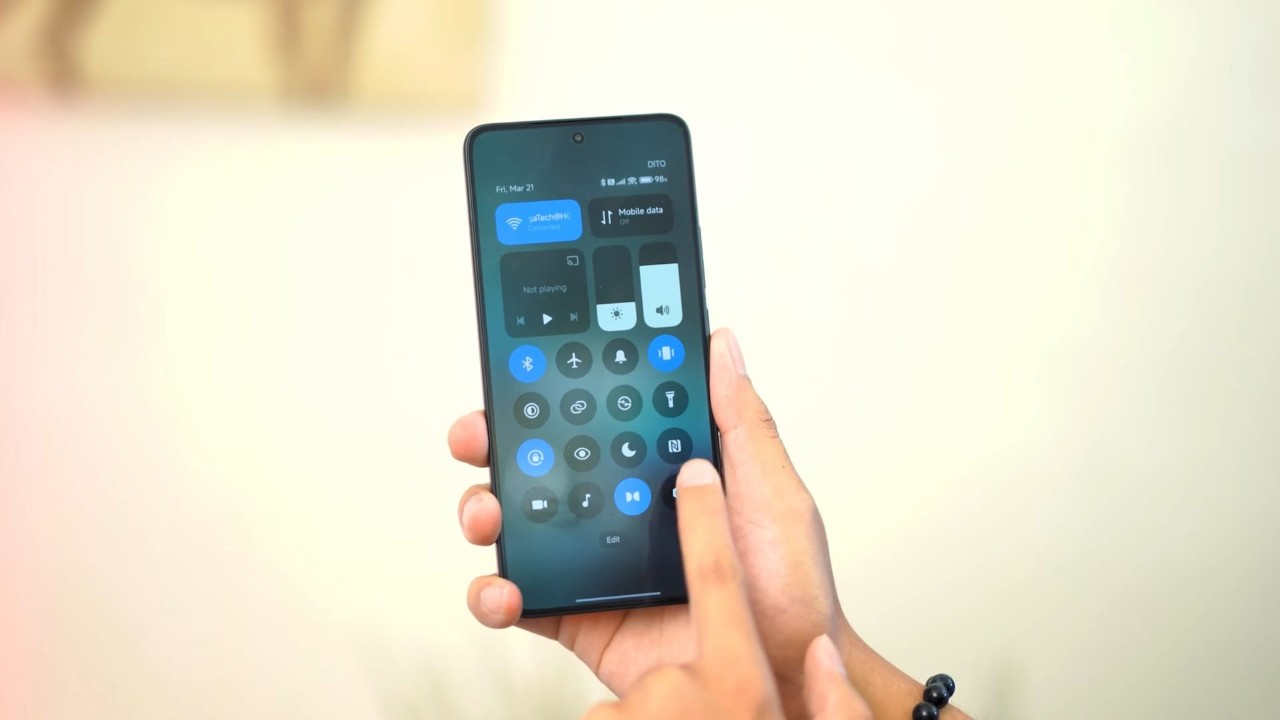
Meanwhile, the Nothing Phone (3) remains clean and free of any bloatware, except the first-party apps which are as equally useful as Xiaomi’s apps.
Now, for update policy, the F7 Ultra is promised to get up to four major OS upgrades and six years of security patches. That additional one year is a step in the right direction, for sure.
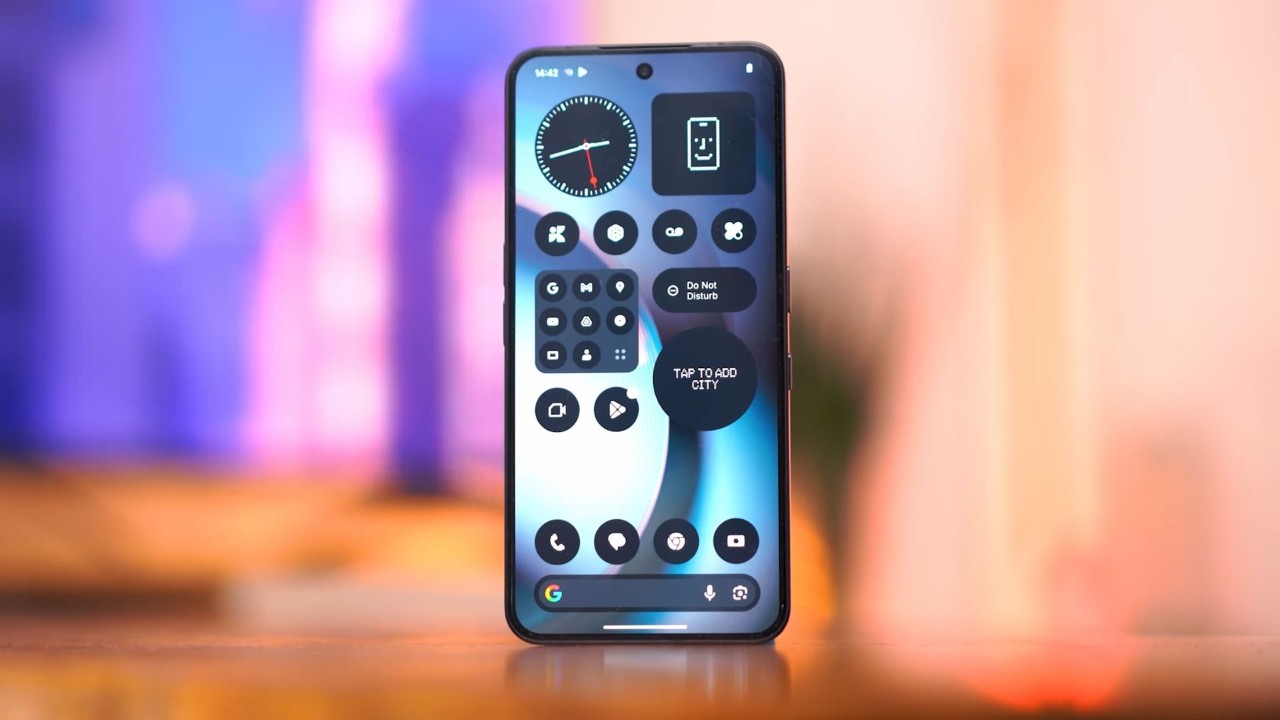
However, the Phone (3) one-ups the competition by offering longer software support with up to five years of major Android upgrades and seven years of security patches.
Connectivity-wise, both phones provide all the essentials: Wi-Fi 7, Bluetooth 6.0, and NFC. Only the Phone (3) has eSIM support, but only the F7 Ultra has an IR blaster.

In this area, the point definitely goes to the Nothing Phone (3) thanks to its cleaner software experience, longer updates, and eSIM support.
Which one should you get?
So, let’s finally talk about the price.
With a starting price of PHP 44,999 (12GB+256GB), it’s a bit of a hard pill to swallow for something marketed as a true flagship… but not quite flagship in terms of specs.
Still, based on our findings, the Nothing Phone (3) comes out ahead thanks to better software, a superior set of cameras, and a quirky design that stands out. So, while it lacks some of the features found in top-tier flagships, the Phone (3) still manages to deliver a solid near-flagship experience.
The POCO F7 Ultra’s trump card is, without a doubt, its incredible value for money. Starting at just PHP 34,999 (12GB+256GB), it packs the latest Snapdragon 8 Elite, a still capable set of cameras, and delivers an overall solid experience—without hurting your wallet that much. It’s easily one of the top recommendations at this price point.
So, if you want a phone that doubles as a conversation starter with its unique design, great cameras, and clean software experience, the Nothing Phone (3) is a great choice. But if you’re all about value and want the best performance possible for significantly less, the POCO F7 Ultra is the one to go for.
Ultimately, the choice is yours.
Nothing Phone (3) vs. POCO F7 Ultra specs
| Nothing Phone (3) | POCO F7 Ultra |
|---|---|
| 6.67-inch FHD+ flexible AMOLED | 6.67-inch 2K AMOLED |
| 2800 x 1260 pixels, 120Hz refresh rate, 460 ppi | 3200 x 1440 pixels, 120Hz, 526 ppi |
| 1600 nits (outdoor), 4500 nits peak brightness | 3200 nits peak brightness |
| Corning Gorilla Glass 7i | POCO Shield Glass |
| Qualcomm Snapdragon 8s Gen 4 (4nm) | Qualcomm Snapdragon 8 Elite (3nm) |
| Octa-core, up to 3.21GHz | Octa-core, up to 4.32GHz |
| 12GB, 16GB RAM | 12GB, 16GB LPDDR5X RAM |
| 16GB+512GB storage | 256GB, 512GB UFS 4.1 storage |
| Triple rear cameras: | Triple rear cameras: |
| - 50MP f/1.68 main, OIS | - 50MP f/1.6 main, OIS |
| - 50MP f/2.68 periscope tele, OIS | - 50MP f/2.0 telephoto, OIS |
| - 50MP f/2.2 ultrawide | - 32MP f/2.2 ultrawide, 120° FoV |
| 50MP f/2.2 selfie shooter (punch hole notch) | 32MP selfie camera (hole punch notch) |
| Dual nano-SIM, supports eSIM | Dual nano-SIM |
| 5G, 4G LTE | 5G, 4G LTE |
| Wi-Fi 7 | Wi-Fi 7 |
| Bluetooth 6.0 | Bluetooth 6.0 |
| GPS, GLONASS, BDS, GALILEO, QZSS, NavIC, SBAS | Dual-frequency GPS |
| USB Type-C | USB Type-C |
| NFC | NFC |
| Under-display fingerprint sensor (optical), face unlock | Under-display fingerprint sensor (ultrasonic), face unlock |
| IP68 dust and water resistance | IP68 dust and water resistance |
| Dual stereo speakers | Dual stereo speakers, IR blaster |
| Nothing OS 3.5 (Android 15) | Xiaomi HyperOS 2, Android 15 |
| 5 years OS upgrades, 7 years security patches | 4 major OS upgrades, 6 years security patches |
| 5150mAh battery | 5300mAh battery |
| 65W charging (wired) | 120W charging (wired) |
| 15W wireless, 7.5W reverse wired charging | 50W wireless |
| 160.60 x 75.59 x 8.99 mm | 160.26 x 74.95 x 8.39 mm |
| 218g | 212g |
| White, Black (colorways) | Black, Yellow (colorways) |




0 Comments
Leave a Reply