

Algunos usuarios prefieren un procesador que pueda overclockearse, mientras que otros ya están satisfechos con lo que puede hacer desde el principio. Si perteneces al segundo grupo, probablemente querrás echar un vistazo al Intel Core i7-4790, que es uno de los muchos procesadores de la línea Haswell Refresh que se lanzó a principios de este año.
¿Qué hay en la caja?
Procesador Intel Core i7-4790 de 4ª generación
Enfriador de stock Intel E97378-001 LGA1155/1156
Disipador de aluminio con pasta térmica preaplicada
Ventilador de CPU
Insignia Intel Inside en la carcasa
Manuales e instrucciones de instalación

Visión general y características clave
Antes del lanzamiento de la familia Haswell-E, el i7-4790 era la versión base del procesador insignia de Intel bajo la arquitectura Haswell. No es overclockeable como el 4790K, y tiene un TDP más alto comparado con sus hermanos de bajo consumo como el 4790S y el 4790T.
Sin embargo, comparte muchas similitudes con las otras variantes del 4790, incluyendo el zócalo LGA 1150, Intel HD Graphics 4600, caché L2 (4 x 256KB) y caché L3 (8MB), así como soporte para tecnologías Intel como vPro y TXT que no están presentes en su contraparte “K”.
En cuanto a especificaciones, el 4790 no ofrece muchas cosas nuevas que no hayamos visto en sus predecesores (4770 y 4771), aparte de una frecuencia base ligeramente mayor, calificada en 3600 MHz, y una velocidad Turbo Boost más alta (4000MHz).
Rendimiento y referencia
Como se puede esperar de un procesador de primera línea, el i7-4790 pudo manejar cómodamente prácticamente cualquier cosa que le lanzáramos. Ya sea que lo usemos para jugar o para ejecutar software de productividad bastante exigente, el procesador no cedió ni un poco y ofreció un rendimiento muy respetable durante todo el tiempo.
Banco de pruebas:
Procesador Intel Core i7-4790 3.7GHz de cuatro núcleos
Gráficos integrados Intel HD 4600
ASUS H97-Pro Gamer placa base
16GB (4x 4GB) ADATA XPG V2 1600MHz DDR3 de doble canal
256GB Micron C400 SED unidad de estado sólido
Antec HCP-1200 fuente de alimentación certificada 80Plus Gold 1200W
Software utilizado:
Windows 8 Pro 64 bits
Controlador de gráficos Intel HD (versión 15.36.3.64.3907)
Fraps (medición de velocidad de fotogramas)
3DMark 06 (CloudGate, Firestrike (Rendimiento | Extremo) & CPU)
[fancygallery id="140" album="164"]
3DMark 11 (Rendimiento | Extremo)
[fancygallery id="140" album="165"]
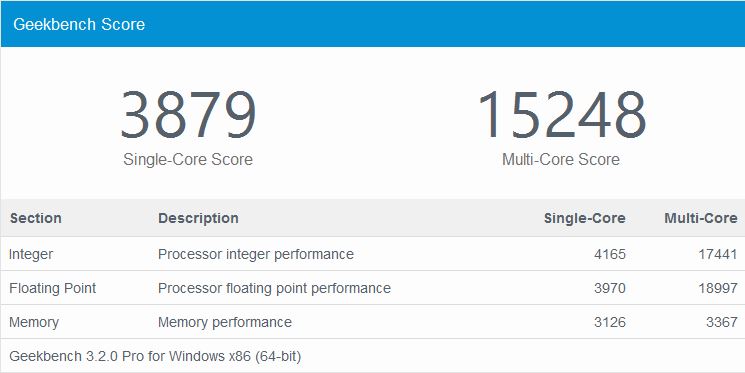
GeekBench 3.0.2
Click to enlarge
CineBench R15 (CPU | OpenGL)
[fancygallery id="140" album="168"]
SiSoft Sandra (Arithmetic, Multi-Media & General Compute)
[fancygallery id="140" album="169"]
PCMark 8 (Creative)

Click to enlarge
Unigine Heaven Benchmark 4.0 (Basic | Extreme)
[fancygallery id="140" album="170"]
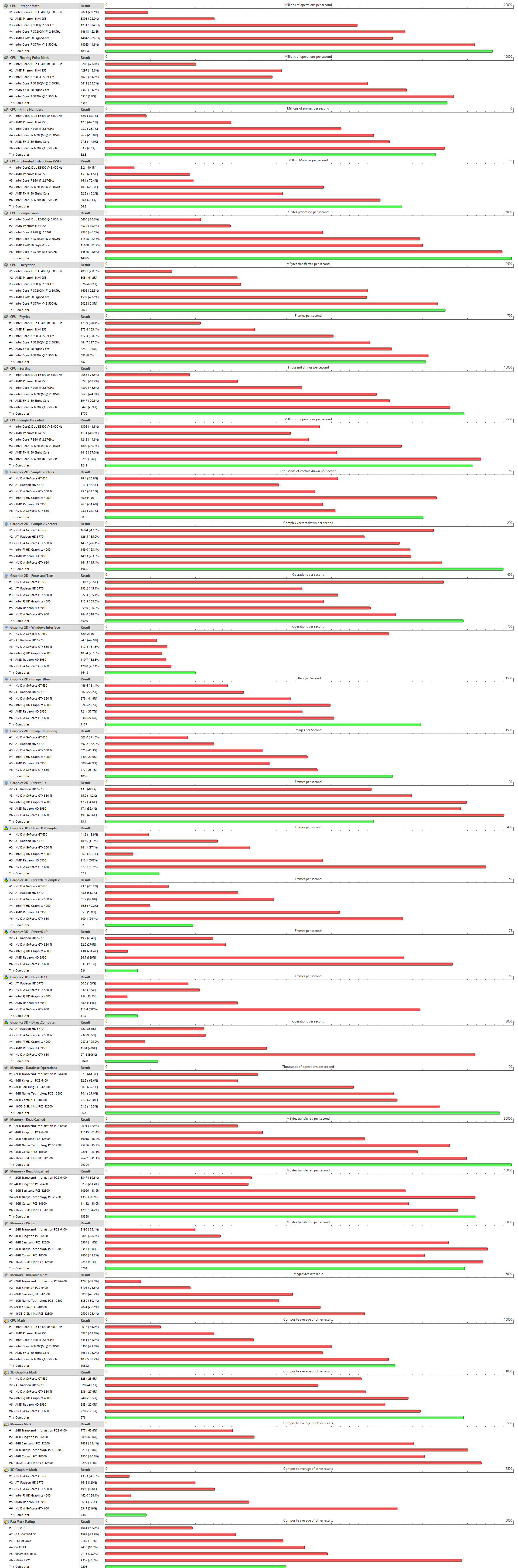
PassMark PerformanceTest 8.0
Click to enlarge
FurMark

Click to enlarge
3D Gaming Performance
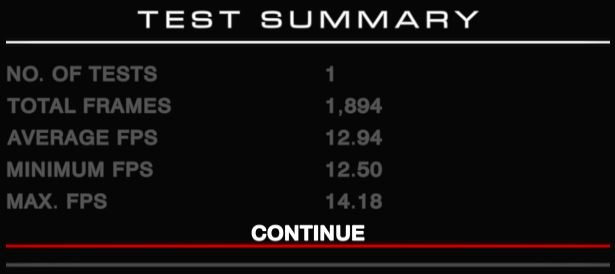
In addition to the benchmark tests we performed on the i7-4790, we also tried playing a few games to measure how well can the chip’s iGPU (Intel HD 4600 Graphics) handle such task. Spoiler, it’s nothing to write home about.

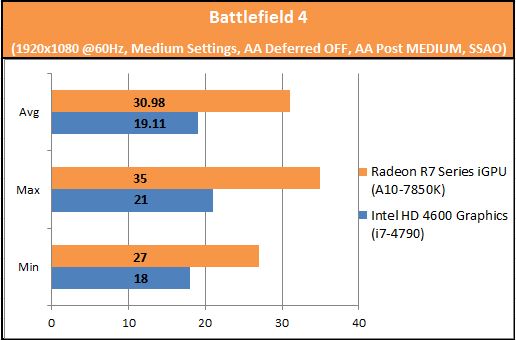
GRID Autosport (1920×1080, Medium Settings)
In-Game Benchmark:
Benchmark Result Analysis / Conclusion
Based on the data we gathered on various benchmark tests that we ran using the i7-4790, we were able to validate two things. First is how pedestrian the performance of the iGPU on this chip and, second, how much firepower each of the 4790’s core can spit out at any given time.
One can probably forgive the lackluster performance of the HD 4600 Graphics on gaming since we would assume that users are most likely to pair this processor with a dedicated graphics card. In fact, scratch that part, you owe it to yourself to purchase a decent GPU if you're planning to play demanding games with this processor!
Intel Core i7-4790 specs:
Processor Family: Haswell-DT
LGA 1150 Socket
H81, B85, Q85 Q87, H87, Z87, H97 & Z97 Chipsets
3.6GHz Core Clock, 4.0GHz Turbo Frequency
Quad-core processor with eight (8) threads
L2 Cache: 4 x 256KB
L3 Cache: 8MB
Support for dual-channel 1333 / 1600MHz memory modules
Up to 32GB DDR3 RAM
Integrated Intel 4600 HD Graphics
350Mhz Base Frequency, up to 1.2GHz Dynamic Frequency
Supports up to 3 displays
84-watt Max TDP
Support for vPro, Hyper-Threading and Turbo Boost Technologies
Intel Virtualization Technology (VTR-d, VT-x & VT-x w/ EPT)
On the brighter side, users will truly be satisfied with what the i7-4790 can offer in terms of processing power. Yes, the 200Mhz and 100Mhz speed bump on the core clock speed and Turbo frequency respectively may make this chip a tough buy for current i7-4770 users, but it should be enough to convince i7 Sandy or Ivy Bridge users to make the jump.
To conclude, the Intel Core i7-4790 is the best locked processor that the chipmaker currently has to offer. The increase in core and turbo frequencies may seem nominal on paper, but should be a welcome addition nonetheless considering that it’s priced the same ($312 Boxed / $303 Tray) as the processor it replaced. It’s also loaded with all the latest and greatest optimizations, tweaks and technologies from Intel which should come in handy for added boost in performance and stability.
Just to reiterate, this processor is intended for users who are, by no means, interested about overclocking. If you have, however, even a slight hint of curiosity about overclocking, then you're better off getting the 4790K which only costs less than two thousand pesos more.
What we liked it about it:
* Slight increase in core and turbo frequencies
* Decent Turbo Boost frequency
* Excels in CPU-related tasks
* Relatively low power consumption
* Support for Intel XMP
* Doesn’t require high-end RAM for performance boost
What we didn’t like about it:
* Poor iGPU performance in gaming
* Not much to offer from the previous gen
* Somewhat sucky stock cooler
Disclaimer: The Intel Core i7-4790 featured here is provided by ASUS Philippines.






try to use an after market cpu cooler. if you have enough dough, why not get a cooler master liquid cooling ?[should be running around 6k to 8k dependent on the model you would get].