
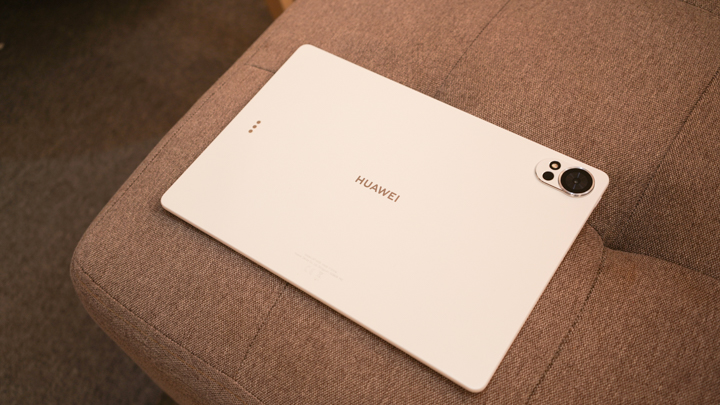
HUAWEI MatePad 12 X (2026) Review



In an era where handheld gaming is experiencing a renaissance, the ASUS ROG Ally emerges as a compelling entry.
This handheld gaming console touts high-performance hardware and a versatile gaming environment.

With several weeks in our hands, let’s dive into the intricate details of the ASUS ROG Ally, evaluating its design, build, and performance, to name a few.
Read on!
The design of the ROG Ally is a culmination of thoughtful engineering and aesthetic consideration. The device feels robust, with good build quality (mainly made of plastic).
The buttons and controls are ergonomically positioned, ensuring that prolonged gaming sessions do not lead to discomfort.

The button layout is quite similar to an XBox controller’s layout, with the left joystick above the D-Pad (directional-pad). Contrary to that controller, we get two additional macro buttons situated where your fingertips would rest in-use. Aside from these, the usual X, Y, A, B buttons are on the right with the left and right shoulder and trigger buttons up top.

For the rest of the I/O, up top the ROG Ally features a 3.5mm audio jack, a microSD card slot, a proprietary PCIE port, USB Type-C, the volume rocker, a battery charge indicator, a power indicator, and the power button that doubles as a fingerprint sensor for Windows Hello.

In front we get four buttons positioned on the left and right sides of the display. Those are the View button, Command Center button, Armory Crate, and Menu button.
The Command Center button opens a quick-access menu providing users with the ability to quickly change their portable’s performance profiles, refresh rate and more. While the Armoury Crate houses your library of installed games for quick launching.

Furthermore, the ROG Ally features customizable RGB lighting, which adds an element of personalization in a considerably tasteful fashion. This allows gamers to have a device that is not just functionally stellar but also visually reflective of their personality (if you care about that).
The ROG Ally is equipped with a 7-inch FHD (1920 x 1080, 16:9), 120Hz refresh rate display, which is a game-changer in the current handheld gaming space.
The high refresh rate ensures that motion is rendered with buttery smoothness, which is particularly beneficial in fast-paced games. In addition, the display is clear and crisp with great color accuracy, as one would expect from an IPS panel, ensuring that gaming worlds are depicted with the richness they deserve.

It also features Gorilla Glass Victus protection for all you butter fingers out there.
Moreover, the display’s size and resolution are pretty balanced, ensuring games look detailed without causing undue strain on the device’s hardware. This balance is critical in providing a gaming experience that is both visually appealing, performance-optimized, and portable.
In addition, the display is also a fully fledged touch screen for ease of use consumers when navigating through Windows 11.
The ROG Ally had a rocky start with respect to software. Initial units had software bugs, which were highlighted by reviewers. However, ASUS demonstrated its commitment to product support by releasing firmware and BIOS updates that addressed these issues.
The company has remained actively engaged in ensuring that the software aspect of the ROG Ally evolves to meet user expectations with each new unit arriving in buyer’s hands.
This commitment is vital, as software plays a significant role in determining the overall user experience. It’s not just about running games; it’s about the entire ecosystem that supports those games, including the user interface, settings customization, and system stability.
Primarily the ROG Ally runs on Windows 11, which makes this handheld gaming console a full-fledged Windows PC.
This means consumers will be able edit photos in Lightroom, cut videos in Premiere, type documents, watch movies and shows; Or basically just about anything you could do on a Windows laptop or PC.
All you’d probably need is a keyboard and mouse, and maybe even a monitor. All connected via a USB Type-C dongle, and/or bluetooth.
Alternatively, if you had a spare ROG XG Mobile GPU lying around, you could even just hook that thing up via the PCIE port, and have all the graphical performance you need!

This ultimately begs the question, could the ROG Ally be the PC tower replacement of your dreams?
–Well, give it three to five more iterations, and I wouldn’t be surprised if it did.
The heart of the ROG Ally lies in its processing prowess.
It’s available locally in the Philippines with either an AMD Ryzen Z1 or Z1 Extreme processor, both models will come configured with 16GB of LPDDR5 RAM and 512GB of internal flash storage.
Our review unit is armed with the Ryzen Z1 Extreme processor, which is known for its eight Zen 4 cores (16 threads) with a maximum boost clock up to 5.1GHz and a base clock of 3.3GHz. This processor ensures that the ROG Ally doesn’t just keep up with demanding games but excels in running them.
Complementing the CPU is an AMD RDNA 3-based Radeon GPU, a graphics processing unit that ensures the visuals are not just rendered but brought to life for portable gaming. With this GPU, expect detailed textures, realistic lighting, and smooth animations out of your 7-inch FHD display.

The Ally is configured with 16GB of dual-channel LPDDR5 RAM and 512GB of internal storage (PCIe 4.0 NVMe M.2 SSD).
The performance of the ROG Ally is further enhanced by its ability to access a plethora of games without being tethered to a specific cloud gaming service. This opens up a treasure trove of gaming possibilities, ensuring that boredom is kept at bay.
However, it’s crucial to discuss a hiccup that the ROG Ally encountered during its initial launch. The device suffered from low wattage performance, which ASUS addressed through subsequent firmware updates. The responsiveness of ASUS in rectifying this issue is just as rightfully commendable and indicative of their commitment to the ROG Ally’s success.
For those interested, found below are some of our results from synthetic benchmarks.
| Device: | ASUS ROG Ally |
|---|---|
| Chipset: | AMD Ryzen Z1 Extreme |
| RAM | 16GB |
| 3DMark Knight Raid | 21,984 |
| 3DMark Time Spy | 2,475 |
| CPU-Z Bench | 676 (CPU Single) |
| 5,219.6 (CPU Multi) | |
| CrystalDiskMark 7.0.0 | 4,334.83 MB/s (Read) |
| 1,716.01 MB/s (Write) |
A critical aspect of any handheld device is its battery life, and this is where the ROG Ally encounters challenges. The device’s high-performance hardware is a double-edged sword; while it ensures exceptional performance, it also places a significant drain on the battery (Especially when using it in Turbo Mode, unplugged).
ASUS has attempted to mitigate this issue through firmware updates, but there is an inherent limitation on how much can be achieved through software optimization. Prospective buyers must consider how critical battery life is to their usage patterns and whether the ROG Ally meets their requirements in this domain.

The Asus ROG Ally features a 40Wh, 4-cell Li-ion battery.
While on a beach trip with the Ally, the device lasted about an hour while playing games on Turbo mode; so you may want to stay near a power outlet or a strong enough powerbank when you feeling like playing video games on vacation.
Running our standard battery loop test on the ROG Ally while on Windows Mode, garnered us a result of 9 hours and 52 minutes.
Which should translate to watching two 2-hour movies you can watch on battery alone while in transit.
The ROG Ally falls short in the connectivity department by not offering an LTE option. In an increasingly connected world, the ability to stay connected on the go is essential for many users. While Wi-Fi connectivity is available, the lack of LTE means that users will need to rely on external networks for on-the-go gaming.
This may not be a deal-breaker for everyone, but it’s an important consideration to mention, especially for those who envision using the device in various locations.
An often overlooked aspect of gaming devices is their community and support ecosystem.
The ROG Ally benefits from an active community of users and enthusiasts. This community plays a vital role in sharing knowledge, experiences, and feedback.
ASUS, for its part, has been responsive to this community. Firmware updates and communication have indicated that ASUS views the ROG Ally not as a static product but as a living, evolving ecosystem. This ongoing relationship between manufacturer and user is a vital asset for current and prospective owners.
The ASUS ROG Ally represents a formidable entry in the handheld gaming market. With its high-performance hardware, stunning 120Hz display, and premium design, it checks many of the boxes portable gaming enthusiasts are look for.
However, it is not without its flaws. The battery life is less than stellar, and the lack of LTE connectivity is a notable omission.
Additionally, at a starting retail price of PHP 39,995.00 (Ryzen Z1) and PHP 43,995.00 (Ryzen Z1 Extreme); the ROG Ally positions itself in the more premium segment of handheld gaming devices.

This price tag reflects the high-performance hardware and the premium build quality. However, it also places the ROG Ally in a category where expectations are high.
Prospective buyers need to carefully evaluate whether the ROG Ally offers the value they’re looking for with its price.
For a limited time ASUS PH will be organizing a special pop-up booth in One Bonifacio High Street Mall (Second Floor) from July 21-30, 2023. For those interested, this could be the opportunity for you guys to hold the Ally in your hands!
Ultimately, the ROG Ally is best suited for those who prioritize performance and build quality and are willing to navigate through its limitations. With continued support from ASUS and an active community, the ROG Ally has the potential to carve out its niche in the handheld gaming space as a high-performance, premium offering.
For those who are passionate about gaming and seek the power and versatility that the ROG Ally offers, this device could well be a worthwhile investment. However, it is always essential to enter this investment with open eyes, in regards to the device’s strengths and limitations.
What we like about it:
What we did not like:
Asus ROG Ally specs:
7.0-inch FHD (1920 x 1080) 120Hz refresh rate, touchscreen
Gorilla Glass Victus
AMD Ryzen Z1 Extreme CPU
AMD RDNA 3-based Radeon GPU
512GB SSD, PCIe 4.0 NVMe M.2
16GB LPDDR5X RAM, dual channel
Fingerprint sensor
Windows 11
40Wh, 4-cell Li-ion battery






Apple, Asus, Cherry Mobile, Huawei, LG, Nokia, Oppo, Samsung, Sony, Vivo, Xiaomi, Lenovo, Infinix Mobile, Pocophone, Honor, iPhone, OnePlus, Tecno, Realme, HTC, Gionee, Kata, IQ00, Redmi, Razer, CloudFone, Motorola, Panasonic, TCL, Wiko
Best Android smartphones between PHP 20,000 - 25,000
Smartphones under PHP 10,000 in the Philippines
Smartphones under PHP 12K Philippines
Best smartphones for kids under PHP 7,000
Smartphones under PHP 15,000 in the Philippines
Best Android smartphones between PHP 15,000 - 20,000
Smartphones under PHP 20,000 in the Philippines
Most affordable 5G phones in the Philippines under PHP 20K
5G smartphones in the Philippines under PHP 16K


