
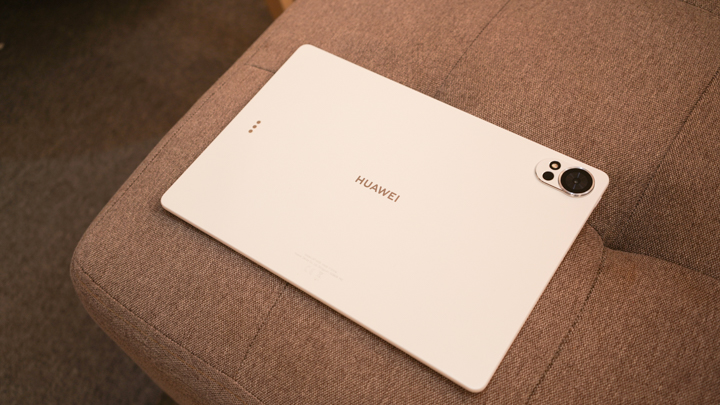
HUAWEI MatePad 12 X (2026) Review



If there’s one issue I’ve always had with the Samsung Galaxy Z Fold series, it’s that it’s a bit thick. This made it a bit bulky when you had it in your pocket. It’s a minor issue for sure, but still something that bothered me.
However, it seems Samsung has addressed all of that with the launch of the new Galaxy Z Fold 7. It’s now one of the slimmest foldable smartphones on the market. But that’s not all that Samsung changed. There’s a new camera, a new chipset, and a new OS to match. If you want to know more about it, I suggest you read on.

Let’s start things off with the biggest change Samsung made to the Galaxy Z Fold 7 – the design. We’re not talking about the overall design of the Z Fold 7, though. It still features the same Samsung design language we’re very familiar with. Instead, I’m talking about the size of the phone itself.

It’s usually hard to tell when a company says their new phone is slimmer than before, but not for the Galaxy Z Fold 7. At one glance, you can tell just how slim it has become, both folded and unfolded.

To give you a better reference, we compared it with TY’s Galaxy S23, which is already a slim phone, by the way. Unfolded, it’s even thinner. I’m quite surprised how Samsung managed to fit a physical SIM card slot as well as the USB-C port.
Because of the slimmer body, the Galaxy Z Fold 7 feels a lot better in our pockets. It also makes it easier to use even when folded. You can easily go through the menus, type, and more, even with just one hand.

Despite it being a lot slimmer, the Galaxy Z Fold 7 didn’t feel fragile. It still feels solid and sturdy. Even with the thinner body, it doesn’t seem like it will easily break despite numerous cycles of opening and closing the main display.

Speaking of the display, the cover screen has also become slightly larger, now measuring 6.5-inches with a unique 21:9 aspect ratio. There are thinner borders all around, and from our short experience with the phone, you can do everything on the cover screen already.
It’s still an AMOLED panel with a 120Hz refresh rate, meaning you can already play games and enjoy watching videos from the cover screen alone. But of course, that’s best done on the main display.

Similar to the cover screen, the main display of the Samsung Galaxy Z Fold 7 is also bigger, now measuring 8 inches. And it’s here where you’ll really enjoy watching videos or playing games. Just like before, you can set it up folded, wherein half the screen displays the video with the other half as the controller.

Alternatively, you can just open it up fully and watch everything from there. The crease is also a lot less noticeable compared to before. It’s still there, but the majority of the time you’re using the phone, you won’t really notice it at all.
Under the hood, Samsung did upgrade the chipset of the Galaxy Z Fold 7. It now uses the Snapdragon 8 Elite chipset, similar to the flagship Galaxy S25 series. Depending on the variant you choose, it is available with up to 16GB of RAM and up to 1TB of storage.

Given our short time with the phone, we weren’t able to run our usual benchmarks. We’ll have those in our full review. However, we were able to play games. On Genshin, it handled everything maxed out. Surprisingly for a phone this thin, there weren’t any heating issues either. But it’s no surprise that the Z Fold 7 could run graphic-intensive titles.

What we were more interested in was the OS. The Galaxy Z Fold 7 ships with Android 16 out of the box with One UI 8. It comes with improved AI features and even better quick share to name a few. We didn’t get to tinker with it too much, but just like the chipset we’ll have more info about it in the full review.

Moving on to the cameras, Samsung made some changes here as well. The cameras of the previous Z Fold series weren’t exactly the best, especially compared to the S23 or even the S24 Ultra. But on the Galaxy Z Fold 7, it now comes with a 200MP main shooter, similar to that on the Galaxy S25 Ultra.
We did get to try it out a bit, and there is certainly a big improvement in terms of the quality, especially in not-so-well-lit environments. As for the rest of the cameras, they are a carryover from before – a 12MP ultrawide and a 10MP telephoto lens. But hey, at least the main camera is now a lot more capable than ever before.

Just like the previous Galaxy Z Folds, you can even turn on the display of the front camera to show the subject what they look like. It also makes it a lot easier to take selfies using the main camera as opposed to the cover or front camera.
As for the battery,b there appears to be no changes here. It still uses the same 4400mAh battery pack as before, with similar charging speeds of only 25W.

As mentioned earlier, we didn’t have a lot of time to play with the Galaxy Z Fold 7, nor were we able to bring it home with us. However, stay tuned for our full review coming soon.
What we do have is the price. It’s a lot more expensive now especially compared to the Galaxy Z Fold 6 of last year, starting at PHP 112,990 for the 12+256GB variant and PHP 120,990 for the 12+512GB variant. As for the top spec 16GB+1TB model, that will set you back PHP 141,990.

You do have four colors to choose from – Blue Shadow, Jet Black, Silver Shadow, and the online exclusive Mint color. Unfortunately, the mint color was not available, but from the photos, it does look loud.

So far, Samsung has made a lot of improvements to the Galaxy Z Fold 7 from its predecessor. However, the bump in price might deter some from buying one. Still, what do you think of the Galaxy Z Fold 7, though? Would be your pick or are you more impressed by the new Samsung Galaxy Z Flip 7 and Flip 7 FE? Share your thoughts in the comments below.






Apple, Asus, Cherry Mobile, Huawei, LG, Nokia, Oppo, Samsung, Sony, Vivo, Xiaomi, Lenovo, Infinix Mobile, Pocophone, Honor, iPhone, OnePlus, Tecno, Realme, HTC, Gionee, Kata, IQ00, Redmi, Razer, CloudFone, Motorola, Panasonic, TCL, Wiko
Best Android smartphones between PHP 20,000 - 25,000
Smartphones under PHP 10,000 in the Philippines
Smartphones under PHP 12K Philippines
Best smartphones for kids under PHP 7,000
Smartphones under PHP 15,000 in the Philippines
Best Android smartphones between PHP 15,000 - 20,000
Smartphones under PHP 20,000 in the Philippines
Most affordable 5G phones in the Philippines under PHP 20K
5G smartphones in the Philippines under PHP 16K


