

Sudah banyak tekanan pada Huawei karena harapan terhadap Mate 30 Pro semakin tinggi sejak peluncuran P30 Pro.
Huawei sangat kuat di banyak bidang -- mulai dari teknologi kamera hingga kinerja chipset, konektivitas, dan daya tahan baterai. Mate 30 Pro memiliki banyak hal untuk dibuktikan dalam semua aspek ini.
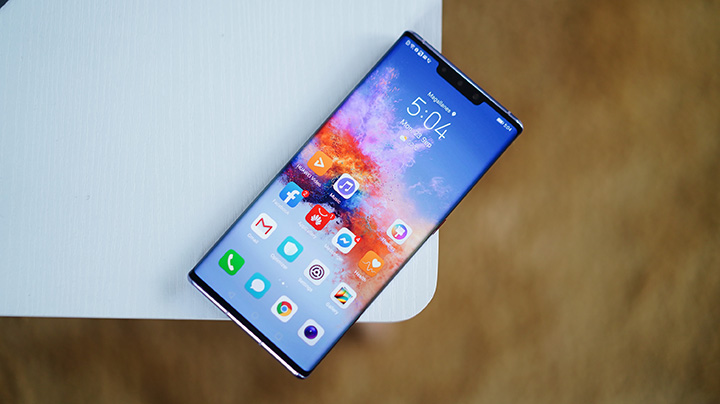
Akankah ia kembali mengirim? Mari kita temukan dalam ulasan lengkap kami tentang Huawei Mate 30 Pro di bawah.
Desain dan Konstruksi
Dalam banyak aspek, Mate 30 Pro sama sekali tidak mendekati desain asli Mate 20 Pro. Ada beberapa petunjuk tentangnya tetapi tampaknya mereka benar‑benar memulai dari awal.
Unit ulasan kami adalah varian perak tetapi warna dan finishingnya sangat dinamis, menyerap banyak cahaya ambient dan warna lingkungan yang menghasilkan efek hampir marmer atau berwarna cerah.
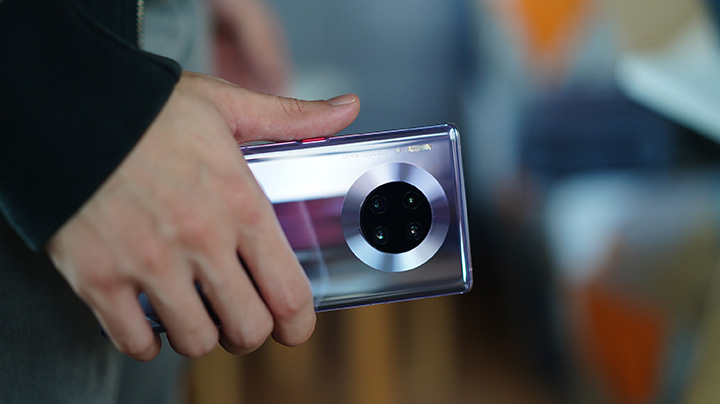
Bodi seluruhnya terbuat dari logam terasa cukup solid, memiliki sedikit berat, dan dipoles halus sehingga menjadi sangat licin serta menjadi magnet noda. Ada varian lain di mana setengah bagian bawah di belakang memiliki finishing matte yang secara perlahan beralih ke finishing mengkilap saat mengalir ke bagian atas.
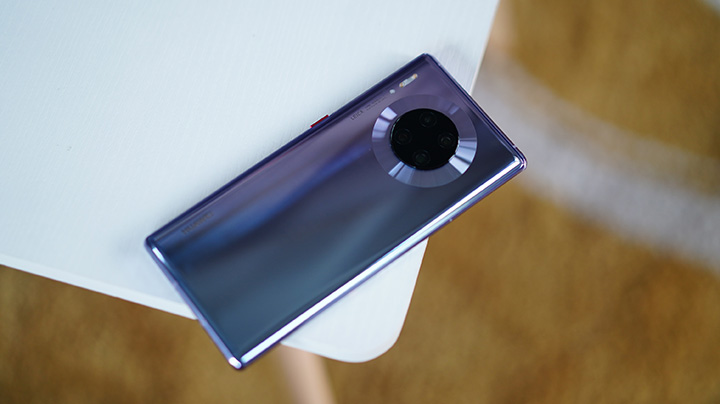
Ukuran keseluruhan telah meningkat dibandingkan dengan Mate 20 Pro dan kini hampir sama dengan dimensi P30 Pro. Kedua perangkat hampir identik sehingga kami dapat dengan mudah memasukkan Mate 30 Pro ke dalam case P30 Pro, hanya modul lensa yang menghalangi.
The curved sides provide a comfortable grip to the hands, allowing you to hold the device with one hand just fine.
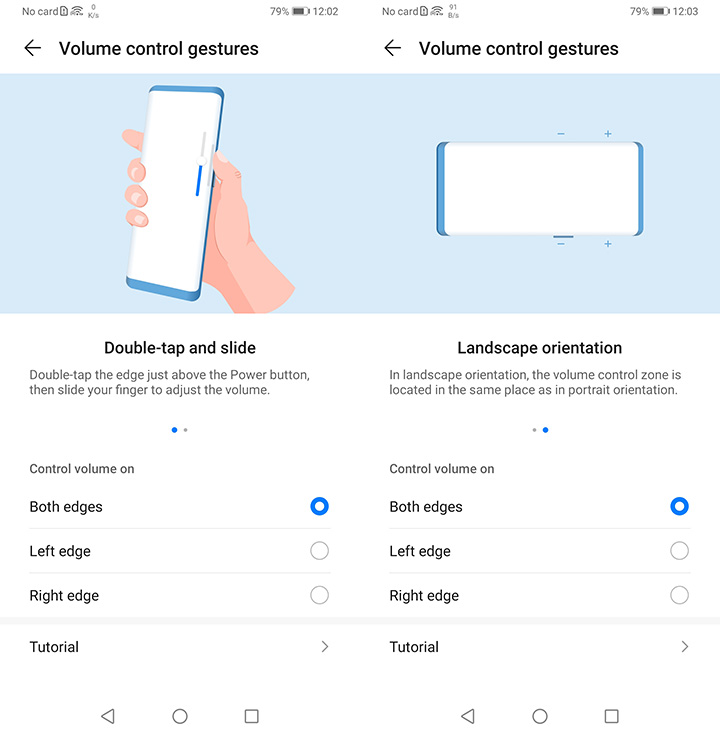
Tombol daya berwarna merah ikonik terletak di sisi kanan; port pengisian, mikrofon utama, dan grill speaker berada di bagian bawah, mikrofon peredam kebisingan sekunder serta IR blaster di bagian atas. Tidak ada apa‑apa di sisi kiri. Yang hilang adalah port audio 3.5mm yang kini dialirkan melalui port Type C serta kontrol volume fisik yang telah digantikan oleh slider virtual yang ditempatkan di area yang sama.
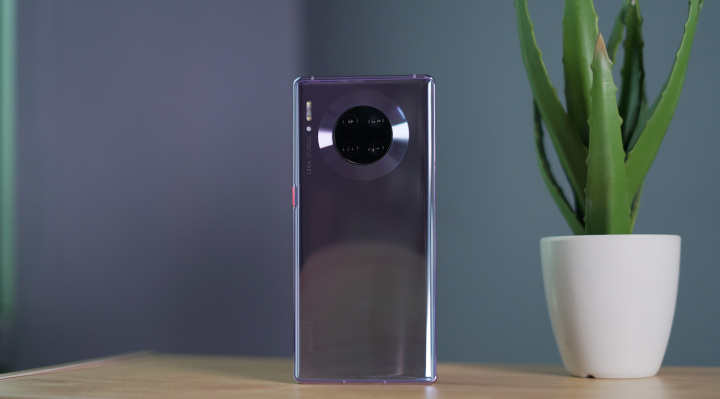
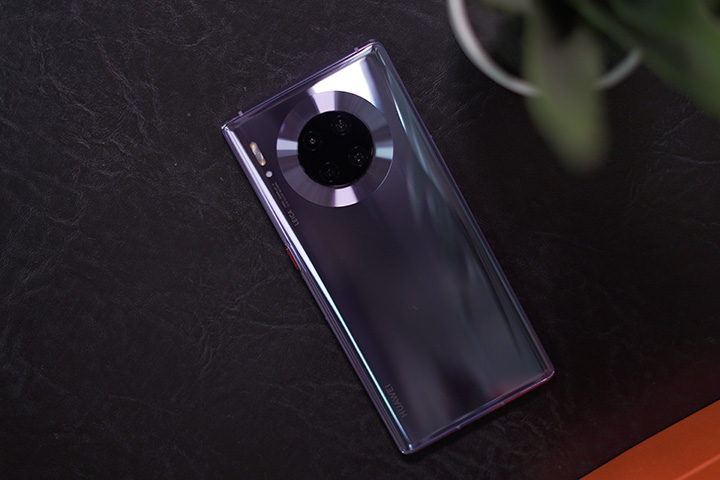
Di bagian belakang terdapat desain konsentris besar dengan barrel bulat hitam untuk sistem lensa tiga kamera. Penampilannya memang mengingatkan pada mesin cuci front-loading, namun bukan yang pertama memiliki tampilan tersebut sejak Lumia 1020 memperkenalkannya pada tahun 2013.
Huawei mengklaim desain ini merupakan bagian dari DNA Mate dan terinspirasi dari kamera tradisional Leica. Itulah mengapa logo Huawei ditempatkan di ujung yang berlawanan dan dicetak dengan posisi horizontal sementara modul lampu kilat dual-LED berada di sisi kiri cincin.
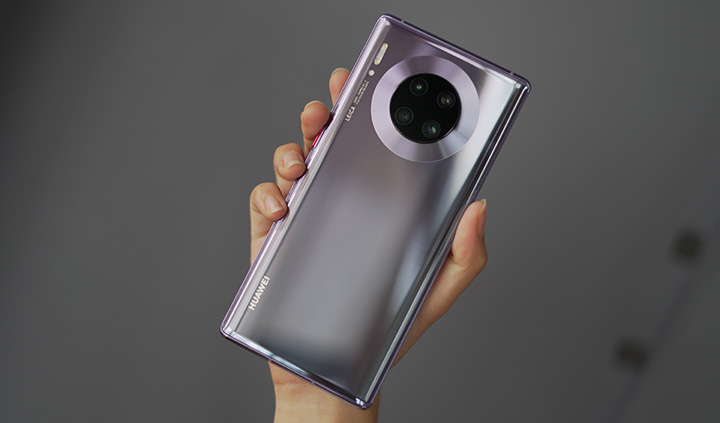
As usual, the device has an IP68 Rating for dust and water resistance of 1.5 meters up to 30 minutes.
Layar dan Multimedia
Mate 30 Pro memiliki layar OLED berukuran 6,53 inci dengan resolusi Full HD+ (2400 x 1176 piksel). Ini tampaknya sedikit menurunkan resolusi dibandingkan resolusi 2K (1440x3120 piksel) pada pendahulunya, Mate 20 Pro.
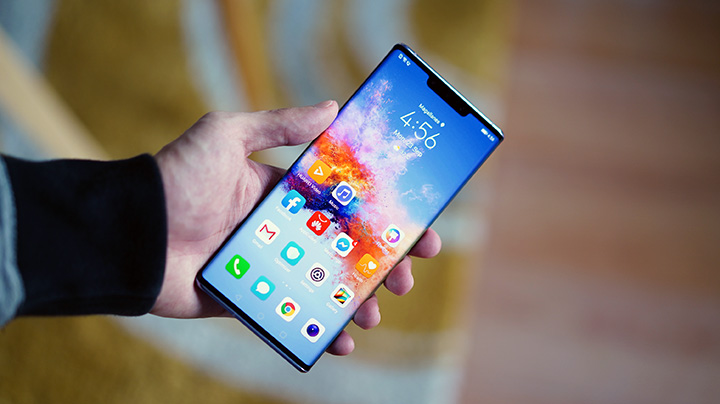
Tentu, kami setuju bahwa menurunkan resolusi memberikan konsumsi baterai yang lebih baik tetapi selalu ada opsi di pengaturan ponsel yang memungkinkan pengguna menurunkan resolusi atau mengubahnya untuk menyesuaikan dengan perilaku penggunaan. Smartphone flagship lainnya telah menggunakan teknik ini tanpa mengorbankan resolusi dan konsumsi baterai sehingga kami masih belum yakin dengan logika Huawei.
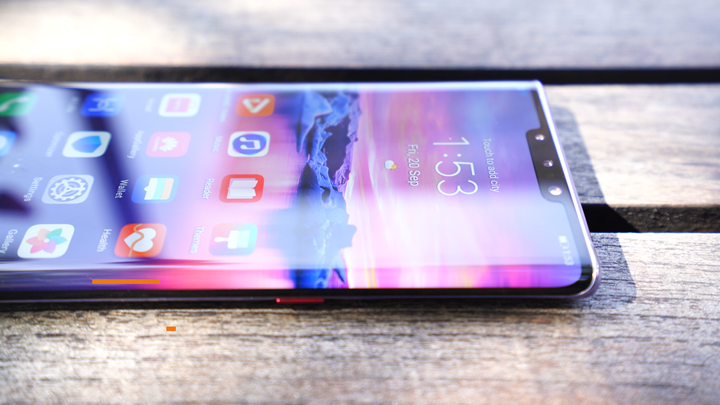
Kaca melengkung bukan hal baru bagi smartphone, terutama tipe flagship, tetapi yang digunakan pada Mate 30 Pro mendorong batas tampilan hampir tanpa bezel (yah, setidaknya di sisi-sisinya). Lengkungan layar mencapai 88 derajat dan Huawei menyebutnya layar Horizon dan memang, Anda hampir tidak dapat melihat bezel samping pada perangkat ini (2 derajat lagi dan bezel secara teknis tidak akan terlihat lagi).
Pendekatan ini menimbulkan sedikit masalah potensial -- pertama adalah sentuhan tidak sengaja yang Huawei tangani dengan membagi layar menjadi 3 bagian, meninggalkan bagian melengkung lebih sadar akan sentuhan yang tidak disengaja.
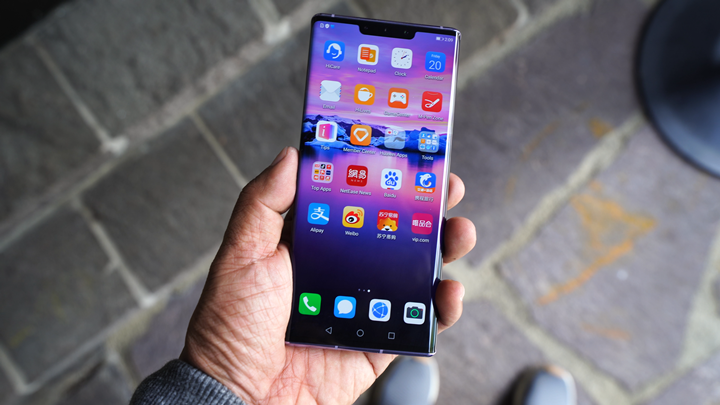
Kedua, penempatan tombol-tombol biasa seperti tombol daya dan kontrol volume. Huawei menyelesaikan ini dengan memindahkan tombol daya lebih ke belakang sehingga hampir menjadi bagian dari panel belakang alih-alih sisi.
Ketiga adalah keterlihatan aplikasi dan game tertentu ketika tepi layar melengkung menimbulkan beberapa masalah kegunaan. Ada opsi untuk menghapus bagian layar tersebut, menjadikannya layar datar, dan menghindari potensi masalah.
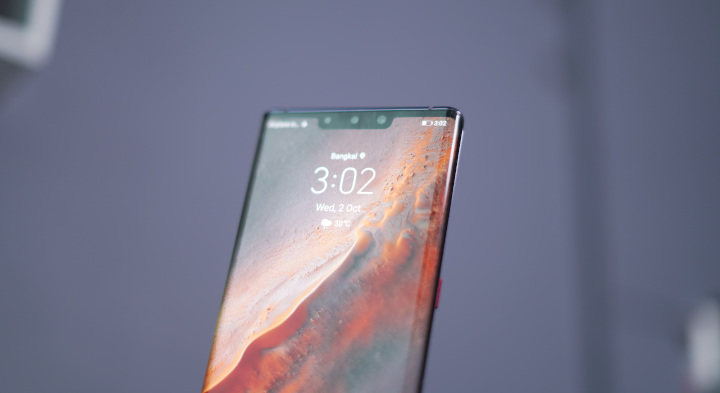
Ini juga dapat dilakukan dengan takik di sudut atas layar. Seperti pada perangkat sebelumnya, Anda dapat menghilangkan tampilan takik tetapi mematikan bagian layar yang telah dipotong.
Meskipun layar Flex OLED menakjubkan dengan resolusi yang sangat tajam dan jelas, warna yang cerah dan hidup, serta kontras yang dalam. Seperti pada P30 Pro, panel OLED juga memungkinkan Always-On Display dengan konsumsi daya yang sangat minimal. Resolusi dapat disetel secara manual antara 2400 x 1176 piksel (FHD+) atau 1600 x 784 piksel (HD+), namun Anda juga dapat mengaktifkan Smart resolution sehingga layar menurunkan resolusi setiap kali perlu menghemat daya.

Penggeser volume kini menjadi tombol virtual di layar dan diaktifkan dengan mengetuk ringan pada tepi kanan atas layar (di mana tombol itu biasanya ditempatkan). Penggeser muncul hampir seketika dengan umpan balik haptik yang halus. Aktivasi menjadi lebih baik seiring Anda terbiasa, dengan tingkat keberhasilan sekitar 70% pada percobaan pertama.
Pemindai sidik jari di bawah layar terletak di bagian bawah layar dan mudah dijangkau, tidak seperti yang ada di Mate 20 Pro. Pemindai ini cepat dan akurat serta dapat mengidentifikasi hingga 5 sidik jari unik sekaligus. Pengrecognition wajah juga tersedia dan lebih cepat, bahkan dalam lingkungan yang hampir gelap.
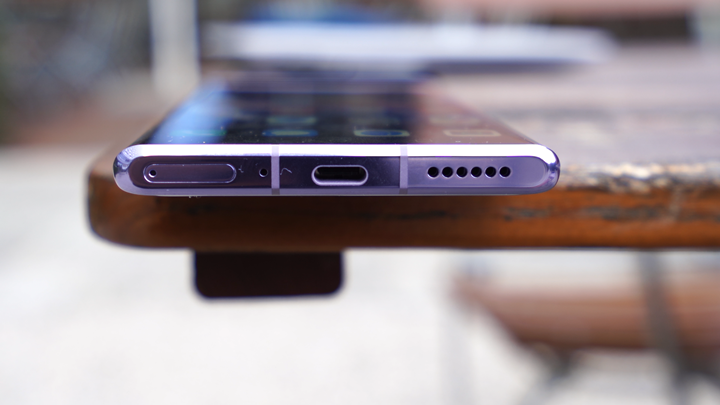
Grill speaker terletak di ujung bawah, tempat suara utama berasal ketika Anda ingin menonton film atau memutar musik tanpa earphone. Kualitas suara sangat baik, keras, dan memiliki sedikit tenaga.
Again, those who are still looking for the 3.5mm audio port will not find it here and have to connect to an external speaker or earphones via Bluetooth/NFC. Otherwise, the box comes with a pair of earphones that has a Type-C jack.
As usual, we loved the inclusion of the IR blaster as it allows you to control other IR-enabled appliances at home so it doubles as a universal remote. Very handy on many occasions.
Camera
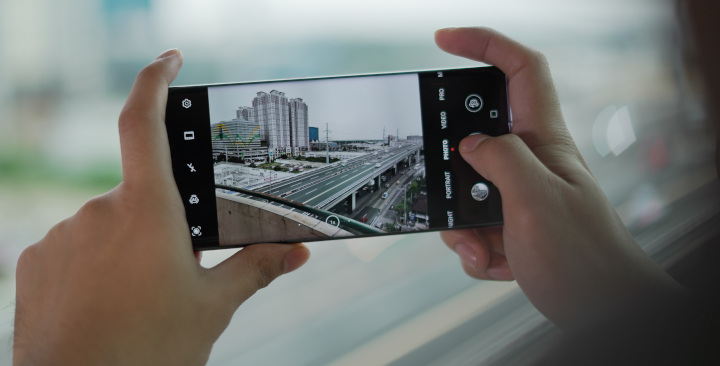
One of the main features of the Mate 30 series, in order to distinguish itself from the P series, is the focus on videography.

This is the reason why some photography features such as the zooming capability that maxes out at 30x, compared to the 50x on the P30 Pro.
Huawei explains that they have to balance the features due to the type of lens they employed. As such, there is no periscope type setup here that offers 5x optical. Instead, they settled with a straight-up 3x optical lens.
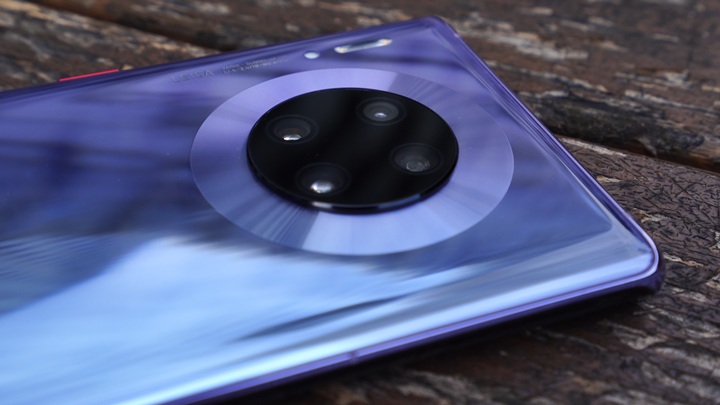
The Mate 30 Pro’s three cameras include a 40MP Cine Camera with f/1.8 aperture, another 40MP SuperSensing camera with f/1.6 aperture and OIS, and an 8MP telephoto camera with f/2.4 aperture and OIS which is capable of 3x optical zoom, 5x hybrid zoom, and 30x digital zoom.
The main camera takes great photos with clear and sharp images. The post-processing leans more towards vivid colors and a bit of sharpening which looks good upon closer inspection. It's not as aggressive as in the P30 Pro so it's more toned down.
Macro photography is even better with the Mate 30 Pro as you can get really close to the subject as near as 2.5cm. You get awesome shots like these:
We’ve seen how the Night Mode performs in the P30 Pro. If you thought that was impressive enough, the Mate 30 pro kicked it up a notch.
This is how a normal human eye would see in the night.

This is the Night Mode shot:

Impressive, huh? This shot took almost 8 seconds in hand-held and it still managed to take a sharp photo in almost no light. That’s the AIS and OIS working their stabilization magic along with the camera sensor’s high light sensitivity.
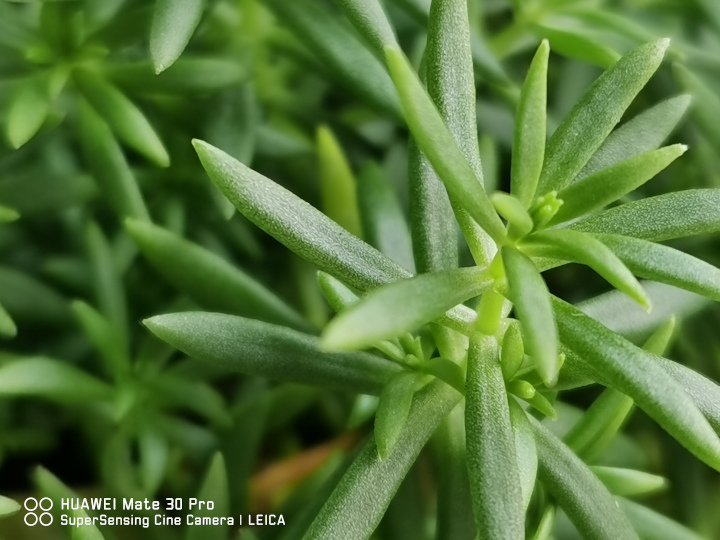
Sample macro shot with the Mate 30 Pro.

Sample portrait photos.
Here are some sample photos taken with the rear cameras:
What’s really unheard of is the ultra-high slow-motion capability of the Mate 30 Pro. At its peak, the frame rates can reach up to 7,680 frames per second at 720p. No other smartphone can match this and the next best thing is merely 960fps from competitors.
To achieve this super slow-mo, the camera shoots 0.12 seconds of footage at 7,680fps in which the AI selects which one to stretch to 32 seconds at 30fps. The whole gang (CPU, GPU and NPU) works with the ISP to fine-tune and refine the resulting video making it as sharp and clean as possible.
In our numerous tests to take slow-mo shots, the camera does a very good job of identifying the best clips to slow down. You can manually set the slow-mo rate from 32X (32 x 30fps = 960fps) to 256X (256 x 30fps = 7680fps).
The camera can take 4k videos at 60fps all the way to 1080p @ 960fps and 720p @ 7680fps. There’s no limit in recording length with slow-motion shots for 240fps but anything beyond that, auto-mode kicks in.
Note: Low-light videography is not yet final in this firmware version. An update will be released sometime this October to improve on this.
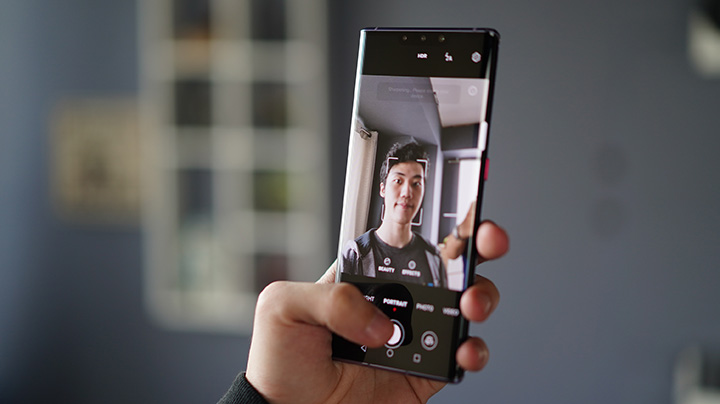
The front-facing camera has a 32MP RGB sensor paired with a 3D TOF camera for that nice depth-of-field or bokeh effect you get when taking selfies.
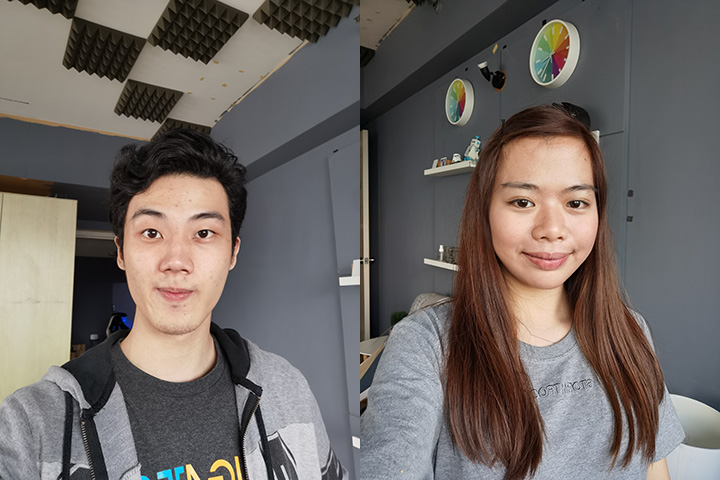
Video recording for the front camera tops at 1080p at 30fps.
OS, Apps and UI
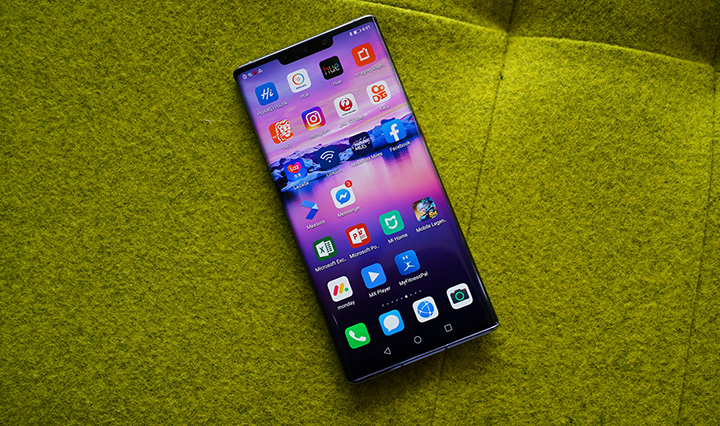
The Huawei Mate 30 Pro runs on Emotion UI 10 which is based on Android 10. It is pretty much the same familiar EMUI we’ve gotten used to from the previous Huawei smartphones, only this time there’s something obviously missing. That’s the Google Play Store.

Perhaps the most controversial topic that hounded the launch of the Mate 30 series would be the operating system and pre-installed apps. The Mate 30 Pro did not come with Google Mobile Services. For those who are not familiar, Google Mobile Services (GMS) are services and apps that are provided by Google under license with any Android operating system. This is comprised of Google Play Services, Google Play Store and the suite of apps like GMail, Google Maps, Chrome, YouTube, among others.
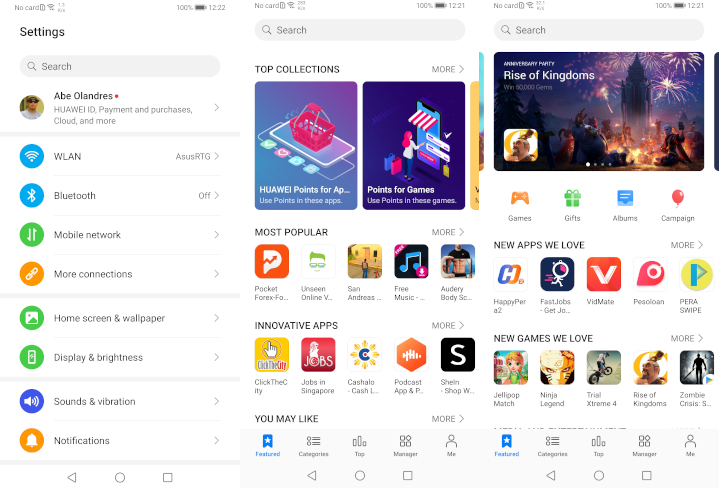
On a side note, Huawei needs to stop putting interstitial ads in the AppGallery. It makes it look cheap and unsightly.
Emotion UI 10 is a refined version of the custom layer on top of Android although the look and feel is almost similar to the previous EMUI 9. Among the more obvious changes would be the option for the typical navigation keys or a swipe-based or gesture-based navigation with the app drawer now accessible by swiping up instead of the usual icon in the middle of the menu.

EMUI comes with a suite of productivity features and other software features that are both useful and practical. These include the App Twin (two instances of apps like FB Messenger, WhatsApp, etc), option for Private Space as a second and completely separate working space from the Main Space, Huawei Share, Wireless Projection, and Smart Assistance for one-handed UI, motion control and voice control.
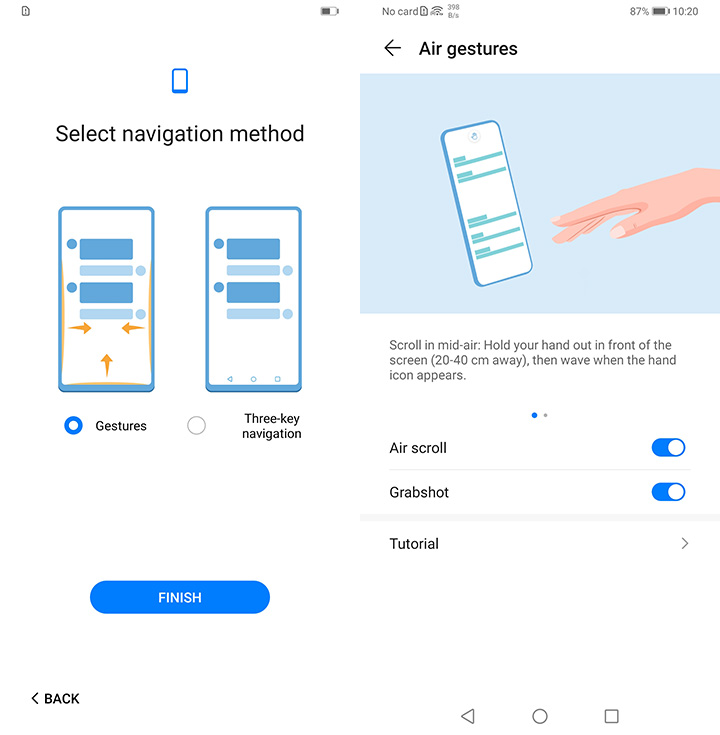
Some native gesture and swipe features have been expanded to include air gestures to either scroll the screen up and down or do a screen-capture. With the absence of physical volume buttons, Volume Gestures have been introduced in its stead.
Biometric features include an under-display fingerprint sensor and face recognition that is surprisingly very fast and accurate we actually prefer it over the fingerprint scanner. The fingerprint sensor recognizes up to 5 maximum prints while the facial recognition allows for a secondary look, just in case you have some other appearance or style that might confuse the scanner.
We also loved that AI Auto-Rotate technology that detects your eyes and automatically changes the orientation fo the screen based on your position. Very clever and useful indeed.
Since we used the China 4G variant in this review, it was not a surprise that there were a lot of pre-installed apps right out of the box. No worries since there’s plenty of storage available here -- 256GB to be exact.
Performance and Benchmarks
Running on the Mate 30 Pro is the new Kirin 990 chipset which was manufactured from the 7nm process. This is the world's first 5G-embedded chipset available in the market.

Note that there’s a slight difference between the configuration of the Kirin 990 5G and the Kirin 990 4G. The latter runs on dual Cortex-A76 cores running at a top clock speed of 2.86GHz with another mid-frequency dual Cortex-A76 running at a max of 2.09GHz (2.36GHz on the 5G). These are paired with quad-core Cortex-A55 running at a top frequency of 1.86GHz (1.95GHz on the 5G).
This 3-cluster configuration is similar to the Kirin 980 but with higher clock frequencies. You can read more the Kirin 990 chipset here.
Likewise, the NPU on the 5G is comprised of 2 Big-Core + 1 Tiny-Core design compared to the 1 Big-Core + 1 Tiny-Core on the Kirin 990 4G. The graphics engine is also powered by a massive 16-core Mali-G76 GPU.
Raw performance of the device is through-the-roof. Very fast and snappy and gobbles up a ton of apps without straining a muscle. This is supported by the results of synthetic benchmarks.
• Antutu: 353, 287
• PCMark: 10,782 (Work 1.0), 8,896 (Work 2.0)
• 3DMark: 5,336 (Slingshot Extreme, OpenGL ES 3.1), 4,252 (Slingshot Extreme, Vulcan)
• GeekBench 4: 3,819 (Single core), 11,712 (Multi-core)
• GeekBench 5: 769 (Single core), 2,924 (Multi-core)
• AndroBench: 1,768 MB/s (Read), 402 MB/s (Write)

The benchmarks scores are impressive enough but the read/write speeds of the internal storage are miles faster than the old one (more than double the Mate 20). In fact, it’s the fastest we’ve seen in any smartphone we’ve tested so far.
Gaming experience is top-notch. We played almost all graphics-heavy games without any issues whatsoever, thanks to the 16-core Mail-G76 GPU.
Call Quality, Connectivity, and Battery Life
The device comes with a full suite of connectivity options -- from fast WiFi and Bluetooth, to NFC and LTE. There’s also an IR blaster for when you want to use it as a remote control for your appliances at home. The dual GPS feature allows for faster and more accurate geo-positioning.
The dual-SIM tray supports two nano-SIM cards with the second slot able to carry an NM card of up to 256GB.
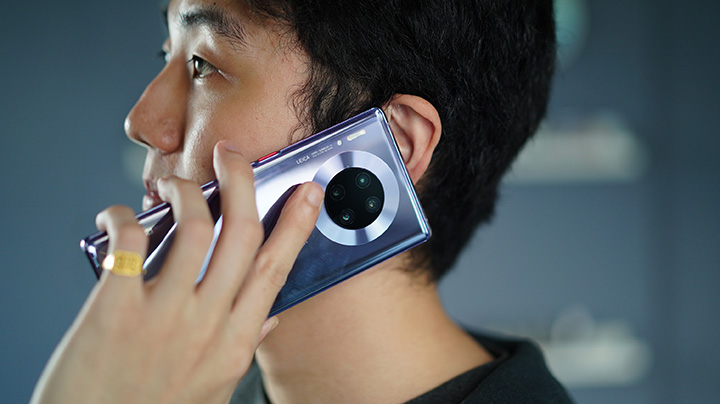
Call quality is very good, reception is loud and clear and signal is fairly strong in both the WiFi and mobile connectivity. As with most Huawei smartphones, we’d always get better signal strength in 4G/4G+ areas.
The Kirin 990 is the first SOC to have a 5G modem embedded in it. The 5G connectivity also supports the widest modes so it can connect to the most number of global networks. Unfortunately, our review unit is the one with the non-5G chip (4G-only Chinese variant) and as such, we were not able to test this out with the local networks.
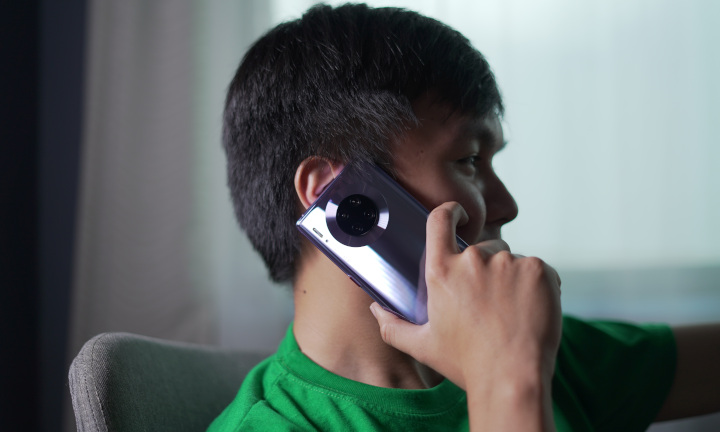
Nevertheless, it should be noted that even local telcos are already rolling out their 5G networks so the 5G version of the Mate 30 Pro should benefit from that.
The Mate 30 Pro is equipped with a large 4,500mAh Li-Ion battery. Our PCMark battery test yields a rating of 13 hours and 27 minutes. That’s about 15 minutes longer than what we got from the Huawei P30 Pro and almost 3 hours longer than the Mate 20. With the video loop test, the device lasted over 28.5 hours (23.5 hours on the Mate 20) playing a full HD movie at 50% brightness, zero volume and in airplane mode. That's pretty impressive numbers coming from the Mate 30 Pro.

The wireless reverse charging is still there and is now faster (rated at 27W) than the one on the Mate 20 Pro and P30 Pro.
The included 40W Huawei SuperCharge allows the device to charge up to 50% in just 30 minutes, 70% in 45 minutes and 90% in 1 hour. A full charge from zero to 100% will still need somewhere around 80 minutes to fully complete. This, despite the large 4,500mAh capacity.
Conclusion
The Huawei Mate 30 Pro is one heck of a smartphone. The gargantuan feat in the photo and video department alone makes it an impressive flagship device. Couple that with a beautiful design, impressive performance, great display, and battery life, then you would not think of even ask for more.
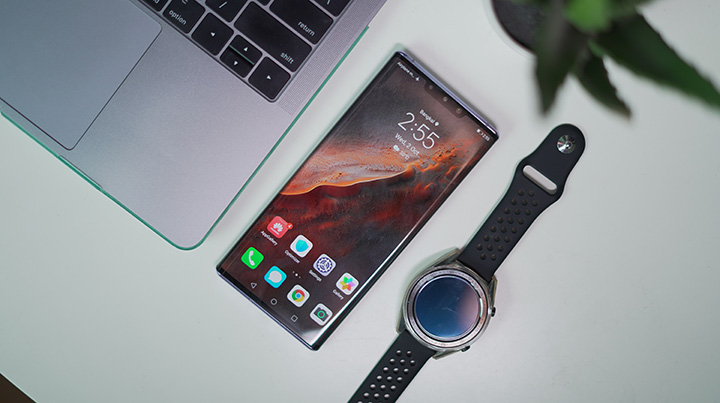
With the setback of the Google Play Store, it still remains whether Huawei can surpass this obstacle and the Mate 30 Pro will certainly be the litmus test.
For those who are familiar with the process of sideloading GMS, it shouldn’t pose a serious inconvenience (It didn’t bother us much!). Huawei was prepared for this eventuality and, somehow, it softened the blow.
Trade issues aside, the Huawei Mate 30 Pro is nothing short of a well-rounded, well-executed beast of a smartphone. It scores high marks in almost every aspect of a truly flagship device. Huawei surely did not disappoint.
Huawei Mate 30 Pro specs:
6.53-inch 18.4:9 OLED FHD (2400 x 1176) display, DCI-P3 HDR
3D curved glass
HiSilicon Kirin 990 7nm 2.86GHz octa-core
Mali-G76 MP16 GPU w/ GPU Turbo (new generation)
8GB RAM
256GB UFS storage
Up to 256GB external via NM card
Dual-SIM card (nano + nano/NM card)
40MP Cine Camera F1.8 + 40MP SuperSensing F1.6 (w/ OIS) camera + 8MP Telephoto F2.4 (w/ OIS, 3x optical zoom, 5x hybrid zoom, 30x digital zoom) + 3D Depth Sensing (Leica)
up to ISO 409600 (photo), ISO 51200 (Video), Dual OIS + AIS, Ultra Slow-motion (7680fps), 4K low-light Ultra-wide time-lapse video, 4K HDR+, 4K 60fps
3D Depth Camera + 32MP RGB Front camera
4G Dual VoLTE
5G connectivity (Mate 30 Pro 5G)
802.11a/b/g/n/ac (wave2), 2.4 GHz and 5 GHz
Bluetooth 5.1, BLE, SBC, AAC, LDAC
GPS (L1 + L5 dual band) / AGPS / Glonass / BeiDou / Galileo (E1 + E5a dual band) / QZSS (L1 + L5 dual band)
NFC
Type-C USB 3.1 GEN1
IP68 water and dust resistance
Invisible Virtual Key (for volume rockers)
Always-On-Display
Dark Mode Engine
AI Auto-Rotate technology
AI Private View
3D Face Unlock
In-Display Fingerprint scanner
EMUI 10 (Android 10)
4,500mAh battery w/ 27W Wireless SuperCharge, 40W SuperCharge, Wireless Reverse Charging
158.1 mm x 73.1 mm x 8.8 mm (dimensions)
198 grams (weight)
Classical Black, Space silver, Cosmic Purple, Emerald Green (Matte), Vegan Leather, Vegan Leather orange, Vegan Leather Forest Green
The Huawei Mate 30 Pro is yet to be released in the Philippines but we reckon it’s going to be in the vicinity of late October 2019. Philippine suggested price is also to be determined but if we take the MSRP, it should be EUR 1099 (~Php63,537) for the 4G variant and EUR 1199 (~Php69,318) for the 5G variant, both with 8GB RAM and 256GB storage.
What we liked about it:
- Top-notch camera capability
- Impressive performance
- Very nice, curved display
- Option for a 5G version
- Very long battery life
- Fast wired and wireless charging
What we did not like:
- Absence of the Google Play Store out of the box
- More expensive than before
- Display resolution could be higher
You can also watch the video review of the Mate30 Pro below:


Why some site says that the antutu benchmark is at 450k?