

nubia 刚刚推出了全新的 Neo 3 GT 限量版,其设计更加简约,但仍保留了预算级游戏手机的特色。这些特色包括肩部触发键、背部某种形式的氛围灯以及强劲的处理性能。

这三项功能同样出现在Infinix GT 30中,该机比努比亚的机型早约两周发布。没错,这是非 Pro 版本,且两者价格相近,均低于 13,000 菲律宾比索,哪一款会是更好的选择?
要回答这个问题,让我们请这两位“坏小子”来一场对比评测吧。
设计与施工
仅凭外观,您就能轻松分辨出哪一个是哪一个。
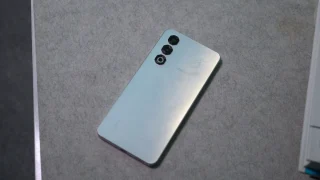
nubia Neo 3 GT 是更简约的一款,拥有纯白后盖以及若干细节和文字。其配备迷你 LED 灯带,与标志性的 Neo 系列“眼”设计相呼应。

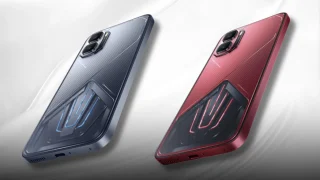
与此同时,Infinix GT 30 的外观更具攻击性。值得注意的是,它保留了与 GT 30 Pro 电竞大师版相同的设计美学。其背面采用半透明设计,并配有四条 LED 灯带。

当然,这两款手机均配备肩键,位于电源按钮同侧。


在机身做工方面,两款手机似乎均采用全塑料材质,并采用平直边缘设计。努比亚背部为磨砂质感,而英菲尼克斯则选用高光表面,更易沾染指纹和污渍。因此,建议搭配保护壳使用。

关于这一点,两款机型均无防摔等级,但具备防尘和防水评级:Neo 3 GT 为 IP54,GT 30 为 IP64。
从设计角度来看,我个人更喜欢GT 30的外观胜过Neo 3 GT。我可以说它因其伪透明设计而更具个性,但归根结底,设计是主观的。

因此,这一轮给双方各得一分是公平的。
显示屏、多媒体与生物识别技术
将两部手机翻到正面,映入眼帘的是大尺寸显示屏。Neo 3 GT配备一块6.8英寸全高清+ OLED屏幕,支持 120Hz刷新率,峰值亮度高达1300尼特。

不过,GT 30 将其提升到了新的高度,配备了一块6.78英寸的LTPS AMOLED显示屏,分辨率高达1.5K,峰值亮度更是达到4500尼特。

它还拥有高达 144Hz 的更快刷新率,然而只有少数应用能利用这一特性,因此目前仍主要停留在 120Hz。GT 30 还额外覆盖了一层康宁大猩猩玻璃 7i,以提供更强保护。
两者都拥有相当尺寸的边框,不过看起来Infinix的边框略薄一些。
尽管这些面板能提供鲜艳的色彩、良好的对比度和深邃的黑色,但GT 30的视觉体验无疑更佳。它不仅提供更锐利的细节,还已支持Widevine L1,可在Netflix上观看高清内容。Neo 3 GT仅支持Widevine L3,就其价格而言,这确实令人失望。

在音质方面,两款机型均配备双立体声扬声器。正如该价位段手机所预期的那样,整体声场表现尚可。它们能够发出相当响亮的声音,高音和中音表现充足,但低音不足,且在最大音量时容易出现声音闷堵的情况。

尽管事实如此,我仍欣赏这两款手机提供的立体声音频,不过Neo 3 GT是将其听筒用作第二个扬声器。然而根据我的体验,GT 30似乎能提供稍佳的音频清晰度。

在生物识别安全方面,两款手机均配备屏下指纹传感器和面部解锁功能,两者解锁速度都很快。因此,对此没有异议。
不过在显示部门方面,GT 30凭借其更优的规格、额外的保护以及Widevine L1支持,确实赢得了这一分。
性能与基准测试
现在,让我们谈谈最重要的一点:性能表现。
nubia Neo 3 GT 搭载 UNISOC T9100 (6nm),我们手中的机型配置为 12GB 内存和 256GB 内部存储。另一方面,Infinix GT 30 则配备 MediaTek Dimensity 7400 (4nm),拥有 8GB 板载内存和 256GB 内部存储。

Sadly, both phones don’t have microSD card slots for storage expansion.
Now, on paper, the GT 30 definitely has the edge. It’s built on a more efficient 4-nanometer process and has better numbers in our benchmark tests.

Take ANTUTU for example, the Infinix GT 30 yielded over 980K points— higher than the Neo 3 GT’s 740K score. The gap in performance is more evident in 3DMark where GT 30 gained higher average FPS which is almost double than nubia’s.
| Benchmark | nubia Neo 3 GT | Infinix GT 30 |
|---|---|---|
| Chipset | UNISOC T9100 SoC (6nm) | MediaTek Dimensity 7400 5G (4nm) |
| AnTuTu V11 | 743,225 | 982,451 |
| AnTuTu Storage | 85,739 | 55,725 |
| S.Read Speed | 957.7 MB/s | 1078.3 MB/s |
| S.Write Speed | 820.0 MB/s | 878.0 MB/s |
| 3DMark Wild Life | 2,048 | Avg. FPS: 12.27 |
| Geekbench 6 CPU Single-Core | 873 | 949 |
| Geekbench 6 CPU Multi-Core | 2,447 | 2,984 |
| Geekbench 6 GPU OpenCL | 2,607 | 3,045 |
| Geekbench 6 GPU Vulkan | 2,737 | 3,061 |
| PCMark Work 3.0 performance | 13,320 | 13,884 |
| PCMark Work 3.0 battery life | 12 hrs & 42 mins | 12 hrs & 51 mins |
Moving on to real world performance, both phones do perform well for basic navigation, scrolling on your social media, and a little bit of multitasking.
When it comes to gaming, I must say, the GT 30 is far more reliable. I’ve tried playing my usual games on both models and Infinix was able to give a better experience.

In Mobile Legends, while both can inherently run at 120 fps consistently, nubia’s frame rate drops when livestreaming the game from the Neo 3 GT itself. It’s even worse for titles like Call of Duty: Mobile where the game can only run at Medium graphics and High frame rate at 60 fps.

As for the GT 30, it can run the game at up to 90 fps consistently at Low (graphics), Ultra (frame rate) settings, which is significantly better. It can even run at Very high graphics settings with 60 fps cap.
However, playing graphic intensive titles like Wuthering Waves doesn’t yield to satisfying results. Both phones were hitting around 25 to 30 fps on average, even at the lowest settings. So, there’s that.
That said, the Infinix GT 30 earns another point this round as it performed relatively better than the Neo 3 GT.
Cameras
Since these are budget gaming phones, my expectations are not that high in terms of cameras, but one of them did manage to deliver a more decent experience.

The nubia Neo 3 GT sports a 50-megapixel main shooter along with a 2-megapixel depth sensor. Up front, it has a 16-megapixel selfie camera. Meanwhile, the Infinix GT 30 also features a dual rear setup with a 64-megapixel main snapper and an 8-megapixel ultrawide lens. For selfies, it has a 13-megapixel front camera.

Taking a look at our sample shots, you can see quite a difference. While the image quality looks good at first glance, the photos taken from the Neo 3 GT tends to oversaturate the colors, making the image look unnatural.
nubia Neo 3 GT vs. Infinix GT 30 sample shots
Monday, Oct 6, 2025


The image processing looks better on the GT 30, retaining near-accurate colors, and slightly better clarity.
It is the same case for video quality. While both phones can shoot 4K at up to 30 fps, only the GT 30 can shoot at that quality even when using the selfie camera. And not to mention, it supports EIS for both the rear and front cam at 4K quality, too. The nubia doesn’t, sadly.
So, in terms of camera performance, the GT 30 earns the point yet again, giving it a three-point lead in this comparison.
Battery Life
Inside, both phones pack larger than usual batteries. The GT 30 packs in a 5500mAh unit, and the Neo 3 GT has 6000mAh capacity.

What’s interesting here is that, even though nubia packs a larger capacity, they both yielded almost the same battery life.

In our PCMark test, the Neo 3 GT lasted 12 hours and 42 minutes. That’s a little bit shorter from the GT 30 that lasted 12 hours and 51 minutes. The software optimization might be a factor as to why this happened, but your guess is as good as mine.
As for charging though, nubia has a faster 80W of wired charging as compared to Infinix’s 45W. Also, both phones support bypass charging as they should.

What I liked with how nubia implemented bypass charging is that you can set the device charging at a certain percentage (like 80% only). After that, the phone will automatically draw power directly from the wall outlet.
That said, it’s a tie for this round.
Connectivity and Other Features
Now, let’s move over to the software side. Out of the box, both phones ship with Android 15: the Neo 3 GT runs on MyOS and the GT 30 has XOS 15 on top.

Honestly, Infinix’s software looks visually better, having a more modern look throughout the system. Both do have a fair share of bloatware, but they can be easily removed.

On the subject of update policy, only Infinix has mentioned its software pledge for the GT 30, offering up to two major OS upgrades and three years of security patches.
Connectivity-wise, both have the essentials here: 5G, NFC, and Wi-Fi 6 for Infinix and Wi-Fi 5 for nubia. Infinix does offer an IR blaster that’s useful for universal control for your home appliances, so that’s a plus.
With a more transparent update policy, a more modern UI, and the addition of an IR blaster, the GT 30 deserves to get another point this round.
Which one should you get?
We have finally arrived to the last part of this comparison where we answer the question, which one should you get?
With all the pointers we’ve discussed so far, the Infinix GT 30 crushed the competition with its better specs and performance across the board. It boasts a better chipset, a sharper screen, and a more visually pleasing UI.

What seals the deal is the price. The Infinix GT 30 sets you back only PHP 11,999 (8GB+12GB) which is a thousand pesos less from that of the nubia Neo 3 GT Limited Edition, priced at PHP 12,999 (12GB+256GB).
The Neo 3 GT is not that bad per se. On its own, it’s a decent pick, especially that the Limited Edition comes with an included game pad, along with other freebies. It’s just that, it came in short in a lot of ways.

I can only recommend this phone if its price drops down to at least under Php 10,000. But that’s just me. Ultimately, the choice is always yours.
| nubia Neo 3 GT 5G | Infinix GT 30 5G |
|---|---|
| 6.8-inch FHD+ OLED | 6.78-inch 1.5K LTPS AMOLED |
| 120Hz refresh rate | 1224 x 2720 pixels, 144Hz refresh rate |
| 1300 nits peak brightness | 1600 nits (HBM), 4500 nits (peak) brightness |
| - | Corning Gorilla Glass 7i |
| UNISOC T9100 SoC (6nm) | MediaTek Dimensity 7400 5G (4nm) |
| Octa-core, up to 2.7GHz | Octa-core, up to 2.6GHz |
| 12GB RAM | 8GB LPDDR5X RAM (+8GB extended memory) |
| 256GB storage | 256GB UFS 2.2 storage |
| Dual rear cameras: | Dual rear cameras: |
| - 50MP f/1.8 main, AF | - 64MP f/1.75 main, PDAF |
| - 2MP depth | - 8MP f/2.2 ultrawide, 111.4° FoV, AF |
| 16MP f/2.0 selfie shooter (hole punch notch) | 13MP selfie shooter (punch hole notch) |
| Dual SIM | Dual nano-SIM |
| 5G, 4G LTE | 5G, 4.5G LTE |
| Wi-Fi 5 | Wi-Fi 6 |
| Bluetooth | Bluetooth 5.4 |
| GPS | GPS |
| USB Type-C | USB Type-C |
| - | FM radio |
| NFC | NFC |
| Under-display fingerprint sensor | Under-display fingerprint sensor |
| IP54 dust and splash resistance | IP64 dust and splash resistance |
| Dual stereo speakers | Dual stereo speakers, IR blaster |
| Shoulder triggers, LED lighting | Mechanical Light Waves (rear LED lights), GT Trigger |
| MyOS, Android 15 | XOS 15, Android 15 |
| - | 2 major OS upgrades, 3 years security patches |
| 6000mAh battery | 5500mAh battery |
| 80W charging (wired), bypass charging supported | 45W charging (wired) |
| 163.7 x 75 x 8 mm | 163.7 x 75.8 x 7.99 mm |
| 192g | 187g |
| Limited Edition White Hailstone, Electro Yellow, Interstellar Grey (colorways) | Cyber Blue, Pulse Green, Shadow Ash, Blade White (colorways) |


0 Comments
Leave a Reply