

Microsoft has begun a shift in its AI strategy by pulling back on usage of third-party AI services. The tech giant has started substituting OpenAI and Anthropic models with its own internally-developed Micosoft AI (MAI) models across several consumer and workplace applications.
An example: Thousands of daily tasks inside Microsoft Excel and Outlook that used to be sent to OpenAI’s GPT or Anthropic’s Claude are now being handled entirely by Microsoft’s first-party systems.
The main driver behind this sudden change is the massive cost of running large AI models. Heavy users using advanced office tools can easily cost Microsoft a substantial amount of cash (in computing power) while only paying a standard flat monthly subscription fee. Microsoft AI CEO Mustafa Suleyman noted that because the company pays massive sums to external providers, its active goal is to drastically reduce those bills by utilizing its own highly-optimized systems.
This transition was legally cleared by a recent contract renegotiation between Microsoft and OpenAI. The updated agreement ended Microsoft’s original exclusivity clause, giving OpenAI the freedom to sell its technology to other cloud platforms like Amazon AWS while freeing Microsoft to build and ship competing models.
To kick off this independence, Microsoft recently debuted a family of seven in-house models, including its first reasoning engine, MAI-Thinking-1, alongside dedicated models for voice, coding, and images.
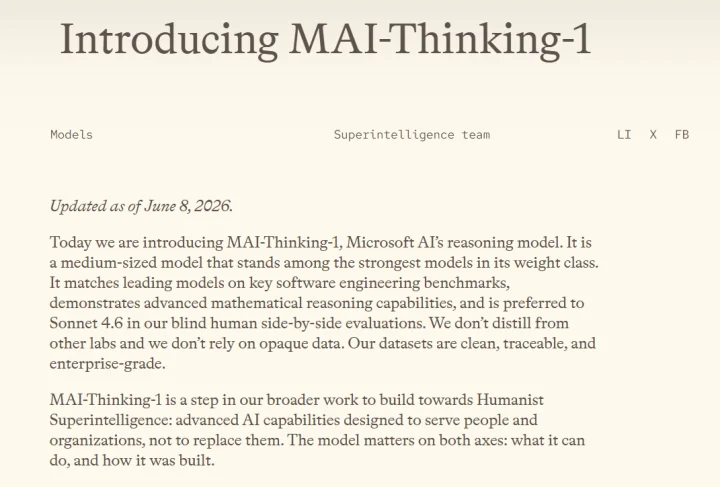
Other models include MAI Image for photos, Transcribe for audio, Voice for text-to-speech tasks, and Code for some backend wizardry.
While Microsoft says it will still offer OpenAI’s premium engines for highly complex tasks, the financial shift is already underway.
By routing routine corporate workflows to its own home-grown models, Microsoft can run tasks directly on its Azure servers and bypass third-party rental fees entirely. For everyday users, this means the AI features running inside their daily office apps will now be supercharged by Microsoft’s systems, rather than rely on outside power.
Perhaps the pros to this include increased limits and higher control over data privacy and access.







0 Comments
Leave a Reply