
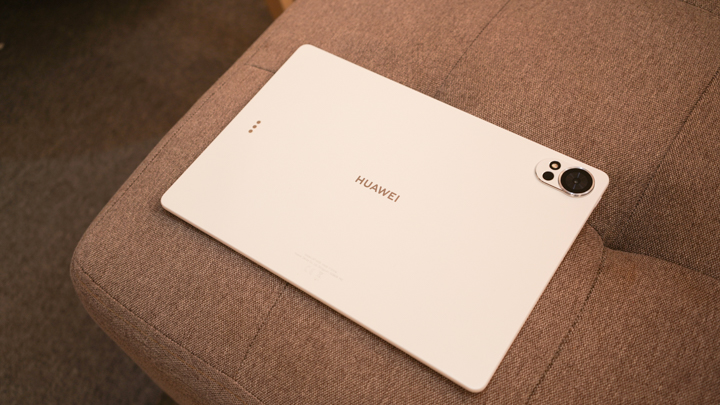
HUAWEI MatePad 12 X (2026) Review



With electric mobility, automated driving and the connected car, data volumes as well as safety requirements in vehicles are increasing. At the same time, vehicle functions have to be very robust. Reason enough to rely on new architectures, says Infineon’s Peter Schäfer.
From Peter Schäfer
Domain and zone controllers will integrate logical software functions from today’s distributed systems. The development complexity is thus shifted from the vehicle network with many individual ECUs to the hardware/software architecture of central domain/zone ECUs. In addition to scalable computing power up to 15k DMIPS (Dhrystone Million Instructions Per Second), flexible integration of functions from different ASIL (Automotive Safety Integrity Level) according to ISO26262 is required. System availability thus becomes a technical challenge. Gigabit Ethernet will allow large amounts of data to be exchanged between domain computers. For communication with sensors and actuators, classic network technologies such as CAN, Flexray, and LIN will continue to be used. And finally, crypto-security will play a central role. Secure software updates for vehicles in the field, the detection of network manipulation, and the protection of private data require powerful security functions in all ECU classes.
All these places increased demands on microcontrollers. Dependability, i.e. the robustness and scalability of a microcontroller family becomes an important criterion. Provable deterministic behavior for time-critical functions and fast recovery in case of failure are essential elements of a robust computer. This is where multi-core microcontroller families with optimized architectures for real-time control show their strengths. Classic processors with complex memory management and multiple cache levels often do not allow, for example, to reliably predict the maximum execution times of functions.
Technical reliability is also an essential characteristic of robust computer families. With a stringent development process, extensive simulations of aging effects, and special function blocks for testability, error rates in the ppb (parts per billion) range can be achieved in operational use. In addition, integrated flash and RAM memories with their safety mechanisms ensure robustness over the entire life cycle. This is where modern automotive microcontroller families clearly differ from microcontrollers derived from consumer devices or communication applications.
Scalability also plays a major role. How quickly can you react to changes in market requirements without having to develop from scratch? In complex multi-core systems, software architecture and functional safety concepts according to ISO26262 stand for high research and development efforts. Today, there is a demand for cost-effective single-core ASIL-D computers up to hexa-core computers with 16+ MB flash memory, large functionally safe RAM blocks, and special application-specific accelerators.
Last but not least, a holistic safety and security architecture is required that addresses all functional elements such as computing cores, memory blocks, buses, communication interfaces, etc. Isolated “safety islands” on processors are not sufficient to exclude potentially safety-critical malfunctions. In ECU concepts for domain computers, a combination of processors and ASIL-D-capable microcontrollers, e.g. from Infineon’s AURIX TC3x family, is used to guarantee maximum functional safety. New vehicle E/E architectures support software updates for cars in the field. Protection against manipulated updates, but also securing the network traffic within the vehicle against attacks requires powerful hardware security modules. Integrated into the microcontroller, these modules have their own computing cores and memory and allow cryptographic functions to be executed with minimal latency.
Dipl.-Ing. Peter Schäfer, Vice President and General Manager Automotive Microcontrollers, Infineon Technologies, heads the Automotive Microcontroller Business Unit at Infineon. He studied electrical engineering at the RWTH Aachen University and has spent the last 25 years at Siemens Semiconductors, Infineon Flash, Qimonda, and Infineon Technologies in various management positions in Sales & Marketing, Development and Productline Management. Since 2008 he has been responsible for the Automotive Microcontroller business unit, which is very successful in the automotive market, particularly with products from the TriCore and Aurix microcontroller families.
You may head over to the official Infineon website to know more.






Apple, Asus, Cherry Mobile, Huawei, LG, Nokia, Oppo, Samsung, Sony, Vivo, Xiaomi, Lenovo, Infinix Mobile, Pocophone, Honor, iPhone, OnePlus, Tecno, Realme, HTC, Gionee, Kata, IQ00, Redmi, Razer, CloudFone, Motorola, Panasonic, TCL, Wiko
Best Android smartphones between PHP 20,000 - 25,000
Smartphones under PHP 10,000 in the Philippines
Smartphones under PHP 12K Philippines
Best smartphones for kids under PHP 7,000
Smartphones under PHP 15,000 in the Philippines
Best Android smartphones between PHP 15,000 - 20,000
Smartphones under PHP 20,000 in the Philippines
Most affordable 5G phones in the Philippines under PHP 20K
5G smartphones in the Philippines under PHP 16K


